

(Jose Rizal’s ‘Josephine Sleeping’ is highlight of the highly anticipated year-ender of Leon Gallery, The Kingly Treasures Auction 2024, on Nov. 30, 2024, 2p.m.)
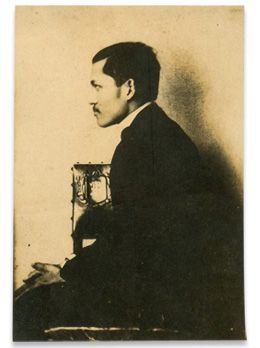
Jose Rizal

The Sunday Times Magazine article, June 14, 1970, featuring ‘Josephine Sleeping’

Rizal’s sculptures from the book ‘Lolo Jose,’ ‘Josephine Sleeping’ at bottom right
Exactly a month before our José Rizal’s 128th death anniversary on December 30, Leon Gallery will auction one of the very few of our National Hero’s sculptures that remain in private hands. It is the portrait of his ultimate love—The First Filipino’s last lady. Titled Josephine Sleeping, it captures Josephine Leopoldine Bracken de Rizal, outstretched on a divan. It is an intimate portrait. It is also a work that would have scandalized many during Rizal’s time for its frank sensuality, but anyone who would dare love our greatest hero cannot be other than controversial.
There were indeed so many speculations about her, then and now. Some even posited by so-called serious biographers of Rizal: That she was an illegitimate daughter of a British military captain and a Chinese woman; that she was a prostitute and that her stepfather, George Taufer, met her in a tavern; that even Rizal himself could have met her in such unsavory places while he was in Hongkong.
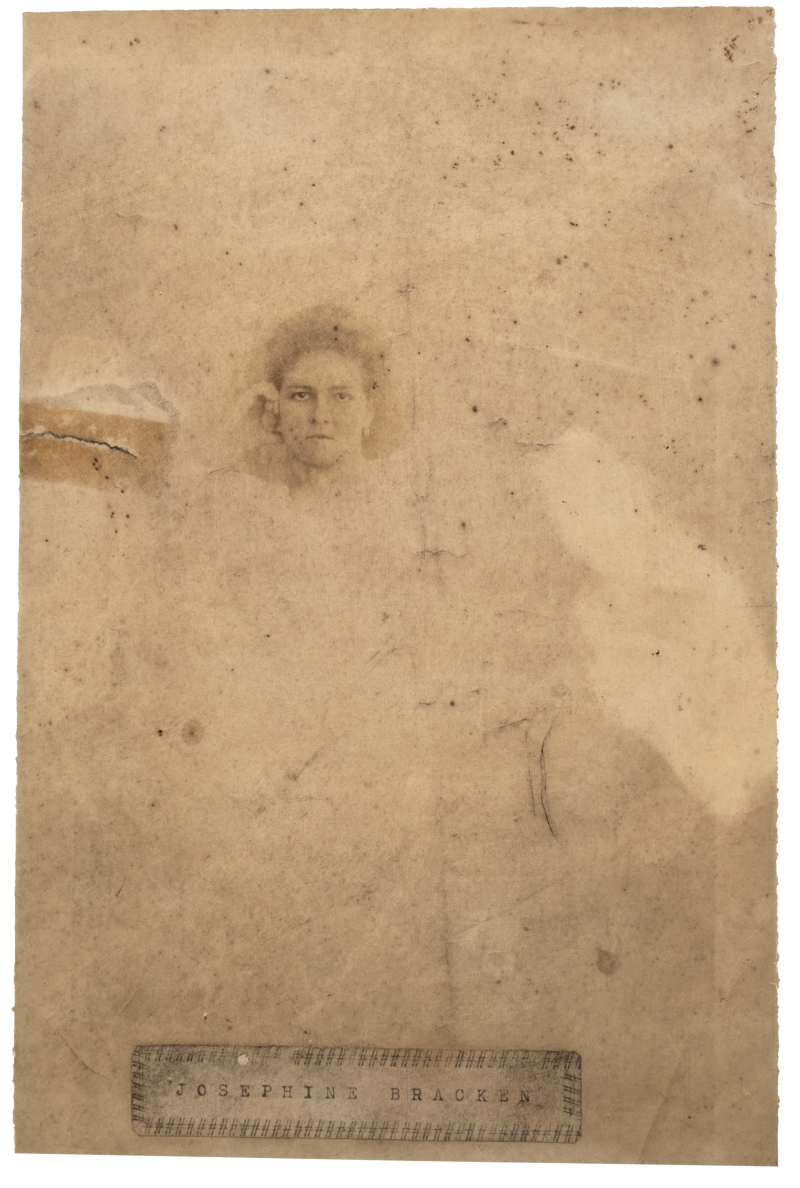
A pencil sketch of Josephine Bracken

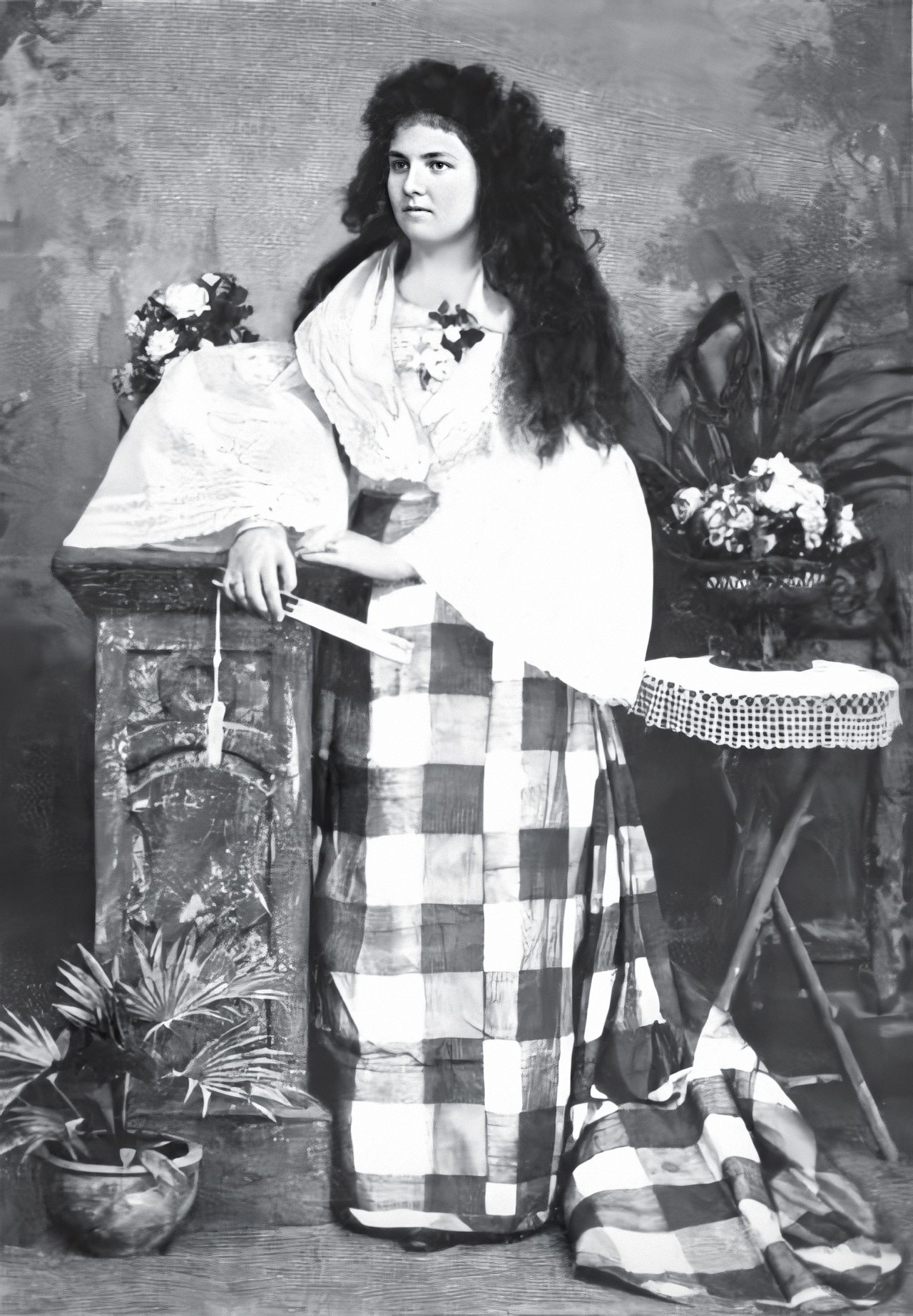
Photos of Josephine Bracken
This prompted a grandson of Josephine, Macario Ofilada y Mina, to write a book to set the record straight in Errante Golondrina, The Life and Times of Josephine Bracken (New Day, 2003). Josephine was born on 9 August 1876 at Victoria Barracks, Hongkong. Ofilada found his grandmother’s baptismal records, which stated in Latin that she was an Anglo-Saxon (her father, James Bracken bearing an Irish surname, was serving in the British Army), and was also listed as legitimate (legitima). Her mother’s name was Elizabeth, and had she died by 2 September after suffering too much blood loss while giving birth to Josephine. The Taufers, James and Leopoldine, were listed as the godparents of the newborn child.
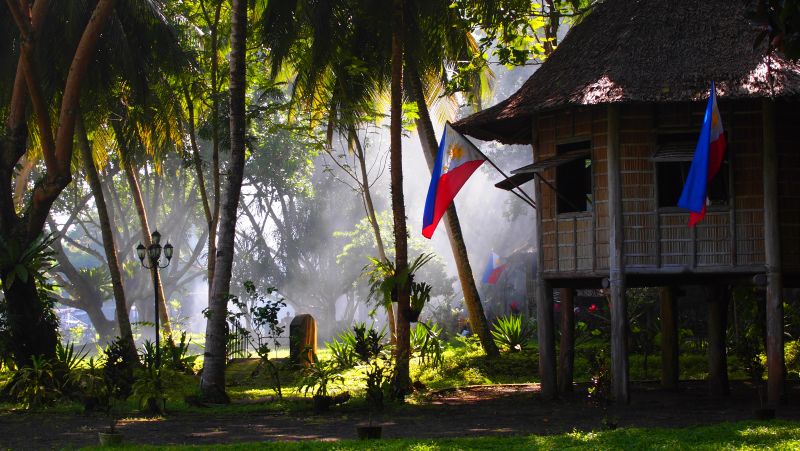
Rizal’s hexagonal home in Dapitan
When her stepfather was going blind, they had to find the best doctor, and Rizal was apparently the only one in Southeast Asia. And so even if Dapitan was a far-flung military outpost of the Spaniards in the Philippines, Taufer and Josephine had to find their way there with the help of one Manuela Orlac in February 1895, where Josefina and “Joe” (her pet name for him) would meet.
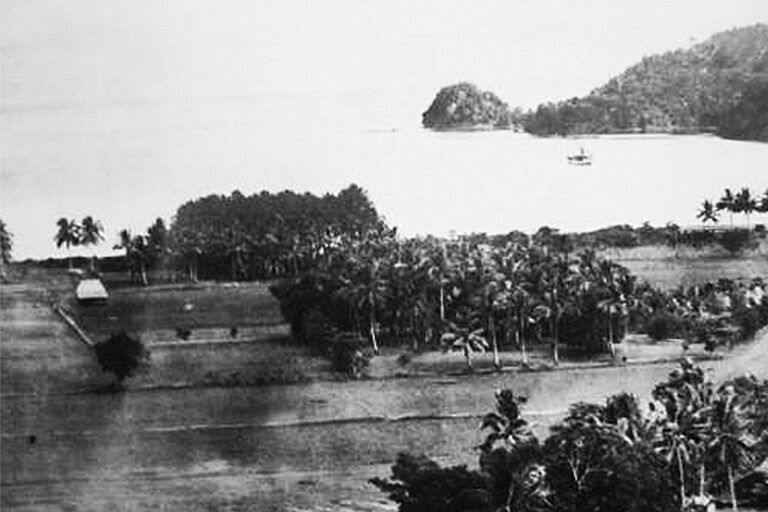
Dapitan town in the 1890s
Rizal was bad news for Taufer, a double whammy, in fact. Apparently, there was no way Rizal could make Taufer’s eyesight better, and to add to the old man’s woes, he would admit that he was in love with his stepdaughter. The old man almost took his own life upon hearing this, for she was 18 and Rizal was 33. There were rumors that Taufer himself was in love with Josephine. Eventually, Josephine was able to take him back to Hongkong and then to return to Manila. Somewhere in between, she delivered Rizal’s letter to his mother which stated:
“The bearer of this letter is Miss Josephine Leopoldine Taufer whom I was at the point of marrying, counting on your consent, of course. Our relations were broken at her suggestion, on account of the numerous difficulties in the way. She is almost alone in the world; she has only very distant relatives.
“As I am interested in her and it is very possible that she may later decide to join me and as she may be left all alone and abandoned, I beg you to give her hospitality there, treating her as a daughter, until she shall have an opportunity or occasion to come here.
“I have decided to write the general about my case.
“Treat Miss Josephine as a person I esteem and value much and whom I would not like to be unprotected and abandoned.”
Because of innuendos, such as Manuela Orlac’s relationship with the friars, the Rizal family had reservations about Josephine, except for his sister Narcisa who treated her kindly. Josephine returned to Dapitan and according to one of Rizal’s letters, she helped him with the household chores: she washed his clothes, she cooked him dishes and assisted him in the clinic.
They wanted to marry in a Catholic ceremony, but even if Rizal drafted a retraction to go back to the Catholic fold from masonry, he had a misunderstanding with the Jesuit, Father Obach, and their wedding plans were aborted. This is the point many of us imagine Rizal marrying Josephine with only God as their witness. Josephine would then become pregnant with a son who died at birth.
Did he talk politics to Josephine? We really do not know. But her subsequent actions were remarkable. In July 1896, Rizal decided to end his happy days with Josephine in Dapitan, with the intention of serving the Spanish Army in Cuba. His best friend, Ferdinand Blumentritt, perceived this move as Rizal wanting to know more about the revolution. Rizal never reached Cuba, as he was arrested and sent back to the Philippines because the Philippine Revolution headed by Andres Bonifacio had erupted.
Despite Rizal’s belief that the revolution should only be a last resort and must be carried out only by a well-prepared and educated populace, the Spaniards implicated Rizal with the fake news that he had formed Bonifacio’s Katipunan.
As a last act of love, Rizal signed the retraction document and married Josephine Bracken before he met his tragic but heroic fate on 30 December 1896. But there was no looking back for her. With Rizal’s sisters and taking with them his last poem, where he hailed Josephine “Farewell, sweet foreigner—my darling, my delight!” they met Rizal’s brother Paciano with Andres Bonifacio himself in Cavite. Bonifacio was handed the poem, which he translated to Tagalog and distributed it among the people. With this the revolution claimed Rizal as their hero and martyr.
Josephine joined the revolution in Cavite; she killed one Spaniard, the report said. She was even reported to be helping pacify the hotheads in the controversial Tejeros Convention, along with Rizal’s sisters, claiming the moral authority of the widow of Rizal. She even asked the revolutionaries to turn the spacious Tejeros Friar House into a hospital for the wounded of the revolution. Dr. Floro Quibuyen asks, if Rizal was totally against the revolution, why did Josephine join it?
She later had a quarrel with the Rizal family over Rizal’s books, which she wanted to claim as the widow of Rizal. She could not produce a marriage certificate, and went back to Hongkong and eventually married another Filipino, the Cebuano Vicente Abad. A local Cebu newspaper, El Pueblo, announced in an ad that Josephine could teach English and German, and lived near Plaza Rizal. She was identified as “Josephine Braecking de Abad, Profesora de Lenguas.” It was said that one of her students was Sergio Osmeña, who would become president of the Philippines.
Josephine died at 25 years old in 1902, and was laid to rest in an unmarked grave. It was assumed that she was buried in a pauper’s grave, until recently when her remains were discovered in Hongkong, with those of her biological mother.
Josephine ended one of her letters to Rizal with an attempt at poetry, “Love I will love you ever, love I will leave thee never, ever precious to thee never to part heart bound to heart or never to say good bye. So my darling receive many warm Affection and love. From Your Ever faithful and True till death Josephine Bracken.”
In Dapitan, in a relationship outside of marriage that the community could perceive as a scandal, Rizal wanted to reciprocate the love of Josephine—here, in this portrait of her sleeping, yes, “we are man and wife.” It showed how much she inspired Rizal, so that he made her the muse of his art. Their hearts communicated through this work.

Timeline courtesy of Leon Gallery
Rizal’s time in Dapitan, where he became a one-man NGO empowering a people in a sleepy town, invigorating them, was for me the most important part of his life. As an artist, he was also at his most productive. So, any of his artworks from this period would be extremely important. But especially one that features the First Filipino’s last lady, who, aside from his country, ranked first in his heart, and in her own right, a heroine who fought for our country.
Reprinted from the catalogue ‘The Kingly Treasures Auction 2024’
The Kingly Treasures Auction is on Nov. 30 2024, 2 p.m., at Eurovilla 1, Rufino corner Legazpi Streets, Legazpi Village, Makati City. Preview week is Nov. 23 to Nov. 29, 2024, 9 a.m. to 7 p.m.. For further inquiries, email info@leon-gallery.com or contact +632 8856-27-81. To browse the catalog, visit www.leon-gallery.com.
Follow León Gallery on their social media pages for timely updates: Facebook – www.facebook.com/leongallerymakati and Instagram @leongallerymakati.


