
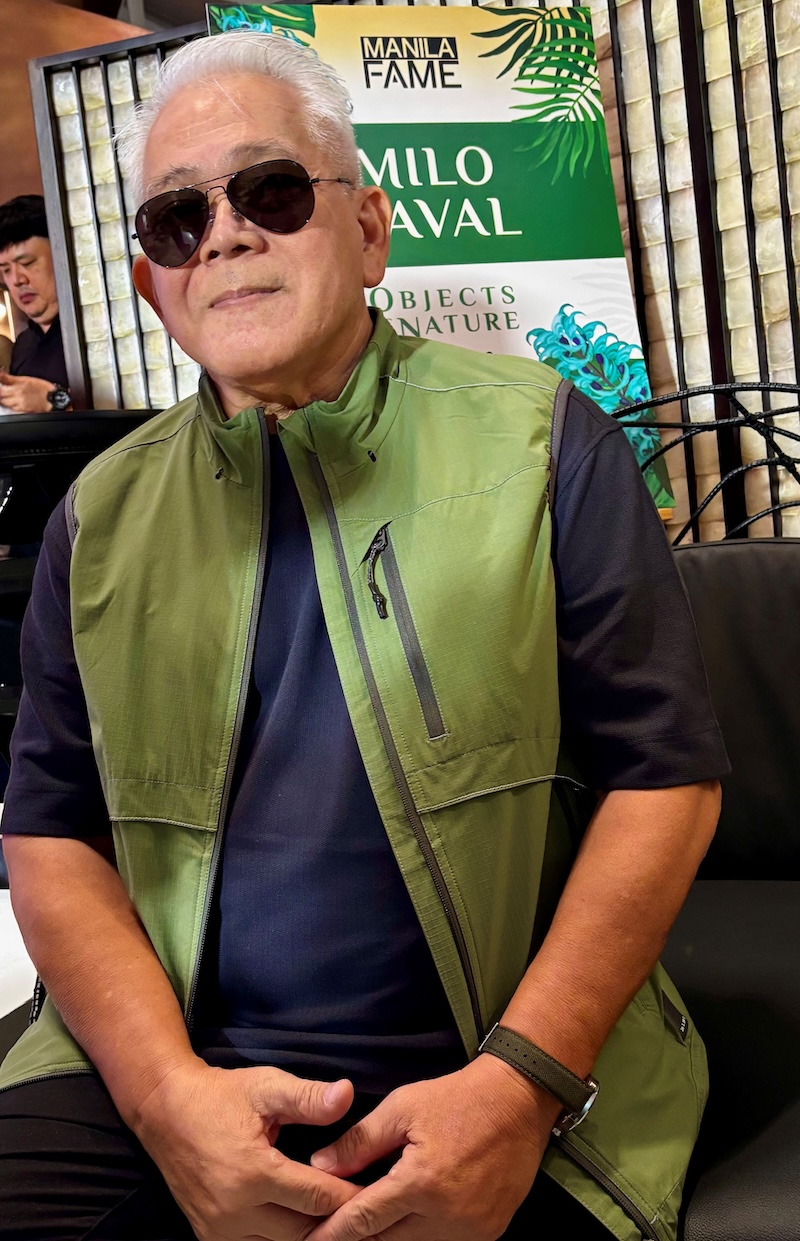
Milo Naval
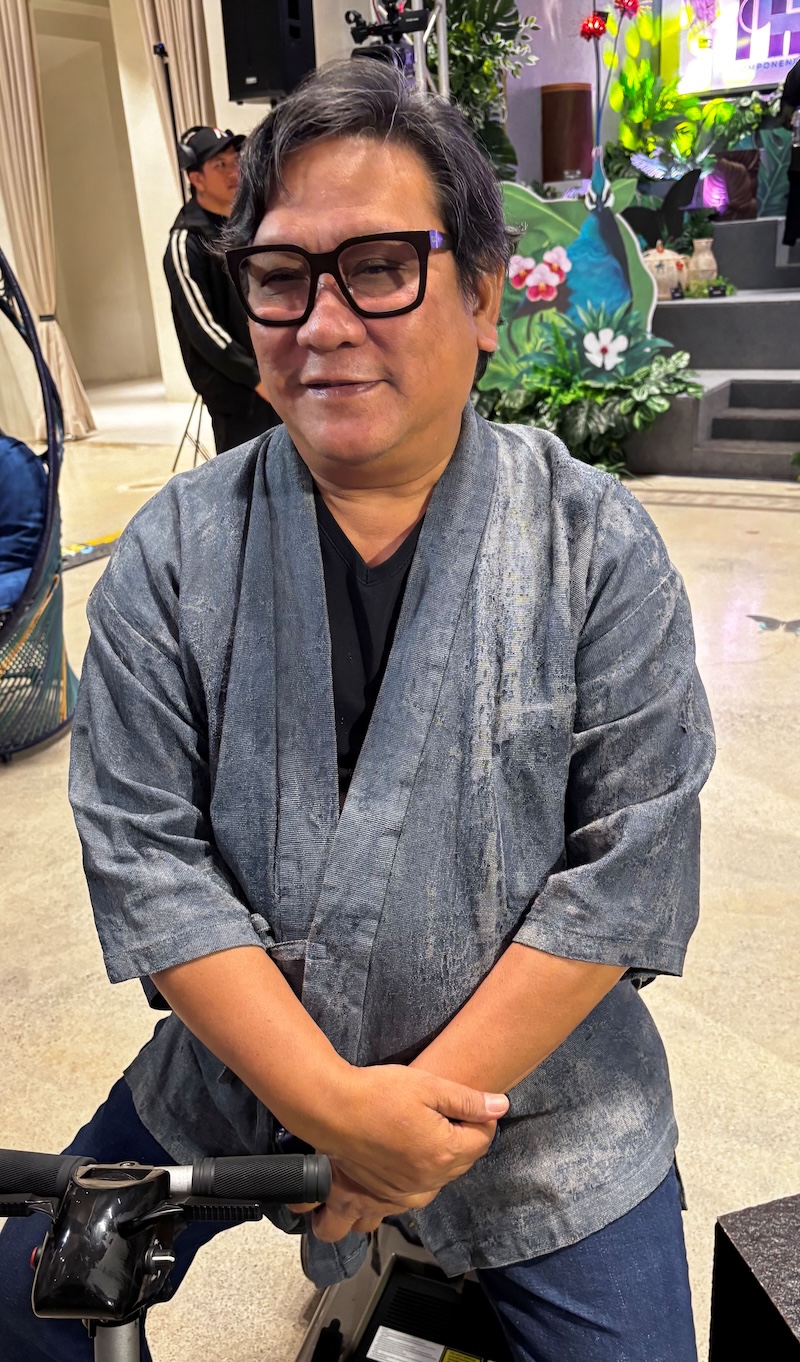
Tony Gonzales
Catch Manila FAME on October 16-18, 2025 at the World Trade Center Metro Manila, Pasay City.
Manila FAME 2025, the country’s leading trade show for home, fashion, and lifestyle, marks a return to form.
The event, short for Manila Fair for Artisans, Manufacturers, and Exporters, sees the comeback of three of the Philippines’ most influential design figures: Tony Gonzales and Milo Naval, who lead product development and special settings, and Kenneth Cobonpue, who creates the centerpiece installation.
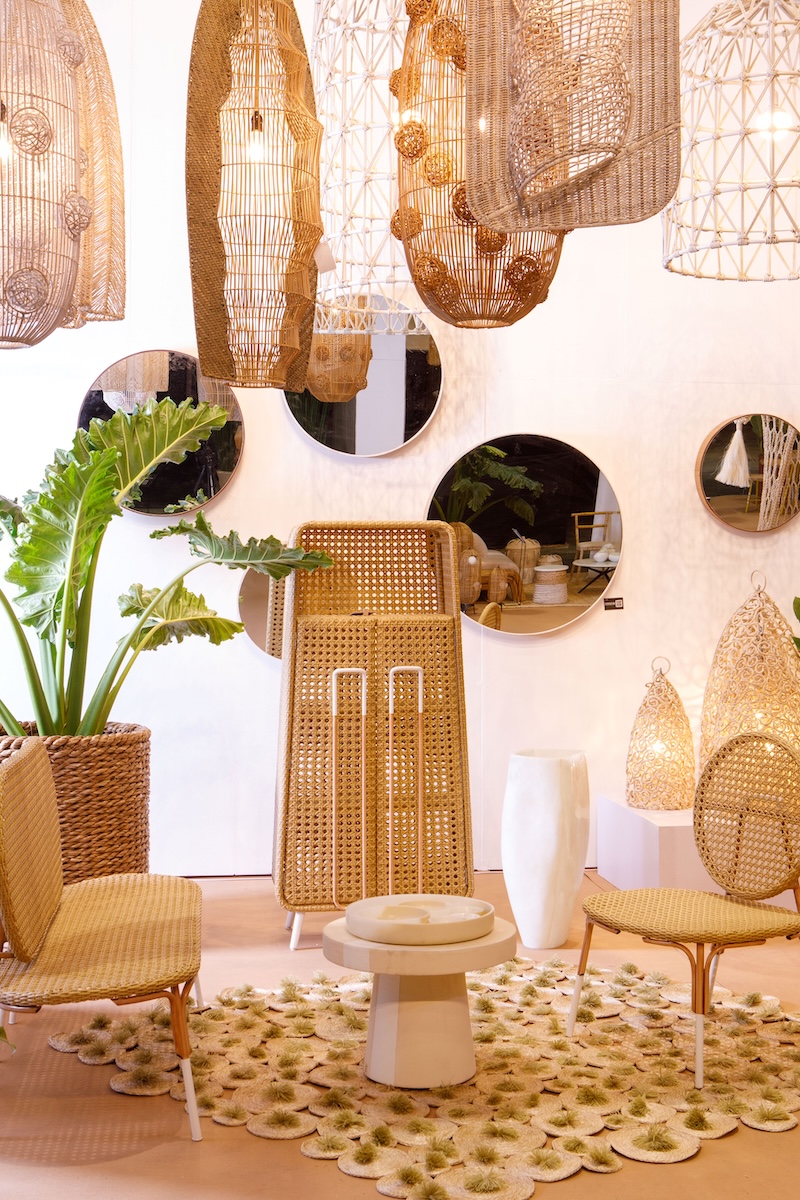
With the theme ‘Objects of Nature,’ Manila FAME 2025 goes to the heart of what Filipino artistry and craftsmanship do best.
Their presence signals a shift toward depth and discipline after years of experimentation that sometimes veered into whimsy. Gonzales and Naval, both veterans of the Philippine design evolution, bring coherence and commercial sensibility rooted in craftsmanship. Their approach aligns closely with this year’s theme, Objects of Nature, which highlights organic forms, textures, and materials, an enduring source of Filipino creativity.
For Gonzales, the guiding force behind Design Commune, the show’s curated collective of manufacturers and designers, the goal remains the same as when he launched it eight years ago: to foster collaboration between creative talent and small to medium-scale producers.
In the exhibit Elements of Nature, he, yet again, mentors young designers, helping them balance innovation with market realities.
Naval, founder of Evolve Designs and OMO Furniture, returns in Home at FAME, a contemporary exploration of how natural materials and craftsmanship shape the modern Filipino home. The fair has a personal meaning for him; he began his career with CITEM more than three decades ago, meeting peers who would later form Movement 8, the design group that helped place the Philippines on the global high-end design map.
Before the pandemic, Cobonpue’s exhibits were the visual anchors of Manila FAME—showcases that turned the fair’s halls into theatrical environments. Instead of presenting his furniture as stand-alone pieces, he built entire settings where light, texture, and scale combined to tell a story. Sculptural chairs, woven forms, and dramatic lighting fixtures created a world that felt both handcrafted and futuristic, capturing how Filipino materials such as rattan and abaca could stand alongside global design icons. Each installation became foretaste of collections bound for global design capitals, making Cobonpue’s spaces not just displays, but also destinations within the fair.
Together, Gonzales, Naval, and Cobonpue represent a range in Philippine design, one that honors tradition while asserting progress, proving that innovation thrives best when grounded in experience.
‘By the time you’ve named a trend, it’s already over’—Tony Gonzales
For more than three decades, Tony Gonzales has been a fixture of Manila FAME, serving as creative director and consultant for the CITEM’s (Center for International Trade Expositions and Missions) product development programs. This year, the Design Commune he leads brings together 20 manufacturers and a small group of young designers.
Each participating company brought its expertise and signature material—metal, stone, wood, paper, shells, even barnacles. Gonzales says the Philippines has long been known for its ability to take raw materials and transform them into something unexpected. “Material manipulation,” he calls it, has become part of the country’s design identity.
During a press preview at Centro Turismo, Gonzales produced a centerpiece that reflected this philosophy: a dome made of nito-leaf coasters that gleamed like copper under the lights. For De la Cruz House of Piña, which has supplied brands such as Williams-Sonoma and Crate & Barrel for decades, Gonzales proposed a simple adjustment. “They’ve been doing coasters and placemats,” he says, “so I told them, let’s make something more three-dimensional than flat.”
Nearby were woven lotus-leaf floor coverings and chairs made from salvaged shipyard metal, their surfaces distressed from hammering. “You see the pounding on the metal,” he notes that the texture itself became a form of storytelling.
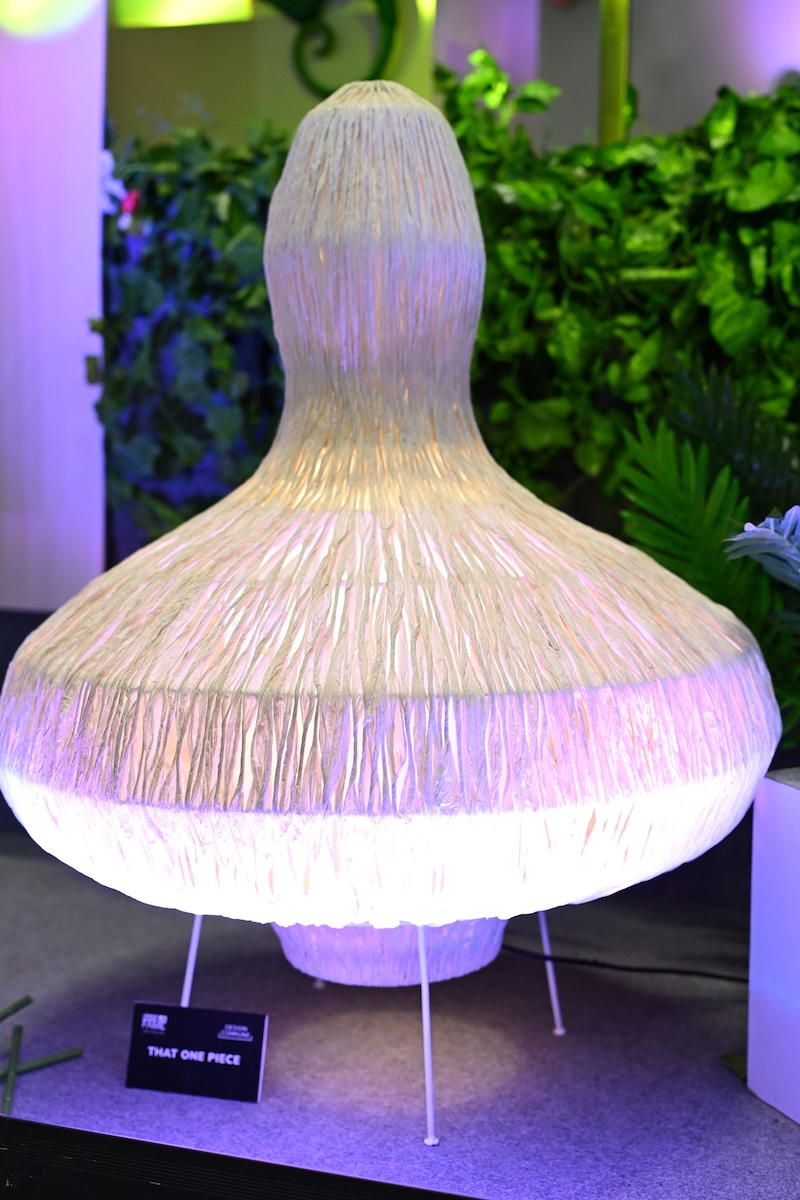
Unwoven lamp designed by Gonzales for That One Piece
Gonzales advised Luis and Rowena de Jesus, owners of Lija, to untwine its weaving. Hence, the white lamps were made of twine woven loosely to allow more light to pass through.
More than a showcase, he sees Design Commune as a way to sustain a new generation of Filipino designers. With a modest budget, Gonzales takes his mentees on field visits to factories in Cebu, Davao, and Pampanga, exposing them to the realities of production. “If you’ve been reading about the same names for the last 20 years,” he says, “then the design industry hasn’t really grown.”
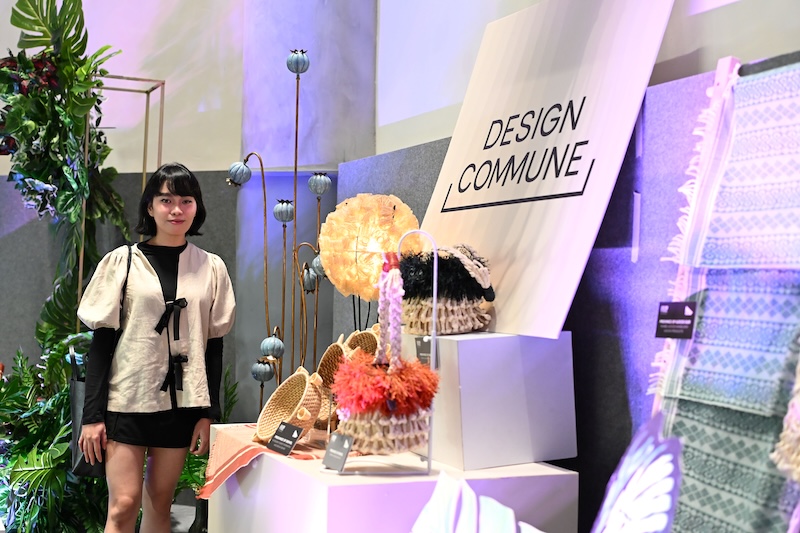
Interior and object designer Uzel Alconera
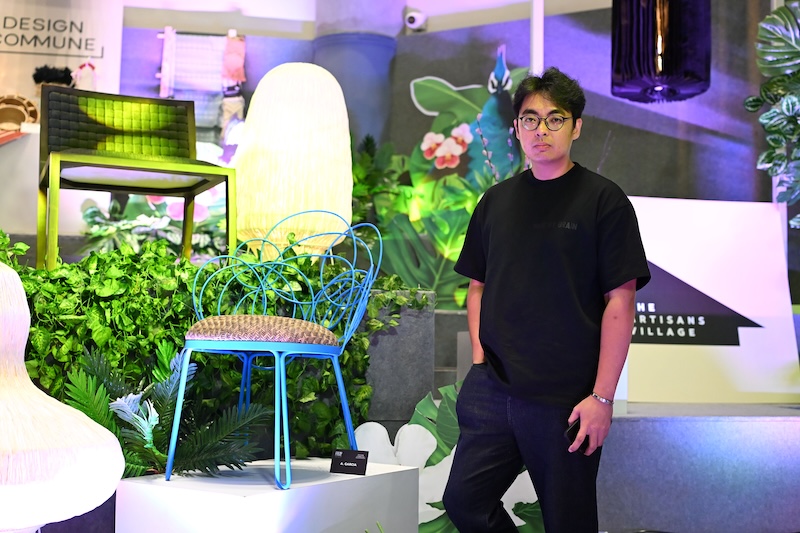
Furniture brand Zarate Manila founder and creative director Jim Zarate Torres
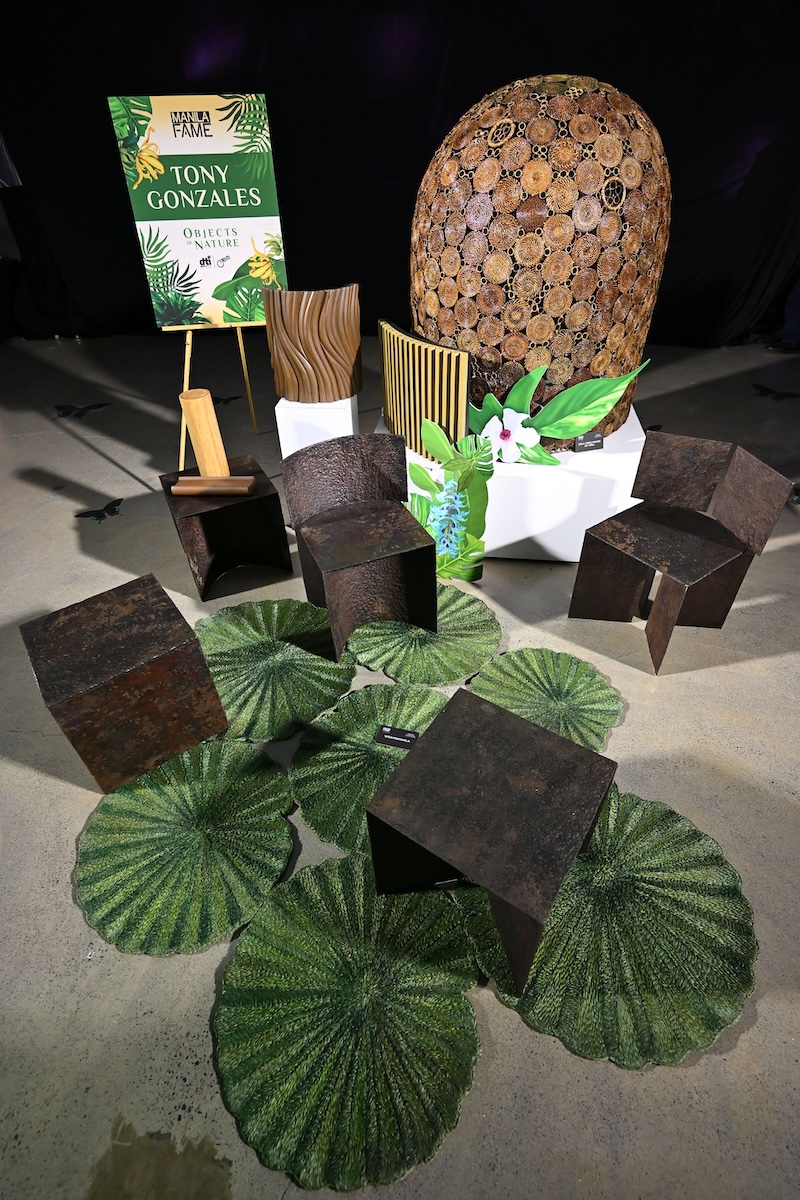
Designs by Tony Gonzales
For the setting, he handpicked three young creatives—interior and object designer Uzel Alconera, Zarate Manila founder and creative director Jim Zarate Torres, and product designer Jaime Brias—to collaborate with him in developing home and holiday décor.
Brias, the son of designer Maricris Floirendo-Brias of Tadeco, designed lamps for Maria Vine Craft and Tadeco, using abaca and t’nalak in forms that resembled flowers and eels. The designers worked with manufacturers from Bulacan and Pampanga to expand their material and technical capabilities.
Industrial designer Reine Shih, who has long collaborated with Gonzales on CITEM projects, also joined the group.
The designers said working with Gonzales changed the way they approached design. Gonzales encourages the younger team to resist copying what they see online. “Most young people now start by scrolling through Instagram,” he says. “But how can you become a leader if you’re always following?”
“Trend” is a word which Gonzales avoids. In his view, the accelerated pace of social media has rendered the concept meaningless. “Everything moves too fast,” he says. “By the time you’ve named a trend, it’s already over.”
The new collection is divided into three parts—earth, air, and water—each interpreted by a different team. Despite the theme, Gonzales says the results surprised even him. “Some of the products came out more like gallery pieces than consumer goods,” he says. Still, he found the experiment rewarding.
He believes that by blurring the line between home décor and art, Filipino craftsmanship gains greater value in the global market. The idea, he notes, comes largely from the manufacturers themselves, who want to explore how far their products can evolve. Hearing their aspirations and integrating their views into the design process makes the collaboration more dynamic.
Likewise, he often reminds young designers that collaboration demands humility. They must, he tells them, serve the company—observe its processes, understand its limits, and shape designs around what is possible. Otherwise, he warns, even the most inspired concept risks ending up in the trash can.
For Gonzales, that meeting point between makers and designers defines the essence of Design Commune. He likens it to an arts-and-crafts movement, where growth comes through shared work and mutual learning rather than competition.
The greater challenge, he admits, lies not only in nurturing creativity but in reviving a shrinking manufacturing base. With fewer players in the industry, designers depend on producers and vice versa. Gonzales attributes the continued dialogue to long-standing trust. For instance, there are companies, he says, which follow new ideas simply because he is involved, and they know his designs will sell.
‘In whatever I do, I always do the opposite’—Milo Naval
Manila FAME 2025 feels like a homecoming for Milo Naval. He began developing products for companies for CITEM in 2007; this year marks the first time not only to curate a special setting but also to guide product development for other companies.
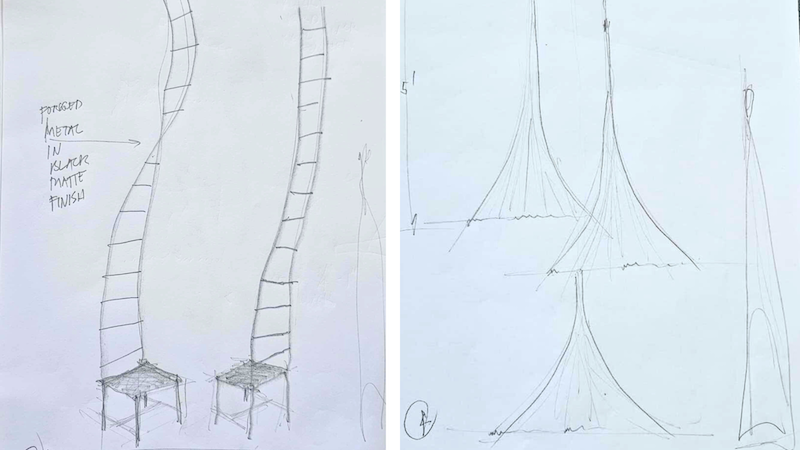
Milo Naval’s Manila FAME 2025 product sketches
Naval explained to the 10 participating manufacturers, mostly furniture makers and a few accessories producers, that his approach was rooted in feeling, rather than form. He shared only the general idea and mood he wanted to convey, pairing his spare sketches with vivid descriptions of the emotions that the finished pieces should evoke. Rather than prescribing every detail, he preferred that the makers grasp the intent behind each design—an approach he believed turned the collaboration into genuine product development rather than mere execution.
For Home at FAME, Naval set out to reinterpret the flora-and-fauna theme through a modern lens. His designs combine sleek details and expert craftsmanship, taking cues from each company’s strengths. “A metal company will still work with metal, and a weaving company will still weave,” he says. “But I use their skills in the way I design.”
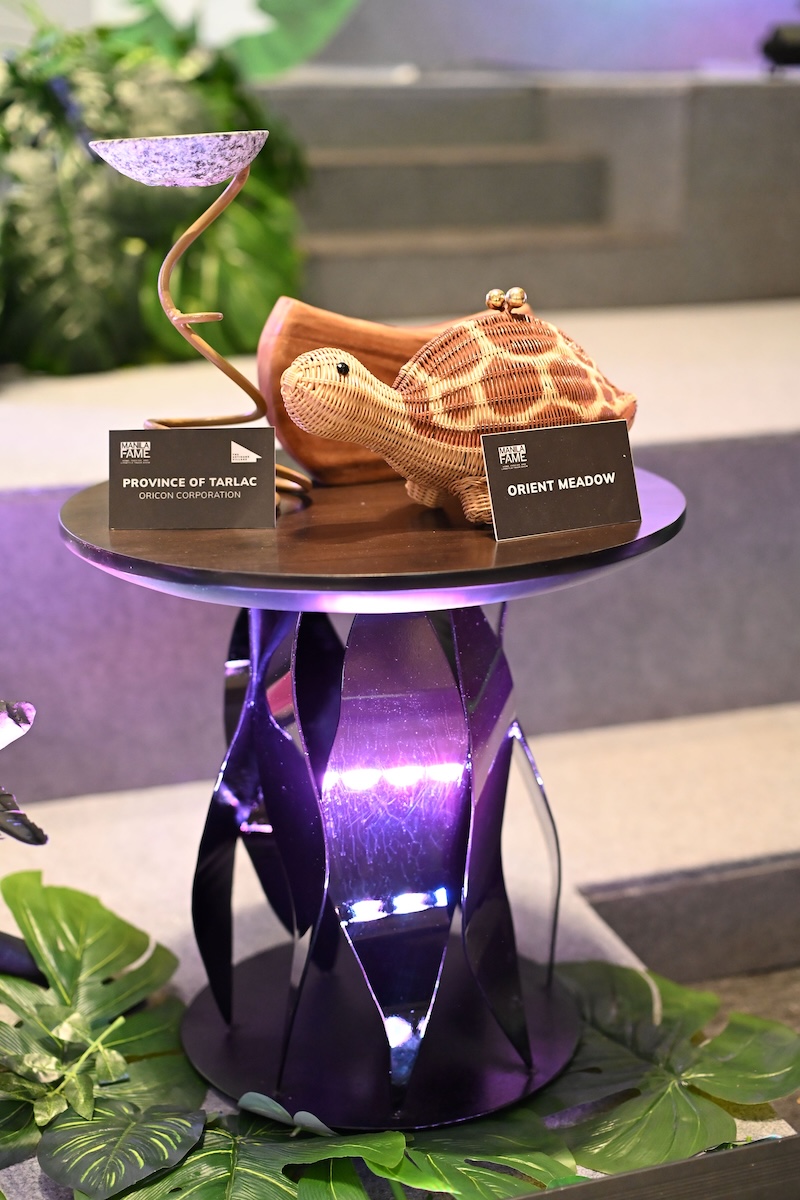
Metal table with leaf patterns designed by Milo Naval for Oricon
The theme centers on nature—though not in the conventional way. The resulting collection is a study in contrasts: sofas made from metal manipulated to look like crumpled paper and coated in glossy automotive finishes; solid wood tables balanced on spindly metal leaves; pendant lamps shaped like drooping lilies. Together, they evoke what Naval describes as “a modern adaptation of nature.”
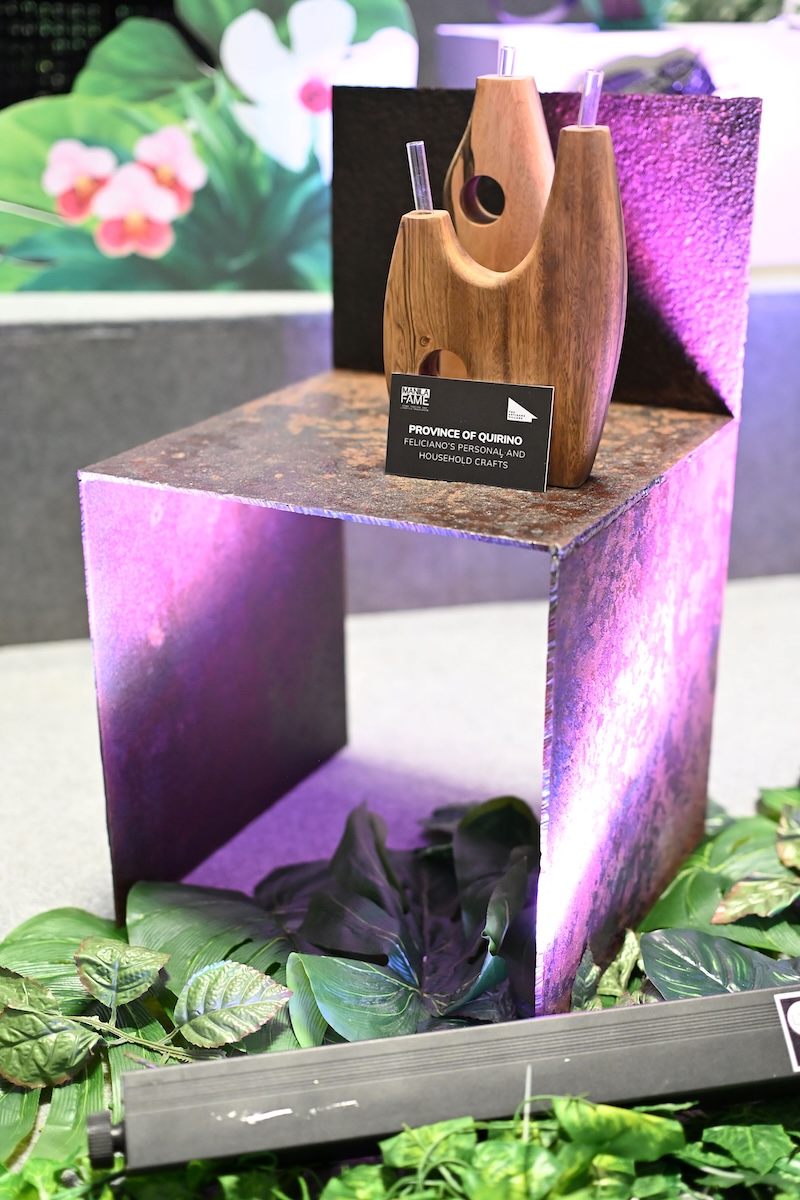
Distressed metal chair designed by Gonzales for Feliciano’s Crafts
For Oro, he created paper lamps and parasols; for Hacienda Crafts, geometric carpets. South Sea Veneer, based in Pampanga, produced oversized veneer tables. Jed Yabut, an emerging designer-manufacturer from Valenzuela, crafted a metal chair inspired by wave patterns, upholstered in leatherette with a woven leather frame, and a matching side table supported by metal leaves.
Artifex, another collaborator, developed tabletop accessories inspired by twigs and birds, along with a modern birdcage.
Naval envisions an all-white space filled with furniture rendered entirely in black, a stark contrast he calls “dramatic and glamorous.” A presentation stripped of color creates an immediate visual impact the moment visitors step in.
Likewise, known for his preference for neutrals, Naval has chosen to go all black in his OMO furniture—an inversion of his signature restraint. “In whatever I do, I always do the opposite,” he says. “If everybody’s showing colors these days, I’ll go against that. That’s the only way to shine, the only way to be noticed: by being different.”
Although his company, OMO, is not participating in the special settings, Naval contributed a few signature pieces to lend the collection his personal imprint—among them, a floor lamp made of wooden slats shaped like a bottle with a canvas cover, a screen of capiz and mahogany, and a chair with a woven back.
Across these partnerships, Naval’s stamp remains unmistakable—refined scale, technical precision, pared-down lines and an instinct for the unexpected. “What I’m showing is my interpretation of home for FAME,” he says. “ Or, how modern can be expressed through color—or in this case, the absence of it.”
‘It’s fine to start wild. But eventually, you have to tone it down’— Kenneth Cobonpue
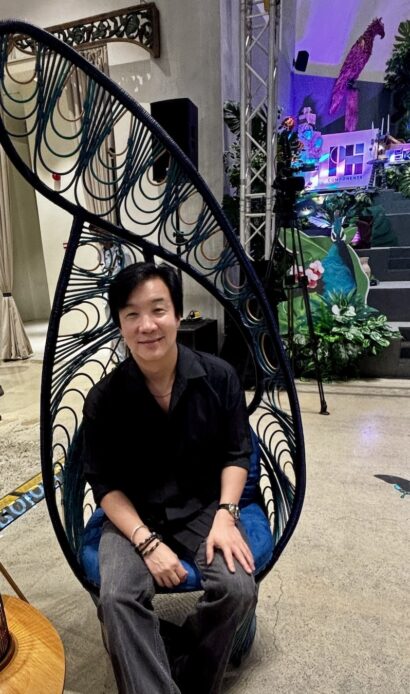
In the presscon setting, world-famous designer Kenneth Cobonpue sat on his Easy Peacock chair, a reinterpretation of the rattan classic that has become one of his most recognizable works. Where the traditional peacock chair is heavy with ornament and royal flair, his version strips it to its essence—a single, graceful arc of the feather that feels at once familiar and new. Handwoven from resin over a steel frame, the chair keeps the warmth of Filipino craft but replaces weight with lightness, transforming nostalgia into modern design.
Cobonpue says he avoids revisiting old creations, preferring each piece to stand on its own. Once a design is complete, he moves on, wary of diluting its original spirit with endless variations.
This year marks a comeback for Cobonpue, once the perennial centerpiece of Manila FAME. Before the pandemic, his installations often anchored the trade show’s design narrative. In recent years, he has focused on his flagship showroom and restaurant-bar in BGC, rarely exhibiting in the country.
But his return feels timely: the fair’s theme, rooted in nature and sustainability, echoes the organic forms and materials that have long defined his namesake brand.
Cobonpue unveils new pieces, some of which he uses to gauge market response before debuting them in the world’s most influential fairs Salone del Mobile in Milan or International Contemporary Furniture Fair in New York.
Among the highlights are a lighting fixture that rises like a miniature cathedral and a furniture collection combining velvet and wire, its outlines reminiscent of a child’s doodle of a flower.
Manila FAME, he says, remains a kind of laboratory, an early testing ground before the global design season begins.
He admits, however, to feeling a creative lull in the global design scene. Even after attending the Milan Furniture Fair,considered the “Olympics of Design” over the past three years, he finds that fresh ideas emerging are few, in Europe or in the Philippines. Fashion, he notes, continues to evolve; product design less so. “Maybe the world of design is just saturated,” he says, in half jest.
Across Europe, that fatigue is reinforced by economic strain, he observes. Weaker demand and rising production costs are prompting many smaller manufacturers to retreat to safer, lower-risk designs, while larger firms focus on sustainable materials, digital design tools, and circular production methods.
The push for sustainability has also changed how Europe buys from Asia: importers now prefer smaller, faster orders from suppliers who can guarantee transparency, environmental responsibility, and consistent quality.
Asian suppliers that can demonstrate strong environmental standards, transparent sourcing, and efficient logistics still have an edge, especially if they can offer design innovation or materials that are difficult to find in Europe. The Philippines, long known for its handmade furniture, now competes with China and Vietnam, where lower costs and faster production dominate, he said. In that landscape, Filipino makers must rely on what they do best—turning craft into culture, and culture into design.
For Cobonpue, the return of Gonzales and Naval to Manila FAME restores a balance he finds essential. In recent years, he said, the fair leaned too far into playful experimentation. Gonzales and Naval, in contrast, bring discipline and market awareness that keep design ambitious yet grounded.
“It’s fine to start wild,” he says, “but eventually, you have to tone it down.”
That same philosophy guides how Cobonpue runs his atelier and factory in Cebu. He tells his designers to push ideas as far as they can, but to know when to pull back. “You have to tone it down sometimes. Otherwise, it looks like student work.”
For him, design must always reach the market. It has to connect beauty with function.
At his Bonifacio Global City showroom, Cobonpue continues to strike that balance between sculptural statement pieces and more commercial designs. His lighting—often whimsical, such as the Limbo Chandlier shaped as a wire-framed aerialist holding on to a fixture—pushes boundaries that furniture cannot.
“People treat lighting like sculpture,” he notes. “They’re more forgiving when it’s daring. But furniture must always be comfortable and fit within a space.”
The broader market, however, feels less forgiving. He describes global furniture sales as sluggish, weighed down by weak retail spending and political uncertainty.
Tariffs imposed by the US on metal imports have also cut into his company’s profits. Since most steel in the Philippines is sourced from China, American duties—up to 25 percent on furniture with metal components—make exports significantly more expensive. Wood products remain unaffected, but metal-based designs now face a tougher path to US buyers.
Europe, too, has been slow, with demand dampened by war and inflation, he said.
For now, Cobonpue sees the Philippines as a modest bright spot—one that depends on stability at home and renewed confidence abroad.
Catch Manila FAME on October 16-18, 2025 at the World Trade Center Metro Manila, Pasay City.


