
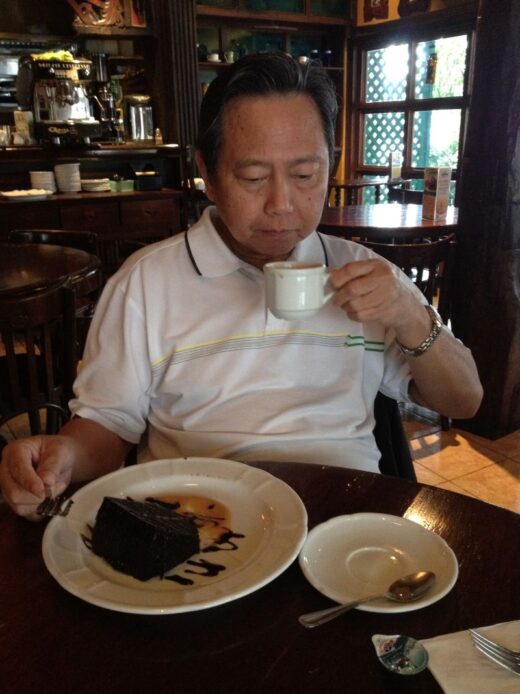
It is a curious thing how chance meetings can redraw the map of life.
In 2009, my younger brother, Feliciano Rodriguez III, called me on my cellphone and insisted I drop everything to join him at M Café. He said it with urgency. “You have to meet him,” he told me. “He is the most interesting person I have ever met.” I was then working in our family’s office in Legaspi Village, Makati City, a world of sales and supply monitoring, and logistics. It was a slow afternoon at the office, so I decided to humor my baby brother and walk toward Ayala Museum.
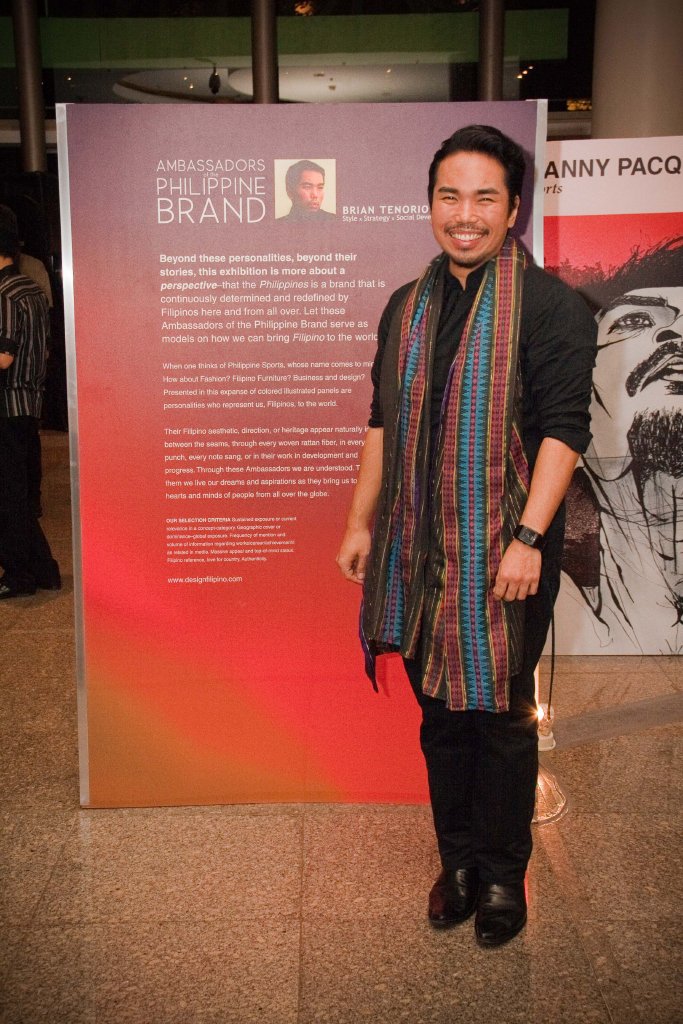
April 5, 2011 photo from Brian Tenorio’s Facebook memorial page
I found them already several rounds deep into lychee martinis. The group was loud, animated, in that early 20s phase where everything feels possible and everyone talks over each other. And then there was Brian, sticking out like a sore thumb in that group of wide-eyed Makati yuppies. Brian Tenorio—an award-winning designer, a pioneer of high-end Filipino men’s footwear, and later a strategic design consultant for the Asian Development Bank.
He was dressed entirely in black, even in the afternoon heat—a shirt that looked like a tángzhuāng, black trousers, fantastic leather shoes, and a Filipiniana scarf worked into the ensemble. He looked like he had come from somewhere else, or perhaps was on his way to somewhere better.
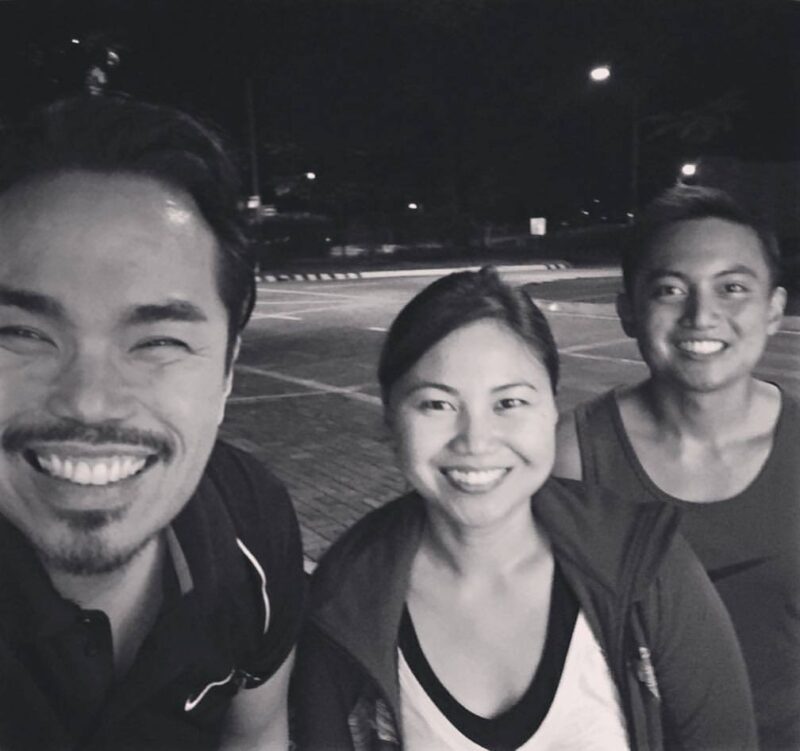
Brian, the author, and her brother Liam jogging in Ateneo in 2016
He was an upperclassman of my brother’s in Ateneo. My brother and his friends were in their early 20s, still discovering themselves; Brian and I were just exiting that phase, entering our 30s—old enough to have lived a little, young enough to still be figuring things out.
I joined this merry company, sitting down and ordering what my brother insisted was the best drink in the house. I am usually quiet in new company, content to listen and observe. Brian, on the other hand, held the room effortlessly. The younger ones leaned in, drawn to him as he spoke. He liked to teasingly provoke everyone, but no one got hurt; he had a way of making himself even more endearing. I was observing all of this hullabaloo, this table filled with empty martini glasses, when his gaze finally turned to me. He had that way of singling you out as if you were the most important person in the world.
“You know, I can read palms,” he said, taking my right hand. And just like that, he had me.
———-
One night in 1995, I was waiting at Gate 1 of St. Scholastica’s College, long past dinner, long past the hour a young high school girl should be outside alone. The Leon Guinto streetlights cast long, lonely shadows, and the humidity of a Manila evening clung to my uniform, as I had played in the field and stayed under the sun all afternoon. I had spent my last coins on a payphone call to my mother. I hadn’t had dinner, and the hunger was a dull ache until the lady guard, seeing me still there, shared her baon with me.
When my father finally arrived at almost 1 am, he was not apologetic. He had been closing a very important deal. We listened to rock and roll music on the way home, him singing along.
When we finally got home, my mother, Rosalie Rodriguez—who had left her bank job at my father’s urging to become a stay-at-home wife and focus on raising my younger brother and me—was waiting, her concern having curdled into sharp, justified fury. She began to argue with him immediately—about the hour, about the danger of a teenage girl left alone at the school gates, about his misplaced priorities. I was too heavy with sleep to listen, so I retreated to my upstairs bedroom, the sound of their raised voices muffled by the floorboards.
My father, Feliciano Rodriguez, Jr., in his characteristic boyish, mischievous way, found a solution: He simply started bringing me to the meetings.
From then on, I became a fixture in the lobbies of the Peninsula or the Manila Hotel. I watched him meet with energy and airport officials, doing mental math on kilowatt hour projections while the rest of the city slept. I was often so sleepy that I would retreat to the powder room, lower the toilet lid, and nap against the cold tile wall, the distant hum of the lobby piano serving as a lullaby. I was only awakened when a concerned lavatory concierge knocked to ask if I was all right. When I returned to the table, I would find my father still talking.
I watched my father meet with energy and airport officials, doing mental math on kilowatt hour projections while the rest of the city slept
“No contract ever gets signed during the day,” he used to tell me during our late-night car rides home. “No deals are brokered and sealed in an office. It’s always at night, when people are relaxed, fed, and a little loose. You prove you can pull an all-nighter and match their energy until they eventually yield to your vision.”
Being brought into these settings, I learned early how to listen to adults, how to hold my own in conversations with them. It made me articulate, confident even—but only in certain contexts. With people my own age, I was awkward. I flinched at touch, stiffened at casual affection, and held myself at a distance I did not know how to explain.
My father noticed this, of course. He would laugh, half-amused and half-exasperated. “You’re such a square, Ms. Stiffo-O,” he would say. “Loosen up. Why don’t you touch their shoulder? Talk to people. Look at me—I’m just natural.” He moved through the world with disarming ease, able to connect and persuade. Where I observed, he engaged; where I remained guarded, he opened up.
But he was not just charming. He taught me that difficult conversations were part of any meaningful work, but that they should never end in humiliation. “Tapusin mo nang makakalunok ang tao,” he would say—end things in a way that allows the other person to recover, to breathe, to try again. Nothing was ever meant to be a dead end.
He put everything into his “Great Project”—a massive power generation venture meant to supply the airport. This wasn’t just a local middleman play; it was a feat of overseas procurement and transport. He had spent years organizing a phalanx of technical experts, foreign suppliers, and local engineers.
Behind him was his father—my grandfather, Dean Feliciano Rodriguez Sr., the longest serving dean of mechanical engineering at the Mapua Institute of Technology (yes, there’s a shortage of name diversity in my family, settling for three generations of Felicianos), already in his 80s but still game to support his son’s ambition, a stalwart of Philippine engineering education and the profession, a power generation expert whose standards were exceptionally high.
There were frantic months of mobilization and pre-operational labor, of jetting back and forth across the globe. They both traveled to New Jersey and Mexico City to personally inspect massive diesel generators and compare the best systems suited for the Philippines.
He imagined a legacy in steel and electricity—one that his father might finally recognize.
He mortgaged our home to bankroll the initial mobilization. He was all in. Then, the 1997 Asian financial crisis hit like a tidal wave. The currency plummeted, the bank changed its terms overnight, and three years of grueling, jet-set labor collapsed in a matter of weeks.
We lost everything. We lost the house.
Dad sat us down and broke the news that he was, well, broke. “What does that mean?” my younger brother asked, I remember—his eyes not yet able to grasp the weight of it, the only one of us not crying.
His partners offered him “outs” to recover a fraction of the advanced capital he had poured into the project. The first was a quarrying operation. “It’s easy money,” they told him. I remember. I was there during the meeting. All he had to do was manage the extraction. The second was a talent agency—a thinly veiled front for the importation of European models. That one, I was not present. It probably was a human trafficking pipeline disguised as high-end entertainment.
He refused both.
At the time, I felt a searing anger and disappointment toward him. We were losing the roof over our heads, and here he was being “difficult.” I didn’t understand why he wouldn’t just take the lifeline. Anything was better than nothing!
“There are things we walk away from,” he told me.
Later, I understood. He would not level a mountain and displace vulnerable people for profit. And he certainly would not be part of the exploitation of people, no matter how “glamorous” the talent agency label made it sound. He had put in the labor and exhausted his resources, but he would not compromise his moral stance just to recover. He failed financially, yes—but he wanted to keep his conscience and soul intact. To top it all off, my lolo died soon after.
My father would not level a mountain and displace vulnerable people for profit. And he certainly would not be part of the exploitation of people
After the failure, he started again. This time without his father. It was smaller now, and with my mother’s full involvement and support—downstream LPG distribution. It was unglamorous work—trips to the narrow, crowded streets of Binondo, accounting for every screw and brass valve. But I saw what it did to them. They built together. Procurement trips became food trips; business became a shared adventure.
So after graduating from the University of the Philippines (UP) Diliman, I joined him. I learned logistics, inventory, and dealer networks. But what I loved most was the corporate social responsibility (CSR) work later on. I stood in basketball courts and seaside town halls, translating technical modules into something people could understand. Dad would remind me that business, like life, was not just about profit or the “deal.”
“Did you have fun?” he’d ask. “Did you meet new people and make friends? What did you discover about yourself?”
——–
For years, Brian had been trying to pull me out of the LPG business and into his orbit. He was a whirlwind of disparate ideas, always launching something that felt worlds away from the unglamorous, male-dominated industry I was in.
He invited me into ventures I never quite felt ready for. There was LuxMortem—his foray into high-end luxury urn manufacturing. He asked me to help produce a lifestyle television show. He dreamed of a coffee shop along Katipunan Avenue near Ateneo, and a centralized roastery in Cubao.
Through every invitation, his message was the same: He didn’t just want a partner; he wanted me because he believed I was the only one who could handle the operations. Or so he told me. He saw a bridge between my world of operations and his world of vision that I hadn’t yet recognized. I stayed where I was, choosing the steady path, but Brian remained persistent.
By 2018, his ideas had evolved into something that responded more deeply to a disturbing trend of self-harm among Filipino youth.
“It’s simple,” he told me. “We design a space young people want to go to—like a lounge, or your glamorous tita’s receiving room. Then we bring in psychologists and psychiatrists. We Belo-fy mental health, so people think it’s cool. Bawal panget sa Mindcare Club.” He arched an eyebrow, lips pushing forward in a teasing pout, taking the edge off an otherwise serious pitch.
This time, the vision stuck with me. He believed we could make it into a multi-branch venture. He brought in Mark Paul G. Platon, his high school best friend, who added the necessary structure of medicine and business. Brian brought the vision. I, as he always intended, handled the operations of the physical clinics—the logistics of care.
Then, the world stopped.
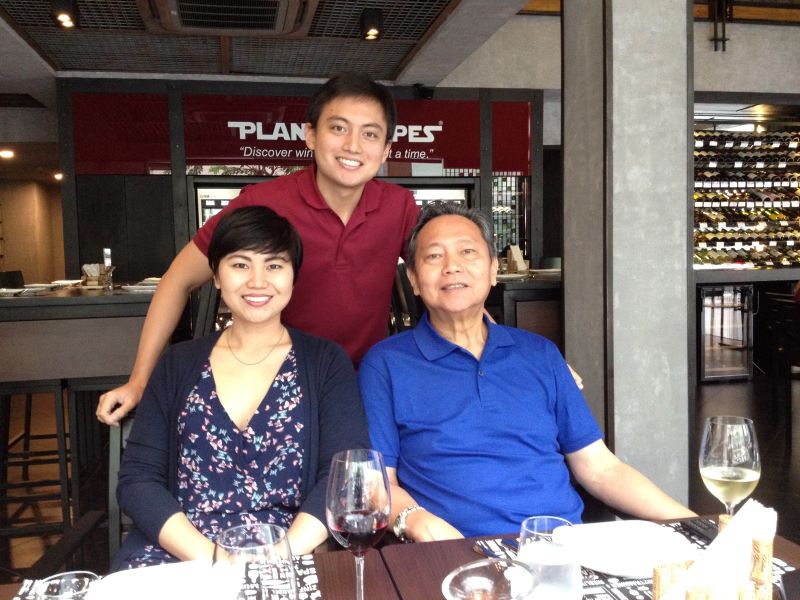
The author (seated, left) celebrating Father’s Day in June 2015 with her father and brother Lian
In June 2020, my father died. It was the Friday before Father’s Day. By early afternoon, he was gone. Because of pandemic restrictions, there was no wake, no community grieving, no chance to see him one last time.
In July 2020, Brian lost his battle with cancer. He was only 42.
Two constants. Two pillars of my world. Gone within a month of each other.
There is no clean way to describe what comes after. Without the ritual of a physical wake, the tradition of catharsis was denied to us. I busied myself with more work and buried the profound sadness and longing. I was in shock. Everything dulled. Food had no taste. Sleep did not come. I was not sad in the way people expect; I was numb.
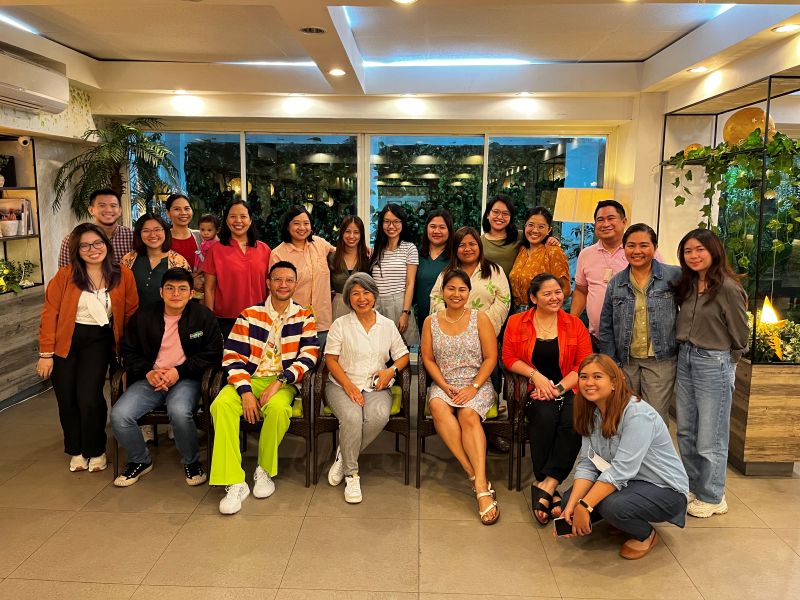
January 14, 2023: The first onsite event of Mindcare Club, after having worked with each other virtually for three years
When my father died, I lost my boss, my mentor, and the person I spent my adult life trying to prove myself to. And then Brian was gone—the man who lived as if time was short, always wanting to be the pioneer. Looking back, it was poetic: He had set Mindcare Club in motion just in time for the world to need it most.
——-
At first, I stayed and kept Mindcare Club alive for Brian. It felt like if it disappeared, he would disappear again. But somewhere in those early months, it began to feel less like a memorial and more like a bequest.
The brick-and-mortar clinics never happened. We became fully digital. And then, we saw the gap.
In a nation of over 113 million people, there are only 700 psychiatrists. That is a staggering 0.6 specialists for every 100,000 Filipinos. To put that into perspective, there are roughly 80,000 registered lawyers in the country—about 1 for every 1,200 people. This is where the work needed to be done.
Through Dr. Ma. Luz Casimiro Querubin, we built the clinical backbone. She believed the first encounter sets the tone—that how you listen determines what follows. We adopted a stepped care model, a tiered process where everyone sees a primary care physician first before going to a specialist. We trained medical doctor generalists, our “First Step MDs,” to serve as the first point of contact. If the client or patient needs further and more specialized care, they are referred to second-step psychologists or counselors and third-step psychiatrists.
Most people in the Philippines do not know where to start with their mental health. They navigate blindly or wait months for a specialist. With a First Step MD, they are heard, properly assessed, and guided. We began to see patterns: anxiety that was actually hyperthyroidism; depression rooted in sleep deprivation; decisions clouded by stress; and online gambling addiction linked to male depression. Sometimes, it wasn’t pathology at all, but life—loss, retirement, or the sheer weight of surviving.
Most people in the Philippines do not know where to start with their mental health. They navigate blindly or wait months for a specialist
Mental health was not just about illness; it was about being empowered to take agency over one’s journey toward becoming one’s optimal self. In the process, we also shaped the doctors. They learned to slow down, to see the person, not just the symptom.
——
I often think back to my father’s final questions: Did you have fun? Did you make friends? What did you discover about yourself?
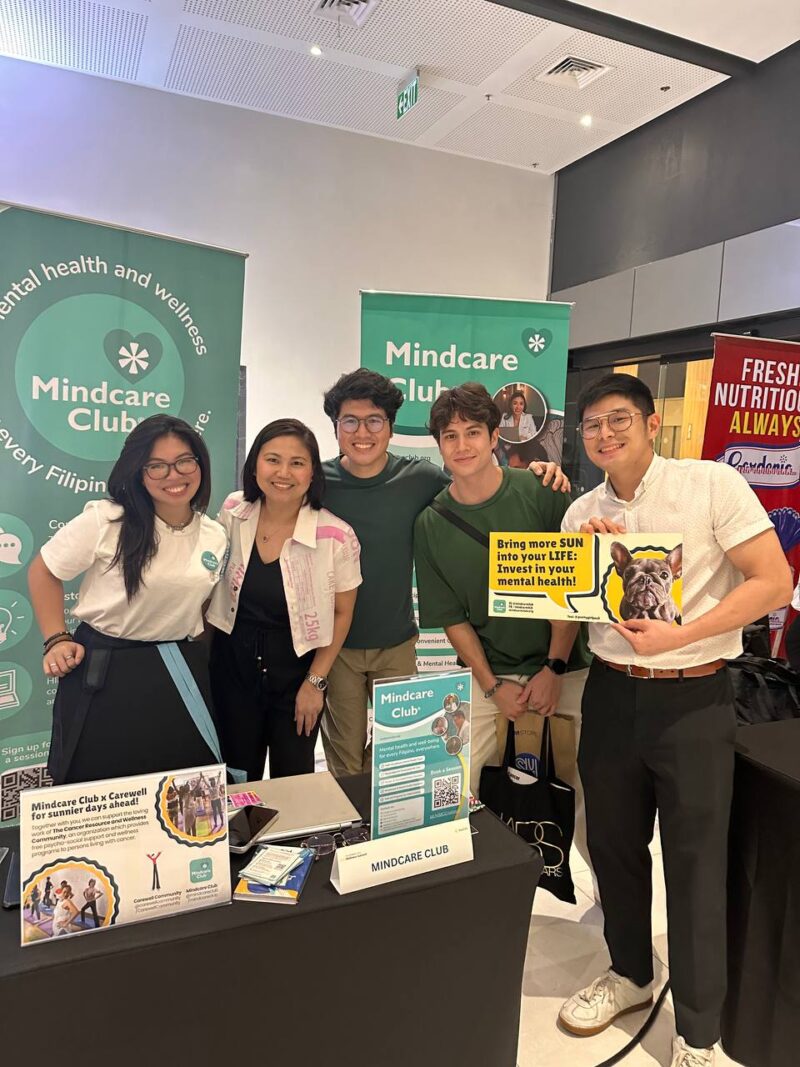
Mindcare Club promotional booth in October 2025 at One Ayala Spaces: Adrianne Amante, the author, Jan Castañeda, Zach Castañeda, and Jeremiah Tomas
For a long time, I thought the answer was found in the petroleum business. But the instinct I had in those seaside barangays—the instinct to teach, to simplify, to help people navigate technical fears—was the true preparation for Mindcare Club.
We are no longer just an idea Brian had about a designed space. We have become a working organization, one that has learned to meet people where they are. Much of that work now happens in the corporate space. We work with companies like Ford Philippines, where we conduct interactive talks and workshops with employees—not just therapeutic sessions—creating spaces where conversations about stress, burnout, and well-being can happen openly, and where these conversations begin to shape more thoughtful, long-term approaches to care within organizations.
We support the pilots and crew of a budget airline, certifying that they are fit to fly—mentally alert, present, and able to carry the weight of responsibility that comes with their role. We also have a long-time partner, a data- and research-based offshore outsourcing company in the Philippines, that has chosen to invest in its people by budgeting mental health sessions for employees beyond HMO coverage, and in turn benefits from remarkably low attrition. These are just some of the organizations we support—forward-thinking companies that understand that investing in people is not a cost, but a long-term advantage.
Alongside this, we continue to partner with organizations like Carewell Community for cancer survivors and support the JM Canlas Cup for suicide awareness. At the same time, we are training a new generation of First Step MDs to be the empathetic front line of Filipino healthcare—shaping not just how care is delivered, but how it is understood.
Looking back, the life I thought I was going to live disappeared in that sweltering summer of 2020. I lost my constants. But in the vacuum they left behind, I found that I had inherited their tools. I have my father’s line in the sand—the refusal to profit from exploitation or to “level the mountains” of other people’s lives—and I have Brian’s belief that even the most broken systems can be redesigned with a bit of grace.
I am no longer the girl waiting at Gate 1 for a midnight ride home. I am the one driving. The road is often unlit, and the challenges of building a business in a developing country are staggering, but I have found a strange comfort in the uncertainty.
It is not easy to start all over. It is not easy to leave the comforts of the familiar. With Dad gone, I have no one to blame, and with Brian gone, I do not have a captain to direct me toward the next adventure. I am now my own navigator and captain.
Back in 2019, as I was about to enter my fourth decade, I was mustering the courage to shift. My father’s death pushed me to face the question: Am I living for his dream, in fulfillment of his ambition, just to please him? Or am I ready to live my own life, assume responsibility for myself and my actions, and finally pursue what I truly want—without a crutch and without a chip on my shoulder? Yes, Brian provided me with that avenue. But it was still me who took that chance, who left everything familiar, and pursued something uncertain—whether I would succeed and thrive, or crash and burn.
Brian provided me with that avenue. But it was still me who took that chance, who left everything familiar, and pursued something uncertain
I never imagined that I would be managing a fleet of physicians, nurses, and psychologists—instead of a fleet of trucks and trailers—all doing their best to help others while continuing to hone their own skills. Admittedly, supporting both them and our clients takes its toll. There are constant, often disproportionate reactions to misread or misunderstood communications, misaligned expectations during sessions, and, at times, sexist remarks and personal attacks directed at therapists.
I empathize and, at times, absorb the weight they carry. In client service debriefings, I am often reminded not to take things personally. I also have to remind myself that these mental health professionals are not my children, but professionals—service providers and experts—who are also human and therefore prone to fatigue and frailty. I do not have to be defensive on their behalf; instead, I can accept feedback as an opportunity to improve and move forward.
I am learning that patience, boundaries, and compassion are not just virtues, but survival skills in this industry.
I envision Mindcare Club as a platform where mental health professionals can grow their careers, where they do not feel the need to migrate to countries that pay better simply to have their expertise recognized and valued. It may sound like a lofty ambition, especially in a country where services are often expected to be free, and where psychological and psychiatric care are sometimes dismissed as “just talking.” But I see a future here—one that grows, and one that makes a real impact on society.
Is the stress and emotional weight worth it? Did I make friends? Am I having fun? Am I growing?
Challenges are surmountable. Since 2020, each year has brought its own crises, its own pace of change. Everything moves quickly now, almost too quickly. I have learned to resist the urge to react to every shift—to step back when I can, to assess, and still move forward.
I continue to learn and refine my approach. At the same time, I am forming connections I never thought I would—with people younger than me, and across a wide spectrum of lived experiences: from LGBTQ+ communities to more traditional spaces, from those navigating financial hardship to those in positions of privilege.
I am having fun again. I am learning to live beyond work—to find joy in things I once set aside: music, writing, and making things with my hands. I have recently tried woodcut printmaking. I have become a more engaged BTS ARMY member, unabashedly embracing being a fangirl. I adopted a cat. And beyond entrepreneurship, I am also beginning to pursue my first love—writing, telling stories—because I remember the awkward girl who was so expressive with the pen but quiet and unsure in person.
And somewhere in all of this, I have begun to trust myself.


