

Abel PH
Likhang Habi Market Fair runs from Oct. 10 to 15, 2025 at The Space, One Ayala, Ayala Ave., Makati.
Maribel Ongpin on abaca
Maria Isabel Ongpin, chairman emeritus and CEO of Habi: Philippine Textile Council, has emerged as one of the strongest voices opposing the Bangko Sentral ng Pilipinas’ (BSP) move from abaca-based banknotes to polymer bills.
Abaca, or Manila hemp, she insists, is “forever identified with the Philippines,” a material that embodies heritage, livelihood, and national identity. To abandon it, she argues, is a cultural and economic mistake, especially in a country where daily transactions still rely on cash. “First World countries are almost cashless. We are not. We are a wet market economy. You go to the market; you cannot use your credit card,” Ongpin says.
The shift to polymer, she adds, not only removes national heroes in favor of “animals we haven’t seen since the 18th century,” but also sidelines a fiber that has long supported rural communities. Even if volumes are small, losing BSP as a client weakens abaca’s standing as a national fiber, denting its prestige, perception, and potential to anchor high-value industries.
Her pushback comes just as abaca is poised for renewed visibility. The fiber will be featured prominently in the forthcoming Likhang Habi Market Fair, while a new book by scholar Norma Respicio will underscore its cultural and economic importance—evidence Ongpin hopes to present to the BSP once it is published.
The shift to polymer not only removes national heroes in favor of ‘animals we haven’t seen since the 18th century,’ but also sidelines a fiber that has long supported communities
Now on its 15th year, Likhang Habi Market Fair, the mother of artisan fairs, will run from Oct. 10 to 15, 2025, in a new venue, The Space, One Ayala. The fair will feature over a hundred vendors, mostly from rural communities, with lectures and workshops by young heritage advocates, established designers, and entrepreneurs.
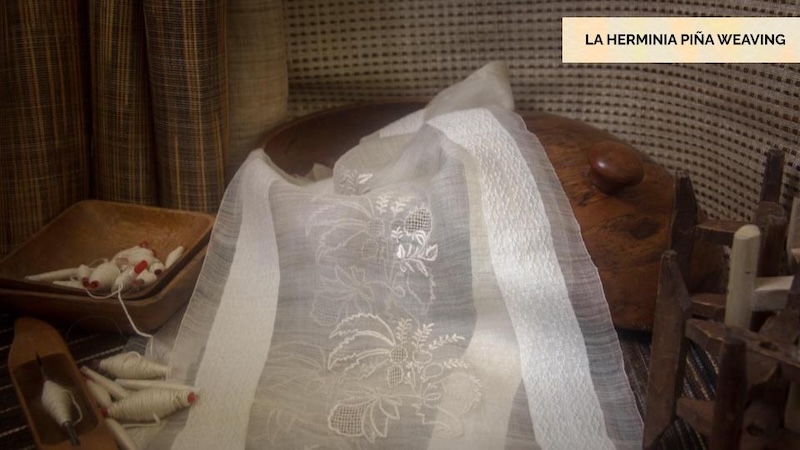
La Herminia Piña Weaving
Dom Martin Gomez on Eloisa Hizon-Gomez abaca weaving competition
Highlights include the proclamation of winners of the 8th Lourdes Montinola Piña Weaving Competition on October 11 and the 4th Eloisa Hizon Gomez Abaca Weaving Competition on October 12. The abaca weaving competition is named after the mother of Dom Martin Gomez, the fashion designer (Gang Gomez), who joined the Benedictine monastery and who now decided to sponsor the contest. Three winners will each receive a cash prize of ₱50,000.
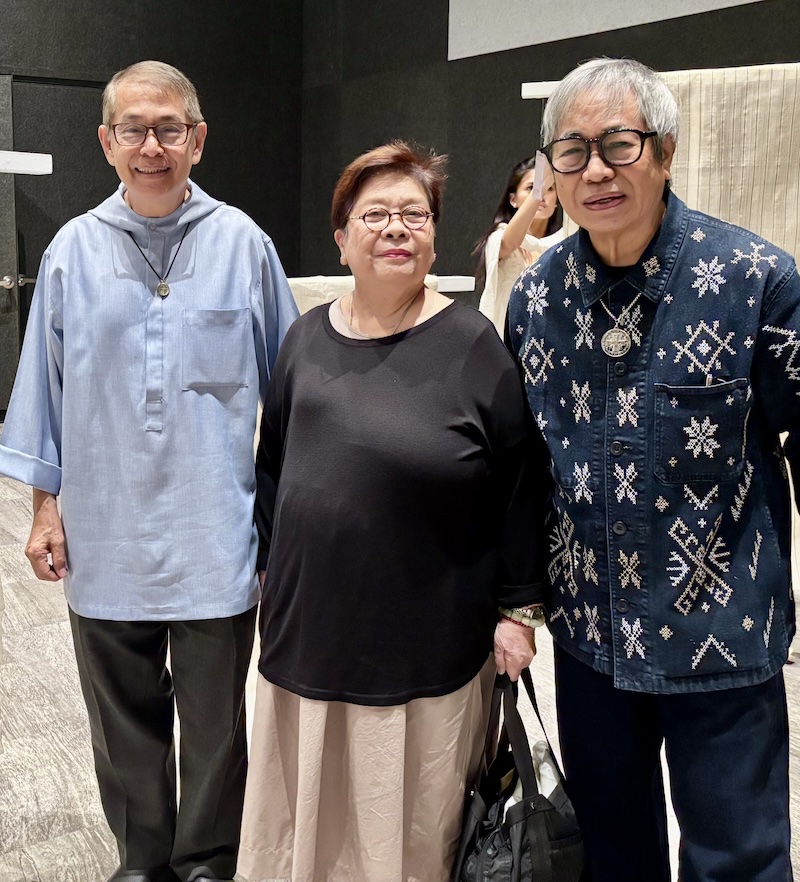
Dom Martin Gomez, OSB, museum curator Cora Alvina and designer Barge Ramos
“The impact is huge. From just a few entries in the beginning, my dining room table was groaning with submissions—abaca is heavy, after all. Most entries come from Mindanao—the B’laan, Manobo, and other indigenous communities in Lake Sebu. What’s good is that they now know about Habi,” says Ongpin.
“Winners not only take home their prize money, they also keep their entries so they can sell them. That applies to both piña and abaca competitions. It encourages weavers to keep going and helps them realize the value of what they do. Usually, even the judges end up buying the entries.”
Ongpin is equally proud of the council’s publishing work: several documentaries and four books so far, covering indigenous Philippine textiles, their fibers, and weaving processes; banig mats and their artistic and traditional dimensions; a weaving manual by Gay Eiko Yoshikawa-Zialcita; and the future of piña weaving.
A fifth book, on abaca, is now in production.
“The point of this abaca book is to make Filipinos—especially government officials — understand what abaca means to the Philippines. Yes, it’s grown in Indonesia and Ecuador now, but it originated here. In the 18th and 19th centuries, it was a major Philippine export. The US Navy found Manila hemp ideal for ropes because abaca doesn’t deteriorate in saltwater. It remains the strongest fiber in the world,” Ongpin stresses.
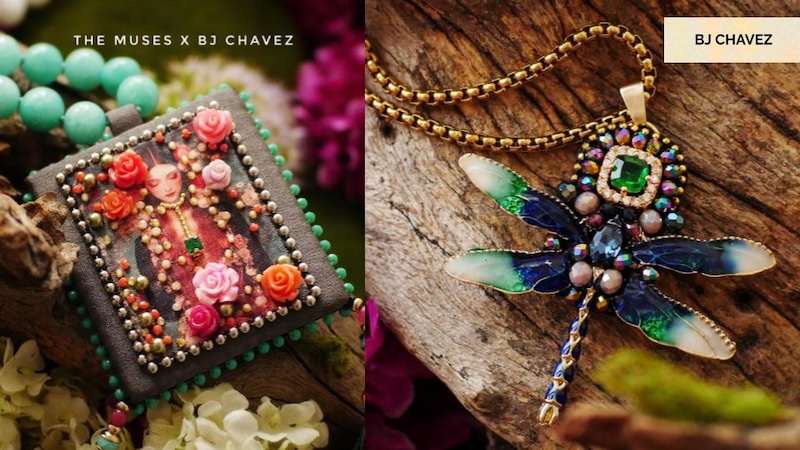
BJ Chavez
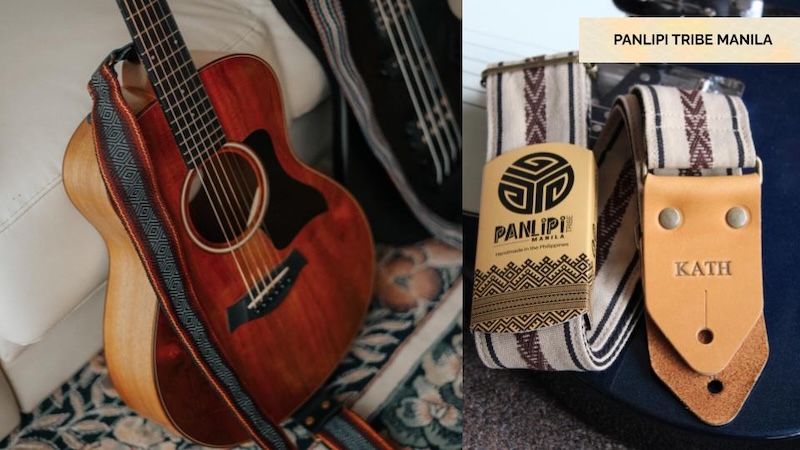
Panlipi Tribe Manila
Through the years, the Likhang Habi Fair has helped countless artisans. Ongpin often recalls how Habi itself was born almost by accident, and grew into a movement that continues to champion Filipino weaving today.
More than a decade ago, the Indonesian Textile Society came to Manila in search of a Philippine counterpart. In desperation, they turned to the Museum Foundation of the Philippines, where Ongpin was then president, and asked her to host the 2nd Asean Traditional Textile Symposium.
Ongpin turned then to Adelaida Lim, a cultural advocate and entrepreneur long immersed in the country’s weaving traditions. Ongpin told her that it was embarrassing for the Philippines not to have a textile society. Lim, who lived in Baguio and had always been fascinated by weaving, readily agreed. From there, Habi: The Philippine Textile Council was born.

MCV Designs
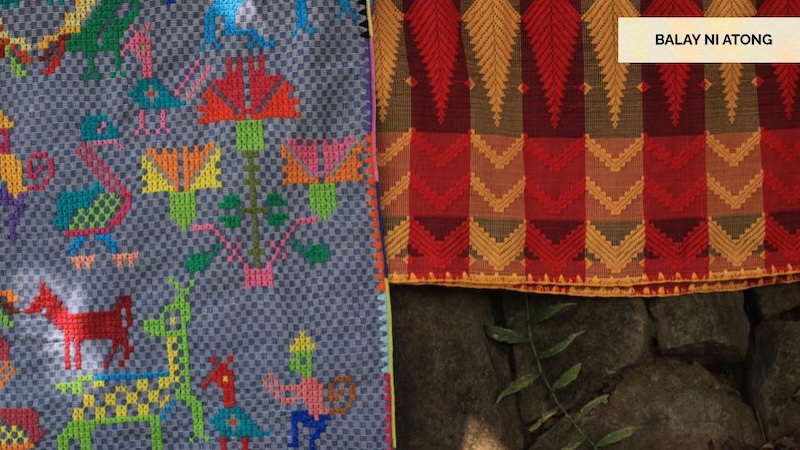
Balay ni Atong
The symposium, held in 2009 during the presidency of Gloria Macapagal-Arroyo, was mounted at the National Museum. But the event also needed a venue to showcase the fabrics, which led to the birth of the first Likhang Habi Fair.
That first fair had only 12 vendors, recalls Ongpin, not start-ups, but established entrepreneurs such as Narda Capuyan, who brought woven products from the North, and Floy Quintos and his Gallery Deus, known for antiques.
From those modest beginnings, new initiatives sprang up. The fair later inspired the MaArte Fair, which became the flagship fundraiser of the Museum Foundation of the Philippines. A breakout group then founded ArteFino, organized to channel support directly to artisan communities.
Several others followed suit, Ongpin notes. Before she became First Lady, Lisa Araneta Marcos was already a regular visitor to Likha. So was Sen. Loren Legarda, who has long championed the National Arts and Crafts Fairs.
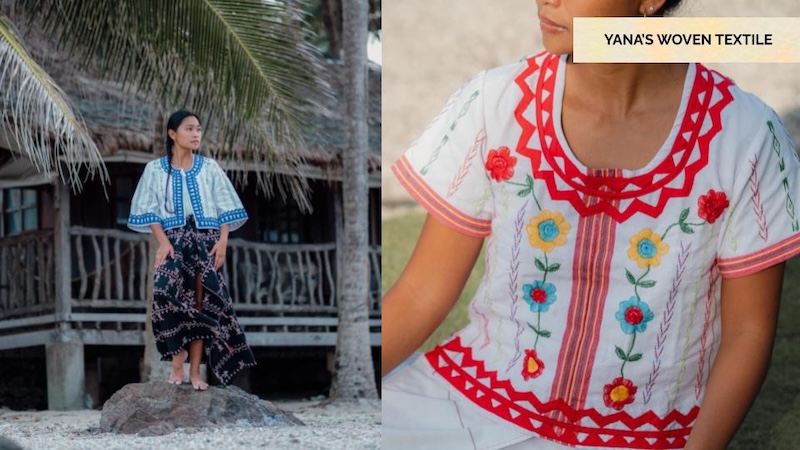
Yana’s Woven Textile
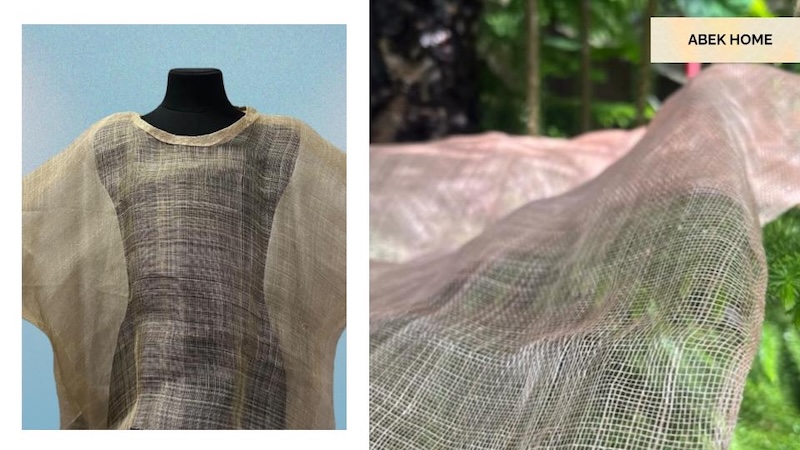
Abek Home
To prepare for the event in those early years, the Habi members went to Aklan to explore the world of pineapple fibers and develop an itinerary for the symposium participants. They met Felicidad Eguia-Nadres, founder of EN Barong Filipino. This visionary matriarch launched a family business that became one of the country’s most prominent producers of the barong Tagalog. Today the company is managed by her son, Emil Nadres.
“Ms. Nadres brought us to all the piña weavers, so that when the symposium came, we knew where to take people,” Ongpin recounts. “She even helped us find a hotel. One of Habi’s biggest supporters, Bea Zóbel, came along on that trip.”
Ongpin recalls, “Before, we had to arm-twist vendors to join. Now they apply on their own and many are newcomers you don’t see in other fairs, such as Nina Corpuz of Nina Inabel.”
Lim points to the success story of Catherine Diquit of Likhang Maragondon. “When she first joined, she did very badly because she didn’t know what the public wanted. Years later, she came back with new products and amazed us with how far she had developed. In the beginning, she sold products using very plain textiles.”
Most vendors, Ongpin notes, come from rural areas. “The first time they join, they don’t even know how to set up an exhibit. Rudy Roa had to help them with their displays. They don’t know how to price, or what the competition is. But they learn fast. Then they come back stronger.”
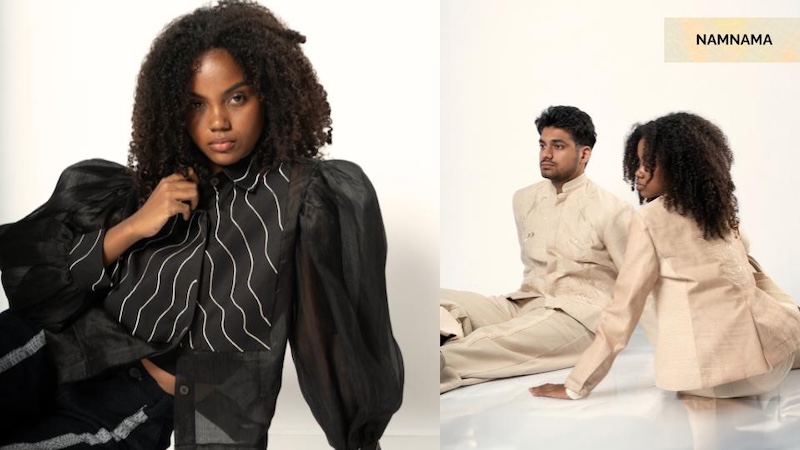
Namnama
Deepening their knowledge, the council traveled around the country. In Sorsogon, they discovered Josefina Epino (a.k.a. Lola Pina) of Gubat, Sorsogon, who introduced the salanigo, an ancient weaving technique similar to the twilled weave or sawali pattern, into handwoven abaca slippers. “We were so excited,” Ongpin recalls. “The slippers were entirely made from hand-stripped abaca, and they didn’t even have a brand.”
Lim cites another success story: Raquel Eliserio of Kalibo, Aklan. On their initial visit, she only had three looms. Her 12-year-old son was the one tying the knots, an essential part of piña weaving. The council brought her to Manila where she quickly gained recognition. Eliserio was a consistent winner of the Lourdes Montinola Piña Weaving Competition. The government even sent her abroad. She came with the Habi team to Indonesia, joined an international crafts competition, and won first prize for her weaving.
Today, her son, Carlo Eliserio, has become a textile expert and entrepreneur, while Raquel’s namesake brand is carried by Rustan’s. “We’re not saying we made her start,” Ongpin clarifies. “But through Likhang Habi, we helped bring her out to the world.”
When these artisans were brought to the fair, a fashion designer immediately showed interest and a connection was made. “That’s what happens,” Ongpin says. “We just introduce, and they take it from there. Designers go straight to our piña weavers asking for yards of fabric. We don’t get commissions. We just connect them.”
Plans are afoot for the council to visit Bicol. Ongpin notes that in Catanduanes, recognized as the abaca capital, the industry had long suffered under local practices where traders linked to political leadership were buying the fiber at very low prices. This distorted the market and left farmers shortchanged.
Since Catanduanes supplies a significant share of the country’s abaca, its local conditions affect the national industry as a whole. With the entry of Gov. Patrick Alain T. Azanza, there is now hope that more supportive policies can revive abaca and ensure fairer value for the communities who depend on it, says Lim.
Asked about the council’s greatest achievement, Ongpin cites Habi’s work in cotton
Asked about the council’s greatest achievement, Ongpin cites Habi’s work in cotton. “We now have farmers planting cotton, and we buy everything they produce. We pay them the world price, so they’re encouraged to keep planting. For me, that’s been our biggest accomplishment.”
She adds that raising public awareness has been equally important. “We’ve raised consciousness about our indigenous fabrics, which means we’ve raised appreciation. And we welcome everyone—ArteFino, MaArte—they all help in their own way. We also try to keep our prices reasonable so the youth market can afford them, because that’s very important to us. Even our books are priced with that in mind.”
Lim offers her measure of success. “When I see how textiles are now used every day, even in what people wear casually, it’s very encouraging. It shows that our work has been effective. There’s now not just interest, but actual use of these fabrics in daily life.”
This year’s Likhang Habi Fair expands its programming with “Kwentong Kultura: The HABI Lectures,” a three-day series of talks and panel discussions featuring voices from across the weaving and design community.
Day 1 features “Young Voices Advocating Heritage in Fashion,” with speakers Stephanie Diputado and Joy Geocado (Namnama Clothing), Steffi Cua (Idyllic Summer), and Catherine Diquit (Likhang Maragondon), with
moderator Jane Kingsu Cheng
Day 2 is “The Journey of the Entrepreneur in the Handwoven Textile Industry,” with speakers: Len Cabili (Filip + Inna), Carlo R. Eliserio (Aklan Piña Artisans Association), and Lulu Tan-Gan, with moderator Niña Corpuz
Finally, Day 3 is “Application of Handwoven Textiles Outside of Fashion, with speakers: Rita Nazareno (ZACARIAS1925), Edric Ong (AHPADA), and Tanya Fricke, with moderator Wilma Huang.
Registration fee is ₱200. Sign-up link is bit.ly/HabiLectures2024
Guests can also enjoy cultural presentations, weaving demonstrations, and workshops, all reinforcing HABI’s mission to preserve and promote Philippine textiles. This year’s program partners include Chef Sau del Rosario and his Café Fleur, who will add a culinary dimension to the celebration of Kapampangan heritage.


