
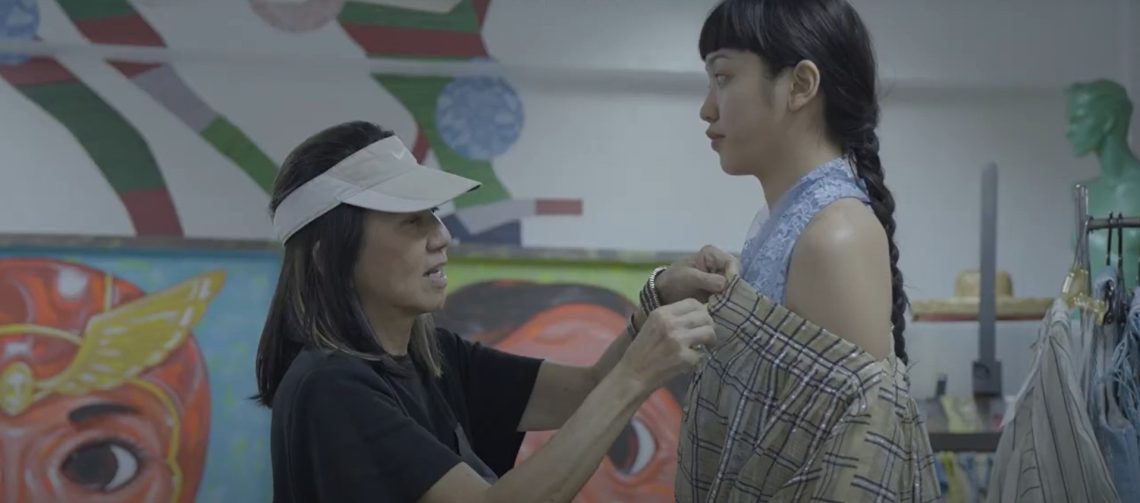
A boxy piña top with ethnic block designs layered over a blue French lace blouse, piña elephant pants with big side pockets, a men’s sporty piña jacket with silk and linen sleeves, a black striped piña shirt-jacket with ethnic-printed sleeves.
Designer Lulu Tan-Gan is reimagining the traditional Filipino fabric, piña, for a new generation. Known for its delicate, translucent quality, piña is often used for formal wear. However, Tan-Gan’s latest collection offers a fresh take on the material, blending ethereal luxury with relaxed comfort. Think piña as baggy or cargo pants or long travel coats.
For her upcoming Red Charity Gala fashion show on Oct. 22 at the Shangri-La at The Fort, Tan-Gan draws inspiration from various indigenous cultures across the Philippines. From the silk-screened symbolic patterns of the Kalinga and Mandaya to the block prints of the Maranao sarimanok and the T-boli gecko and the floral embroideries of Lumban, Laguna, her designs showcase a tapestry of Filipino heritage.
Tan-Gan’s commitment to ethical fashion is demonstrated by her repurposing of leftover materials. Before “Zero Waste” became a popular concept, she was already saving scraps of piña and knit yarns from her previous collections.
These remnants have been creatively incorporated into her designs, resulting in unique pieces. By fluting and sewing together piña scraps, she adds texture and embellishments to the bodices and sleeves of her shirts
Leftover knit yarn is woven by Cordillera weavers and made into embellishments or separates. Tan-Gan’s casual line features colors likewise inspired by Cordillera fabrics, such as blue, green, maroon, and black. Some piña tops contrast with a woven band of Cordillera graphic motifs.
For those who appreciate traditional piña, Tan-Gan’s collection also includes vintage-inspired pieces. Modernized with contemporary silhouettes such as loose pants and collarless shirt jackets, these designs in traditional beige offer a timeless yet trendy look.
The millennial or a Gen Z fashionista will adore the beige collarless jacket, teamed with a pink spaghetti-strapped cropped top and short bubble skirt.
Additionally, Tan-Gan’s designs often feature quirky pairings, such as piña clothing with Melissa jelly platforms, corrugated soles, and four-inch heels. This unexpected combination adds a playful and modern touch to her creations. Tan-Gan creates textural contrast by pairing the matte feel of coconut buttons with the shine of rhinestones against the silkiness of piña.
Tan-Gan’s designs often feature quirky pairings, such as ‘piña’ clothing with Melissa jelly platforms, corrugated soles, and four-inch heels
While Tan-Gan’s designs have traditionally been associated with women of standard sizes, her kaftan collection is far from matronly. The modern stripes and checks give these pieces a youthful feel. A kaftan blouse with glittery beadwork can be paired with a short tapis dyed in turmeric with black stripes for a stylish and unexpected ensemble.
“Through my designs and fabric treatments, the perception of piña has been transformed from a traditionally stiff material to one with fluidity,” says the designer, who has made her clothes move effortlessly on the wearer. “To create that ethereal effect, these pieces are designed to be layered, sometimes with more body-hugging inner wear such as t-shirts or chemises.”
Aside from piña, the fashion collection will also feature silk from La Union and linen, further showcasing Tan-Gan’s dedication to using sustainable and locally sourced materials.
At the turn of the new millennium, Tan-Gan, then known as the “Queen of Knits,” found herself at a crossroads. “I began to question what defined me as a Filipino designer, as many of us were heavily influenced by Western fashion,” she says.
Having always used yarn to create her clothing, Tan-Gan started experimenting with piña yarn infused into her cotton and acrylic knit yarns. However, she soon discovered that piña was too delicate for the knit loom and that wearing the blend was itchy. It became apparent that using piña fabric in its raw and delicate state was the best option for this unique material.
In 2007, Tan-Gan opened her namesake boutique at Greenbelt 5, with the concept of showcasing Filipino brands. This provided her with an opportunity to shift her focus towards pineapple fabrics and embrace a “farm to fashion” approach. “To ensure piña, our heritage material, remains relevant in today’s fashion landscape, we must innovate both its texture and applications, extending its use beyond traditional ceremonial roles,” she says.
‘We must innovate both “pina’s” texture and applications, extending its use beyond traditional ceremonial roles’
Tan-Gan has been working closely with weavers from Kalibo, Aklan. The piña fabrics used in her designs are colored with natural dyes, either at her atelier or at Patricia Araneta’s Mahalina Foundation in Calatagan, Batangas.
“I engage with piña throughout the cutting process,” Tan-Gan explains. “I love the crisp sound as I cut, and my design evolves as I lay out the pattern. I may lengthen, widen, or reshape it. I’m also mindful that no inch of the weave is wasted in the process,” she says. “I simply have a different inspiration that leads to new designs.”
Just as her knitwear was travel-friendly, and easy to wash and pack, the piña clothing in her collection is likewise user-friendly.
She notes that many designers and brands are becoming increasingly involved in national identity and heritage, expressed through materials and craftsmanship.
“By actively supporting and promoting the interests of the textile and creative communities, we ensure that traditional and unique fabrics remain relevant and valued for use,” Tan-Gan says. “This involves raising awareness, encouraging its continued use in modern designs, and helping sustain the artisans and cultural heritage connected to weaving.
“Thanks to textile and fashion pop-ups such as Habi, Katutubo, Artefino, Maarte, and Likha (the First Lady’s program to promote indigenous crafts), the influential Red Charity Gala, and the Ternocon exhibition and competition, Filipino wear has gained greater visibility. It takes belief in our resources, heritage, and a strong commitment to make this ‘Love Local’ era possible,” she concludes.


