
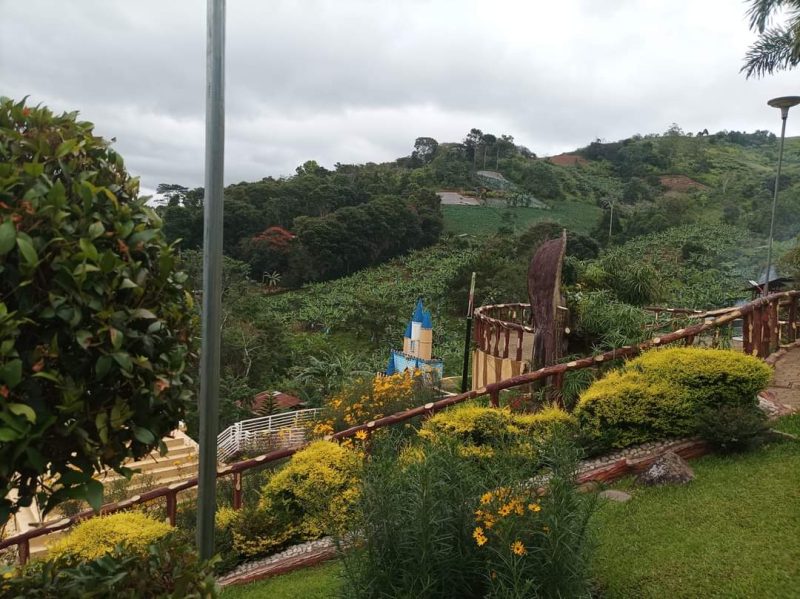
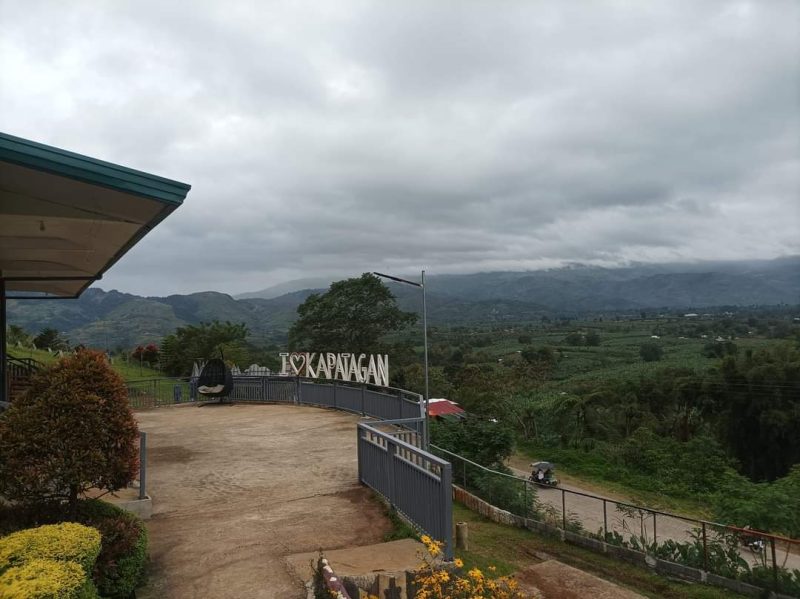
Kapatagan overlooking Mt. Apo
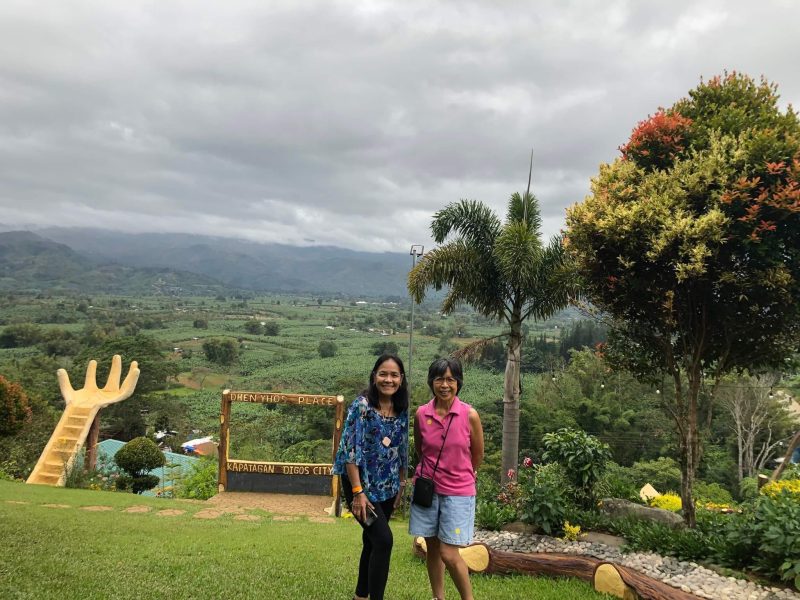
View of Mt. Apo from Dhen Yo’s Place, Kapatagan, Digos
I first went to Davao in 2002, in my 50s. It was a most anticipated trip, not just to see Davao and its top attractions and binge on its exotic fruits like durian, mangosteen, and marang. It was also to visit the newborn daughter of a nephew named after our beloved firstborn, whose passing in 2000 was still very raw and deeply lamented. I just had to see Maria Maningning, and my husband Mario and younger daughter Banaue granted my wish and joined me on my sentimental journey.
Seventeen years passed before I would visit Davao again. It was an invitation for me and Mario by foremost Mindanawon artist Kublai Millan and his friend from the National Commission on Culture and the Arts (NCCA), the ostrich egg sculptor Danny Rayos del Sol, to attend the First Mindanao Art Fair and Convention primarily organized by Millan. According to Millan, its mission was to bring to life a sustainable art industry in Mindanao and the vision was “to build a thriving community of artists who are aware of our identity and can thus offer what is uniquely ours.”
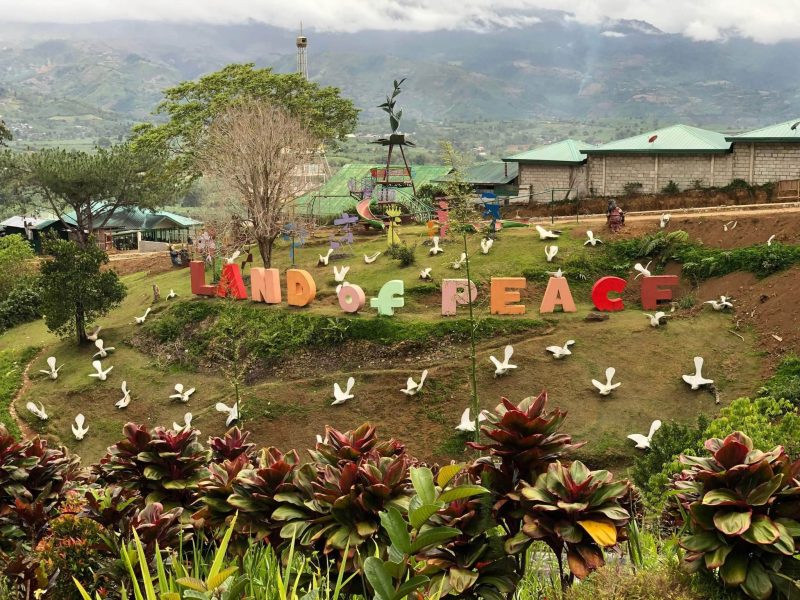
Kublai Art Garden
It was a most successful event which highlighted the colorful and diverse art and cultures of multi-ethnic Mindanao, and which progressed to other activities even during and after the pandemic.
Recently, I embarked on my third journey to Davao upon the invitation of the daughter of my cousin, who’s a native of Davao. Sadly, Mario could not join me anymore as he passed away two years ago due to COVID pneumonia, exacerbated by his heart condition. The invite was actually made earlier in 2021 to celebrate the 90th birthday of my cousin manang Norma, which did not happen because of the pandemic lockdown.
However, the visit this time could not be more opportune as my 92-year-old cousin had just recovered from COVID-19. Three of my sisters and a brother-in-law, a cousin, and her daughter who were all from Bataan, joined me.
Manang Norma is strong-willed and a war survivor. As a 12-year-old girl in World War II living with her father’s family in the Gempesaw ancestral home in Pangi, Davao, she was struck with the bayonet by Japanese soldiers in a massacre which took the lives of her grandmother, father, aunts, and uncles. It should be noted that Davao City was among the earliest to be occupied by the Japanese forces during World War II; the city became a Japanese settlement before the war and turned into a Japanese colony of extensive abaca plantations. Meanwhile, the Battle of Davao, towards the end of the war, was one of the longest and bloodiest battles in the liberation of the country, which brought tremendous destruction to the city.

Norma as a young adult
When little Norma realized she was the only one left alive and that the Japanese soldiers had left, she crawled out to find refuge
When little Norma came to and realized she was the only one left alive and that the Japanese soldiers had left, she crawled out to find refuge. She was found afloat along the Pangi River and was brought to the Brokenshire Memorial Hospital. Her father’s surviving younger brother found her and brought her to recuperate to his elder brother living on Anda Street.
Her mother, named Bagong Silang, a nurse in the USAFFE (United States Armed Forces in the Far East) and stationed in Bataan with her younger sister Paz, my mother, took the traumatized little girl to our hometown of Orani. There she was nursed back to health. The care and love she received not just from her mother but also from my mother, who took her in like her own, nurtured her, and she grew up strong, as if the traumatic experience was just a thing of the past. (An exception was on one trip, during a stopover in Tokyo, an adult Norma was visibly shaken, broke down in tears, apparently reliving her trauma.) She returned to Davao to study Commerce at Rizal Memorial Colleges.
Manang Norma’s first job after graduation was at PLDT where she was assigned in Lucena, Quezon. As the first manager there, she held the fort upon the declaration of Martial Law, believing that telecommunication must be kept running. But she was forced out of her work when the soldiers came to shut down the office. She moved to the US for better opportunities for her children, where she found another telecommunication job. There, she became tougher, fending for herself and her kids, after her husband left her. She had to work two jobs to raise a brood of five and to see them through their education.
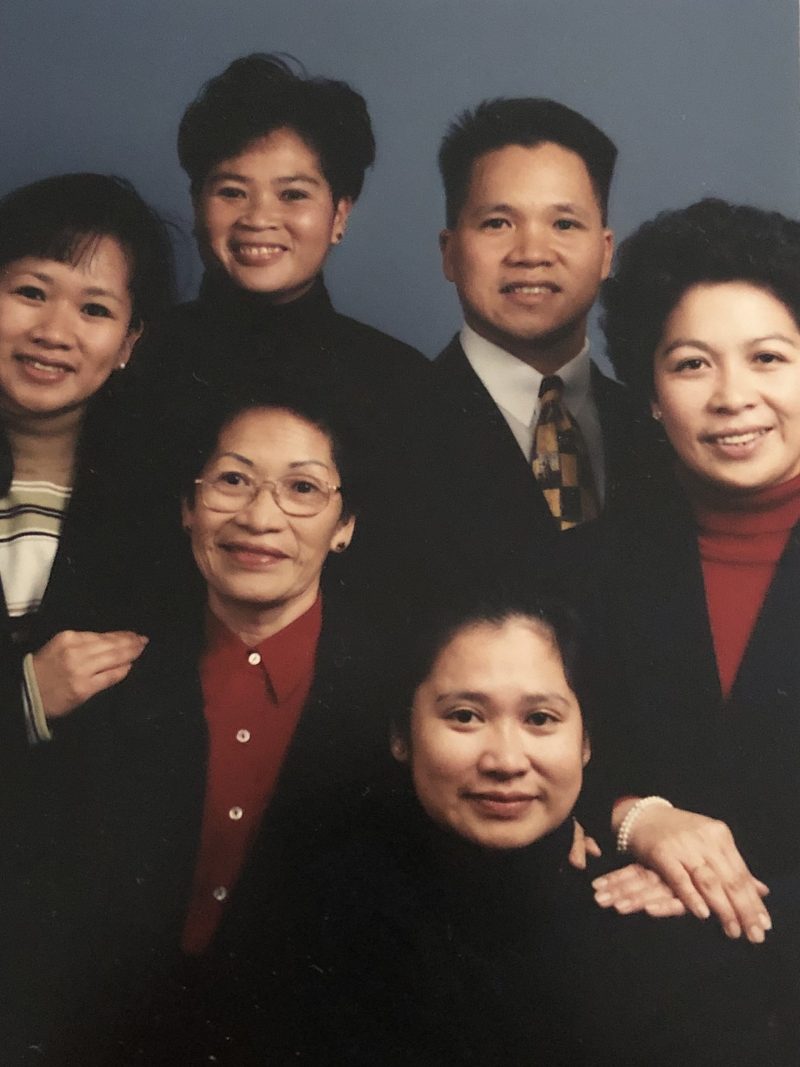
Manang Norma with her 5 children
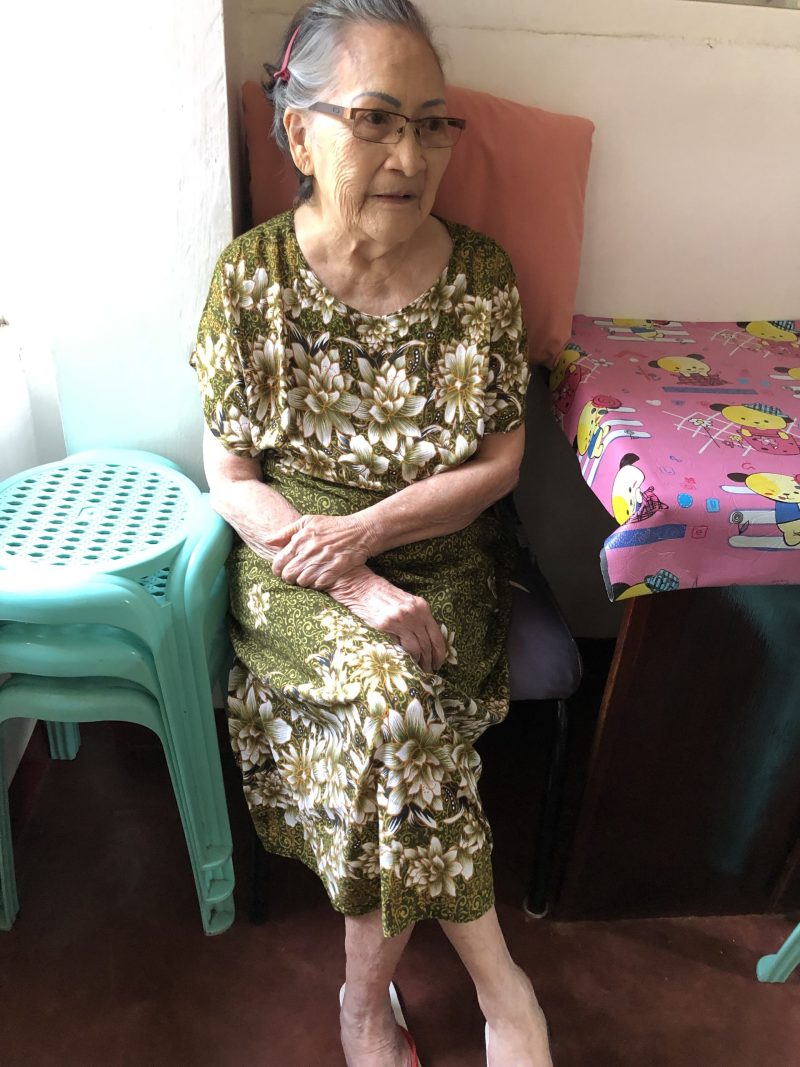
Manang Norma at 92
She would occasionally come home to the Philippines to visit, Orani always on her list. My mother would pamper her with servings of crabs, prawns and our town’s delicacies. I always looked forward to her visits, when I’d pick her up from the ladies’ dormitory of Pope Pius XII Catholic Center on UN Avenue, where she preferred to stay on her visits, and we’d go out and have a wonderful time together.
Manang is one of the most amazing women I’ve met
Manang is one of the most amazing women I’ve met. She is tough and smart, generous, and with a good heart. She put my eldest sister through college, a tremendous help to my poor parents who valued education so much. My sister Delia in turn would help my parents in my siblings’ education.
Ever since I met her when I was a little girl, manang Norma had always been athletic. In the US, she would take the stairs to her office 20 or so floors up instead of taking the elevator— every day of her working life, even as she would not be without her glass of Coke, the only exception to her healthy living. In Davao where she finally retired, she would walk every morning from her home in Matina Pangi to the Shrine of Holy Infant Jesus of Prague— not easy, as we discovered when we tried to do so on the last day of our visit to Davao.
Manang Norma’s daughter Jaja hosted us in Davao and arranged a neat and exciting tour package for our group for our six-day stay. It was sequenced to allow us time to be with Manang, who sadly has been losing her memory. It was encouraging to see flickers of recognition and a smile in her eyes when we talked about Orani; my sister Delia reminded her about their time together in Lucena, or talked about the places in Davao we just visited.
Museo Dabawenyo, at the Philippine Women’s College–Mindanao Folk Arts Museum and Studies Center along University Ave. in Matina, set the tone right for those in our group who had not visited the city. The museum exhibit is a rich historical and cultural display of 50 objects from the First Peoples, the Colonial Landscape, Revolution/Resistance and Reconstruction, Resurgence and Reinvention, Current Perspectives, and Future Directions of Davao.
Proving the multi-ethnicity of Davao are the dwellers comprised of the Lumads, the Moros, and the Settlers. The Lumads are composed of the Atas, Tagabawa, Klata-Guiangan, Ovu-Manuvo, and Matigsalug, while the Moro people are the Maguindanaon, Maranao, Tausug, Sama, Iranun, and Kagan.
The Buda (Bukidnon-Davao)-Marilog Tour will take you to the breathtaking Sonnen Berg Mountain View, its sunrise and the sea of clouds greeting you at the break of dawn
If nature is your cup of tea, Eden Nature Park comes to mind. For those who can ride for hours, setting off long before the crack of dawn, there’s the Buda (Bukidnon-Davao)-Marilog Tour that will take you to the breathtaking Sonnen Berg Mountain View, its sunrise and the sea of clouds amid the undulating mountains greeting you at the break of dawn. Bemwa Farm, with an explosion of colors of the flowers and plants, is a feast for the eyes, especially for city people whose eyesight has always been glued to the blinding light of the computer. This Buda trail includes the home of the iconic Philippine eagle at its Center located in Calinan District, as well as the Malagos Garden Resort, which boasts the first chocolate museum in the country. The museum shows the visitors the wonders of cacao—its history, various types, and how chocolate is made from the tree to the bar.
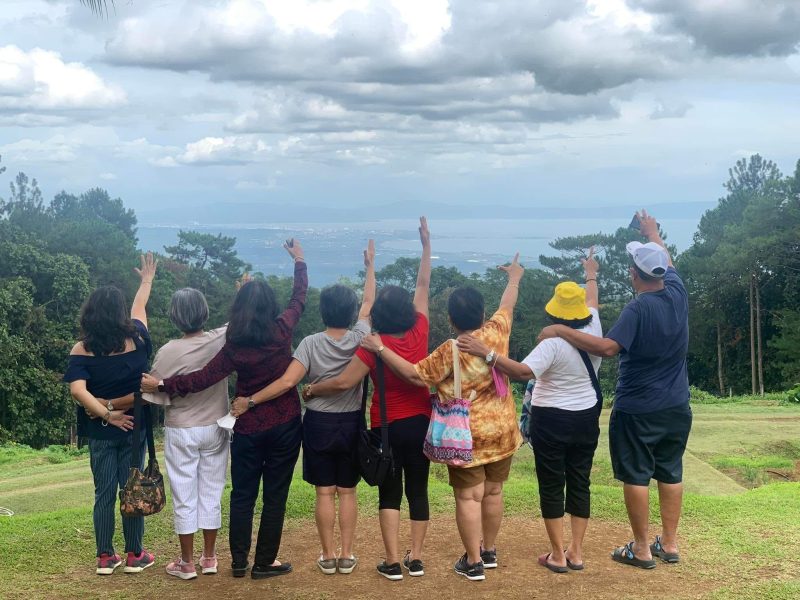
The goup at Eden Nature Park

At Sonnenberg Mountain View with the sea of clouds

The Group at Sonnenberg
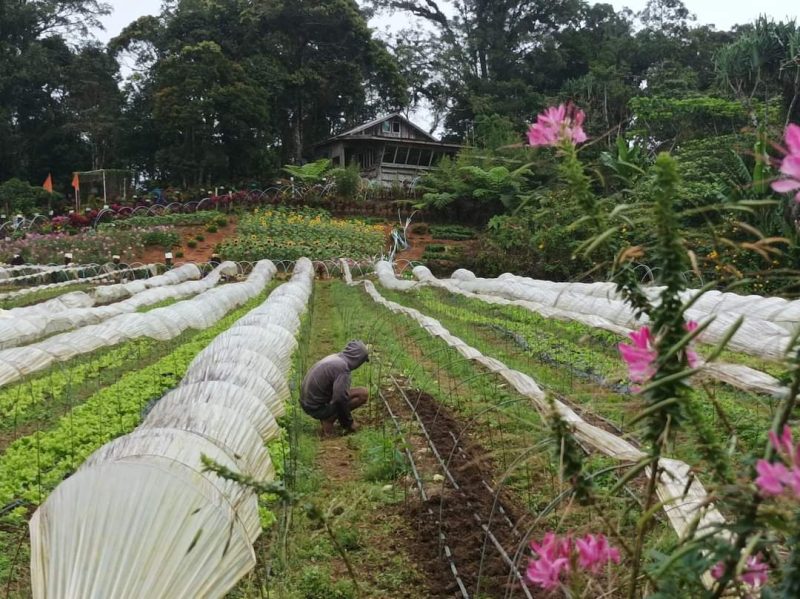
Bemwa Farm

At Bemwa Farms

Cacao tree
Our sweet tooth satisfied, we went to see a pineapple plantation the region is famous for, and were rewarded with freshly-picked pineapples from Davao Agricultural Ventures Corporation (DAVECO) Pineapple Plantation.
The waters were so inviting so off we went to take a dip at Paradise Island Park & Beach Resort in Samal Island, a 15-minue boat ride from Davao City.
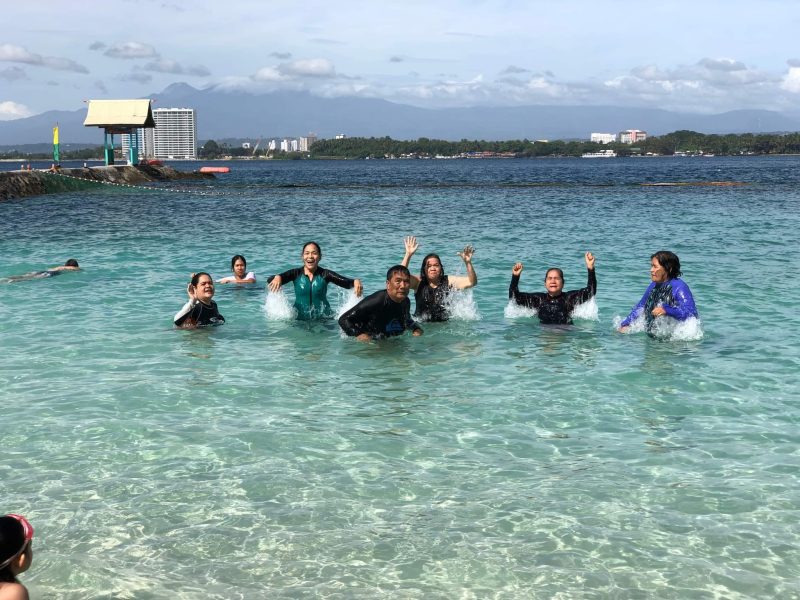
Swimming at Paradise Island Resort and Beach in Samal Island
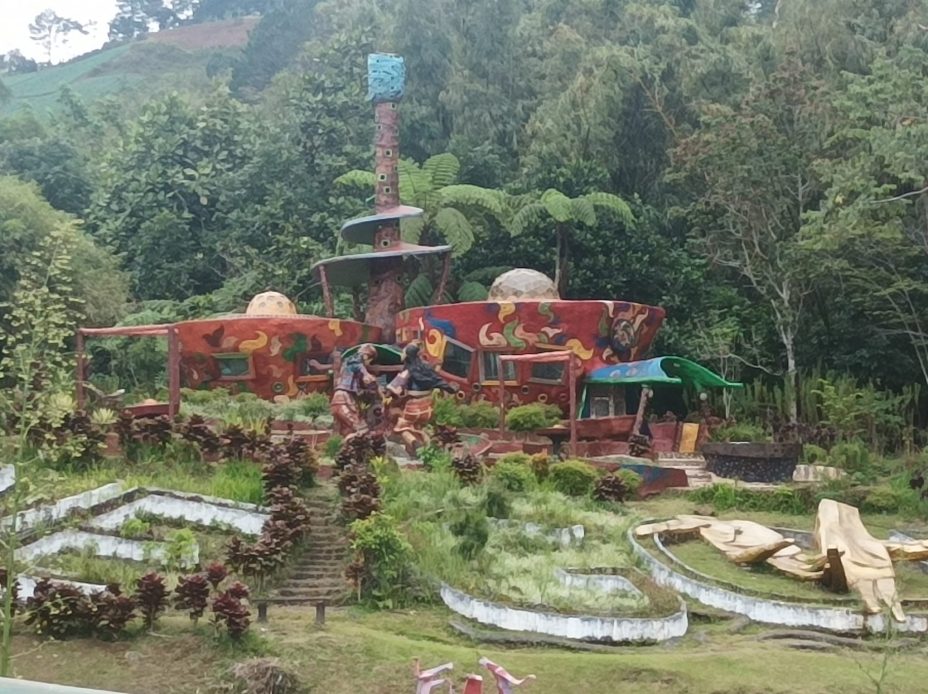
We continued our escapade to Digos City in Davao del Sur, where we had lunch at the popular Mers Native Delicacies before climbing up Kapatagan. Located at the foothills of Mt. Apo, the highest mountain in the Philippines (2,954m above sea level), Kapatagan is where Agong House is, the Kublai Art Garden of the prolific artist of giant sculptures Kublai Millan.
Kublai Art Garden
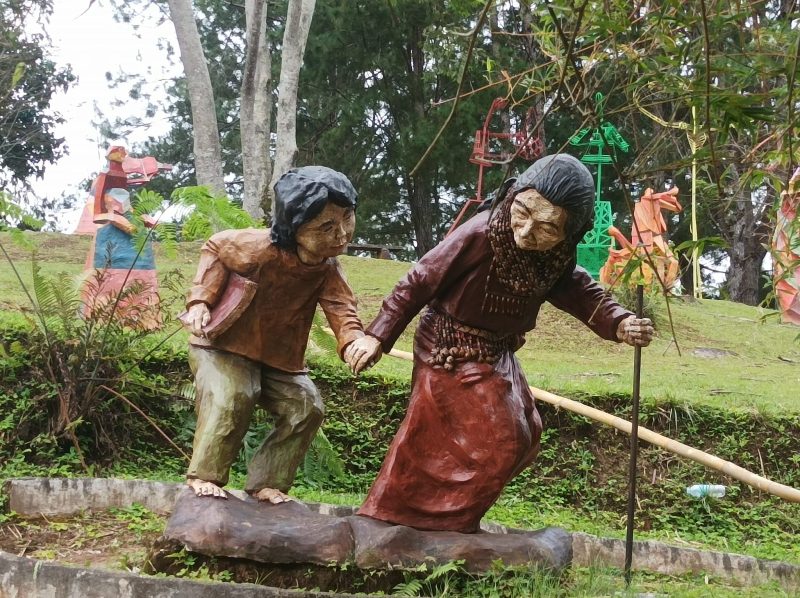
Proliferation of art at Agong’s House
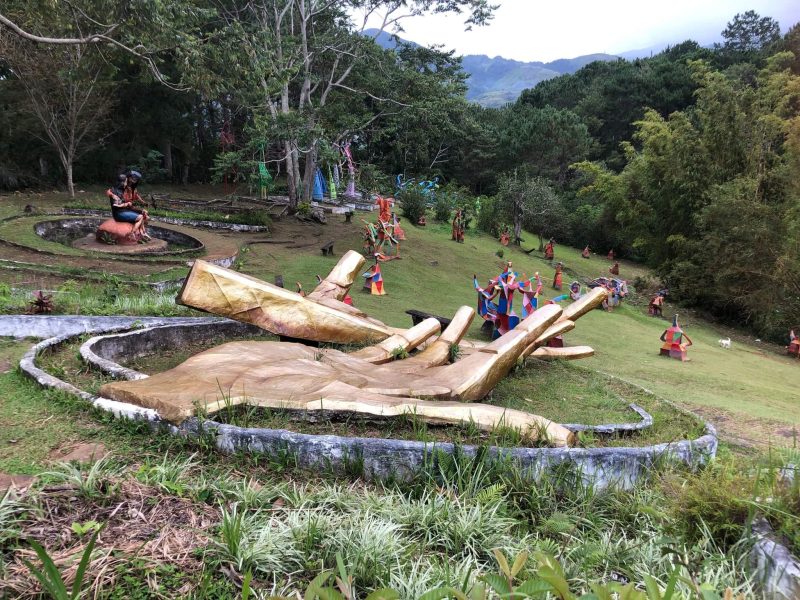
Kublai Millan’s Art Garden
Our group found daunting the climb up the road to Agong House. I thought I’d climb the highest peak to reach what I’ve been raring to see, and Jaja joined me in the quest.
Agong House reminded me of J.R.R Tolkien’s Hobbit house of Bilbo Baggins; it is a quaint and unique shack which tickled my childhood fantasies. Surveying the vast Kublai Art Garden of life-size sculptures of indigenous peoples shown in varied activities was a surreal experience. The sight was a gift to this adventurous septuagenarian after an arduous climb.
Happily, we were able to swing by Dhen Yho’s Place near Agong House, where we easily climbed down from the hill, rewarding us with yet another awesome mountain view overlooking Mt. Apo. What a fantastic art and nature treat! Manang Norma, through her daughter Jaja, made this possible, and I’m just grateful that the universe has been magnanimous in the serendipity that accompanied us throughout the trip.
On the last day of our Davao escapade, I made it a point to visit Maria Maningning. She turned 20 last December and has been bravely battling biphenotypic leukemia for the last five years. I would not leave Davao without seeing her, remembering that my first Davao trip came about because of her. Hers is yet another story of the courage, faith, and generosity of people who share and donate not only precious blood for transfusions, but also funds to treat this heartbreaking illness. I’m really hoping and praying to see Maria Maningning and manang Norma again, healthy and still fighting, on my next Davao escapade.

Visiting Maria Maningning (middle) with sisters Maya & Mithi and Mom Tayna at right


