
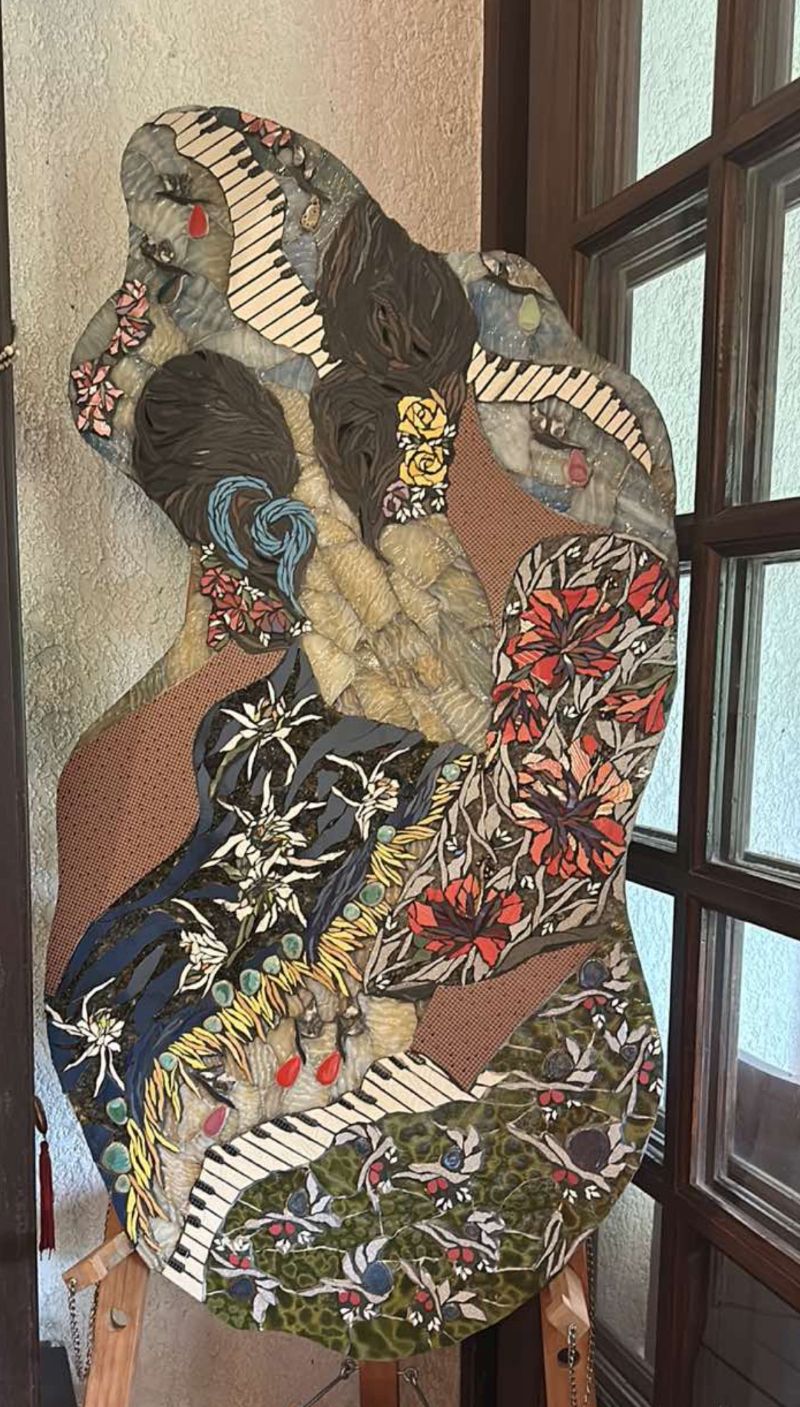
Lisa de Leon Zayco’s ‘Sonata’ (mosaic of glass and ceramics)
‘Waxing Wonders, Fragmented Thoughts’ by Lisa de Leon Zayco and Tats Rejante Manahan will be on view Feb. 13-23, 2025 at J Studio Gallery, 2241 Chino Roces Ave., La Fuerza Plaza, Gate One, Makati City
While a solo exhibition focuses on an artist’s body of work, two-person exhibitions often show shared or contrasting artistic affinities. Waxing Wonders, Fragmented Thoughts by Lisa de Leon Zayco and Tats Rejante Manahan highlights contemporary artistic expressions rooted in decorative art forms of ancient civilizations and classical antiquity. They are both contemporary creatives inspired by the structured and expressive nature of mosaics and the meticulous surface prepping of frescoes.
The affinity between de Leon-Zayco and Rejante-Manahan lies in an interest in the dialogue between past and present artistic practices that reflect their respective, continuous, creative endeavors, and years of training.
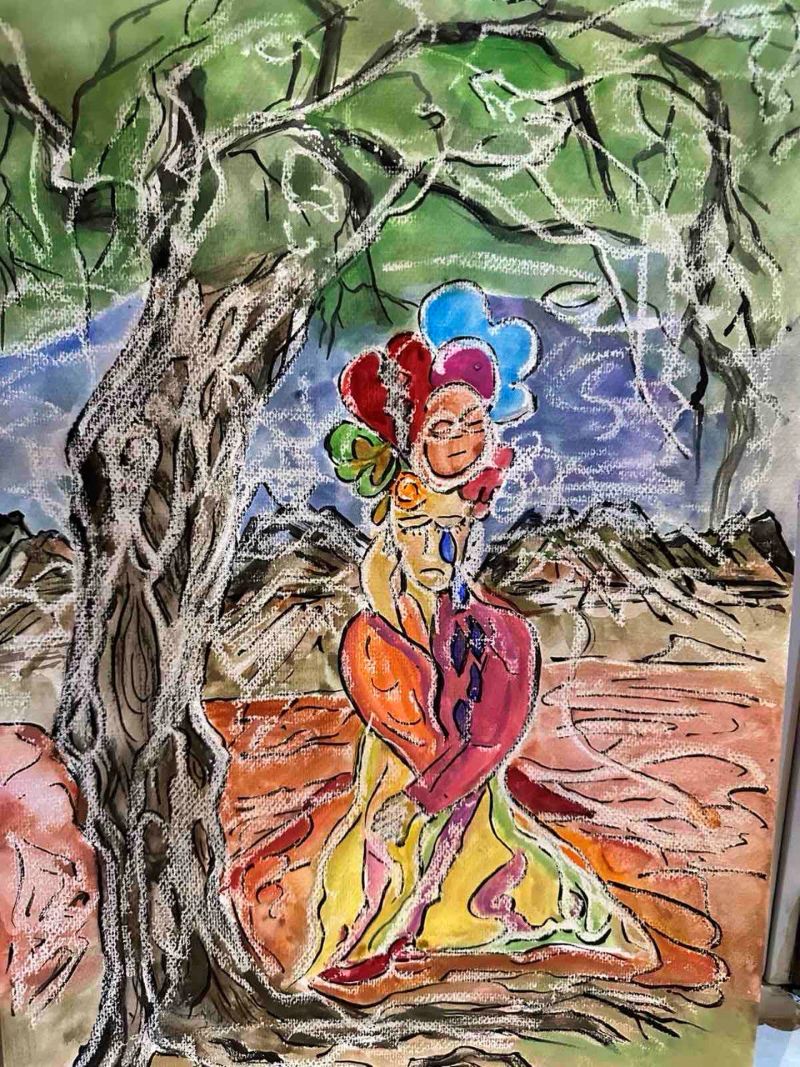
Tats Rejante Manahan’s ‘Crying on the Inside’ done in wax resist technique
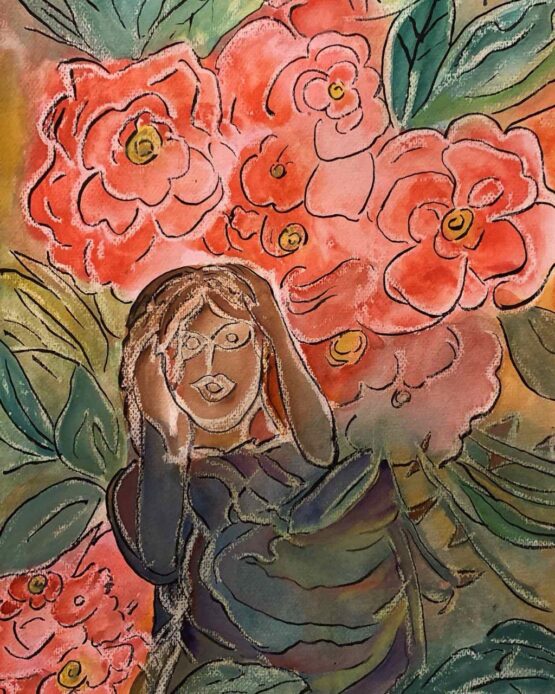
De Leon Zayco’s mosaic and assemblages have a well-handled complexity, while Rejante Manahan’s cold wax and resist paintings combine pre-meditated ink brushstrokes contrasted with wax, bringing elements of surprise and wonder resulting from shapes unexpectedly appearing.
Both artists provide a different and yet complementary look at the scenery of their inner worlds, with a masterful knowledge and handling of processes gained from years of pursuing their respective artistic career paths.
It is this deep foundation of Rejante Manahan’s mastering surface treatments and de Leon Zayco’s subconscious thought patterns emerging from found objects, which turns Waxing Wonders, Fragmented Thoughts into a clever draw that bridges both artists’ visions and one’s understanding of the exhibit.
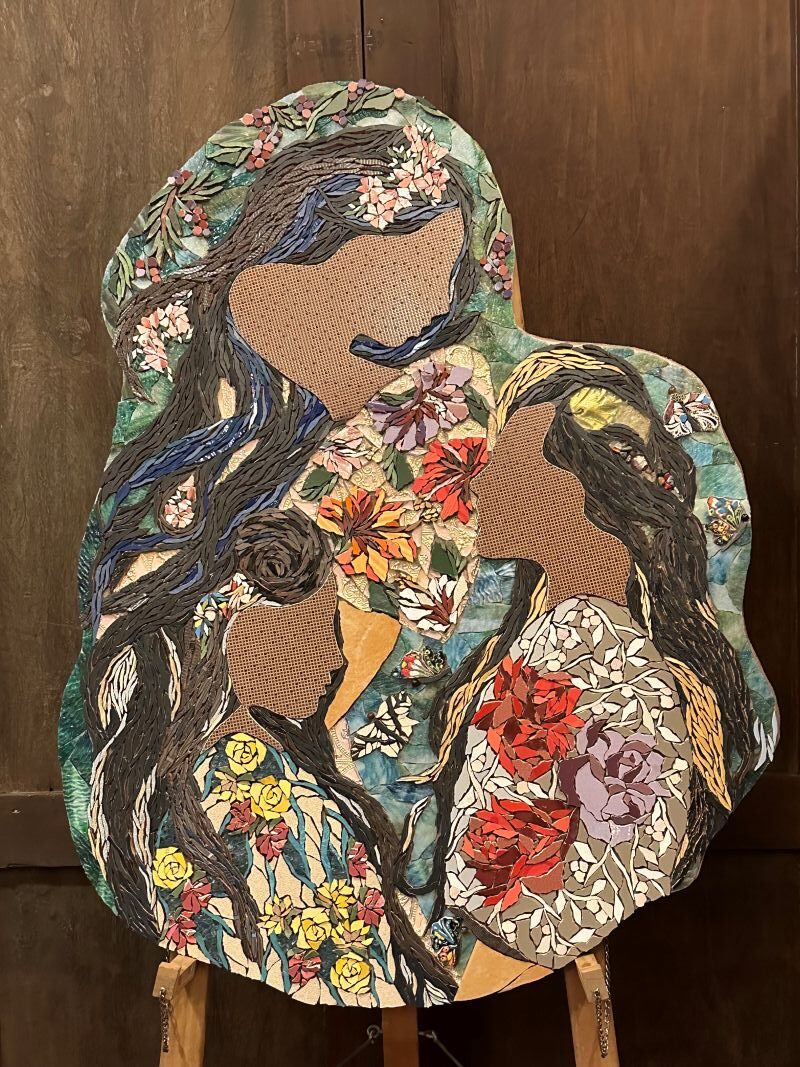
Lisa de Leon Zayco’s ‘Marikit’ (mosaic of glass and ceramic)
Lisa de Leon-Zayco has been doing mosaics as far back as she remembers. In her youth, a fascination with a mosaic table led her to learn more about the visually stimulating art form. This became her chosen creative path that eventually led to the development of her own expressive mosaic technique through the years.
Brokenness allows us to be polished, restored and made whole
Mosaics gave her creative freedom. From her dreams transcribed into her journals, she creates depth and spatial relationships between random components. The mosaics have evolved into mixed media assemblages incorporating found objects, everyday items, and discarded organic materials. The new juxtapositions combine unrelated items to create new meanings and narratives, while giving life and context to otherwise mundane or discarded objects.
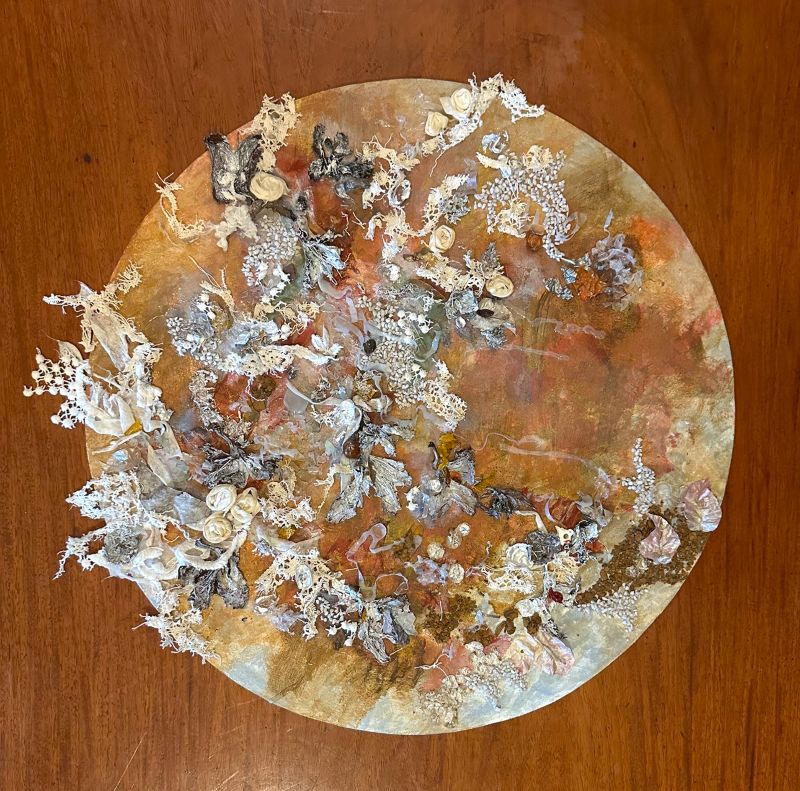
Lisa de Leon Zayco’s ‘Resurgence’ (found objects)
Her mosaics are stories of rebirth, resurrection and gratitude.
Sometimes used as visual commentaries on environment and social issues, or as exploration of dream worlds, de Leon Zayco’s works make creative connections between disparate elements, and elevate non-art materials into the realm of art.
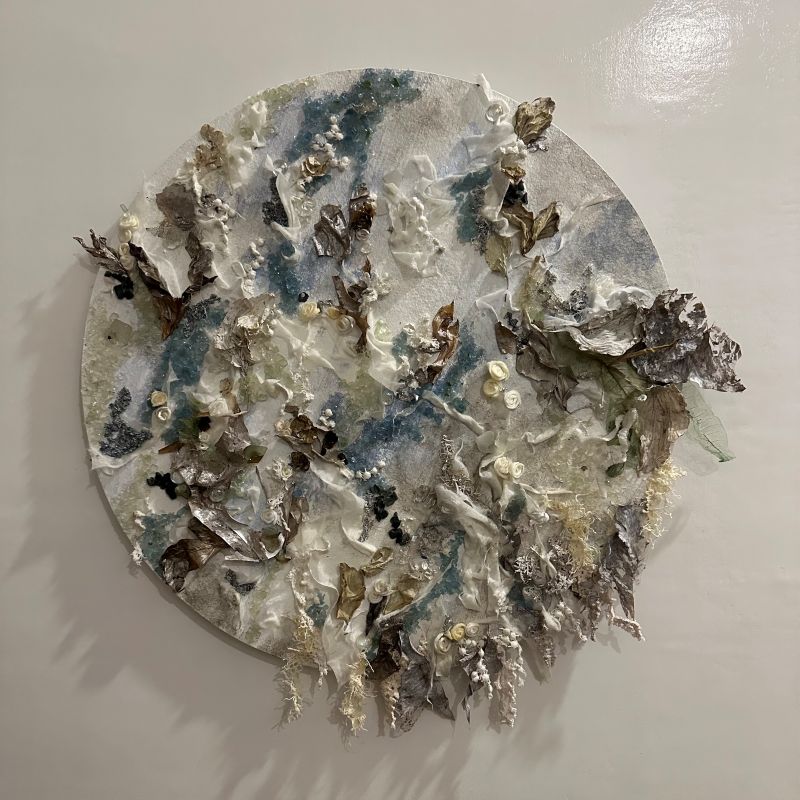
Lisa de Leon Zayco’s ‘Soulful Odyssey’ (found objects)
Decay and beauty emerge in her assemblages, fragments allow her to interpret themes of time, transformation, and the cyclical nature of life itself.
She says: “There is beauty in imperfection. It allows me to interpret life at its very core, all the way to the smallest components that compose it. Not just the happy moments, but more importantly, the heartaches and longings. As I cut the tesserae, new and old, discarded or once cherished, it assures me that life can be made brighter when the undesirable and unpleasant become a part of one’s journey. Brokenness allows us to be polished, restored and made whole.
“One of the most meaningful components of my found object artworks is the use of rust dusted from the grill works of San Sebastián Church in Manila.”
In this work, she deploys rust, a by-product of oxidation that undergoes a transformation. The mosaic is now invested with a sense of culture and history embedded for posterity. Indeed, there is beauty and power in the most unlikely of detritus.
Tats Rejante Manahan, surface decorator and wall painting restorer, became fascinated with wax while studying classical revival paint decoration and traditional lime and plaster finishes, particularly how beeswax affected a final finish. Using the language of pigments and its fugitive materialities, her wax resist paintings for this show combine Chinese brush painting using Chinese black ink, while the rest are done using pure powdered pigments, instead of oil.
Wax is not a common medium. On surfaces, its resistance and emergence have a mind of its own, disrupting the artist’s original idea, but therein lies a certain amount of anticipation that somehow always results in unexpected wonder.
The wax images emerge. It’s like seeing apparitions!
“Using wax either as a resist or as the main binder, I would often wonder how my work would turn out, since wax can have a mind of its own in that even if you map out a drawing in wax, you don’t exactly know the final outcome, and as I do the wax resist paintings and fill in the color, the wax images emerge. It’s like seeing apparitions! For cold wax, the textures that can be achieved are fascinating.”
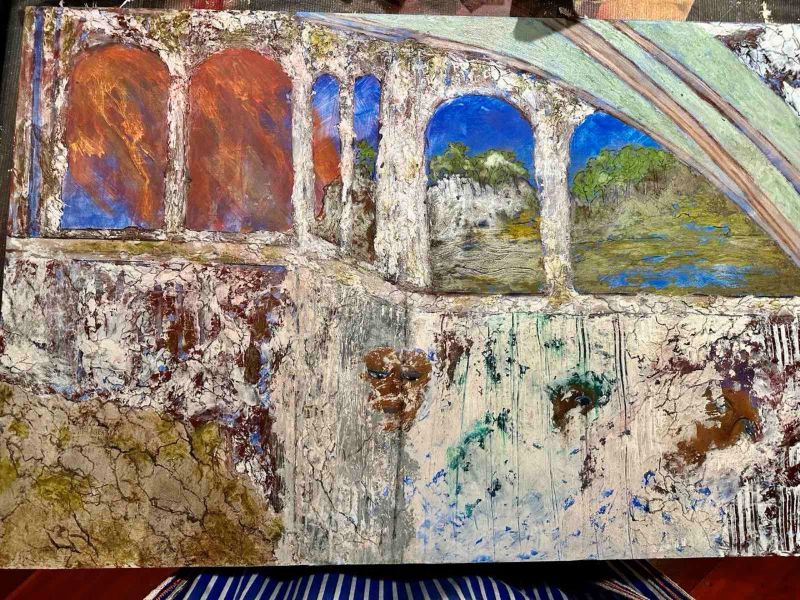
Tats Rejante Manahan’s ‘Salinated Portraits’ (cold wax with powdered pigments)
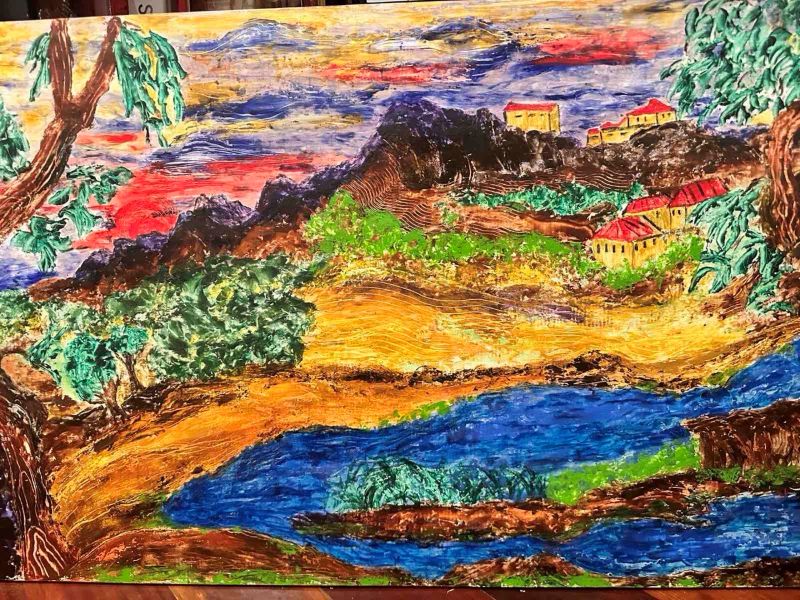
Tats Rejante Manahan’s ‘Salinated Portraits’ (cold wax with powdered pigments)
Describing a work in the show, she says: “Two of my paintings kind of recall restoration work: Salinated Portraits is reminiscent of the time I worked in an 11th century salt-encrusted Christian cave, where my work with a Romanian iconographer was to identify the characters depicted in the frescoes painted on the interior walls. It was quite a challenge having to scrape off centuries of salt encrustations until you finally reach an ‘aha moment.’ But until you get to that, it is haunting to see parts of faces sometimes staring at you from salt layers, especially since the cave iconography was Byzantine, which is characterized by staring eyes.
My painting has the faces peeping out of the salt-encrusted exterior walls….so maybe, that’s what wall grafitti would have looked like in the 11th century. Salt usually forms mostly on interior walls….so that’s some kind of wild thought.”
Waxing Wonders , Fragmented Thoughts presents a clear polarity in the abstract and contemporary shapes of de Leon Zayco’s mosaics and assemblages of found objects, and the exciting aesthetic of the pigments and wax paintings of Rejante Manahan. As you view the works you see the complexity of their surfaces and discover illusions of depth and space here and there.
Both artists blur the lines between centuries-old decorative art forms, and make us realize the groundbreaking potentials these forms provide for rebirthing high-spirited and evolved art making today.
‘Waxing Wonders , Fragmented Thoughts’
Lisa de Leon Zayco &
Tats Rejante Manahan
will be on view from
Feb. 13-23, 2025 at :
J Studio Gallery
2241 Chino Roces Ave.
La Fuerza Plaza, Gate One
Makati City


