
How to end a year without my traditional list of favorite titles?
This time around, with a happy large number of books too challenging to keep track of—a wonderful problem, actually—I have to admit that my list is far from exhaustive. Just the books that have come my way, books awaiting to be read more closely, books that promise to transport readers to another world, yes, another year. A most positive development are titles from outside Metro Manila, books written in other Philippine languages, books from the non-traditional presses. And even as I draw up this list, I know how many more I have missed.
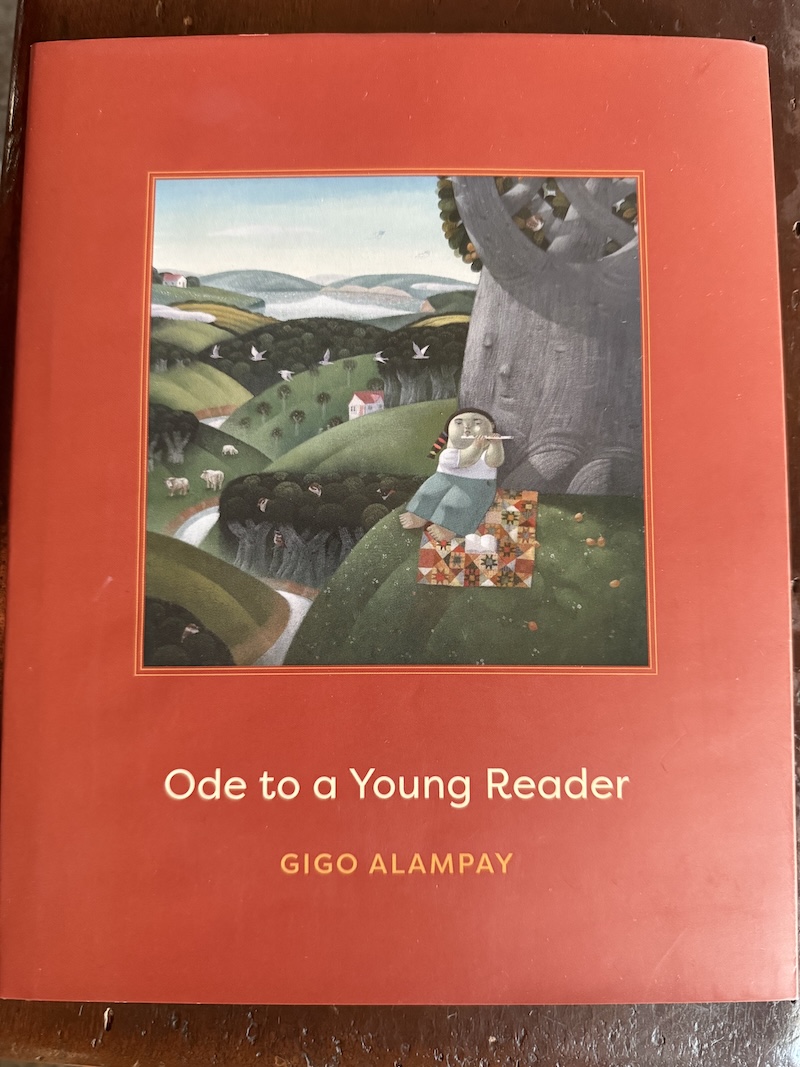
Ode to a Young Reader by Gigo Alampay, CANVAS. A poem book which can be read from the first to the last page and vice-versa. It begins with “I am magic, I hold the key to all the things you are yet to be ” and ends with “Love books, dear child, and love us deep.” It has lavish illustrations of artworks from the forthcoming Tumba-Tumba Children’s Museum of Philippine Art in Ibaan, Batangas, an initiative of the publishing house.
Strands of Her Dreams: The Story of Lang Dulay by Delmo Dulay and Lenly Gula, illustrated by Danny Doce, Daniella Doce, and Roldan Mayon, CSL Printing Press, Davao. Lang Dulay was a legendary master T’nalak dreamweaver, whose artistry was acknowledged when she was given the Gawad ng Manlilikha ng Bayan award in 1998. The texts of the narrative are in English and T’boli languages. What a sacred tradition she was born in. At age 12, she slipped into the backstrap loom and wove her first T’nalak, weaving through the years over one hundred patterns from her dreams.
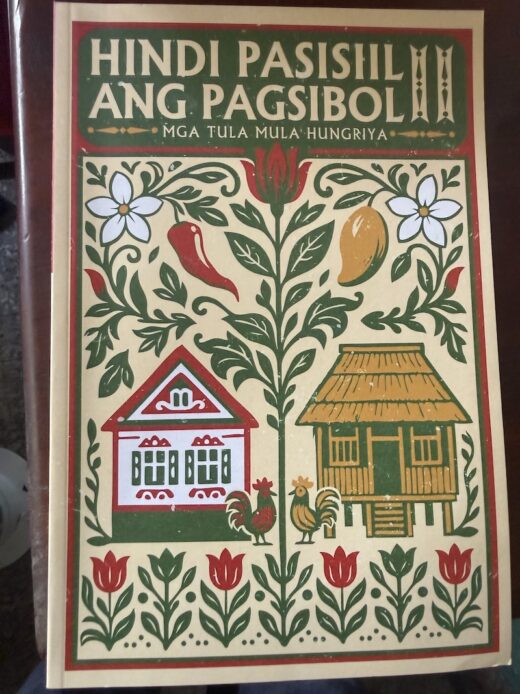
Hindi Pagsisiil ang Pagsibol: Mga Tula Mula Hungriya. Edited by Kristian Sendon Cordero and Enrique S. Villasis, Savage Mind Publishing House, Naga. This second edition goes beyond the original Bikol, Hungarian, English texts but because of a partnership with the Mariano Marcos State University, it is now enriched with Ilokano texts. Truly in the spirit of what Hungarian poet Sendor Perofi wrote, “You cannot bid the flower not to bloom.” The Hungarian poems are translated into Filipino, Ilokano, Sebwano, Bikol and English.
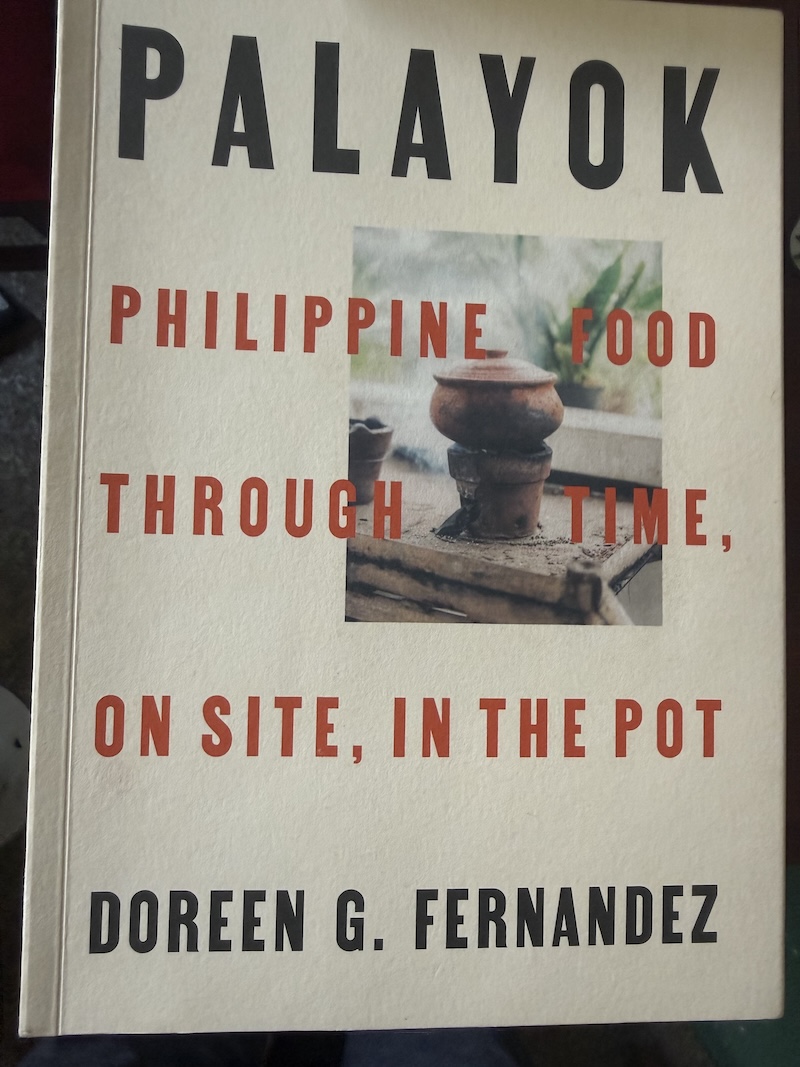
Palayok: Philippine Food through Time, On Site, in the Pot by Doreen G. Fernandez, Exploding Galaxies. This is a welcome reprint of the original 2000 publication, remains relevant because Fernandez’s work as a cultural researcher presents the origins and evolution of Philippine cuisine in her trademark elegant prose. A pioneering food writer, she continues to inspire many others in the field decades after her passing. Why palayok? Because this wide-mouthed cooking vessel is witness to the beginning of life in the Philippines.
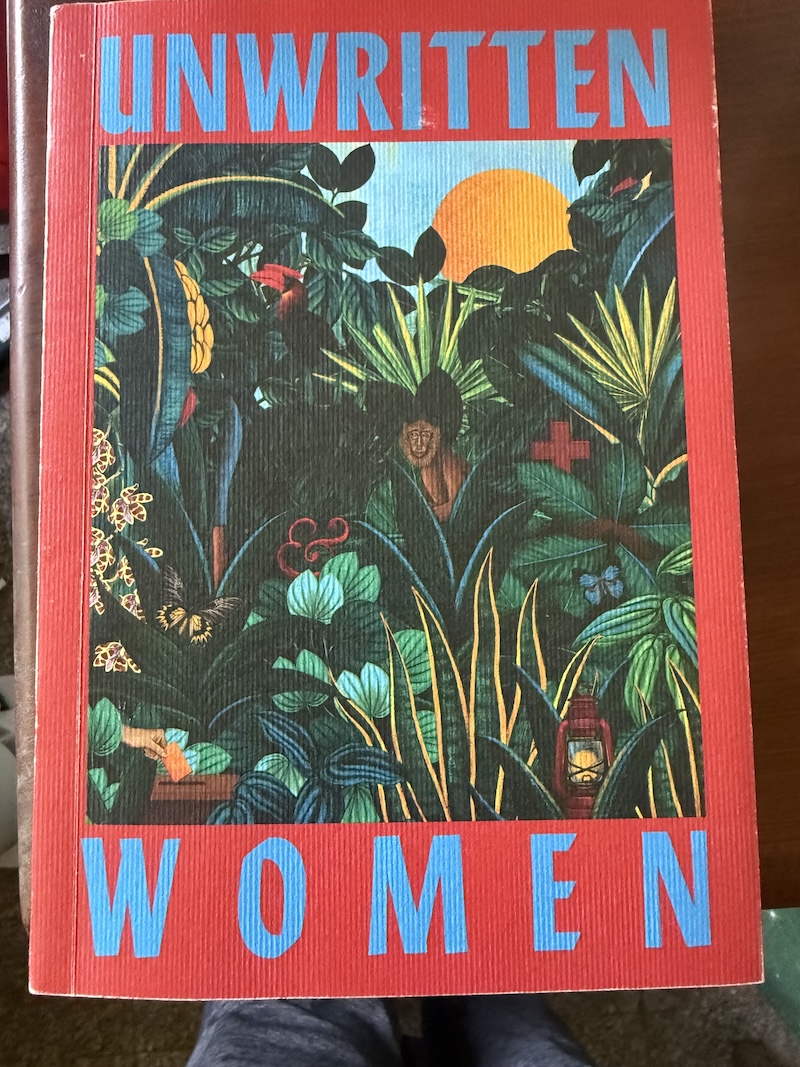
Unwritten Women edited by Angelo R. Lacuesta and Mookie Katigbak-Lacuesta, Good Intentions Books. The intent of the book is to document and highlight the lives of eight outstanding women who have excelled in their fields and yet are little known. The book allows the reader to delve into the formerly hidden lives of Teodora Alonso, Gregoria de Jesus, Rosa Sevilla Alvero, Aurora Quezon, Maria Y. Orosa, Carmen Rosales, Aurora Aquino, Letty Jimenez-Magsanoc. Their well-researched profiles were written by Yvette Tan, Kristine Fonacier, Audrey Carpio, Zea Asis, An Mercado-Alcantara, Jerome Gomez and Dahl Bennett, Mia Concio, and Mookie Katigbak-Lacuesta. (I know the pieces well because for transparency’s sake, I was proud to have written the Intro to the book!)
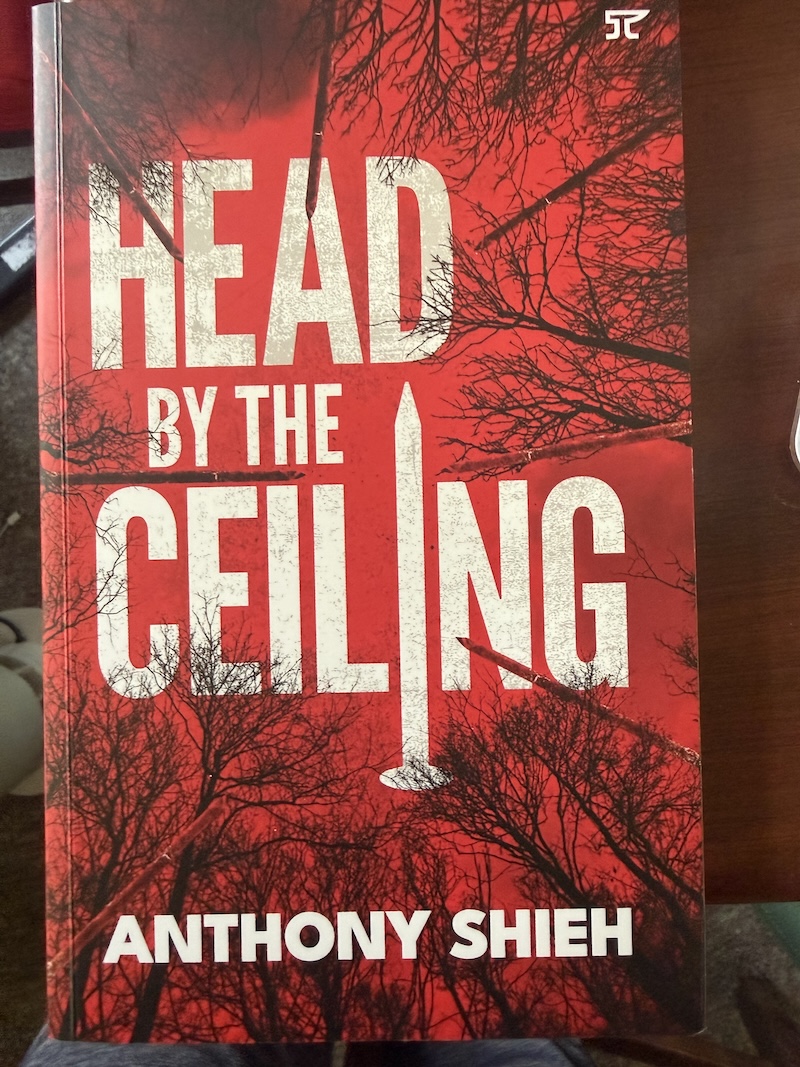
Head By the Ceiling by Anthony Shieh, Anvil Publishing, Inc. This debut horror novel of Shieh is ideal for fans of the horror genre, who will all be fear-stricken as the characters in the book: a group of employees of a network company who are confronted with a string of murders. Could they just be mere coincidences? And the series of chills begins. The book ends with this foreboding line, “They stood before the mausoleum, which concealed a curse that would alter their lives and the lives of their loved ones forever.”
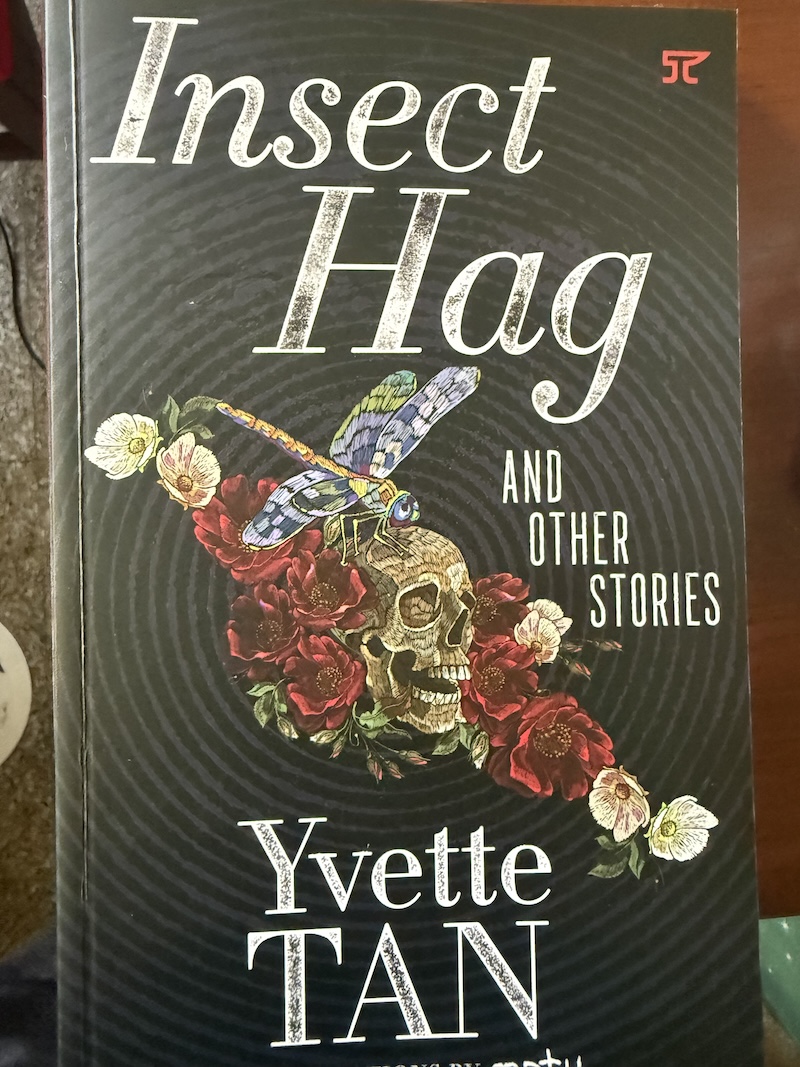
Insect Hag and other Stories by Yvette Tan, Anvil Publishing, Inc. Tan has established her reputation as THE writer of supernatural and horror tales. This is her third collection of short stories of love, death, pests. The Insect Hag story is a challenge to read if one is queasy about insects. The study has a library of insects: ”ant farms; spiders in terrariums; crickets, beetles, and roaches in plastic containers…” The story ends in big relief, but continues to haunt. As all the other stories in the collection will.
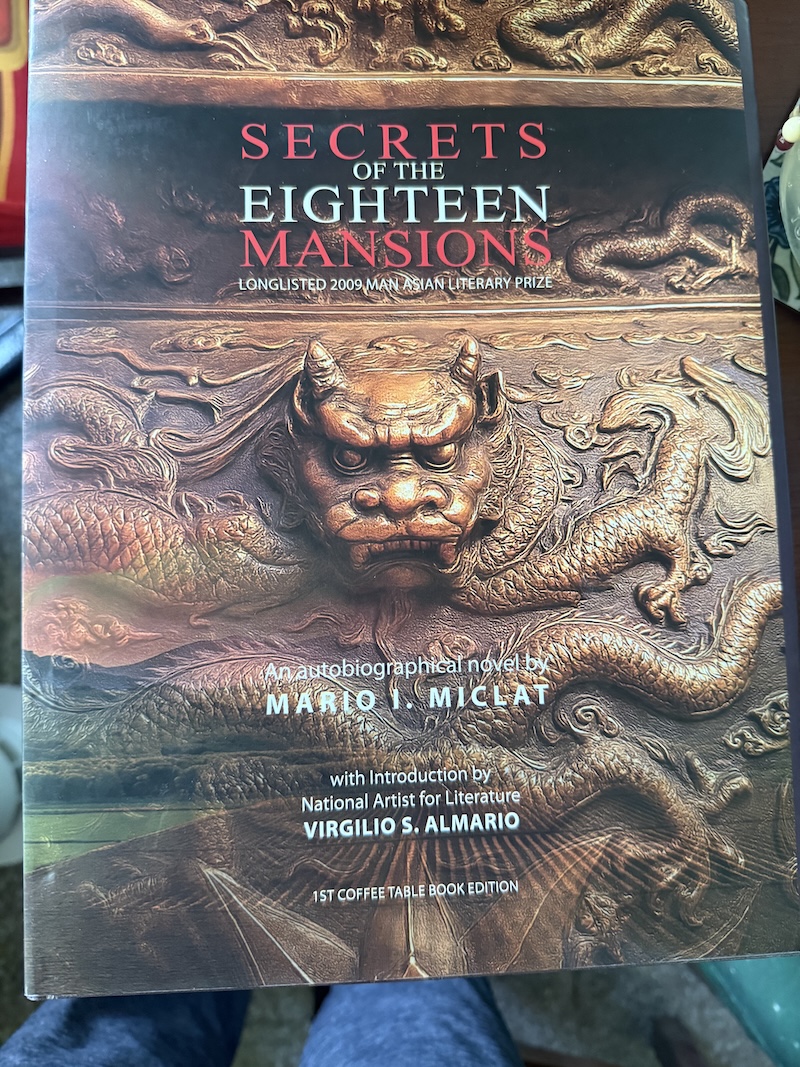
Secrets of the Eighteen Mansions by Mario I. Miclat, Erewhon Artworld Corporation. This is the coffeetable book edition of Miclat’s autobiographical novel longlisted for the 2009 Man Asian Literary Prize, which was discontinued in 2012. Although Miclat had claimed this as a work of fiction, it is an important documentation of his decades-long life in China. This edition collects personal correspondence especially for daughter Maningning. whom the family tragically lost at a young age. It is rich in details and photographs, which are valuable documents not only for the Miclat family but also for the history of the Marxist movement in the Philippines. The first chapter is Talahib Plumes with a March 10, 1986 entry with subsequent chapters, Into the Vortex, Movement Underground, Eighteen Mansions, Quarter Storms, Twice Incognito, Manila! Manila!, Shimmering Red Star, Wonder of the World, A Plaza to Heaven.
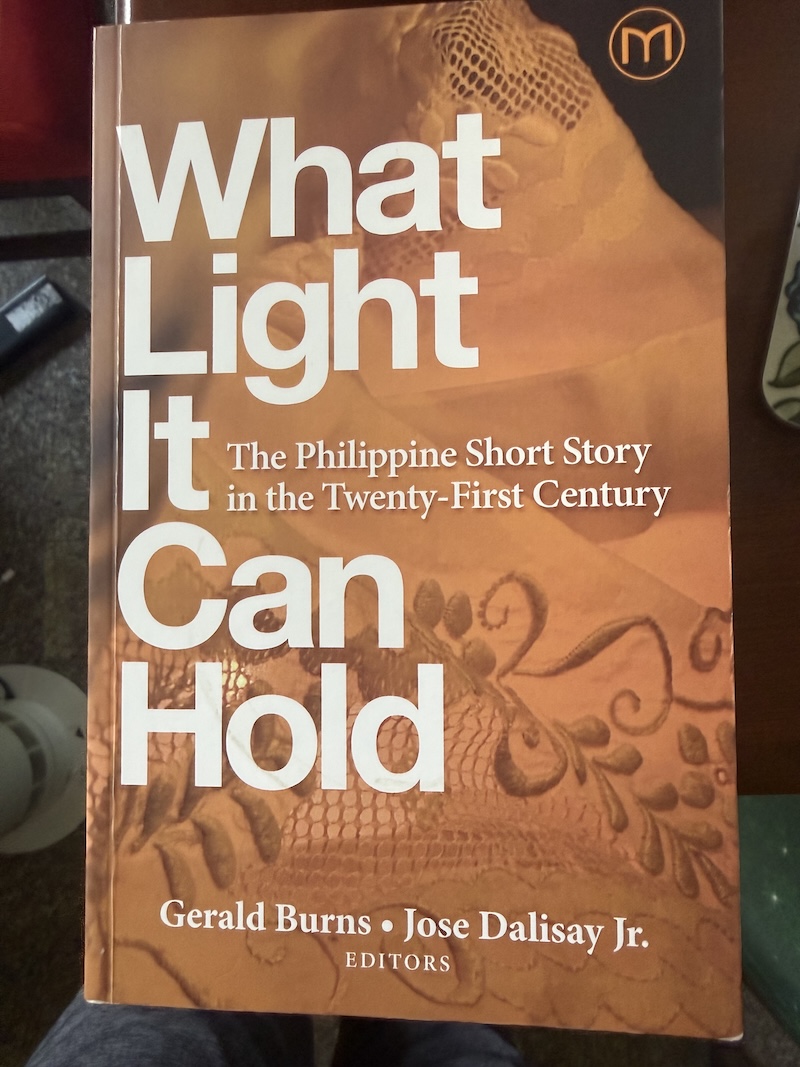
What Light It Can Hold: The Philippine Short Story in the Twenty-First Century edited by Gerald Burns and Jose Dalisay, Jr., Milflores Publishing, Inc. The poetic book title comes from an inscription on a wall of a weaving facility in Kalibo, Aklan, which reads, “How fragile a single thread of piña is, how delicate, but look how much light it can hold.” This collection of 18 short stories, all crafted by their authors with “the same skill, patience, and devotion comparable to the piña weavers’, brings light to contemporary Philippine literature. Burns holds a PhD in American Studies from Yale University and has cultivated a longstanding interest in Philippine literature. He has written on topics as the repatriate theme in Philippine fiction, the evolution of the Martial Law genre, the American Dream and the Filipino-American writer. Dalisay needs no introduction, given his 40 books on fiction and nonfiction and his weekly opinion column in The Philippine Star.
Ang Sekretong Alyas ni Lola Nene by Luis P. Gatmaitan, Adarna House. This young adult novel in Filipino is written in memory of Araceli Policarpio Mallari (1920-2020) whose secret from her family was her active participation in the Hukbalahap movement. Lola Nene, as she is known in her family, held another name during the Japanese times. Lola Nene’s many other secrets are her eyewitness accounts of acts of cruelty. The great granddaughter narrator, Laya, who admires her Lola’s secrets, is thrilled to be commended—“Mana ka sa kaniya.”
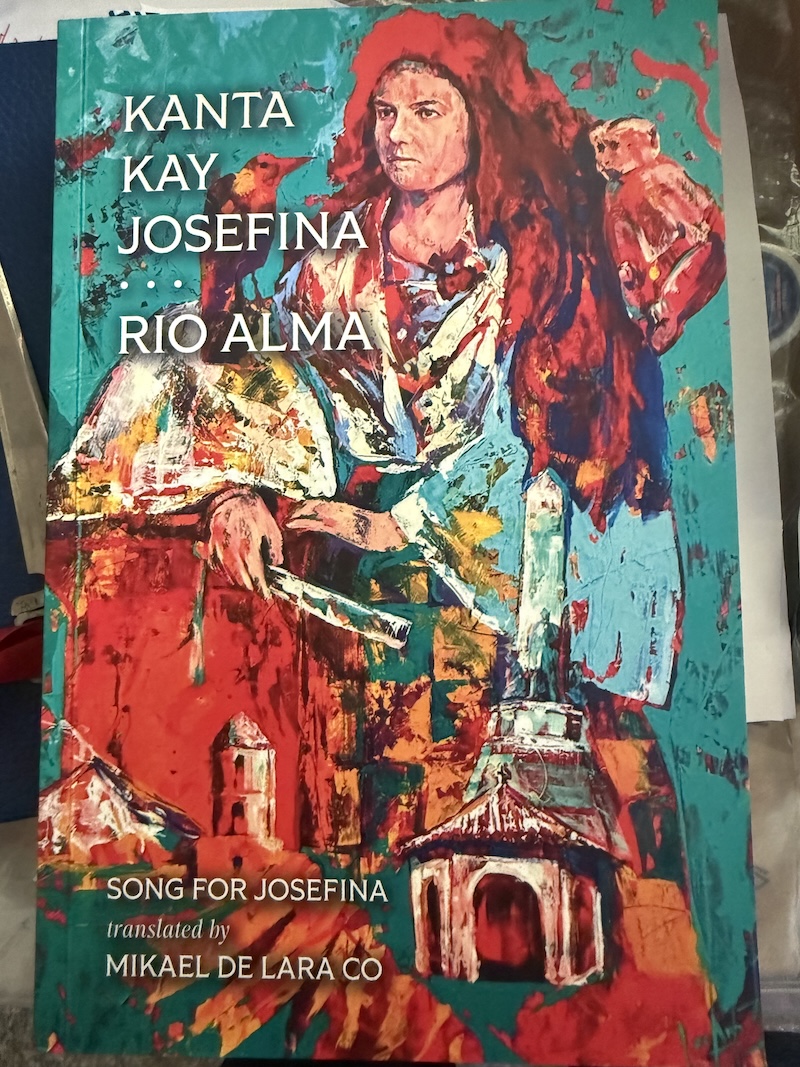
Kanta Kay Josefina ni Rio Alma, translated by Mikael de Lara Co, Pambansang Komisyon Para Sa Kultura at Mga Sining. The initial poem in this collection is dedicated to the poet’s sister, Josefina, and sets the tone for the other poems in the collection on what’s truly essential in life. Why is it that turning seventy,/You begin to see/The sixty-nine years wasted/Determining life’s essentials?/You never needed/Those heaps of things/Tucked inside boxes,/Cabinets, shelves,/And locked inside your house;…”
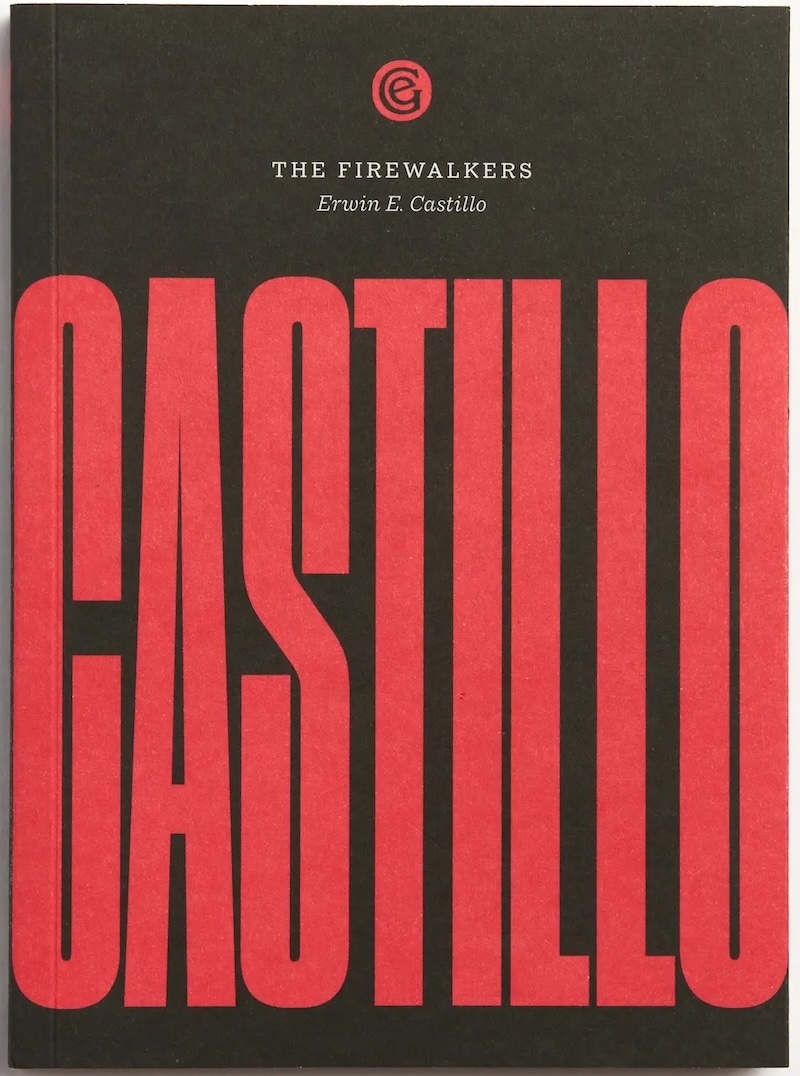
The Firewalkers by Erwin E. Castillo, Exploding Galaxies. This publishing house established by Mara Coson is committed to publishing Philippine classics no longer available for the reading public. Castillo had a reputation of being the upstart poet who wrote the Great Philippine Novel. Thus, this novel continues to speak to us today, the way all classics do. The novel ends with a seductive companion story, The Watch of La Diane, which is about two young lovers travelling across 1970s America.


