
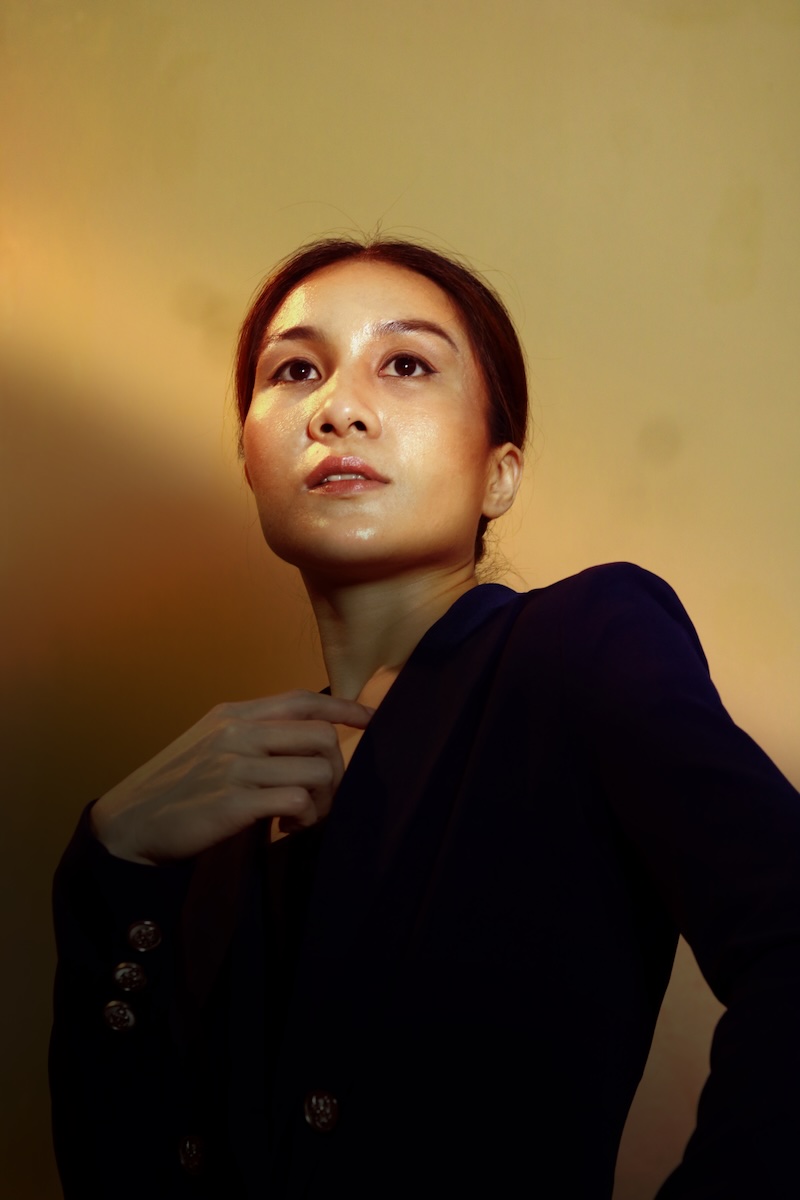
Visual artist and choreographer Razel Mitchao has mastered the pulling technique in modern dance.
Photos by Gozzy Photography
‘Oratio’ goes onstage March 14, Saturday, 6:30 pm at St. Cecilia’s Hall, St. Scholastica’s College, Manila, performed by The Project DP, choreographed by Razel Mitchao and Akira Abao.
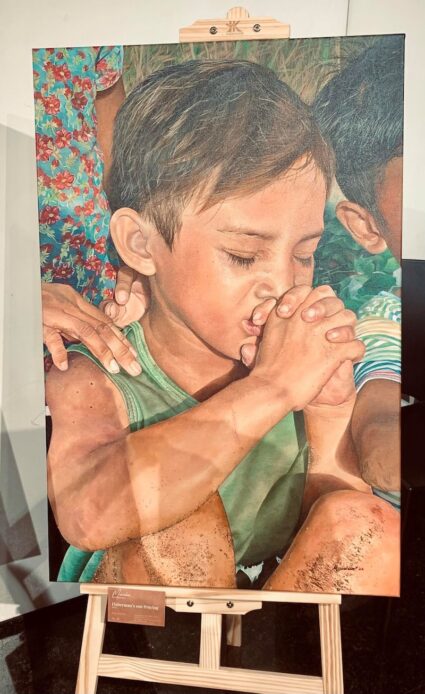
Choreographer Razel Mitchao was walking along the beach in Tanza, Cavite, when she noticed a boy praying. “He was praying for his father at sea,” she recalls, “because his father died there, and his mother had left him.” The boy had been adopted by a neighbor, and had no other relatives.
Mitchao was struck by the intensity of his prayer, wishing that his father, whether in heaven or in memory, was watching over him. Moved by his purity and innocence, she made him the subject of her painting Fisherman’s Son Praying.
In it, she captures a raw spiritual intimacy. The self-taught painter directs the viewer’s eye to the grains of sand on the boy’s sun-reddened skin, his tight clasp in prayer, and the weight of calloused hands resting on his shoulder. Highlights in the child’s hair and the dryness of his lips are rendered with careful precision. What sets the work apart is its emotion. Her instinctive handling of light lifts the scene into something soulful. Working in fast-drying acrylic, she achieves depth and translucency through experience rather than formal training, developing her own shorthand for reality.
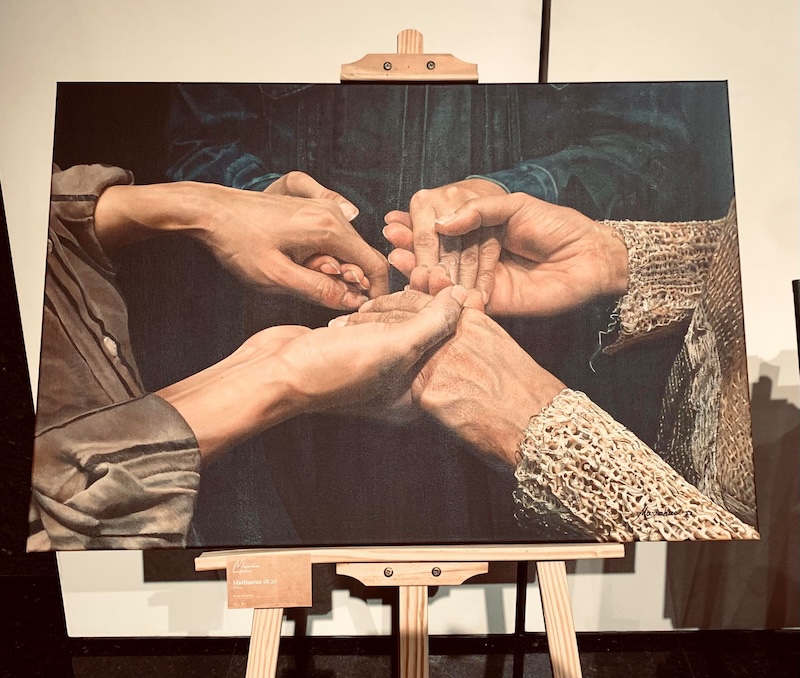
‘Matthaeus 18:20’
That focus on prayer extends beyond the individual. While solitary prayer matters, she suggests that a shared prayer carries greater force. In her work, Matthaeus 18:20, three figures clasp hands. With the background and faces removed, the viewer is drawn only to the act itself. Every swollen knuckle and delicate vein is rendered with clarity. The contrast between youthful skin and the paper-thin texture of older hands shows a command of acrylic rarely expected from a self-taught artist.
Mitchao’s growth as a painter is rooted in her life as a dancer in Bacolod. In 2007 she became a hip-hop scholar at Dance Pull, founded by Dwight Rodrigazo, a Ballet Philippines alumnus. He developed a movement style that strips away the formality of traditional dance for something far more visceral. Known as the pulling technique, it is rooted in classical ballet but thrives on gravity-driven swings and pure momentum. It is a constant play with weight and speed, allowing the body to surge through space with natural force.
At the heart of this style is the counterpull, a technique where one part of the body moves in opposition to another to find a sharp, internal balance. This tension creates a striking sense of energy and strength, giving the choreography a rugged, dynamic contrast.
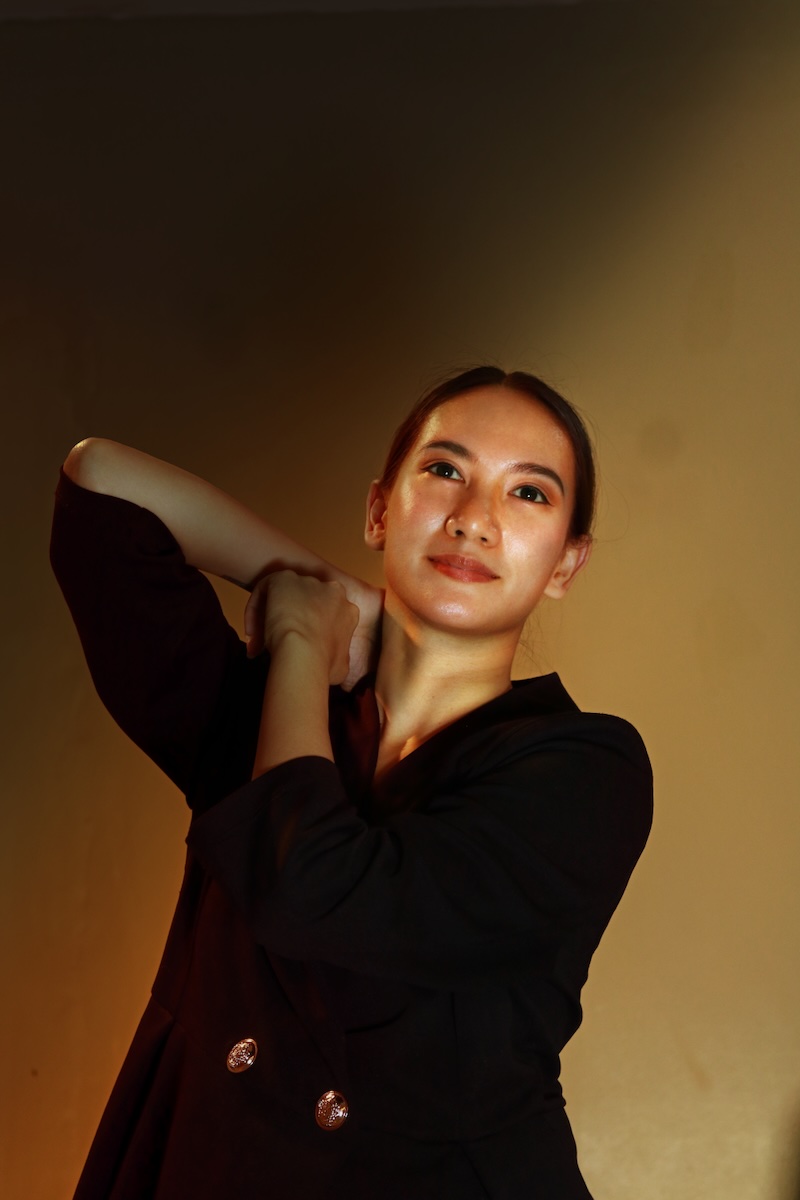
Akira Abao
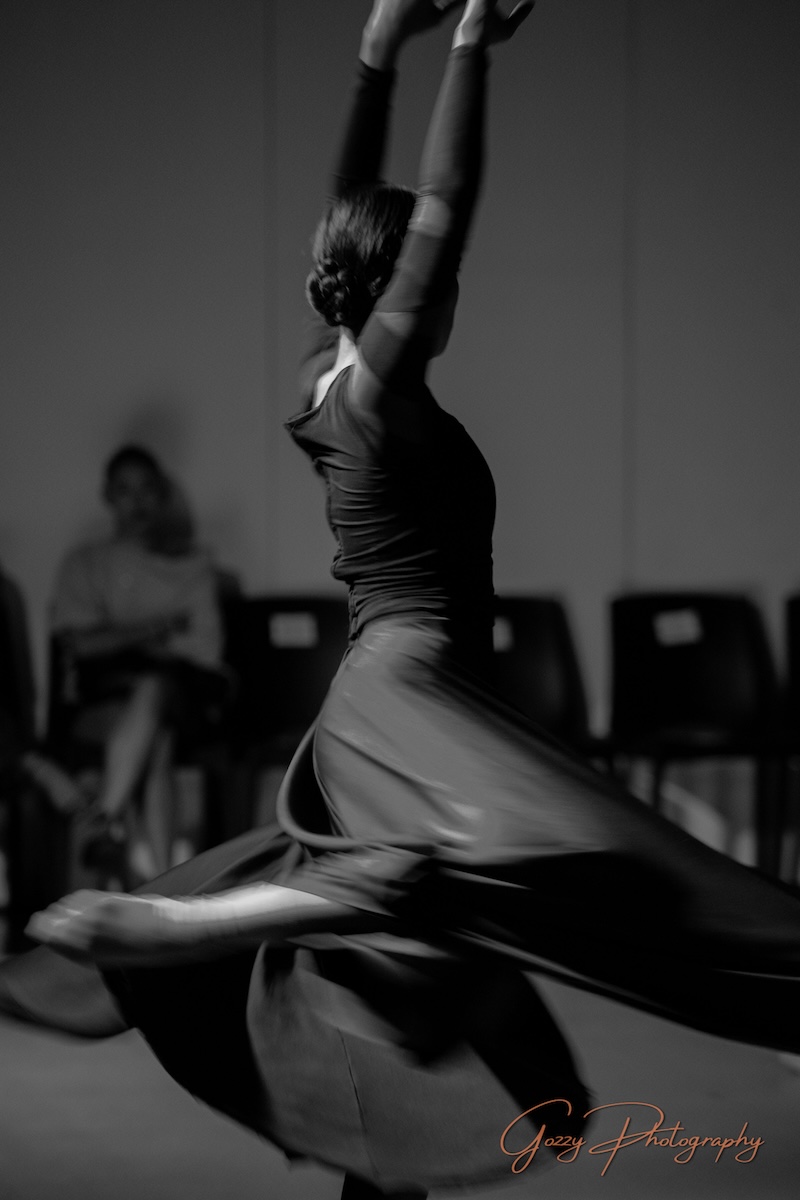
Akira Abao in ‘Oratio’
Mitchao started studying ballet at 18 while mastering the homegrown pulling technique. In 2015, she won the Encouragement Award at the Yokohama Dance Collection Ex. With colleague Akira Abao, she performed her choreography La Elle S’en Va, using the school’s contemporary style.
Meanwhile, she was sketching. In 2017 she gave Rodrigazo a birthday portrait painted with his leftover acrylics on simple paper. Seeing her potential, he mentored her. During the lockdown, she channeled her creativity to painting.
Today she serves as artistic director of The Project DP, with Abao as associate artistic director. She continues to refine her work in ballet and visual art, helping develop the pulling syllabus and organize a dance summit. Hungry to perform, she is mounting an exhibit of her hyperrealist works to help fund the company.
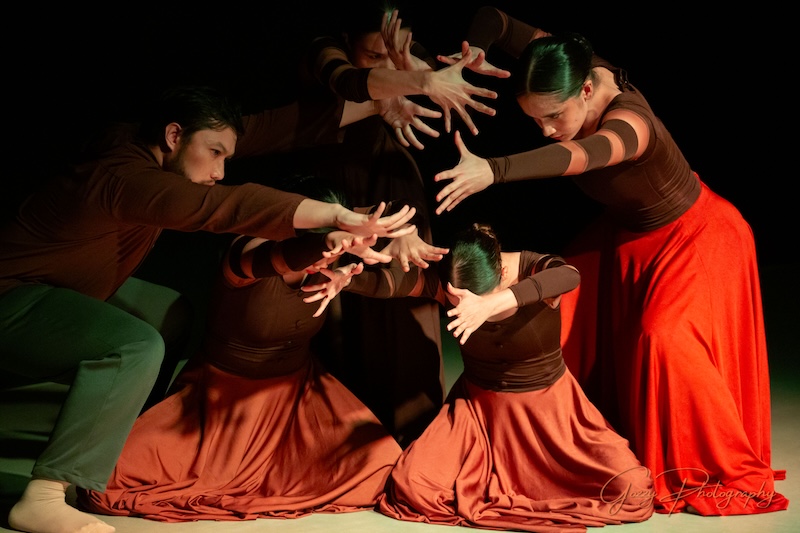
‘Sojourners,’ the cast searching for God
As choreographer, Mitchao says she responds first to sound and image. She began asking what prayer looks like in physical form. The answer was hands.
As choreographer, Mitchao says she responds first to sound and image. She began asking what prayer looks like in physical form. The answer was hands
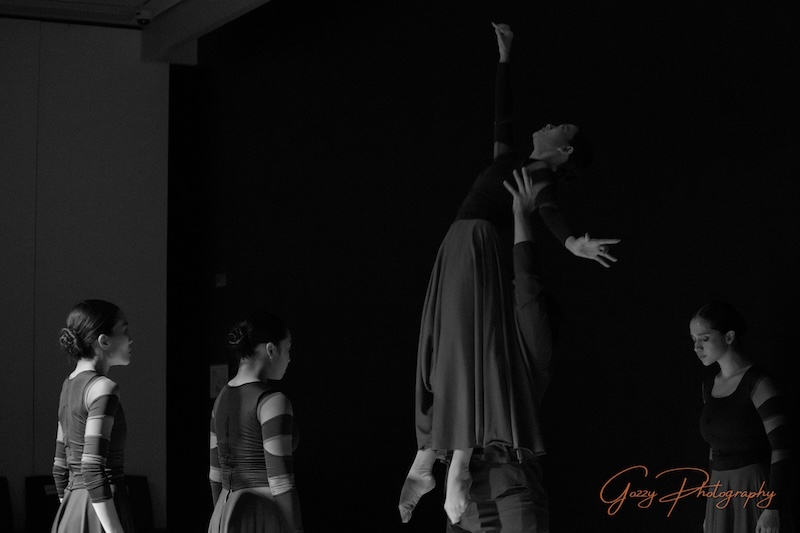
The Project DP offers a night of devotional dancing.
Palms pressed together, fingers lifted, hands open in surrender. Some of her paintings include parts of the body, but the focus remains on the hands. These images became the seed for Oratio, an evening of devotional dance.
The images of praying hands then expanded into gestures until the whole body entered the prayer.
In Oratio, hands and arms become expressive instruments, reaching skyward or clutching the body in step with the emotional arcs of the music. The hands strike sharply, calling out for God, or pound the chest in repentance. The choreography traces an inner conflict that matches the intensity of the music.
More than an expression of faith, Oratio is a showcase for the five company members. Dancers move in multiple directions, creating a tapestry of vulnerability and triumph. Sweeping circular motions, standing splits, and long backbends punctuate the music, while floor-based reaches stretch the vocal lines. Breath shapes the phrasing. Lyrical passages give way to sharp twists, angular patterns, and upward reaches. Every gesture reads as prayer, percussive arms and hand patterns cutting through the air as the torso coils with tension.
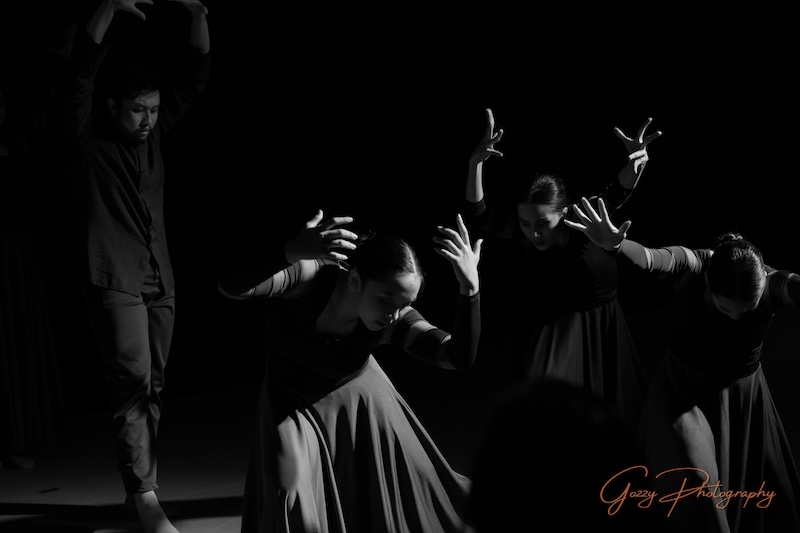
‘Sojourners’
Oratio opens with the group traveling as one, each carrying a private struggle. One moves with hope. Others press on because they must. The stage holds many emotions as they move toward freedom.
The first solo, The Whispers of the Many, centers on temptation and sin. Akira Abao portrays a struggle to reach God. She pleads silently for help yet loses focus as worldly whispers distract her. Faceless figures represent the doubts and pressures that test her prayer.
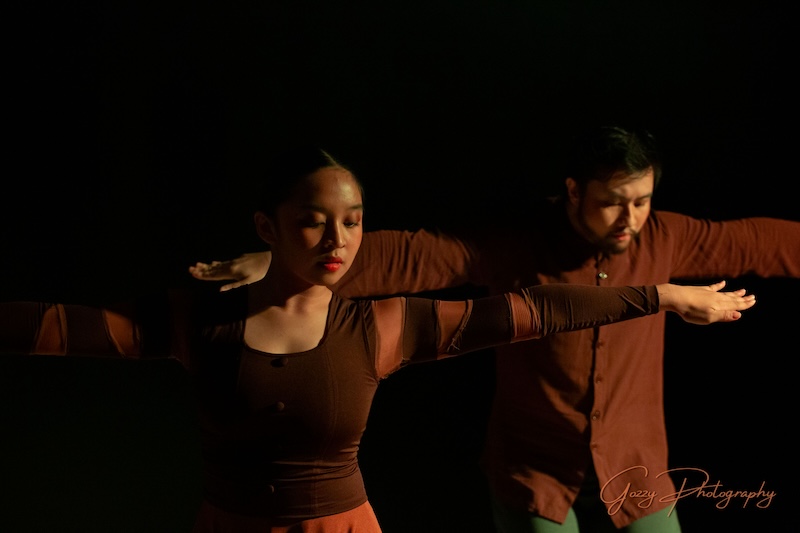
Bianca Manalo and Anton Alvia
The scene then turns to La Mia Preghiera, set to Puccini’s O Mio Bambino Caro, a prayer to the Holy Child. It was created for Bianca Manalo for the World Ballet Dance Grand Prix, where she won gold in Mongolia. The choreography intrigued judges for its pulling technique, unique to the Philippines. Yet, it was not only the curving movements and turns that lingered. It was Manalo’s smile, honoring the innocence of the Holy Child.
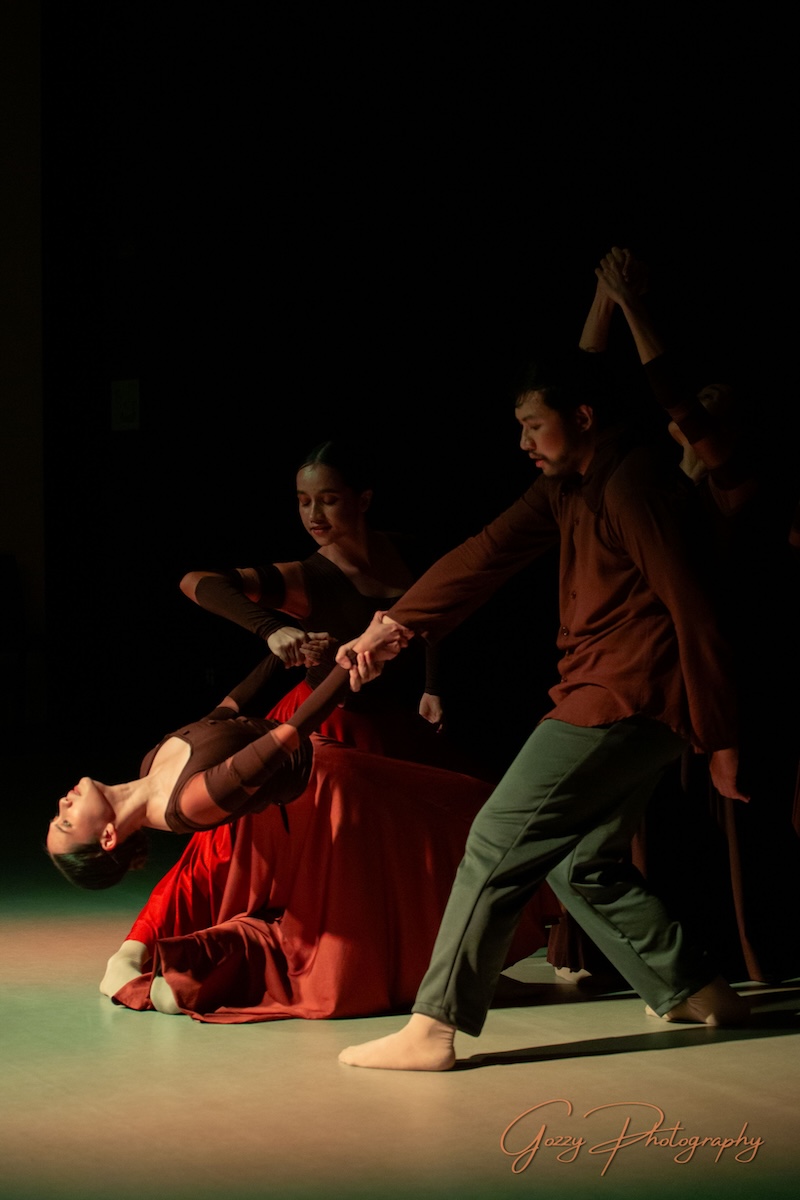
‘Intercession’ with Aldia, Abao, and Judtih Po
Anton Alvia dances to Bach’s Aire, representing connection with the Holy Spirit. The music suggests a presence that surrounds but cannot be seen. His solo, joined by a trio of women, symbolizes this invisible force through sweeping arm gestures, upward reaches, and an alertness to the space around him, as if feeling something move through the air.
Judith Po’s solo, Dei Gratia, unfolds as a conversation with God. As the soprano swells, she expands, reaching higher and wider. When the music softens, she gathers into stillness. Grace arrives not as spectacle but as release.
Mitchao’s solo, The Word, speaks of spreading the word of God. Fingers wiggle, hands reach. Flowing phrases meet sudden orchestral hits with grounded, percussive accents.
The dance ends in surrender and hope. By holding faith in the One, the work suggests, victory is possible under any circumstance.
‘Oratio’ goes on stage March 14, Saturday, 6:30 pm at St. Cecilia’s Hall, St. Scholastica’s College, Manila, performed by The Project DP, choreographed by Razel Mitchao and Akira Abao. Check them out on Facebook: https://www.facebook.com/DPP.Philippines, and Instagram: https://www.instagram.com/theprojectdp/


