
THE first time I met chef Francis Lacson, he had won his second Doreen Gamboa Fernandez Food Writing Award for writing about, of all things, grilled soup, linagpang, the subject of his winning essay. (And yes, he can write.) He prepared that same soup for the afternoon awarding event, and it was one of the best soups I have ever slurped.
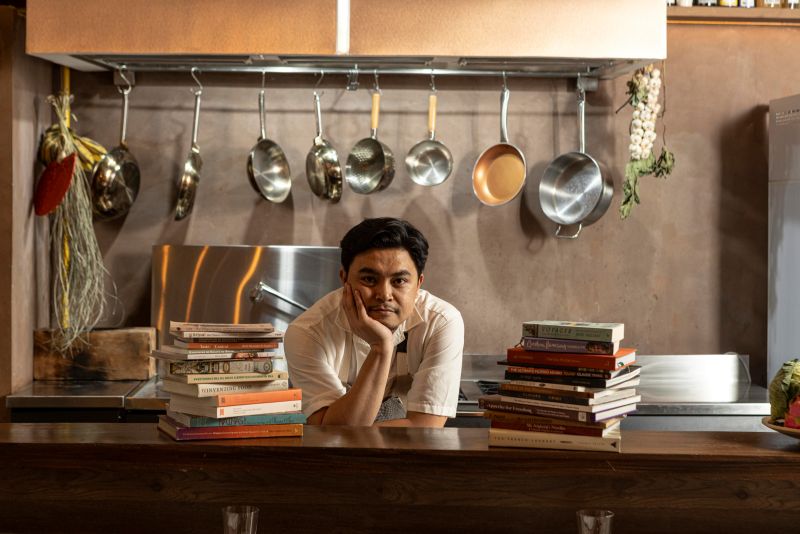
Chef Francis Lacson at the Chef’s ‘dirty kitchen’
Some time later, when he invited me to sample his seafood tasting menu at Leo Sea House in Marikina, I was also blown away. Not bad at all for a self-taught chef—yes, with no culinary training, but one who has zealously attended seminars, read books, and joined competitions.
This time, when he messaged—“Tita Alya, it’s ready!”—that the restaurant he and wife Diane (who is restaurant manager) had been dreaming of was finally set to open, it was time for another of his out-of-this-world culinary adventures. For Francis, eating isn’t just about stuffing your face; it’s a journey through Philippine history and its influences—he’s adamant about being that meaningful—and interpreting them with the most delicious morsels.
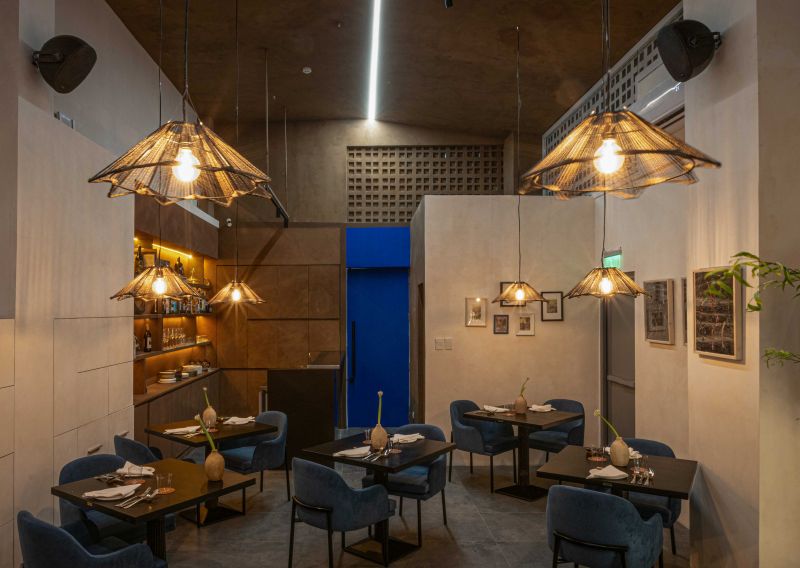
Digámo’s main dining area
It’s a place you must be willing to go to, in Marikina Heights, another planet if you’re from the south, but worth it for dedicated foodies. Digámo, the restaurant’s name, is a Hiligaynon word that doesn’t mean just cooking, but “setting things in order.” In a welcome spiel, Francis called it “an invitation to reclaim our Filipino identity through the palate. From the ancestral hearth to the evolution of a New Archipelagic Cuisine, we view the Philippines not as a map, but as a curated and ever-evolving heritage of flavor.”
Digámo is intimate and cozy, with seating at the Chef’s counter or at tables, with a 10-course tasting menu served. We were treated to an inaugural 14-course menu that had us swinging through an archipelago of different but familiar flavors, presented in the most unique way—aptly described as a “playful evolution.”
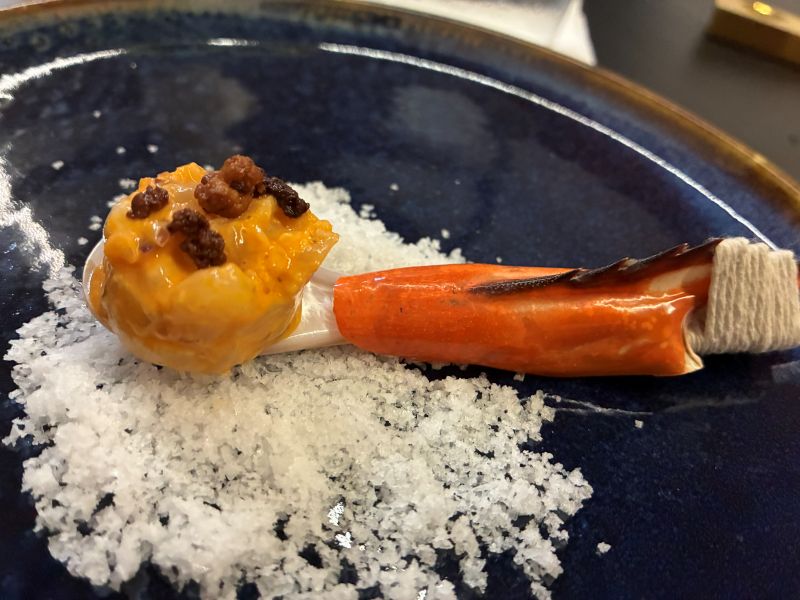
Binabak, ‘ulang’ with ‘aligui,’ cassava leaves, and coconut milk, topped with ‘latik’
The pretty welcome snack, Nilupak, made of saba, palm sugar, and nata de batuan, which came in a bright pink color, sat atop a crisp cassava cake, and was a sweet start. This was followed by Binabak, a taste of the sea, ulang or river prawn prepared kilawin-style, dressed in its own fat (aligui), and mixed with cassava leaves and coconut milk before being unexpectedly topped with latik. If that sounds like an explosion of flavors in the mouth, that’s exactly what it was. Finally, Suam, a tasty drink of rice milk and pandan, fermented for 24 hours, wrapped up what was only the introduction.
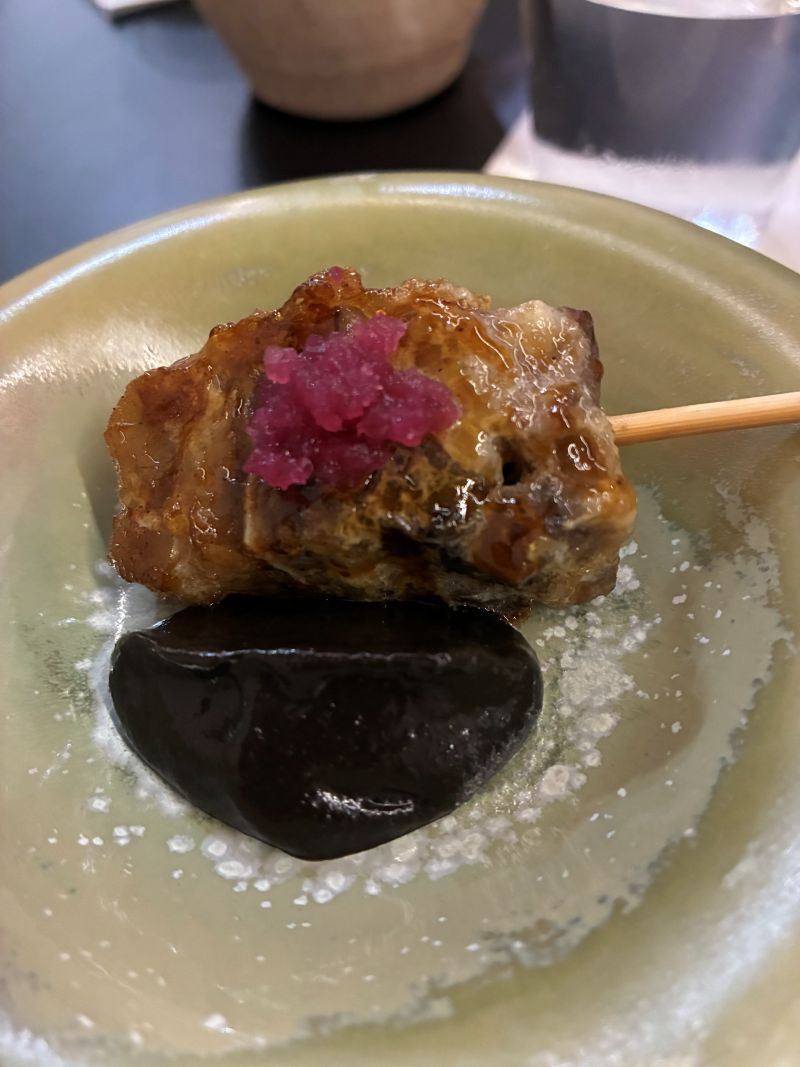
Tenga at Tenga at Tenga, wood ear mushroom, pork ear, and abalone with a corn smut dip
The menu proper began with dishes that spanned the pre-colonial era to the beginning of the Hispanic years in the Philippines. For a first course, things couldn’t get more playful than a dish called Tenga at Tenga at Tenga on a stick, consisting of tenga ng daga (wood ear mushroom), tenga ng baboy (pork ear), and abalone (sea ear), with a corn smut dip. The contrast in flavors and textures was insane.
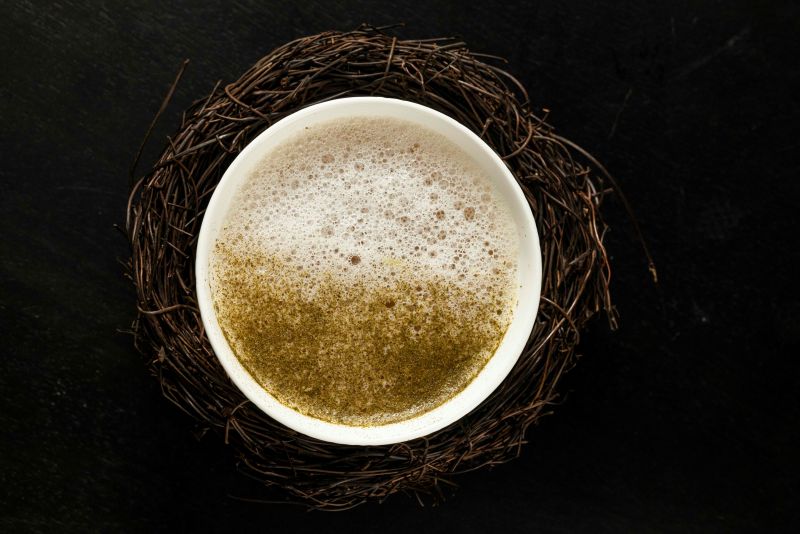
Linagpang, made from grilled young native pullet and smoked shrimp, topped with ginger-lemongrass foam
Francis would have been amiss if he didn’t serve his now famous Linagpang, made from grilled young native pullet and smoked shrimp, this time topped with a ginger-lemongrass foam and, as if the yummy soup wasn’t enough, there was some silky chicken taho at the bottom of the bowl!
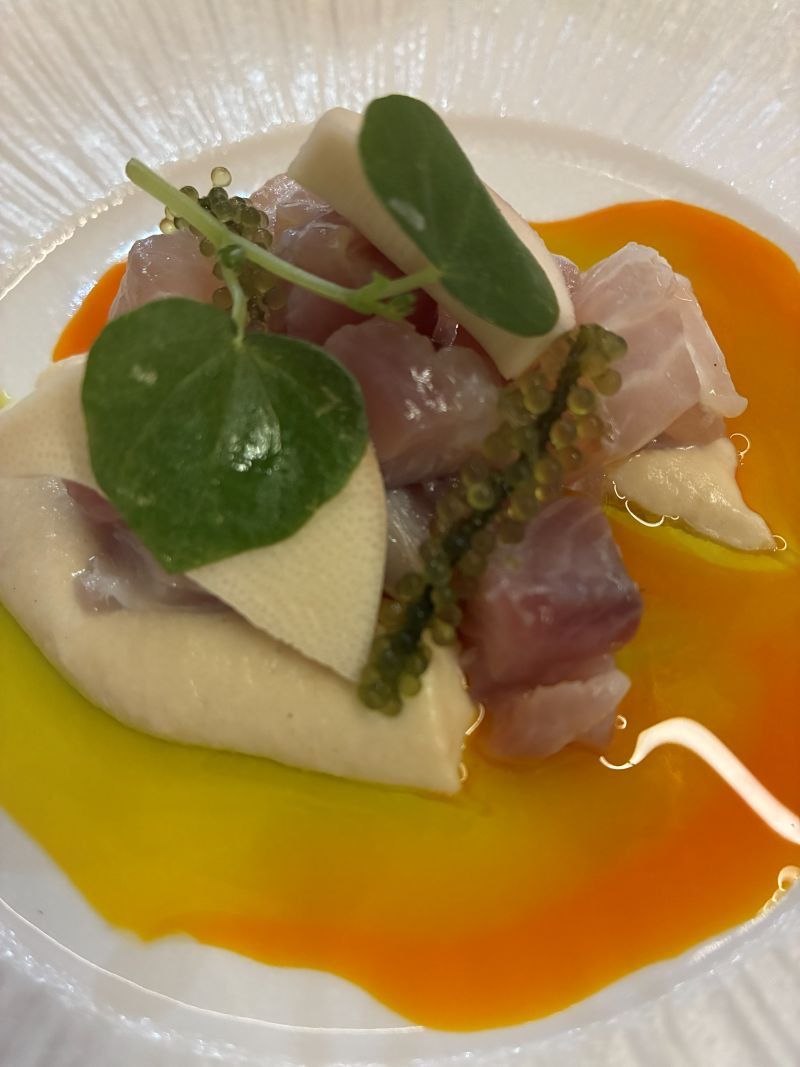
Kinilaw, fresh fish with cold ‘pili ‘purée, oil of ‘palapa,’ chili essence, and pickled ‘ubod’
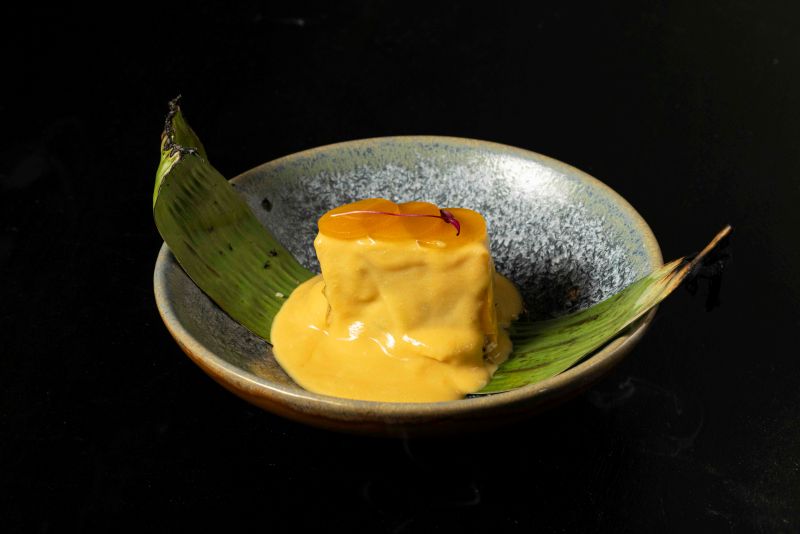
Tamales of steamed pumpkin, Bukidnon honey, unsalted butter, rice flour, and coconut oil, served with ‘burong hipon,’ pickled pumpkin, and salted egg sauce
More out-of-the-box creations followed. Francis’ Kinilaw, using fresh fish from the Marikina Public Market, came with a cold pili purée, oil of palapa (a Maranao condiment made from native white scallion, pounded ginger, chili, and toasted grated coconut), chili essence, and pickled ubod. His Tamales, which had won Francis an award, combined pumpkin, Bukidnon honey, unsalted butter, rice flour, and coconut oil pressed into banana leaves and steamed, served with burong hipon (what?!) and pickled pumpkin, plus the icing on the cake—salted egg sauce. This is not to be missed.
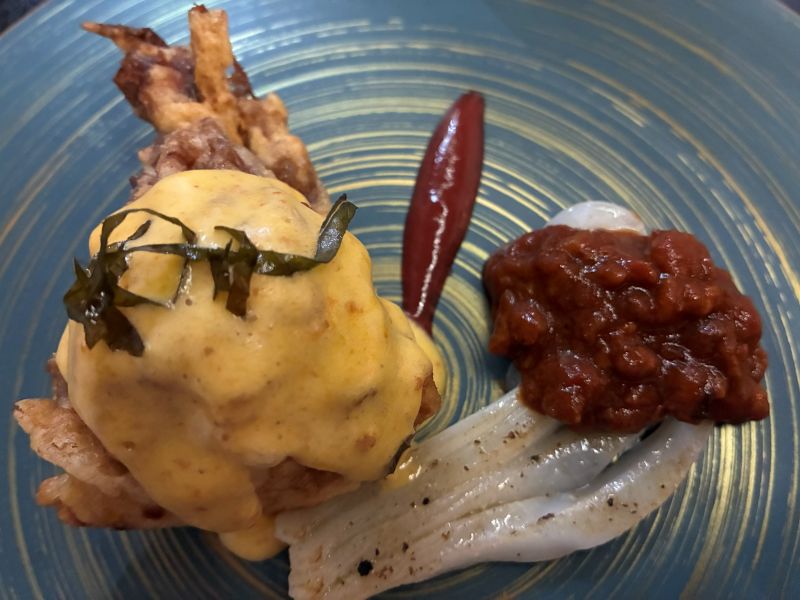
C3, softshell crab and squid cut into strips, with strawberry ketchup and ‘talangka’ dressing
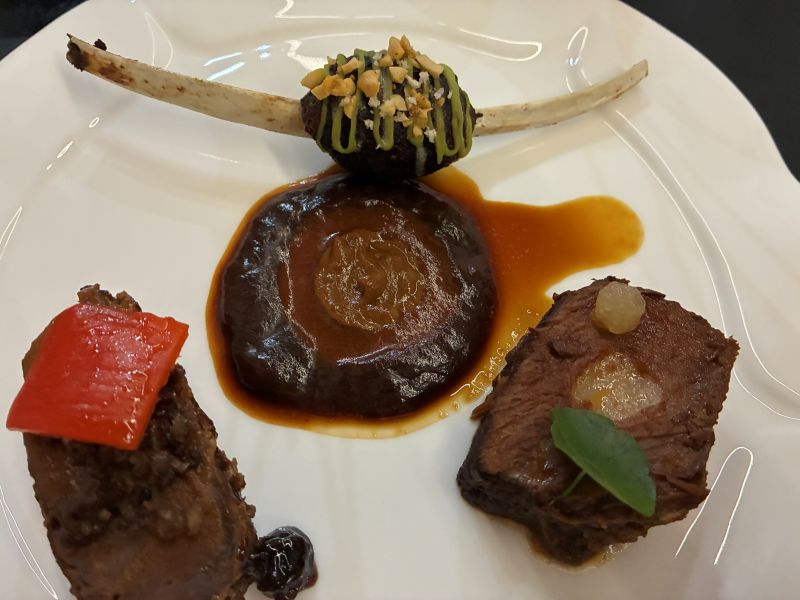
His version of Kulawo, grilled eggplant, was served with puto galapong and watermelon jam. The C3 paid tribute to Maria Orosa’s banana ketchup, but with a strawberry version, for dipping softshell crab and squid cut into strips, plus added talangka dressing. A nod to Tuguegarao, the hometown of Francis’ wife, Diane, was the Pancit Batil Patung of sautéed miki noodles and vegetables with tender slices of grilled carabeef. The last savory course, Sarsa Confusion, a more carnivorous experimentation now heading into the American Period of our history, was a hearty plate with a sample each of menudo, kaldereta, and mechado, eschewing the excessive tomato sauce that often drowns out the distinction.
The conclusions were a guyabano-pineapple Iskrambol, with the guyabano topped with salted cream and served with grilled pineapple as a palate cleanser, and the ingenious Five Stages of Coconut, which featured different versions of the favorite Pinoy ingredient, as identified by Bicolanos: the very young sagbayluwag (slimy, translucent), the young, jelly-like butong best for fruit salads, the more firm malakanin used in pies, the chewy ungol used in bukayo, and the lahing that produces gata—all mixed with corn. I didn’t know those names, either, which made this an even tastier conclusion.
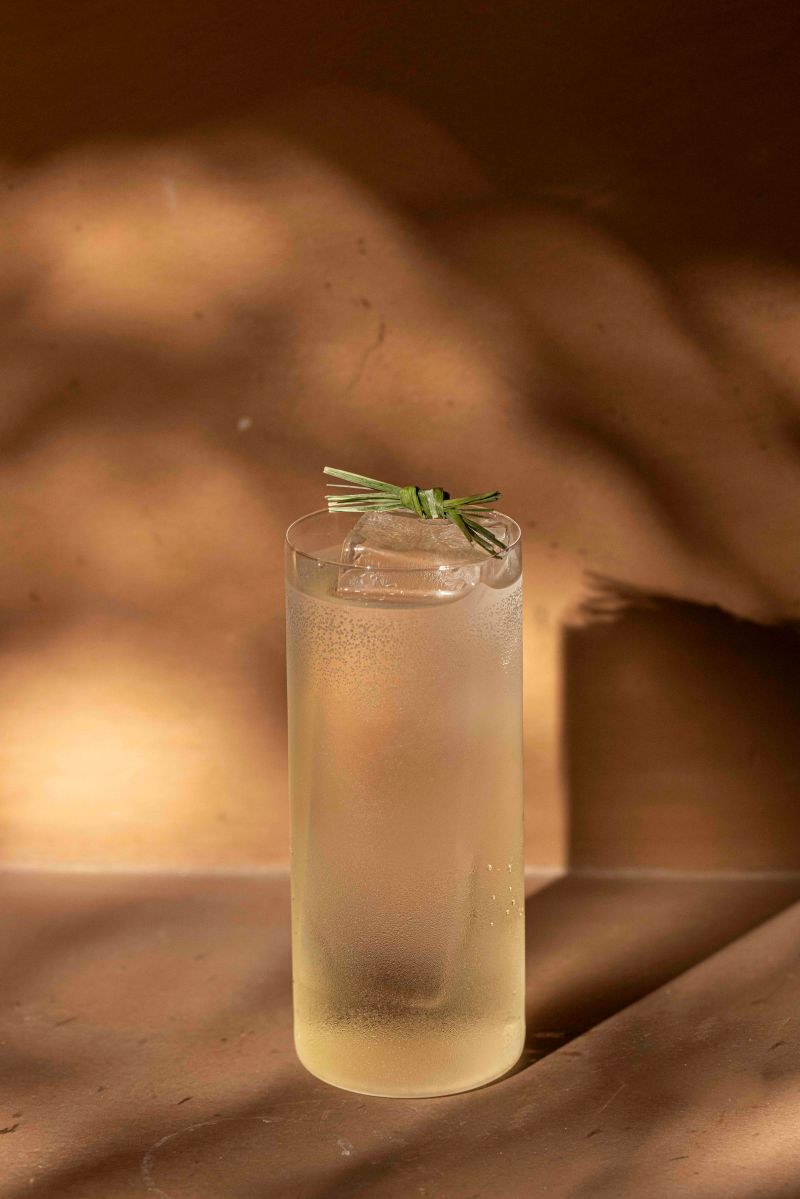
The refreshing Nipa Highball, made with ‘pinakurat’ vinegar
Before I forget, the cocktails were also outstanding and worth going back for, truly refreshing but light enough to not get you too tipsy to enjoy the meal. My favorite was the Nipa Highball, made from fresh tuba, lambanog, lemongrass cordial, coconut water, soda water, and the magic ingredient, in my opinion: pinakurat, the vinegar that gave this a wonderful kick. The Four Seasons Spritz had guyabano wine, Aperol, mango liqueur, prosecco, pineapple soda, soda water, and aromatic bitters.
Sitting for a tasting menu experience at Digámo will take you at least a couple of hours, because, well, this ain’t fastfood. I was worried I would be left hungry by the tasting portions, but that certainly did not happen. Digámo is about a talented young chef willing and able to explore his heritage—Francis grew up in “dirty kitchens” in Mambusao, Capiz, by the way—to inform food that, as the menu states, presents the Filipino soul with a modern edge. You leave the place full—and quite proud to be Filipino.
Digámo opens for business on May 8, and is at 1FG, GCN Commercial Building, 240 Narra St., Marikina Heights, Marikina City. Prices for a 10-course meal are P3,950 at the chef’s table and P3,500 at the main dining area (inclusive of VAT, exclusive of 10 percent service charge). It is open Wednesdays to Sundays, with seatings at 5:30 pm and 8 pm. Reservations are via the website, digamo.ph., at reservations@digamo.ph, or tel. no. (+63 919) 648-3941.


