
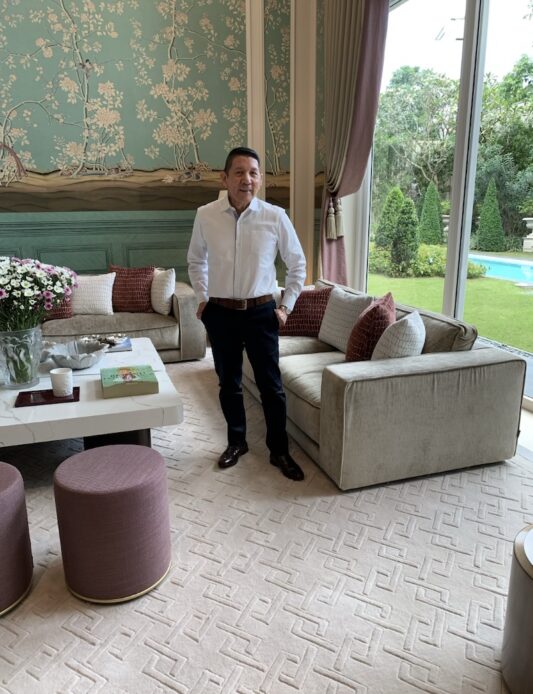
Architect Ramon Antonio marks 50 years in design with a tribute to his Filipino roots: a furniture piece for the Spanish company Punt Mobles. The collaboration, facilitated by Studio Dimensione, the brand’s exclusive distributor, produced the Harvest Side Table, a sculptural work inspired by the traditional carabao plow.
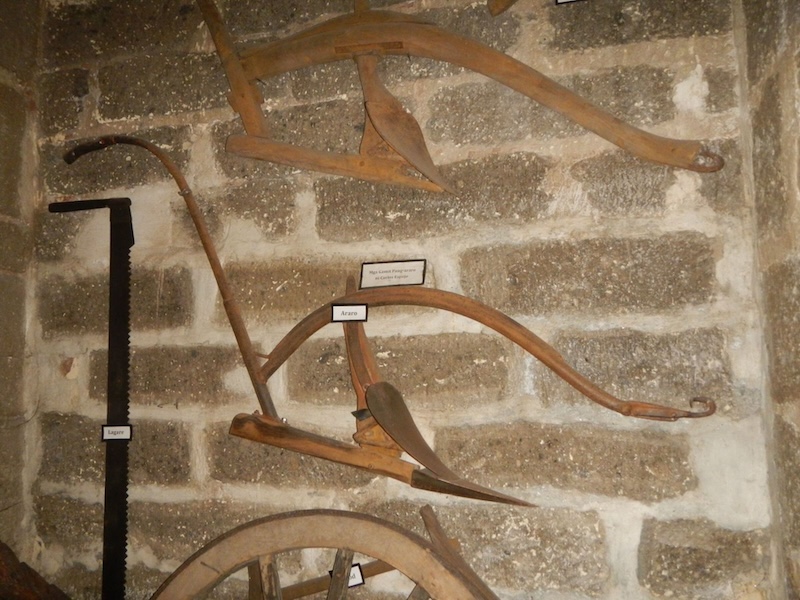
“The inspiration had to be something Filipino,” said Antonio. “When I was asked to design a Philippine table, what went through my mind were childhood memories of our country house in Taytay. I always remembered the beautiful fields around Antipolo and Cainta, as well. They were all rice paddies with haystacks, bamboo and mango trees. But what struck my eye, what was very Filipino, was the carabaos. These water buffalos cultivated the ground with plows before planting. As the seedlings grew, the farmers then waited for a bountiful harvest.”

Harvest Table Sketch shows how Antonio still favors manual drawing
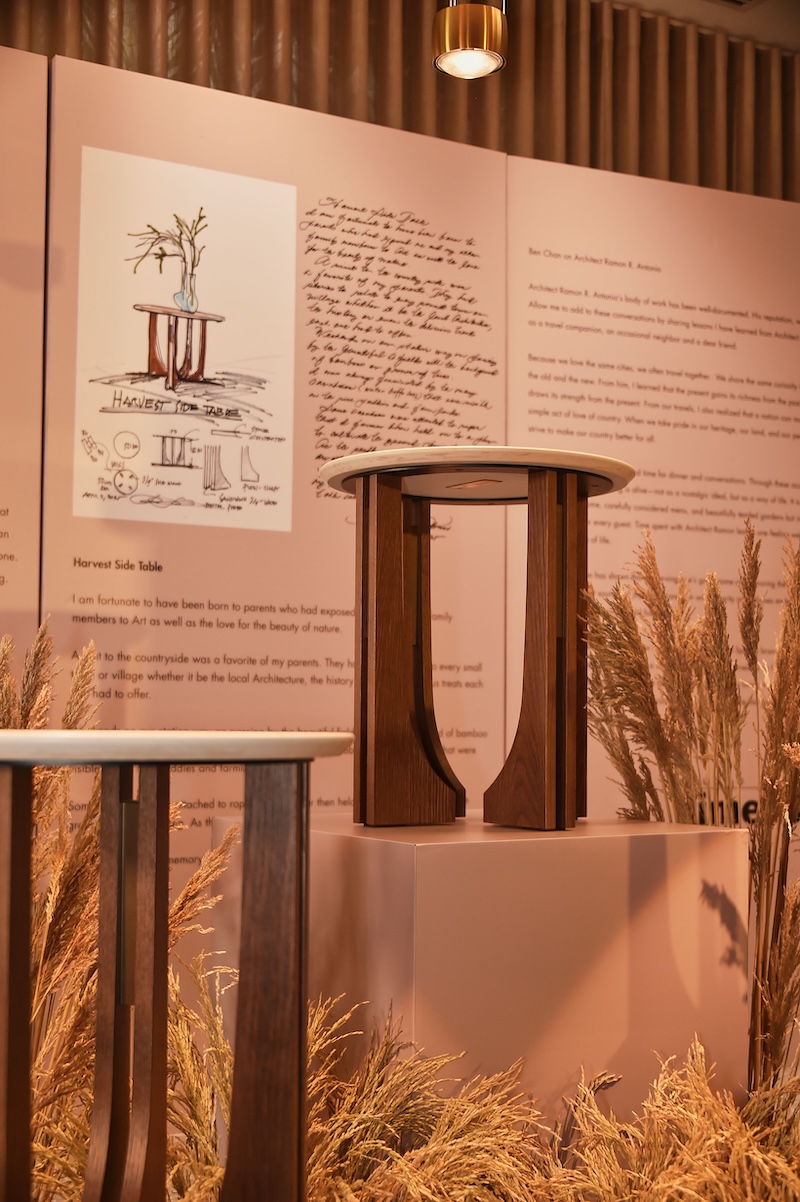
Harvest Side Table at the launch at Studio Dimensione
Antonio’s Harvest Side Table transforms the geometry of a traditional carabao plow into refined modern furniture. The legs echo the angled sweep of a plow blade, forming a triangular structure that is both stable and visually light. Each leg is crafted from two pieces of oak joined by a slim aluminum connector, which holds the timber securely while emphasizing the leg’s clean, geometric lines. The tabletop is made of a durable engineered surface that has the character of natural stone, with subtle veining that adds a touch of elegance. Wide at the base and tapering upward, the legs suggest the plow’s strength while evoking forward movement, turning a utilitarian agricultural tool into a sculptural object that celebrates Philippine heritage.
The son of National Artist for Architecture Pablo Antonio, Ramon Antonio grew up immersed in design, following his father to job sites. His father, who studied architecture at the University of London under a scholarship, taught him the fundamentals of layout, proportion, logic, and ventilation.
Antonio earned his architecture degree from the University of Santo Tomas and chose to carve his niche in residential design. His first house in Makati, set on a fan-shaped lot, was a challenging debut. Yet, it became the foundation of his career. “I was able to create something from that odd shape. That was the start.”
Even in this era of technology, Antonio remains devoted to his traditional tools: pencils, marker pens, and paper.
“I have been blessed. If you were to ask me what my favorite project was, it’s hard to say because, whether small or big, they were like my children,” he says. Like a parent, he is known to be exacting with clients when it comes to maintaining the house.
“I’m not strict. I want to do what is correct, what is proper. What’s very important is that a house must be practical and logical, especially in the choice of accessories, the décor. Everything has to blend. I’m trying to create a theme. Another important factor is how the house has been cleaned. Even after many years, my houses get ratings, report cards, showing which ones are well maintained.” Antonio is able to inspect the homes in Makati where he lives.
“I’m proud to say that many of my clients have become my good friends. When I design a house, I try to reflect the personality of the owner. Each one tells a different story. That’s why it is a challenging profession because it’s very personal. I don’t just build a house; I give a lifestyle. Even the way they entertain, how they present their table setting—all of this is very important. It reflects gracious living. That’s what I enjoy.”
Antonio himself keeps an impeccable home, from food to service to ambience. “As an architect, when I build a house, I can’t imagine myself sitting down and having a cup of coffee in anything less than perfection. What kind of house would suit my design? Any design, really.”
‘As an architect, when I build a house, I can’t imagine myself sitting down and having a cup of coffee in anything less than perfection’
Through the years, his clients have included the children and even the grandchildren of the original homeowners he designed for. Along with his focus on gracious living and lifestyle, his design philosophy emphasizes timelessness and durability. One of his well-known clients is celebrity doctor and influencer Dr. Vicki Belo. His first residence for her embraced a tropical style, while the second leaned towards a more European aesthetic.
“I always like to use natural materials—stone, wood. One of my trademarks is my fondness for courtyards, because I feel gardens are very important. I always say the Philippines is the Pearl of the Orient, so I try to bring that feeling into my homes.”
Antonio’s focus on practicality, lasting materials, and timeless design found expression in his project for Studio Dimensione. The Harvest Side Table, realized by Punt for Antonio, embodies this philosophy through meticulous craftsmanship and thoughtful material choices.
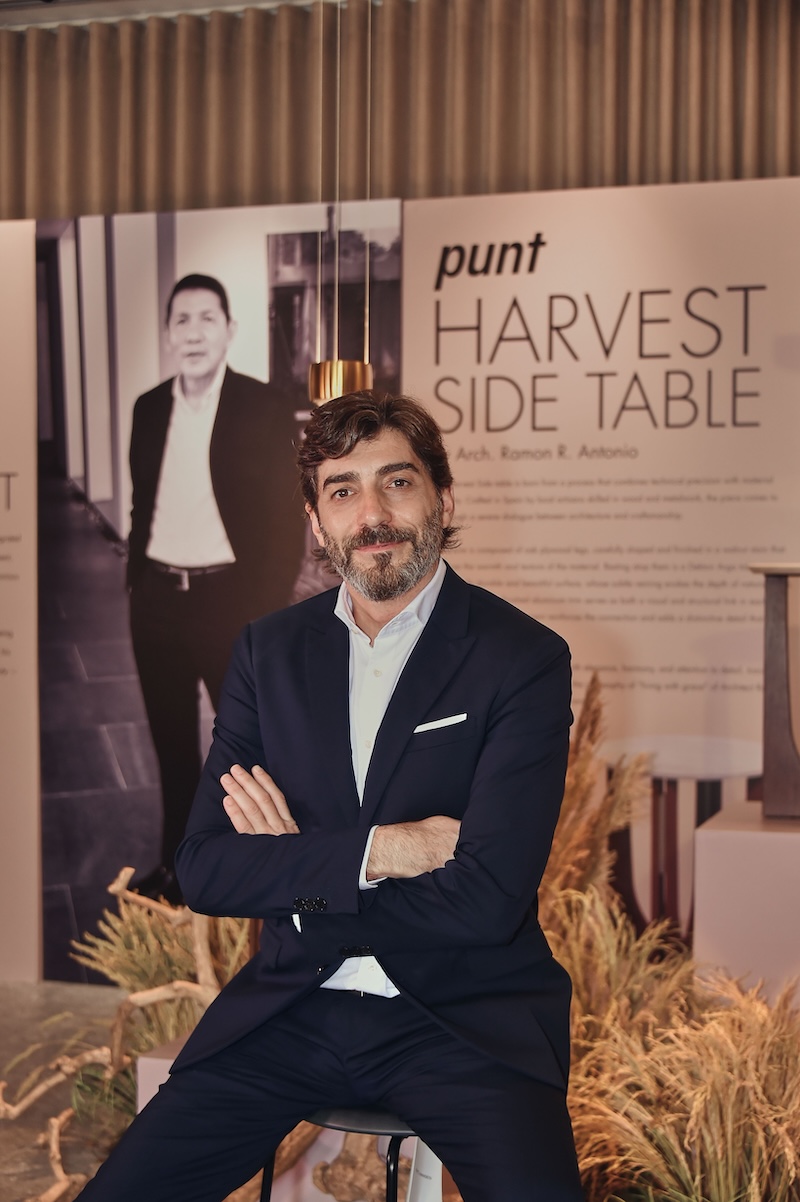
Punt CEO Pablo Ramiro
“Behind our furniture, there is always a designer,” says Punt CEO Pablo Ramiro. “The company was founded on this principle: The furniture must be more than just a useful piece.”
The collaboration was facilitated by Studio Dimensione brand manager Marcella Luca, as Punt sought to work with a Filipino creative. “We combined different materials, using an aluminum strip to hold together the two pieces of walnut from Canada that form the leg. The top is a ceramic-and-marble composite from Spain, and the furniture is handcrafted in Valencia. We worked with him on every detail, from dimensions to materials. All screws are hidden, so you see the pure form.”
The Chan family, owners of Studio Dimensione, first encountered Punt at Salone del Mobile in Milan and were drawn to the brand’s disciplined, modern aesthetic. A connection was forged when they visited Punt headquarters in Valencia. Punt (Spanish for “point”) was named to express the founders’ belief that every design begins with a single point of intention. The company’s early language was shaped by Scandinavian influences: clean lines, spare silhouettes, and the straightforward use of natural materials such as oak and walnut. But instead of the cool austerity associated with Nordic minimalism, Punt interprets it through a Spanish sensibility—more tactile, more layered, and sensitive to how materials register light.
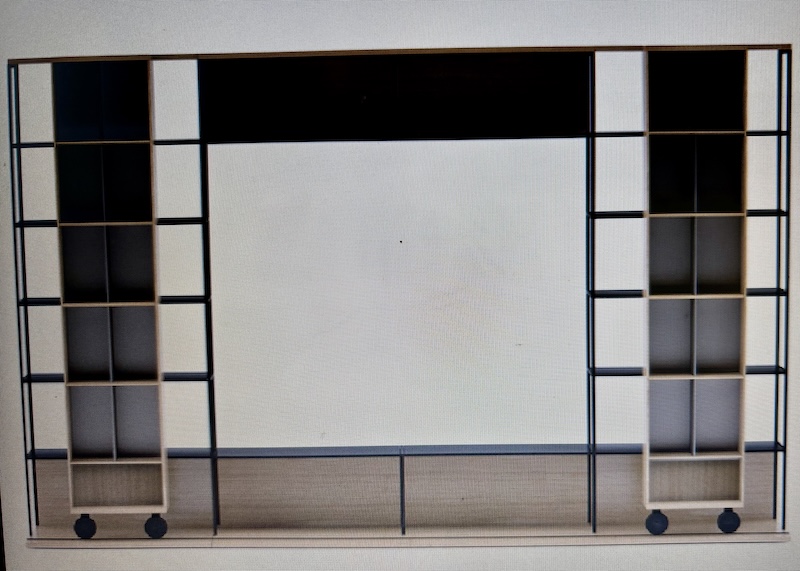
Punt’s signature La Literatura mobile bookcase with wheeled units
That balancing act is clearest in Punt’s signature piece, La Literatura, its best-selling sliding library bookcase. The system is built on a platform with tracks for the wheels. It supports overlapping shelves and ledges that move sideways. Ramiro slides the removable front shelf to demonstrate how it reveals the storage behind. In larger models, clients can add two or three movable front shelves. One version is done in glossy lacquer; another uses walnut shelves framed by bronze-lacquered borders. Yet another variant uses smoked glass and has the profile of a ladder bookcase; a black version combines glass with walnut.
Across Punt’s cabinets, credenzas, and sideboards, the same logic applies. Hinges, hardware, and mechanisms are completely concealed. A push-to-open system allows the drawers and doors to function without handles, keeping the fronts completely smooth. Some models use slatted doors that glide quietly along hidden tracks. Aluminum trims—whether gold, black or bronze—are anodized in Spain through a labor-intensive process that requires repeatedly submerging each piece to achieve the exact shade. Even the metal mesh inside select cabinets is cut so the grain aligns. “By hiding all the mechanisms, the client sees only the clean design,” Ramiro says. The palette is composed of soothing neutrals such as oak, walnut, soft lacquer tones with occasional accent colors. “We are trying to create a calming environment.”
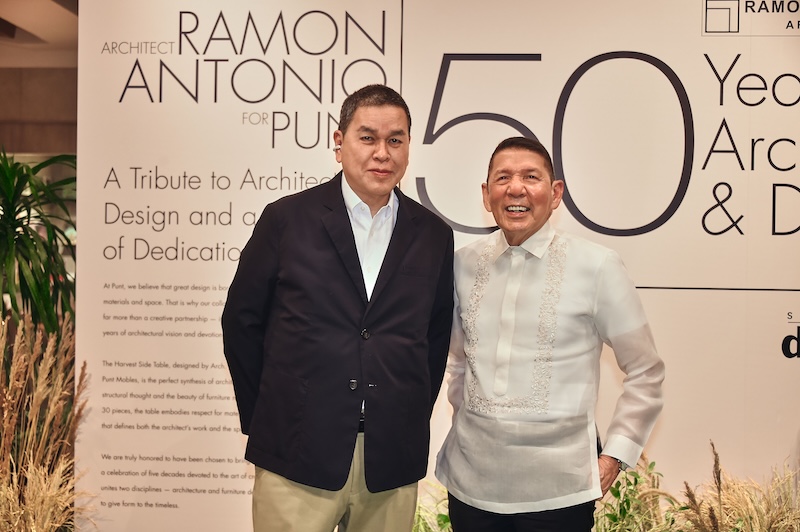
Suyen Corp founder and CEO Ben Chan and Ramon Antonio
Since joining Studio Dimensione in 2022, Punt has found strong traction in the Philippines. “We are really happy with Studio Dimensione,” Ramiro says. “They have a beautiful team. Mr. Ben Chan and his family trust us. They understand that a small Spanish brand like ours can find its place in the market.” Punt now sells in more than 80 countries, with established markets in the United States, Spain, France, England, and Germany, and a growing presence in Hong Kong, Japan, Singapore, and the Philippines. “The Philippines is becoming one of the most important markets for us,” he says. “Clients here understand the product.”
Ramiro expects the relationship to deepen. “For 2026,” he says, “I hope we have another Filipino collaboration.”


