
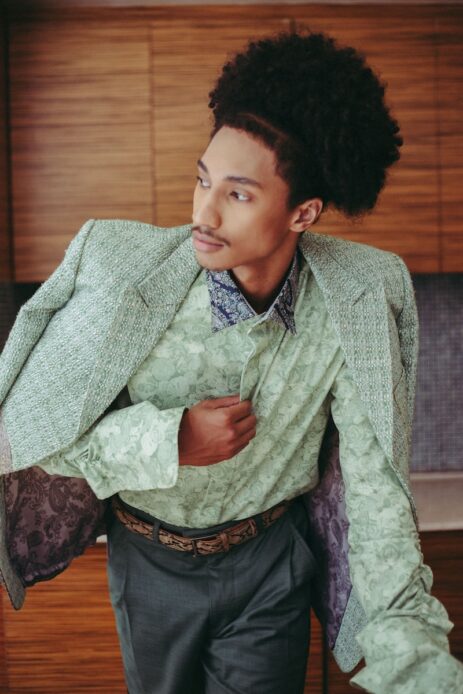
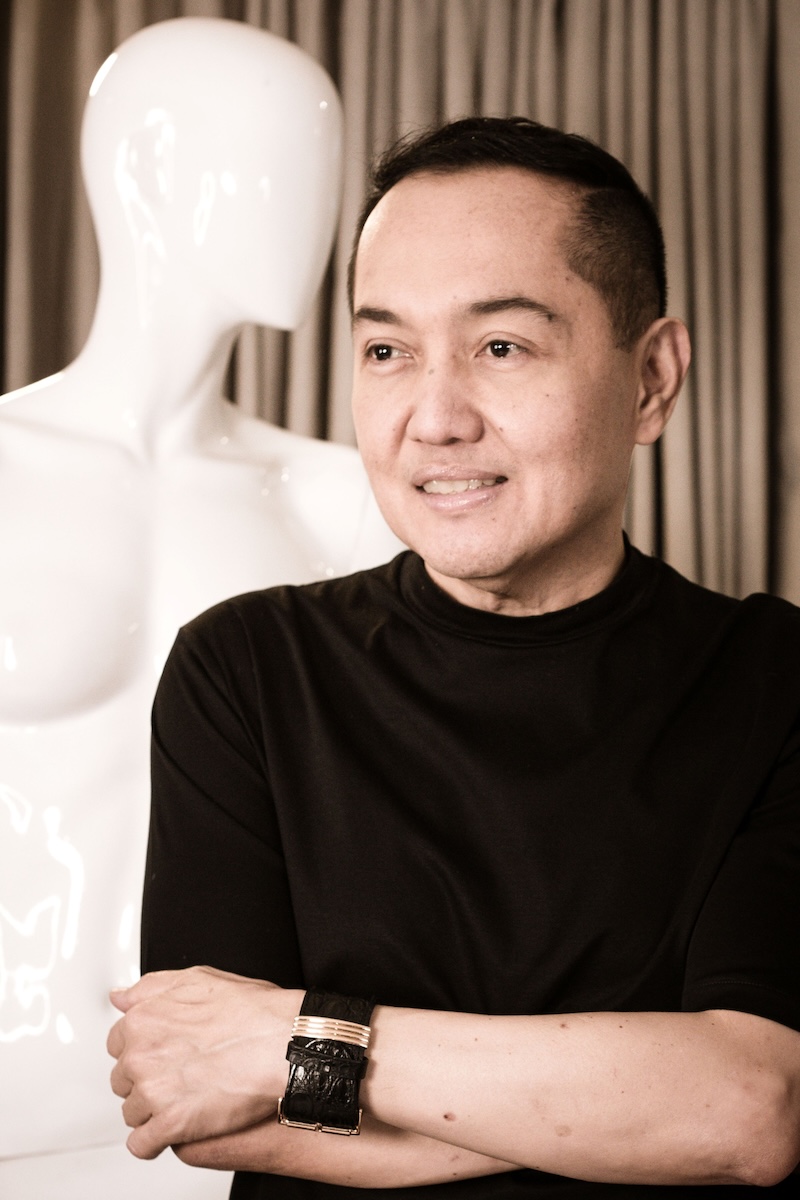
Randy Ortiz: Designing menswear, he knows what style line to cross—and not to cross. (Contributed photo)
Randy Ortiz dresses up the man who cares about how he looks. After four decades in fashion design, he is finally seeing more of them. Filipino men are showing up in his shop ready to experiment with wide trousers, loud prints, and jackets with a little swagger.
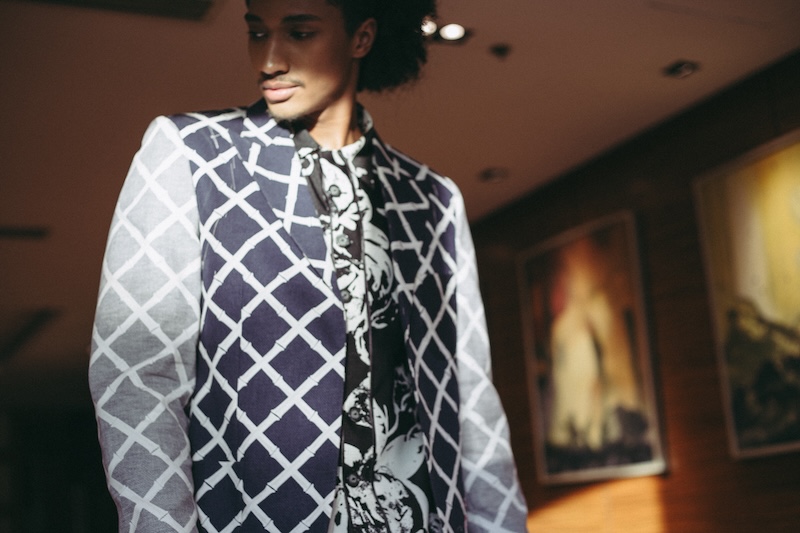
Mix of diamond patterns and bold florals
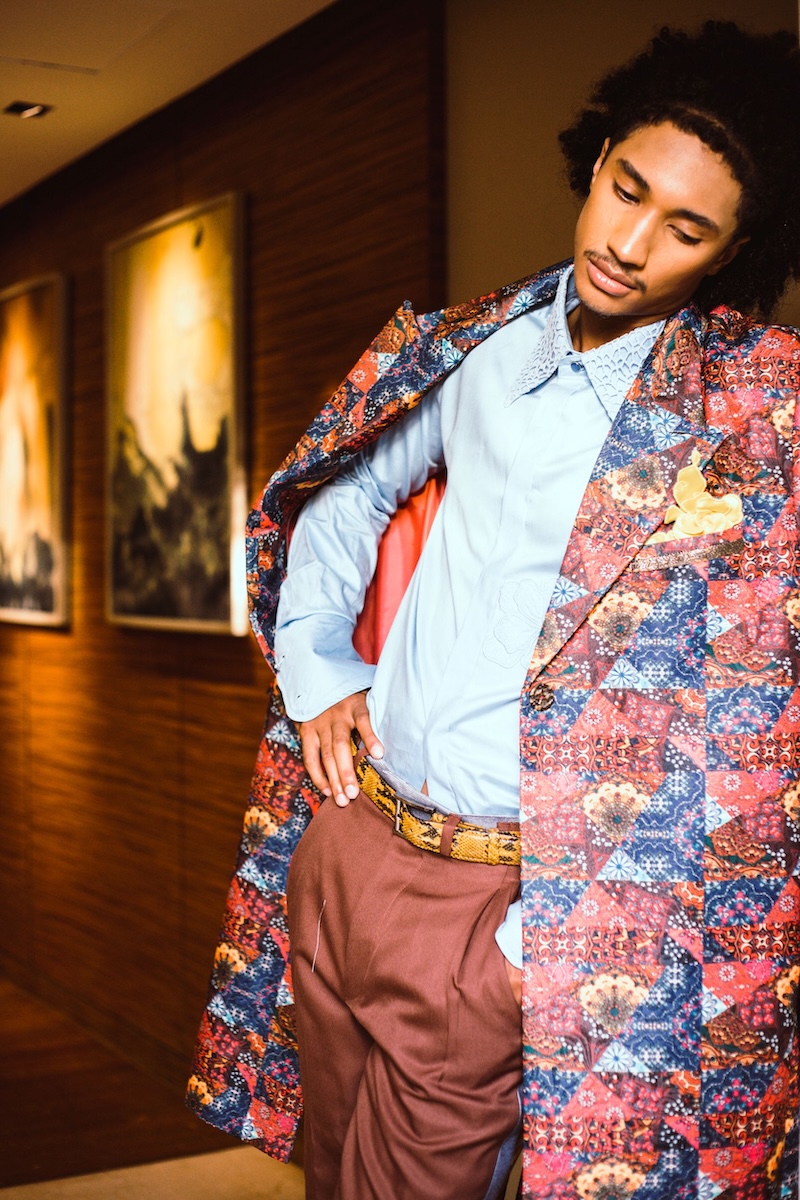
Patchwork-print overcoat in rust, blue, and gold, layered over light blue shirt with intricate laser-cut lace collar, accented with snakeskin-pattern belt
At the start of his career, Ortiz was considered daring in an era when menswear was safe and predictable. His design language has always fused precision tailoring with Filipino flair. He created a niche where practicality met decorative art. His palette has always ranged from fresh powder blue and magenta to earthy sand and rust. His bold floral shirts are worn under diamond-pattern jackets and patchwork print blazers. Geometric motifs meet botanical prints to create a dense, dandy aesthetic.
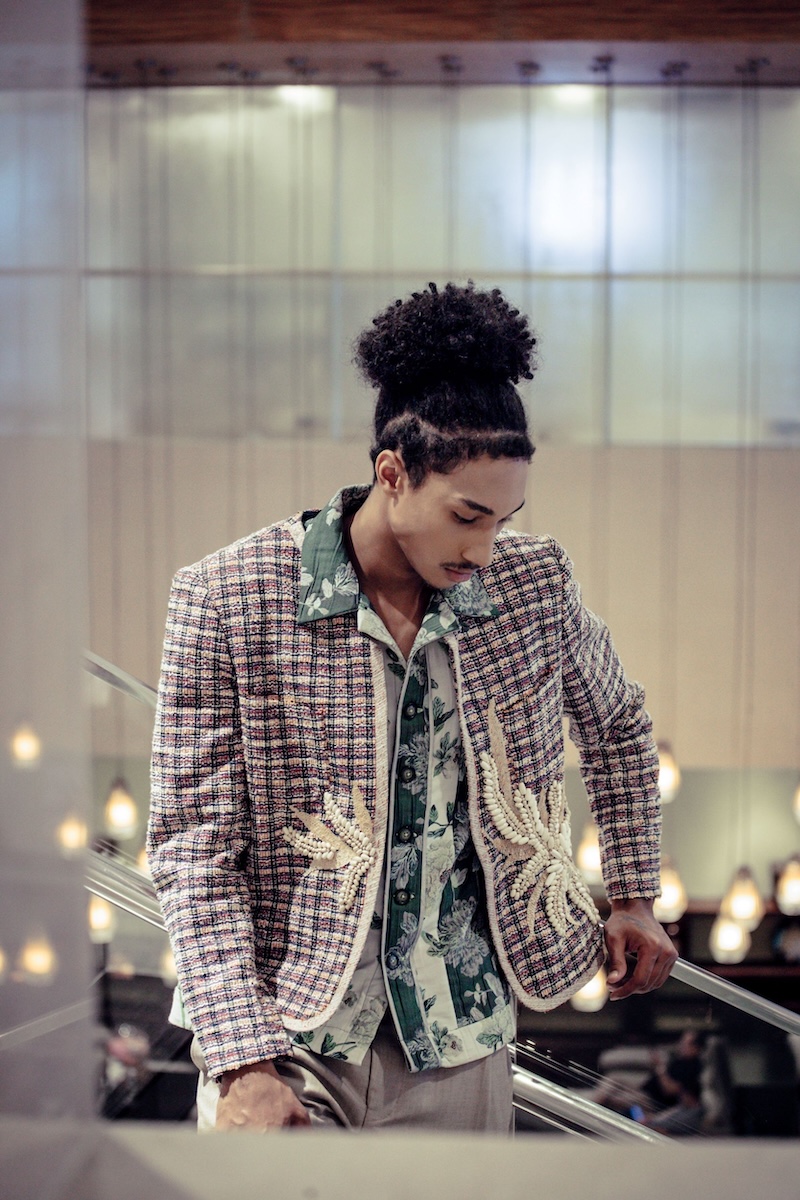
Chanel-inspired plaid jacket with nature-inspired appliqués and botanical-print shirt
For Randy O. Man: #Unofficial 40 on March 19 at the Peninsula Manila, Ortiz keeps this approach, letting prints and textures play off each other, while the shapes stay relaxed but polished. The collection is Randy Ortiz’s design coming full circle—for instance, a mix of colors, textures, and fabrics, where a single jacket can combine multiple prints, multiple materials for a look that is playful and refined.
“In Philippine fashion, I have contributed something revolutionary,” he says. “I’ve reinvented menswear without crossing the line, where men are willing or not willing to wear. There’s always compromise. Sometimes I let loose.”
Thirty-nine years ago, the designer began modestly, running a backyard operation from his father’s house. His earliest influence was close to home. His father, Rodolfo Ortiz, was a politician and judge, and dressed the part in barong and tailored suits. But off duty, he showed a lighter side. He favored Hawaiian prints from the 1950s and 1960s, with plaids and dotted shirts. Ortiz has kept many of those pieces. The suits, neckties, tie clips, cufflinks, and even the rubber bands from that era remain carefully preserved.
The designer’s breakthrough came in the early1990s, when he went into retail with the Randy Ortiz brand in retail store’s Sari-Sari Panlalaki. The line stood out immediately. Menswear featured his signature print-on-print combinations in bright crayon colors. He reintroduced the waistcoat as everyday clothing rather than formalwear. It was paired with polos, T-shirts, and jeans. Students of Manila elite schools were among the first to embrace the looks and quickly became loyal customers.
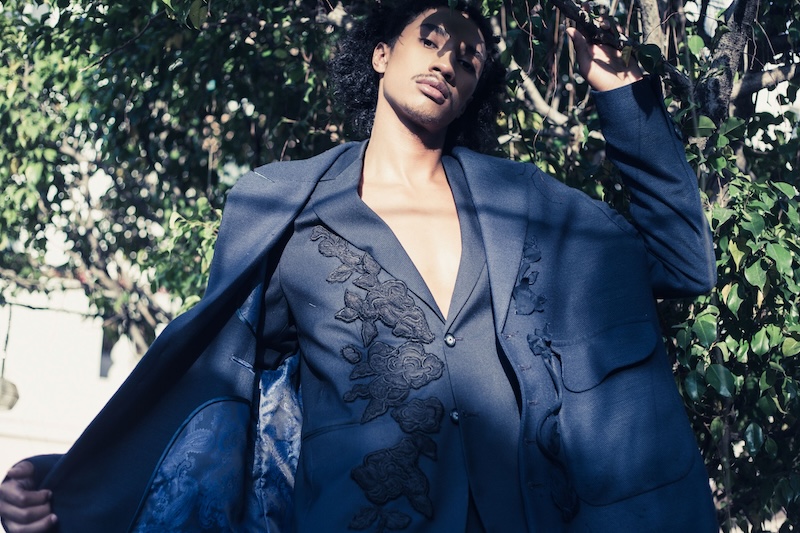
Tailored navy jacket with embroidered appliqués, showcasing precision sartorial technique
Despite lacking formal training, Ortiz developed a reputation for sartorial finesse. He credits his tailors and seamstresses for serving as his best teachers; he learned the trade secrets through experience.
Designer Barge Ramos, known for ethnic-print barongs, noticed Ortiz early on and praised his unique perspective. Ben Farrales, considered “the dean” of Filipino designers, invited him to the Moda Maynila fashion series at the Manila Hotel.
Ortiz’s penchant for mixing multiple prints is distinctly his. He relies on his sense of color to make them work together. Ortiz adds that a simple shirt becomes interesting through proportion and detail. The shoulder may sit wider, the body cropped or relaxed. Fabric gives character. Linen softens the look. Even the buttons matter. Horn or metal adds subtle edge. The shirt still looks easy, but the eye knows something is different.
Ortiz’s clients range from young politicians to actors. There were rising political scions Noynoy Aquino and Bongbong Marcos, Jr., when they were in the Senate. In the ‘90s, he dressed a generation of stars, from Richard Gomez to John Estrada, Mark Anthony Fernandez, Jomari Yllana, Ogie Alcasid, Ariel Rivera, Martin Nievera, Gary Valenciano, to bands The Dawn and Side A.
Back then, designers served as stylists, assembling accessories, shoes, and watches for actors and celebrities. This was the pre-celebrity stylist and pre-influencer era.
Many of his clients have remained loyal through the decades. Chinese-Filipino families, who first came to him as brides or grooms, eventually returned with their children and grandchildren. Many come from the provinces in the north and the south, part of what Ortiz fondly calls his “parokyanos.” Their steady support has sustained the business even through difficult economic periods. During the pandemic, he kept the atelier running by producing masks made of indigenous fabrics while continuing to support the artisans who work with him.
The experience reinforced what he often tells younger designers. While fashion is creative work, it is also a business. Longevity requires discipline, saving, and prudent spending, especially in an industry that constantly encourages fickle consumption.
Those lessons shape his current collection, designed for men and women and built around a clear color story. It begins with neutrals and beiges touched with linen blues, then moves into denim blues and deeper earthy tones such as brown, olive, tangerine, teal, burgundy, and wine. The palette eventually returns to gray, white, and black.
Ortiz describes it as a full-year wardrobe suited to the Philippine climate.
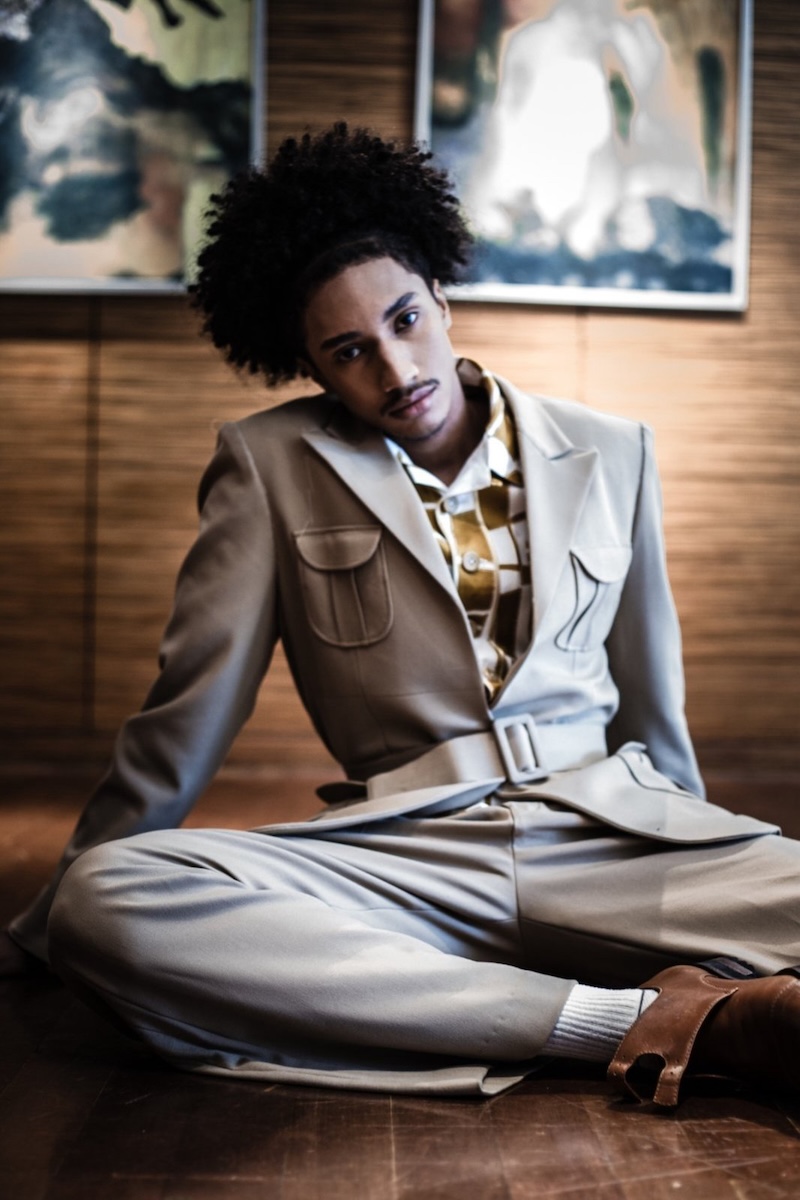
Sand-colored, multi-pocket safari jacket with built-in belt and buckle, worn over gold and white geometric checkered shirt
The collection spans a wide range, from bombers and safari cuts to cropped and elongated silhouettes. He also brings back the 1970s staple, the blouson sleeve, where the fabric hangs over the cuff to create a soft, puffy effect. This volume at the wrist adds a romantic, retro dimension to the collection’s sharper tailoring. Detail is found in the shifting proportions: pocket placements move from the chest to the waist, and shoulders go between sharp padding and a natural, unconstructed drape. Double collars on suits and travel jackets provide everyday wearability to balance the cutting-edge numbers.
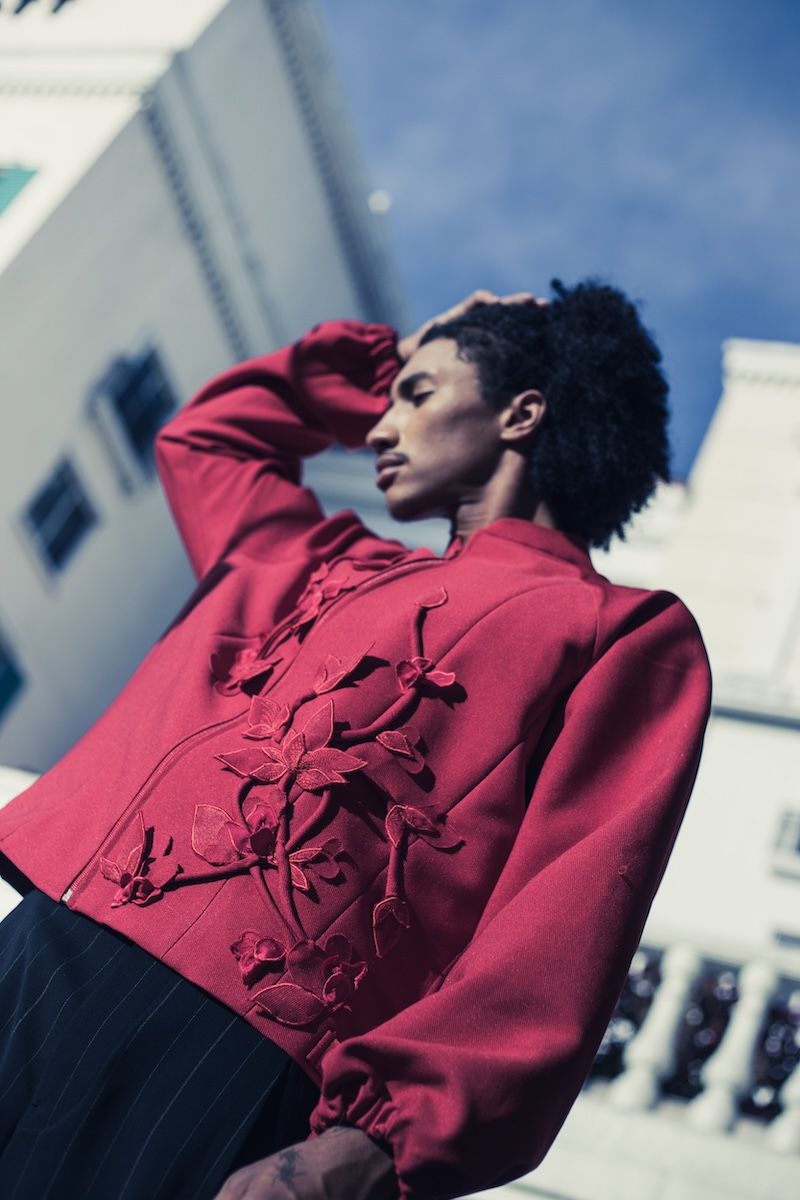
Deep red zip-up jacket with botanical appliqués and blouson sleeves, worn with pinstriped trousers
The shorts are deliberately abbreviated, but are made for comfort, drawing inspiration from the athletic silhouettes in the films, The Swimmer and Chariots of Fire.
The focus on volume carries into the trousers, which range from loose bootcuts to pleated baggy fronts. The popularity of these wider shapes reflects a broader shift in the Filipino wardrobe toward a more relaxed, easy fit.
Ortiz anchors these pieces with hardware sourced from Hong Kong, using D-ring buckles, adjusters, and carabao horn buttons to veer to a military aesthetic. It is a progression from the traditional local preference for simple T-shirts and loose shorts. “Men care about what they wear,” Ortiz says. “Sometimes their wives even shop for them. That’s my advantage, because I design for both.”
Randy Ortiz 2.0 is a study in “his or hers” dressing, anchored in menswear but tailored for both. The collection spans light trench coats, women’s jackets, and tuxedo-inspired separates that blur gender lines through sophisticated construction rather than androgyny. Ortiz avoids fleeting trends like skirts or shapeless cuts. “I’ve tried them myself. It’s not my aesthetic,” he says.
The designer often merges multiple patterns within a single garment, layering floral prints over geometric motifs or mixing four distinct prints in a single shirt. He relies on a trained eye for color to ensure these combinations feel effortless rather than cluttered. The goal is a visual surprise that remains rooted in wearability.
A standout ensemble features a high-collared navy waistcoat that serves as a sharp, military-inspired anchor. Beneath it, Ortiz plays with proportion. A crisp white dress shirt extends into an elongated tunic, its hem softened by intricate white-on-white floral appliqués. This tonal detailing creates a romantic counterpoint to the pinstriped trousers peeking out from below.
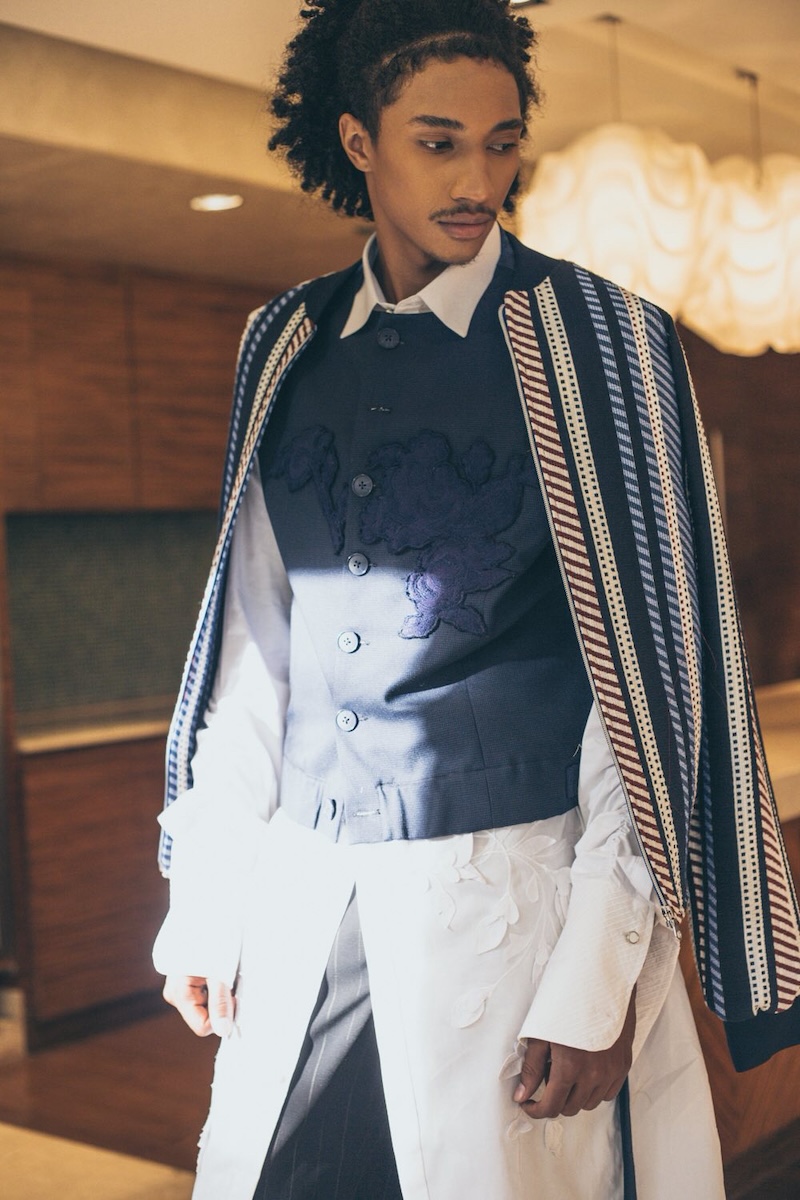
Woven striped cape worn over navy waistcoat, white tunic shirt with floral appliqué, and pinstriped pants
The energy of the look lies in the rhythmic play of pattern and texture in the striped jacket draped over the shoulders like a cape. The sleeves feature woven stripes of varying widths in navy and burgundy that pull the eye upward, while exaggerated cuffs provide a solid finish to the drape. By balancing these heavy, multi-textured weaves against the weightless quality of the embroidered shirting, Ortiz narrows down the gap between decorative craft and masculine structure.
Ortiz’s muses for his new collection include executive Mike Toledo, entrepreneurs Joel Rustia and Gerry Santos (aka Mr. Freeze for his ice factories), model-turned-lawyer Luke Jickaine, actors Dingdong Dantes and John Estrada, Korean celebrity Jisoo, and social figures Manu Sandejas, Raffy Ladaw, Rhonde Castro, and Larry Dulatas.
Ortiz’s enduring appeal is partly nostalgia, partly innovation. He channels the style of his father, the energy of Manila in the ’80s and ’90s, and the bold confidence of today’s youth. The result is a wardrobe that is unmistakably Randy Ortiz: stylish, daring in color, and unafraid of playfulness.
The collection is more than clothing. It is a reflection of a culture shifting toward visible vanity, comfort, and personal expression. Style in Manila is no longer reserved for the elite. It is for anyone out there who wants to be seen.


