
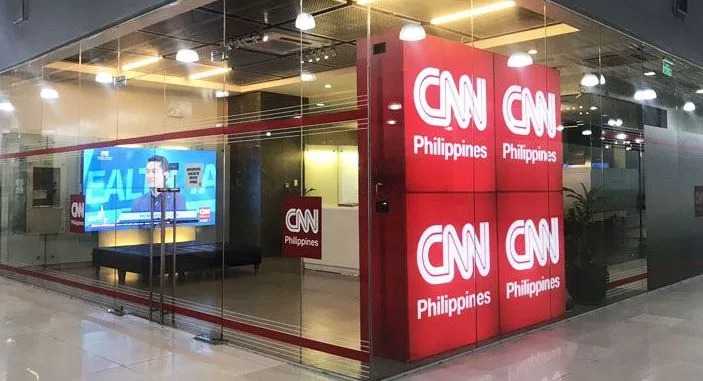
The closing of the Philippine franchisee of the American broadcast network CNN has a grimmer and wider impact than portrayed in the general observation — as the end to just another business enterprise. The tragedy could not have been more grossly minimized, for it constituted a death among a species.
That species is the free press, and it underpins the arrangement that assigns it as watchdog on goings-on that bear on the life of a people who aspire to democratic freedoms. The point is to keep them constantly informed, the better precisely to exercise their freedoms.
Alas, the free press is losing its high-minded form and potency in an evolution corrupted through modern technology. The local CNN was a victim in that evolution, and its disappearance is bound to unsettle and disorient citizens who take their freedoms to heart and like to listen to multiple news voices and distill what they saw and heard before making a judgment, for themselves, on what to believe and what to do.
As one of the broadcast press, CNN itself represented an evolved form of the species — evolved from the print press, but not so much to supplant it as to complement it. Therefore, for a rounded grasp of the repercussions of the evolution of the press, there’s a need to look as far back as when life in freedom was somehow guaranteed by a free press in print.
Quite naturally, once set in print, the word becomes irrevocable, more or less permanent, thus weightier than when merely spoken, thrown as it were in the air, where it tends to evaporate. Thus, news propagated in print multiplies and solidifies its influence.
I myself became involved in the production and propagation of the printed news right around the peak of its long heyday. That was a time when no word about anything had gained full credibility until sanctified in print. Having gone through the actual rigors of putting together a daily newspaper, I feel I understand enough the righteous logic behind the news profession, the range and levels of proficiencies as well as the quality of commitment expected of its practitioners, the layer upon layer of checks through which the news is put through: the profession is, after all, up against people in wealth and power who simply cannot abide the concept of democratic equality.
Producing a newspaper proceeds nonstop all through the waking hours of the day and is ruled by deadlines at every stage. In the first stage, reporters are deployed to their areas of coverage—“beats,” as they are called in the business—to search and chase after the news, which by nature is elusive and not readily discernible, particularly in the case of bad news, which its makers and keepers tend to play down or suppress altogether to avoid accountability.
These reporters work under the supervision of an editor who expects to be informed of what’s happening as it becomes revealed to them. It is a relationship not unlike that between a commander and his troops. By midafternoon, except for late-breaking news, all drafts have been written and given a first look, for basic suitability—primarily accuracy and fairness—by the commander and his deputies. These drafts are sent afterward to the news desk for a more thorough checking and cross-checking by copyeditors and, as needed, for reworking by revisers. They are then titled and assigned places on pages before everything goes to print.
By then the evening television news has gone on the air. But cramped by severe limits on both production time and airtime, it is forced to leave out some details and contexts. But then again, it affords its audiences an immediate awareness valued especially in emergencies—natural disasters, say, and public notices with instant effects. Not to mention, with its sound and moving pictures, it gives them the closest feeling to being there.
In any case, the next morning’s printed news fills much of what the previous night’s broadcast news lacked—a full authentication and a deeper appreciation of the news. Such complementation can only advance press freedom and, with that, people’s awareness and understanding of current events that concern them.
Actually, the Internet is more of a dump
That had been the precise case until cyberspace opened itself to everyone in the 1980s, through a novel platform—the Internet. Once it became accessible to enough of us, around a decade later, our press began to be drowned out by a babel of voices passing themselves off collectively as an alternative press.
They were in fact neither a press nor an alternative to it. For one thing, they lacked the disciplines required of a true press—disciplines developed and improved and refined through centuries of a strict and noble tradition. They just sprouted, materialized out of nothing. They just happened to be favored by a technology that took anything and disseminated it as it was, in its raw, unhealthful form. The worst of this was fake news, and the worst of its concocters were the trolls.
Actually, the Internet is more of a dump, but its pretentious dumpers are only too glad to find an excuse to style themselves as instant press. To be sure, Internet regulators have been trying to sort things out. On its part, the legitimate press — or what has survived of it—has migrated to the Internet or set up posts there to take on the pseudos on their own turf in hopes of regaining its social ascendancy and, consequently, its profitability.
But to all appearances, technology has created a monster too big to be tamable, or for the legitimate press to take on. My own newspaper was an early victim (although it was no small factor that a primary material for producing newspapers—pulp—had been growing scarce) and CNN Philippines has been only the latest one.
Lest the monster’s potential be minimized again, with its every success, our democracy is actually pushed toward the rule of the deceived majority — if it’s not already there.


