
Photos by Inggo Escalante
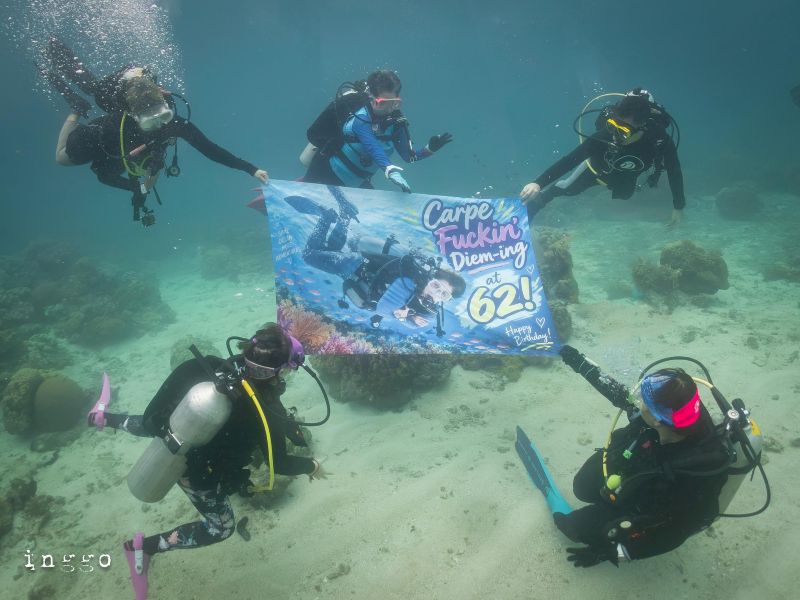
Now on its third year, my annual birthday dive outing with my dive group to places around the Philippines—Bohol in 2024, Malapascua in 2025—took us to Dumaguete and the wonders of Apo Island, an extraordinary marine sanctuary off Negros Island, 30 km south of Dumaguete.
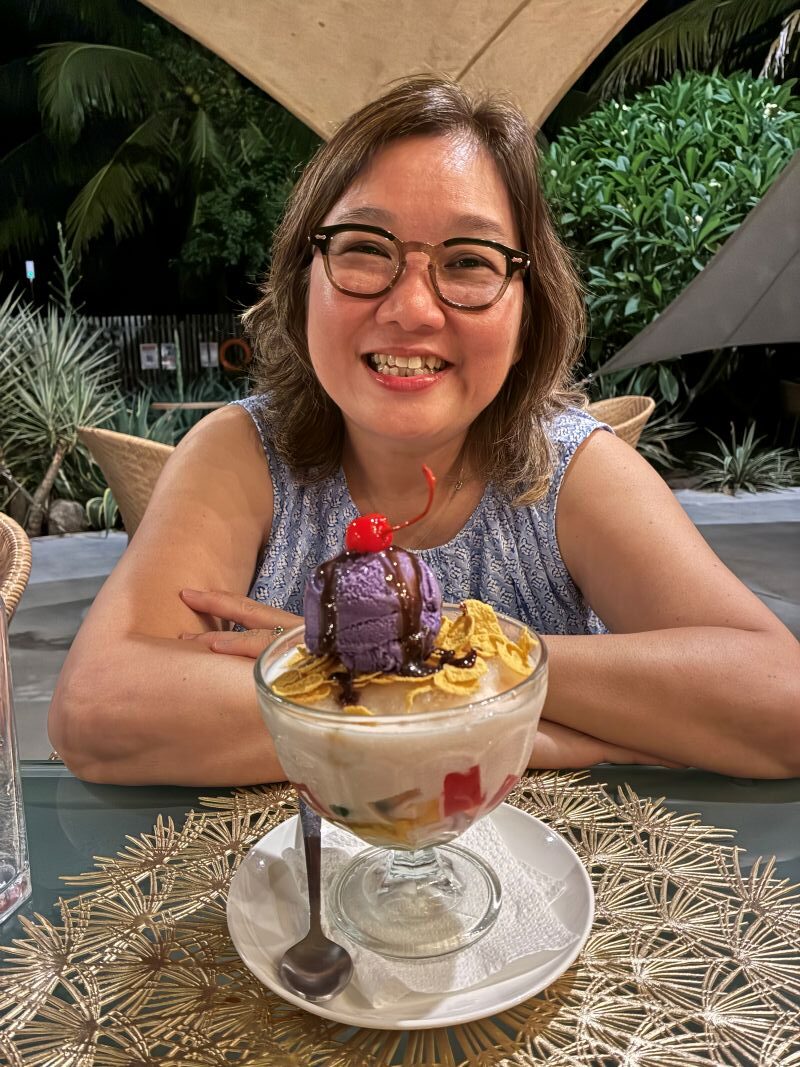
Christine and the killer ‘halo-halo’ at Mahi-Mahi Resort
We returned to a gorgeous boutique resort we had visited in the past, Mahi-Mahi in Zamboanguita, just about half an hour from the airport. Why do we love this place? Great dive and all-around service, wonderful food (the halo-halo is a killer), and probably my favorite part: owners Alex and Elena like to rescue animals. Thus, you’ve got friendly dogs and cute cats wandering around freely, but not enough to bother you if you’re not into furbabies (I’m judging you if you’re not, though, sorry).
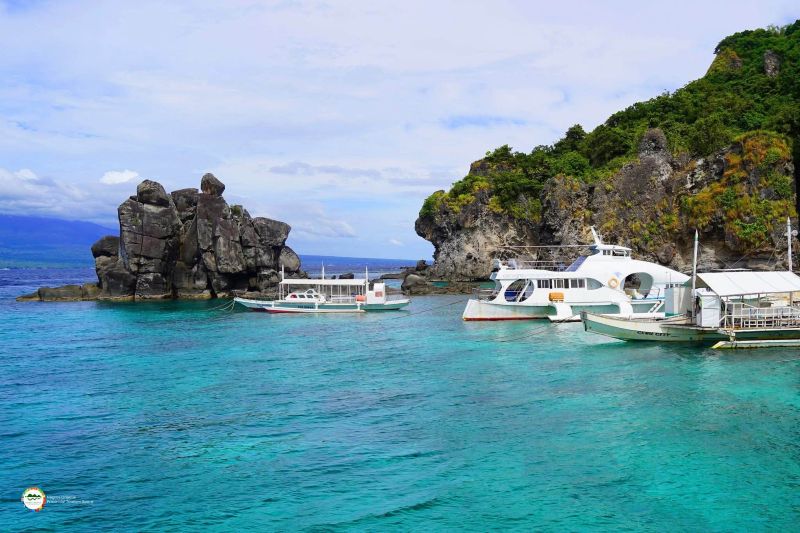
Apo Island (Photo from the Negros Oriental Provincial Tourism Board Facebook page)
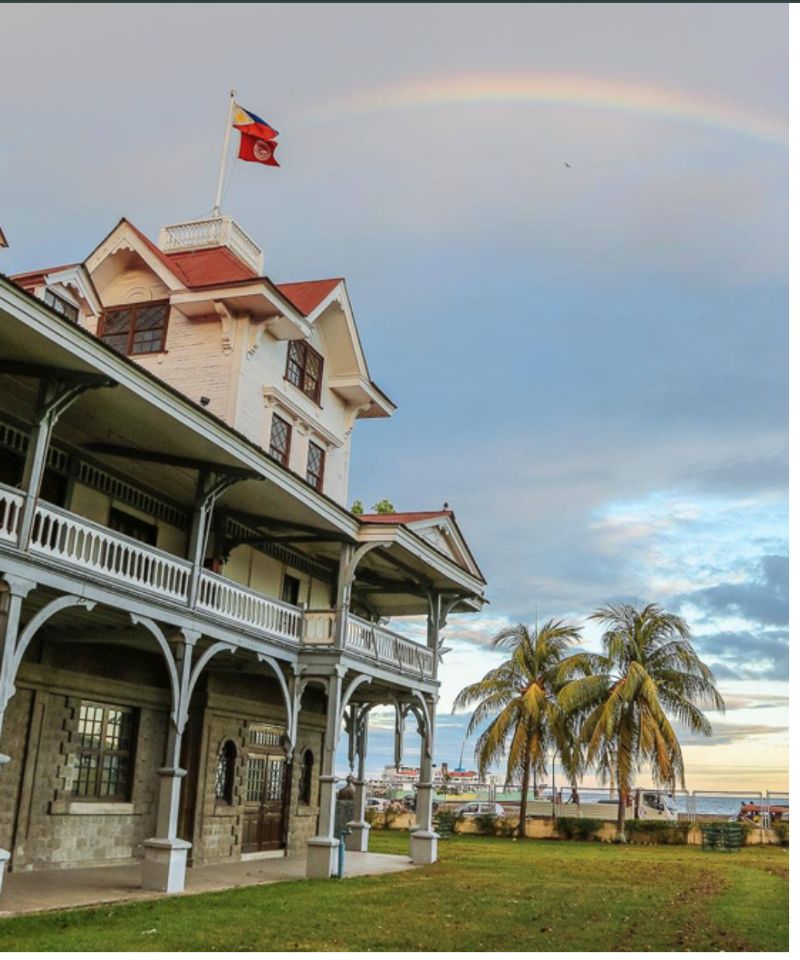
The beautiful Silliman University (Photo by Dennis Futalan, from the Silliman University website)
Apo Island is a relatively small island at 1.5 by 1 km, but is one of the world’s most well-known community-organized marine sanctuaries, recognized by the global science community. It was the late marine scientist and former Secretary of the Environment and Natural Resources Dr. Angel Alcala who spearheaded the island’s protection by engaging the local fishermen, convincing them of the importance of establishing a protected area for their own good. Dr. Alcala and the staff of the also world-famous Silliman University Marine Laboratory, where he was professor emeritus, helped fishermen identify a 450-m stretch of the coast, extending out 500 m from the shore. The result was dramatic; the abundant spillover from the strictly protected area improved the lives of local fishermen, who learned to zealously guard their waters. Dr. Alcala is recognized as a pioneer in the concept of a marine protected area (MPA) and community stewardship, with MPAs now replicated all over the country.
An aside: I may have been one of the last journalists to interview this marine conservation giant in 2021, via Zoom, for an article in Inquirer Lifestyle where he opposed the idea of reclaiming land for some misguided urban development in downtown Dumaguete. Dr. Alcala died two years later at age 93, one of the few honest men who tried to do a good job in Philippine government, but his legacy remains a magnificent one.
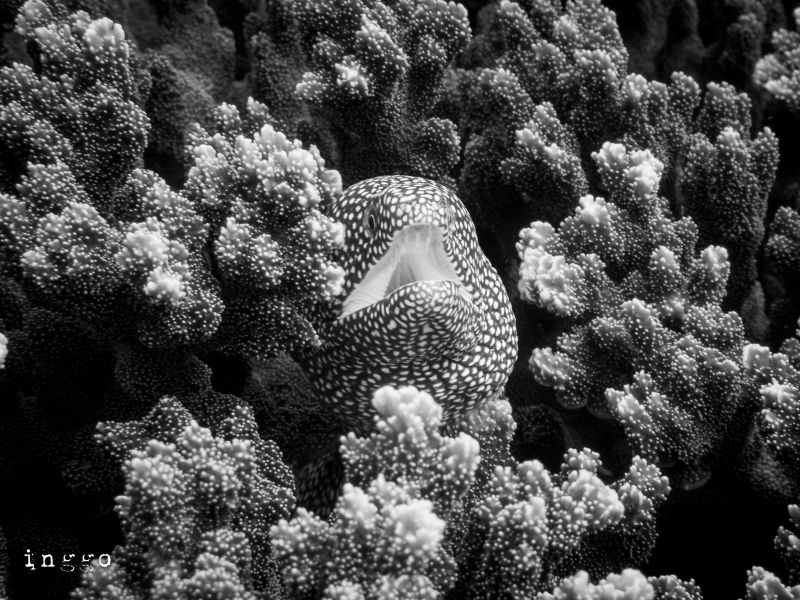
A honeycomb moray eel says hello from the hard coral.
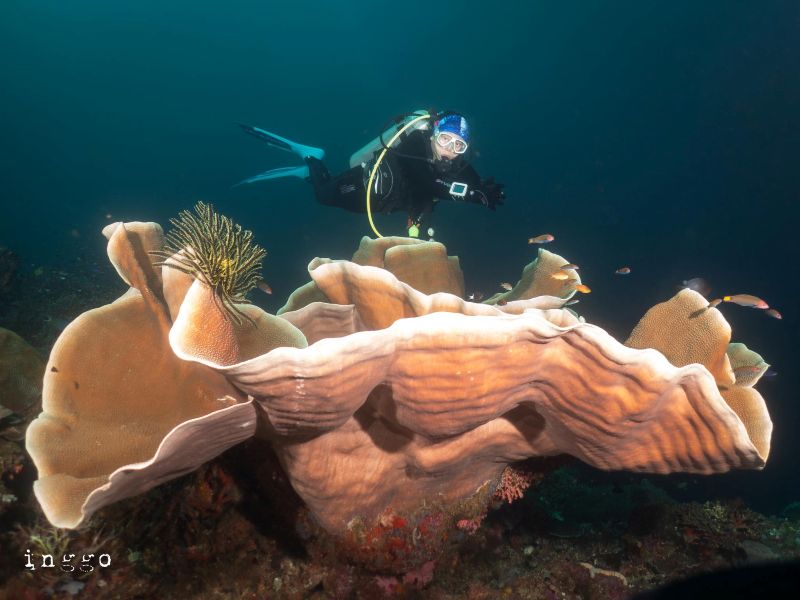
Rina Loy hovers above a humungous lettuce coral.
Apo Island is protected under the National Integrated Protected Areas System (NIPAS) Act of 1992 (Republic Act No. 7586), as amended by the Expanded National Integrated Protected Areas System (E-NIPAS) Act of 2018 (Republic Act No. 11038), and is safeguarded by the local Protected Area Management Board (PAMB). It remains home to over 650 species of fish and some 400 species of corals, including large gorgonian sea fans, brain corals, and humungous lettuce corals. There’s a fee to be able to dive around Apo Island, but it’s worth it: The whole time we were diving there, we hardly saw any trash.
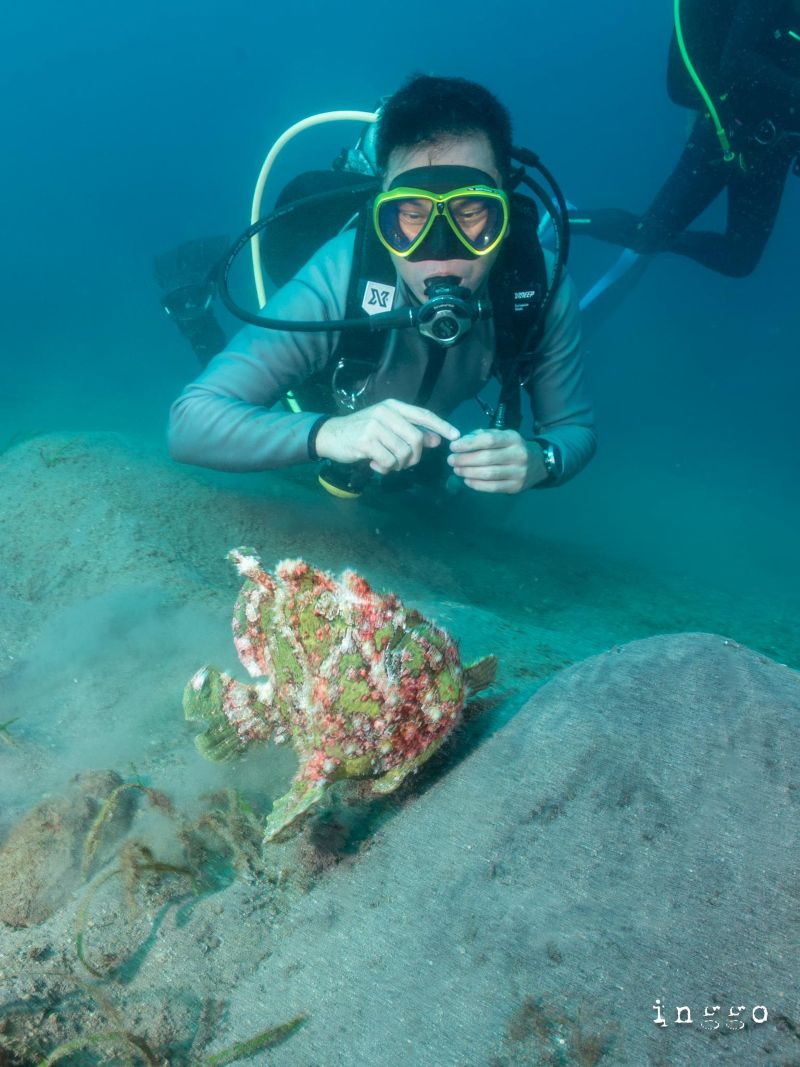
David Huang watches as this cool, fearless frogfish decides to take a walk.
We arrived after an early morning flight, and although weather forecasts pointed to rain, we were met with gorgeous weather in Dumaguete. Every year, I ask God for a sighting of one of our favorite creatures: the frogfish. We got a cute lilac one in Bohol, although there were none in Malapascua, as that was all about thresher sharks. This time, after an afternoon nap, we set off for a dusk dive in Thalatta, along Zamboanguita, that delivered not one, not two, but three beauties, including what may have been a rare marble-mouthed giant in pink and green (see pic above).
Let me tell you a bit about these adorable marine fishes, which we were saying would make great stuffed toys. They’re members of the anglerfish family, so-called because, like anglers, they often dangle a lure from their heads to attract prey. They range in size from thumbnail (yes, they get lost in sargassum) to the basketball-sized fellow we saw on Dive 1. They’re unusual because they hardly swim, but appear instead to walk on their pelvic fins. And because they’re stocky and have a comic underbite, they’re so ugly, they’re terribly cute—but don’t let them fool you: These guys are fast, deadly predators who can suck in any doomed tiny creatures attracted by their lure.
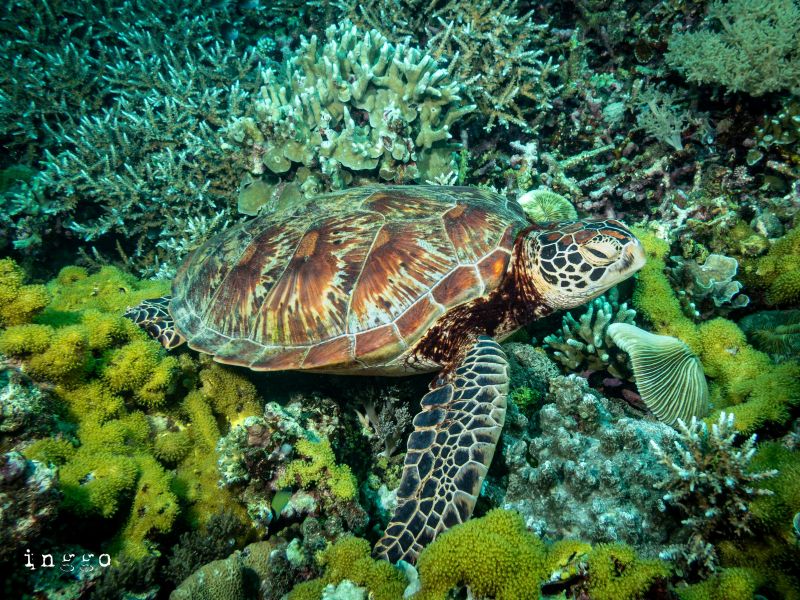
A nonchalant green turtle who didn’t mind us coming close
The next couple of days were spent diving on Apo Island, at sites like Rock Point East and West, Mamsa Point, Sanctuary, Coconut, and Largahan. Apo Island is a macro haven, with so many small critters that our divemasters pointed out, as well as three more frogfish, most notably a black “disco” one with what looked like sparkles all over its body. There were also lots of sea snakes, totally nonchalant turtles, otherworldly topography, and expanses of beautiful hard coral kept safe by the continued protection of the marine sanctuary, proof of how ownership of their own resources can make people truly effective stewards. As our big, comfortable dive banca sailed by, we saw several local fishermen fishing the old, sustainable way, throwing lines into the water from their own small paddleboats, to catch only what they need.
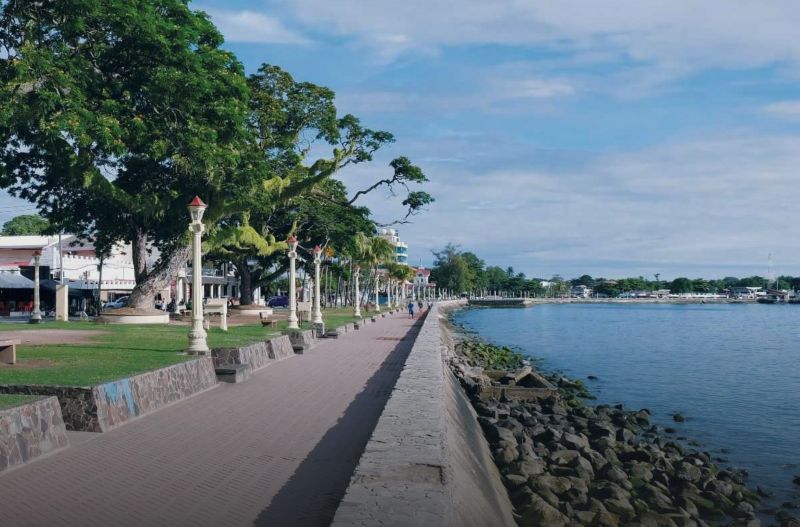
The famous Rizal Ave. promenade (Photo from tourism.gov.ph)
Before our flight out five days later, we stopped for lunch in Dumaguete at the Sans Rival Bistro, home of the famous Dumaguete silvanas (of course we ate some), drove along the famous Rizal Avenue Promenade, and also passed by the first American university in the Philippines, Silliman University, affectionately known as SU. It was founded in 1901 as a primarily Protestant institution, but few know that it was actually named after a retired businessman, Dr. Horace Silliman, who donated the $10,000 seed fund for the institution. The lovely campus features huge old trees and turn-of-the-century buildings. Years ago, I also got to perform in a play at the campus’ excellent Claire Luce Auditorium, which has outstanding acoustics.
The university is registered as a National Historical Landmark by the National Historical Institute, and offers excellent education. The United States Agency for International Development (USAID) named it a Center of Excellence in Coastal Resource Management, and the Haribon Foundation recognized SU as an Academic Center of Excellence in Biodiversity Conservation. It leads in research in the field, with the much-missed Dr. Alcala’s Silliman University Marine Laboratory now known as the Institute of Environmental and Marine Sciences (IEMS), producing some of the Philippines’ best marine biologists. Their favorite laboratory: where else but nearby Apo Island, where artificial reefs growing coral can still be seen underwater, providing shelter to many species—including yes, the cool, cute frogfish.


