
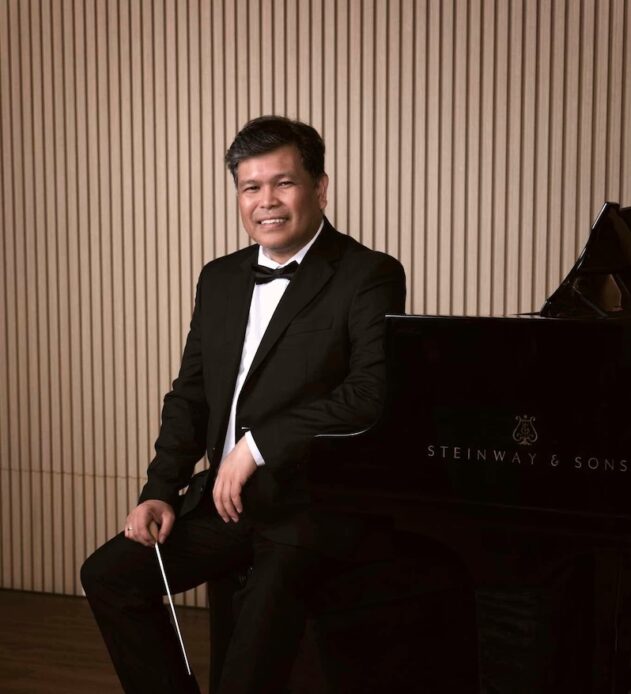
Photos courtesy of the Manila Symphony Orchestra
In May 2018, when the MSO was eight years shy of its centenary, Manila Symphony Orchestra (MSO) president Maan Hontiveros told an Ayala Museum audience, “Spread the word that there’s a thriving, talented orchestra that deserves to be heard. Without music, a country dies. Music feeds the soul.”
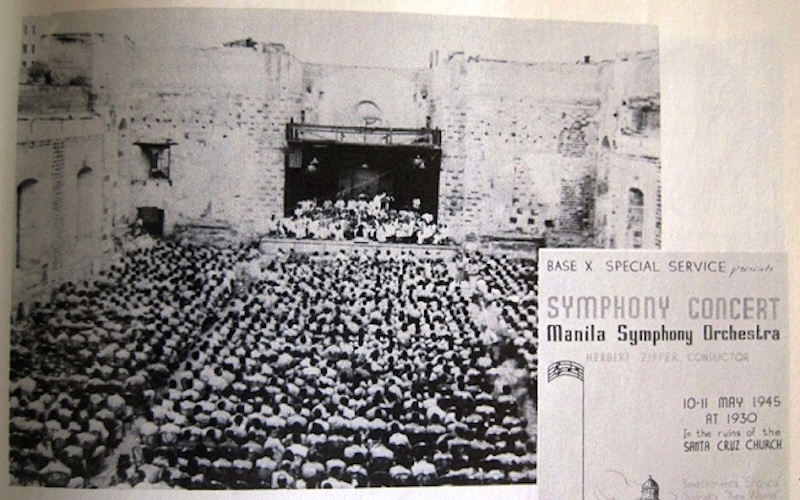
The MSO in May 1945, revived after the Liberation of Manila
Take a pause. Consider how for the past 100 years, the MSO has fed this country’s soul, showed almost indefinable courage, especially during the war years, and continues its legacy of presenting the classics and contemporary works to generations of audience.
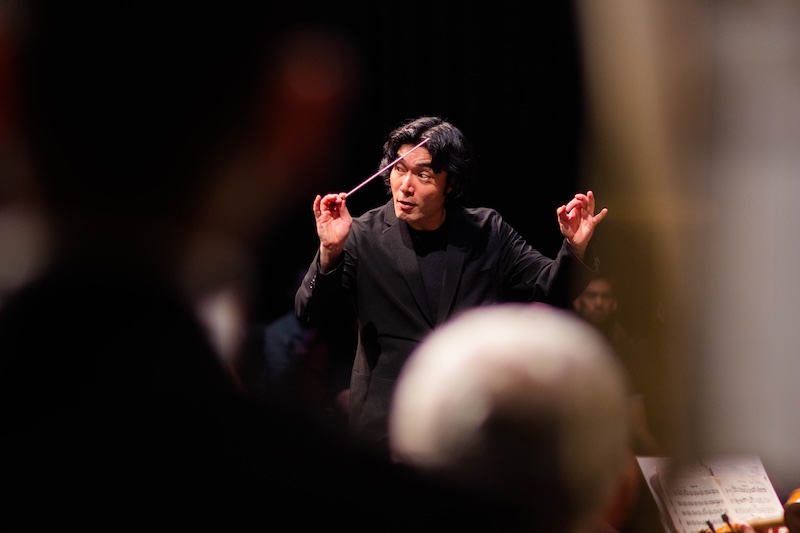
Darrell Ang is guest conductor in the MSO concert on Jan. 22, 2026.
On January 22, the exact date of its maiden concert a century ago, at the Samsung Performance Arts Theater at the Ayala Malls Circuit on Hippodromo Street, Makati, the MSO, led by Singaporean guest conductor Darrell Ang, will perform Beethoven’s Leonore Overture no. 3, op. 72. It was the first composition conducted by MSO founder Alexander Lippay.
Ang will also lead the orchestra in Beethoven’s Piano Concerto No. 5 in E-flat Major, Op. 73, popularly called the Emperor Concerto, featuring rising young Chinese pianist Muyu Liu.
The second half of the program will have MSO trustee and National Artist for Music Ryan Cayabyab’s Misa 2000 and Te Deum, with the world-renowned Philippine Madrigal Singers conducted by Mark Anthony Carpio.
MSO executive director Jeffrey Solares took time off from the busy preparations of the centennial to acknowledge the people behind the orchestra’s history and growth. He said, “The MSO has a beautiful story, a story of the courage of its founders, introducing an art form to a land half a world away for its origins. It is a story of resourcefulness, finding ways and means to continually offer concerts amidst challenges of funding, personnel, facilities, etc.”
The centenary concert is more than a sentimental journey to the past as it repeats its very first program. The MSO head said, “It is important to highlight what MSO would perform in those foundational years to realize how ambitious and how committed to excellence they were. It points out what quality of repertoire and performance we have to continue serving our community. It also shows our artistic identity.”
He has gone through the MSO archives, and considers it “a great honor to continue the work of truly extraordinary artists such as Lippay, Herbert Zipper, Antonino Buenaventura, Basilio Manalo, Oscar Yatco, the Legardas, and continue their dream of making orchestral music a vibrant art form, a viable livelihood, and a visible presence in our community. The hard work and commitment of our musicians, the talent of our artists, both young and old, the support of our patrons, the hidden work of our staff, the appreciation of our community all contribute to making MSO an inspiring institution to dedicate my energy and capabilities to.”
During the wartime period, the Japanese wanted to revive the MSO to maintain a semblance of normalcy, but, according to Solares, “the Legarda family who ran it didn’t cooperate and gave all sorts of excuses.”
Furthermore, he continued in an earlier report, “They (the Legardas) hid the precious music pieces in a dry wine vat in their distillery, until it was time to bring them out. These surviving scores are still used by MSO musicians as references.”
Meanwhile, there were fighting musicians who died in the Bataan March, while others like Zipper became prisoners of war. Concertmaster Ernesto Vallejo and family were massacred by the enemy in Tanauan, Batangas.
Zipper vowed he would conduct the triumphant Symphony No. 3 in E Major or Eroica by Beethoven once the Japanese were defeated. The concert came to be in May 1945, in a roofless Sta. Cruz Church after Manila was liberated.
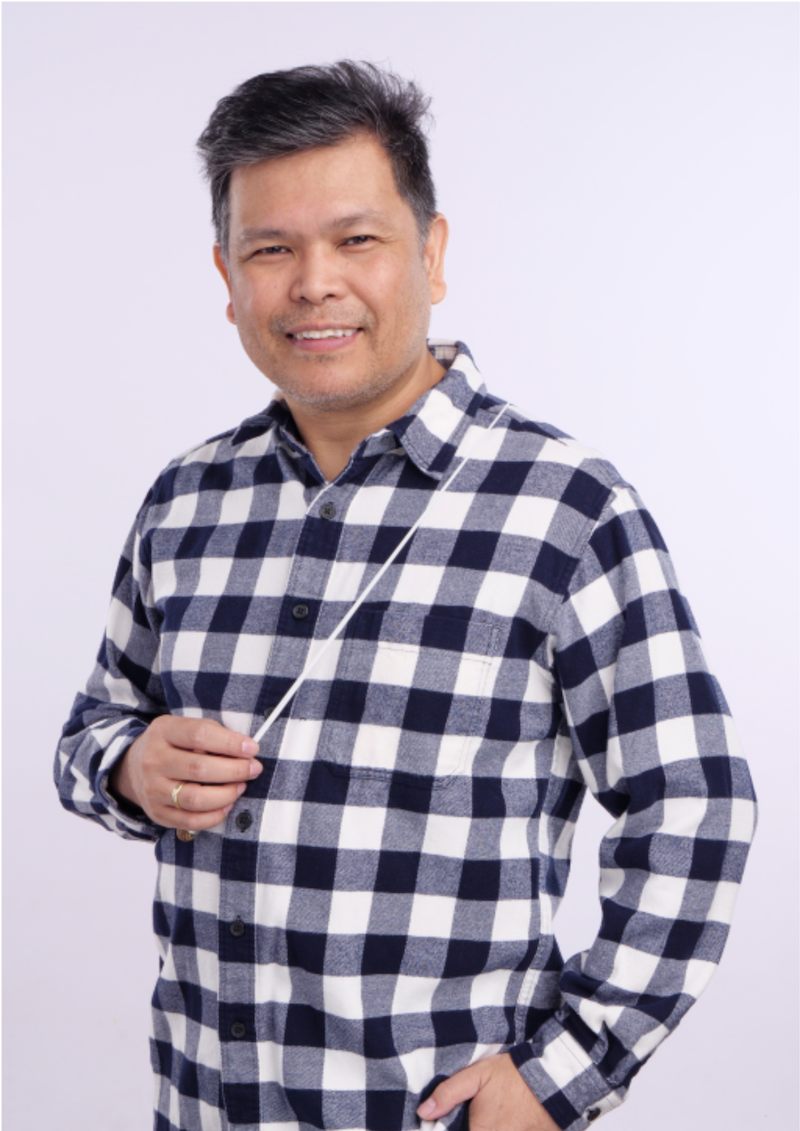
Solares, more casual this time: The MSO is ‘an inspiring institution to dedicate my energy and capabilities to.’
As for what nuances of change he noticed in the MSO after Maestro Ang workshopped the musicians, Solares replied, “Maestro Darrell always puts our musicians on high alert at rehearsals and performances. He has a very keen ear and a really surgical mind that immediately solves problems and makes audible changes in our playing. His attention to detail is very focused and well appreciated by the orchestra players who always do their best to respond. Every rehearsal is a precious learning moment and inspiration for us.”
Meanwhile, the training of a new generation of musicians is in place with its Manila Symphony Junior Orchestra programs that continue to discover and nurture Filipino talents. Through that, the soul of a weary nation is comforted.
For ticket inquiries, visit the social media accounts of the MSO on YouTube – Manila Symphony Orchestra; Facebook – Manila Symphony Orchestra; Instagram – @manila.symphony; TikTok – @manilasymphonyorchestra; and website – www.manilasymphony.com


