
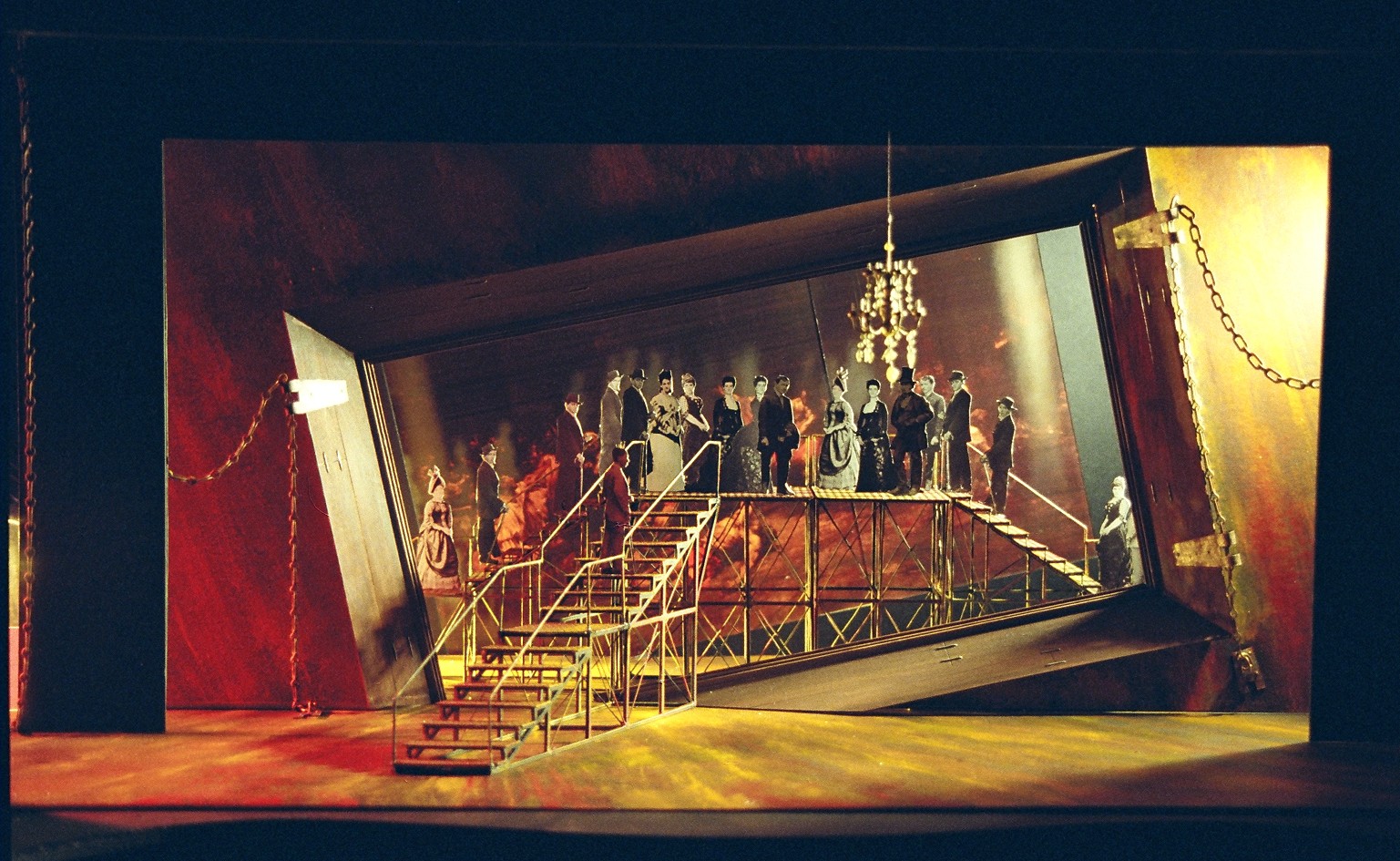
‘Spoliarium: Juan Luna’ won Bronze in World Stage Design in Canada.
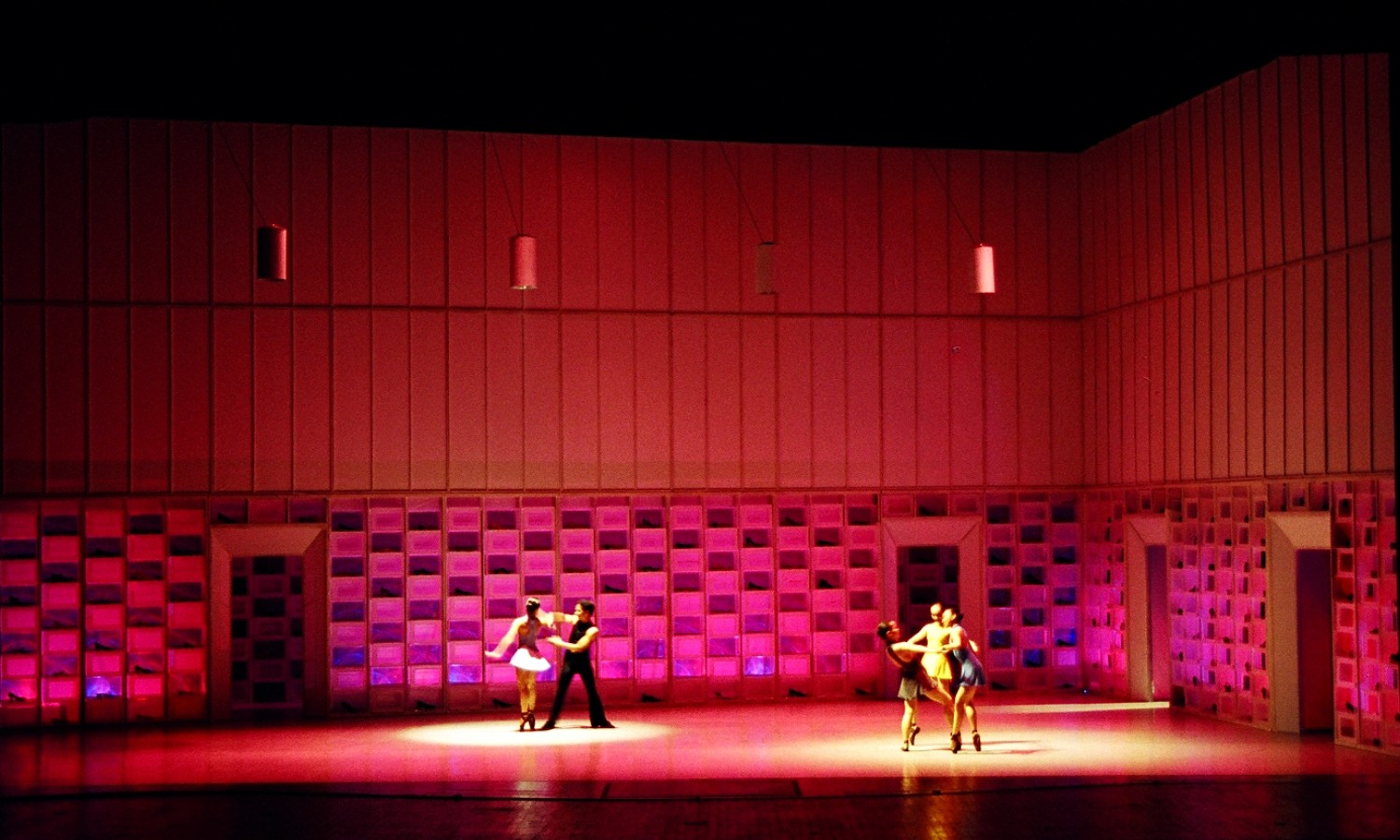
‘Shoes++’ uses plastic bins stacked up as backdrop.
A provocation.
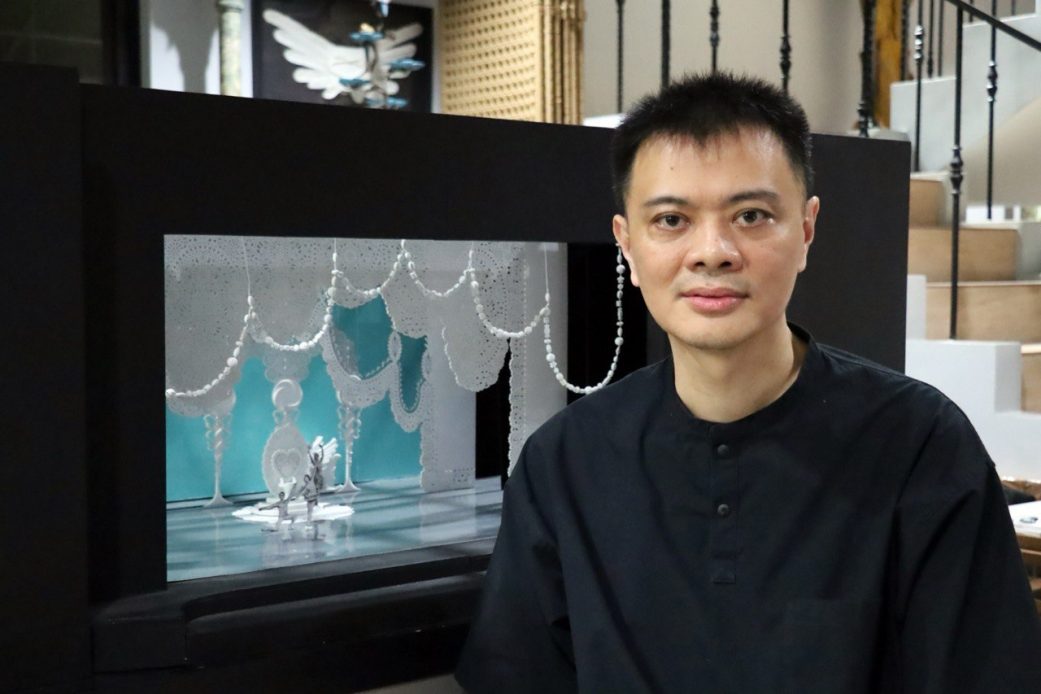
That’s the word the stalwart of Philippine theater, Nonon Padilla, uses to describe the work and art of leading scenographer Gino Gonzales. After the announcement that Gonzales was chosen as one of the Gawad CCP Para Sa Sining 2024 awardees, we visited Padilla for a rare interview about Philippine theater today (that story is for another day), and also for his opinions about Gonzales who regards Padilla as his guiding light in his formation as theater production designer in theater—Nonon Padilla and National Artist Salvador “Badong” Bernal.
Curiously, we never heard the word “scenographer” used so often until Gonzales appeared on the arts and culture scene; it was as if the term was coined, in Philippine context, to encompass the varied skills and visions—indeed the feats—this relatively young designer (the youngest awardee this year) has contributed to design, which have gone beyond theater or stage production.
“It was always a provocation for the audience to think,” Padilla goes on. “A lot of the productions are classics. In the Philippines, the classics don’t mean anything because they’re always new to the students. So it’s good to introduce the good masterpieces in theater in a provocative way.”
Padilla headed Tanghalang Pilipino from its founding in 1986, steered it as artistic director for 16 years until 2001, and has become one of the most staunch advocates of theater as art, not a mere industry. Gonzales calls him the “last of the giants of Philippine theater.”
Padilla considers Gonzales “one of the most imaginative designers we’ve had in a long time. Always had nice experience with him, we’d discuss things in terms of aesthetics, metaphors, what I’d like to work on he’d work on it, research, then submit his designs. They were more or less outrageous. Out of the box. Not many people could take that, always so new, different.”
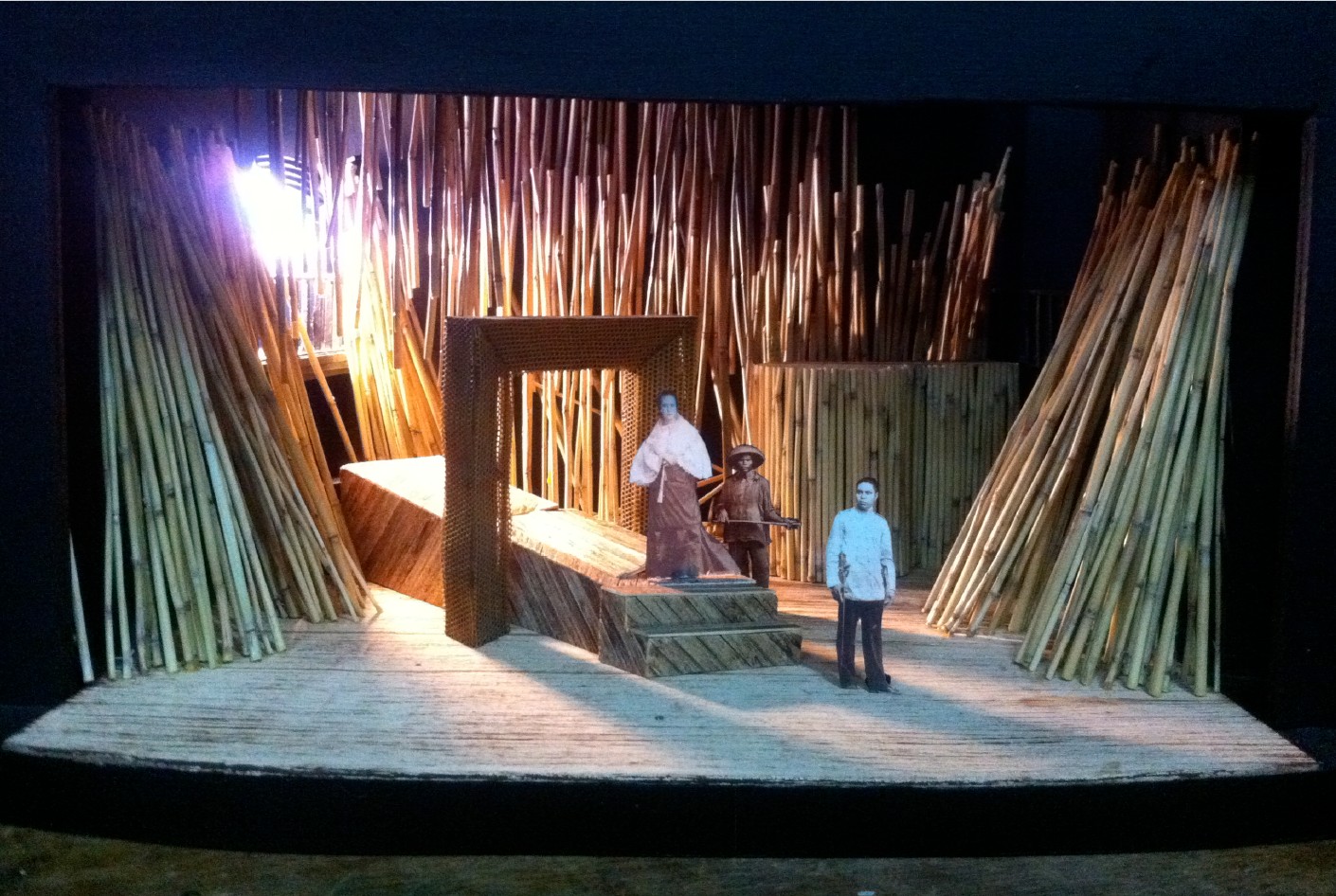
‘Noli Me Tangere’ uses bamboo and pressed abaca.
On and off stage, Gonzales has given the Filipino material and character a contemporary dimension. He has given the local visual vernacular a global appeal and relevance. A bamboo is native and rustic, but in Gonzales’ hands, it becomes a sharp angle, or a stark line, or a geometry of light and shadow. Minimalism in a tradition of horror vacui. But then again, sometimes, he can repurpose whimsy and kitsch into old-world elegance. You’ll never know what to expect from Gonzales—as Padilla puts it, provocative and imaginative.
Gonzales’ work represents a Filipino identity that swims in the global currents, against the current at times yet never drowning in it—and that is how he has helped bring the Philippine arts and culture to the modern times. His body of work, now considerable, embodies Filipino-ness in the globalization era of itinerant millennials and GenZs.
Gonzales’ Gawad CCP Para sa Sining Award for Design and Allied Arts is thus well deserved, and comes at an opportune time, not only for Gonzales, but also for the other awardees: Gener Caringal (Dance), Joey Ayala (Music), Lea Salonga (Theater), Jose “Pete” Lacaba, Jr. (Literature), Mike de Leon (Film), the late Mario O’Hara (Film), Julie Lluch (Visual Arts), Loboc Children’s Choir (Regional Arts), Marilyn Gamboa (Cultural Work), the late Oscar Yatco (Tanging Pagkilala), the late Sen. Edgardo Angara (Tanging Parangal), the late Zenaida “Nedy” Tantoco (Tanging Parangal).
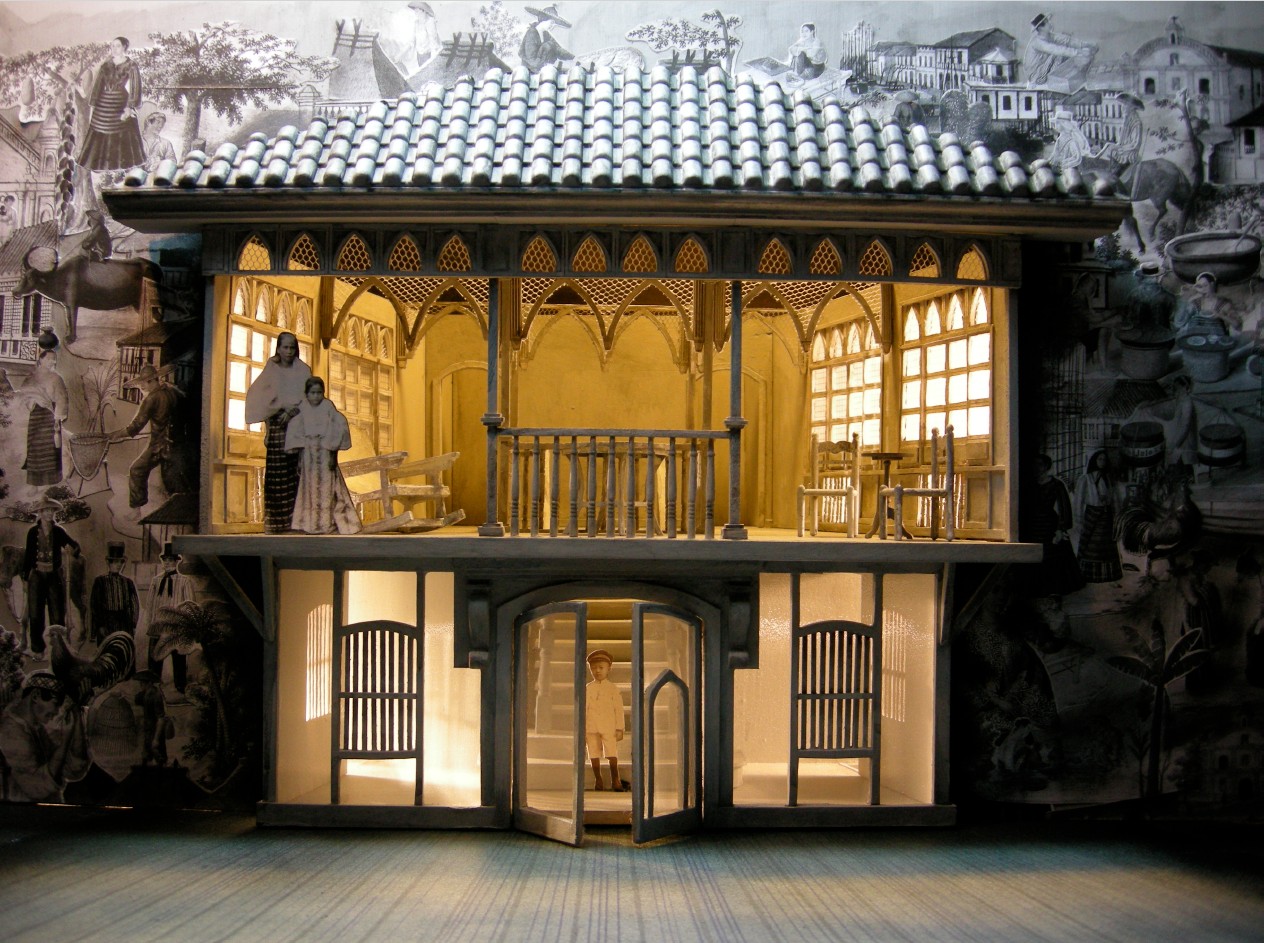
‘Batang Rizal’ for Ateneo Children’s Theater uses full-scale ‘bahay na bato’
A graduate of Mass Communication at Ateneo de Manila University, Gonzales was a recipient of the Fulbright Scholarship and Asian Cultural Council grant in 1998 for a three-year Masters of Fine Arts course in Theater Design (with double major in sets and costumes) at New York University. His three years in New York and the university expanded the mind and the experience of the relatively fresh graduate. He spent his daily life breathing in whatever the big city could offer. It was, he puts it, “envigorating.” Every day was seductive learning.
“Watching Broadway, the opera, going to museums, events, shows at the Lincoln Center, from Africa, Germany, Taiwan, China, Japan. All over,” Gonzales ticks off the items from his memory in the interview with TheDiarist.ph after the Gawad Awards was announced.
“Mangha but lungkot para sa bansa (amazement but sadness for the country)—paano ba magagawa ito (how to do this), how to translate in the Filipino context or as Filipino production. Not just the stage, but also the fervor, the brilliance. Minsan maluluha ka sa ganda (Sometimes the beautiful experience made you tear up),” Gonzales recalls his moments as a new scholar in NY.
In his early months at NYU he was at the bottom rung. “They (classmates) were so skilled—they were from all over. I was lagging behind in terms of skills, model making, painting, dramaturgy; they knew Western literature. But that changed by the third year, I became the top student.”
He received the Meier and Seidman awards for excellence given by the NYU’s Department of Design in 2001, the first of many awards he’d receive here and abroad. During the traditional Clambake, where works of the graduating class were presented to theater and arts industry leaders, Gino’s set design, scale model, costume for Dialogues des Carmelites gained notice, and a few days later he got a message from the school’s Design department telling him to go to an office in Broadway. “Don’t be late, I was told. I was always late,” Gonzales recalled the unforgettable reminder.
“A man interviewed me in a beautiful office, with handsome assistant who came over to look at my work—drawings, scale models, super minimalist, reduced to boxes. This was right before September 11. Can you start, he asked. I said I had no work visa. Bumagsak mukha niya (he was crestfallen).”
Gonzales would learn later that his interviewer who almost became his employer was Harold Prince, the famous American theater director and indeed a leading figure in 20th century American theater known for such productions as Phantom of the Opera, Cabaret and Sweeney Todd. Gonzales now can only smile at the possibility that, if only he had the work visa, he could have joined the iconic productions. That experience now brings to mind, he tells, us, a parallel experience of fashion designer Lesley Mobo, who himself gained notice in London, in a grueling stint trying to juggle work and design studies, and caught the eye of no less than John Galliano. Galliano wanted to hire Mobo for Dior—but the student had no work visa.
Shortly after that job interview, he had to come home. “I was actually crying when leaving NY. My mother told me to go home. I left September 9, then September 11 happened, 2001.”
Back home, he realized how New York imbued him with a mission to work here for “better production by way of design.”
His New York experience gave him a sense of clarity about his chosen profession in design and production. “New York was a lot of hard work. Before I left, Nonon told me, ‘I want you to learn different philosophies, ways of thinking.’ In terms of skills, inuulit lahat ng trabaho (task is repeated). Even drafting, para walang mintis (so it’s seamless).”
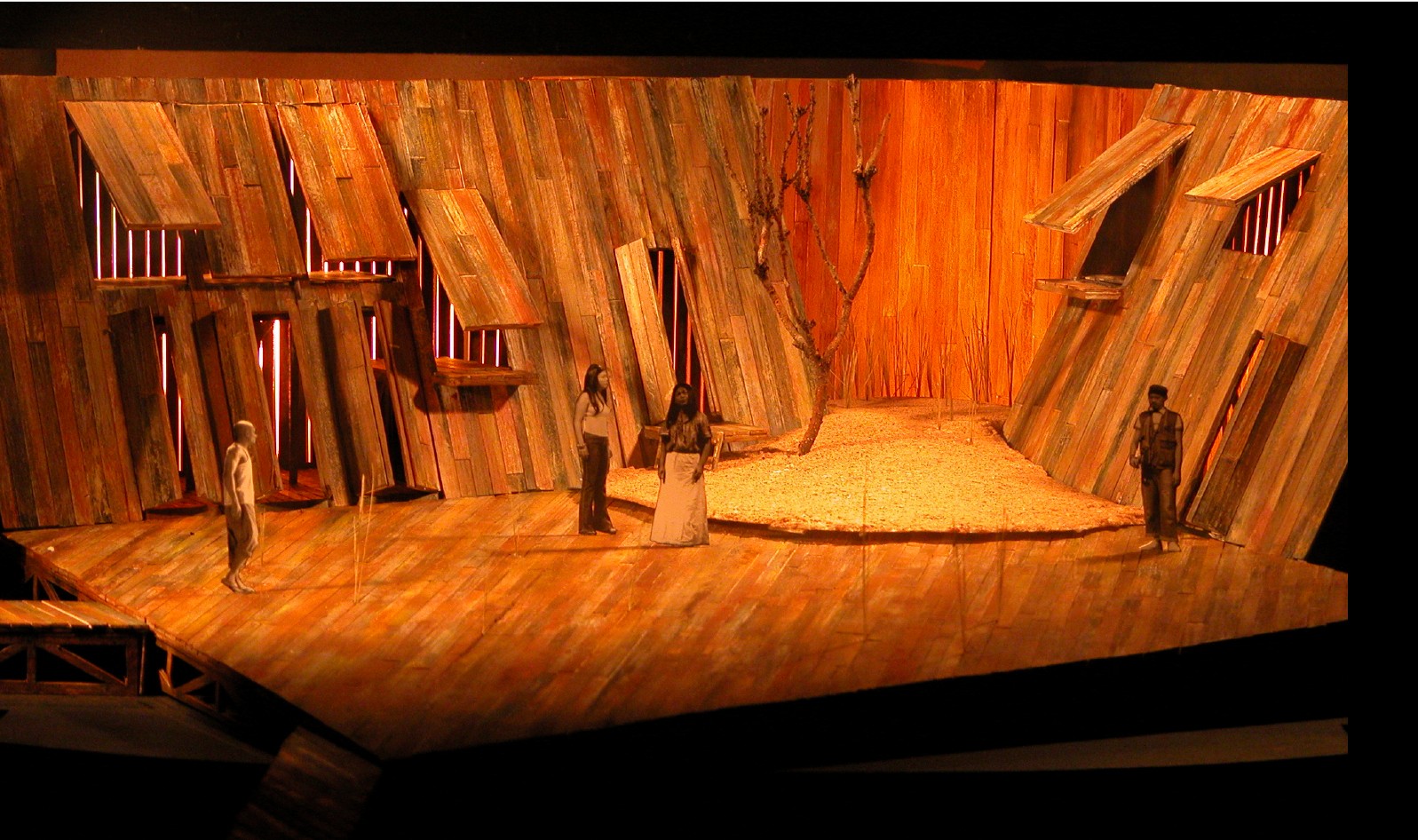
‘Himala: The Musical’ of Tanghalang Pilipino uses dry wooden planks to suggest barren landscape, the stark tree in the film version standing in the corner. Walls open up to reveal private interiors.
It was his college years at Ateneo, his stint in Tanghalang Ateneo, then his rookie days in Tanghalang Pilipino that paved the way for New York. “At Ateneo, Badong (Bernal) was my teacher when I chose production design as elective. It was the head of the department, Doreen Fernandez, who signed up Badong in 1993 or 1994, during his rift with CCP. Kinareer ko klase niya (I did his class as diligently as if it were a career). I remember the scale model for Paglipas ng Dilim Third Act; he told me, ‘You have too many ideas—easier to edit than to coax people.’”
After graduation, Gonzales wanted to go into what was a cool profession then—advertising—to be “a graphic artist, copywriter, creative director… glamorous, in na in.”
But instead he landed a PR job. “After only three days I knew this wasn’t for me. After the 5th iteration of a press release, hindi ko na kaya ito (I can’t do this anymore). I stayed for two weeks.”
Badong told me, ‘You don’t have to create statements all the time; you have to let the actors do that for you’
Then he asked Bernal, who was then doing the production of Alikabok, if he had work for him. “It was Hamlet, my first production in Tanghalang Ateneo. Binira ni Badong; yung Ophelia (costume) nilagyan ng painting sa damit, may nakialam (Badong bashed the Ophelia costume where someone put a painting, someone toyed with it). Badong told me, ‘You don’t have to create statements all the time; you have to let the actors do that for you.’
“Badong was analytical, a philosopher.”
But still Gonzales couldn’t commit to a career in production. “I didn’t see production as profession—how do you stay afloat in theater? Parang hindi sapat (Seems not enough). When I told him this, he said, ‘Look at my walls, puro Ang Kiukok, antiques. How do you think I collected all this? Why don’t I introduce you to my friends who are successful?
“That was how I met Rafael del Casal, Toto (Eduardo) Sicangco, Winky Maramba, who were all in set design and allied arts. Badong told Toto, why don’t you bring him to NYU? I was 21, he said I was still a baby, na offend ako. But he was right; I needed to get more experience before NYU.”
Gonzales got his feet wet, so to speak, in the local theater scene (he even acted in Rolando Tinio’s Oedipus Rex), and was fortunate to find another mentor in Nonon Padilla, the founding artistic director of Tanghalang Pilipino.
Padilla recalls, “Badong took him in and said, that guy is gifted. He had the drive, the interest to do things…. Badong was a strong influence on him. In fact, the Bench Ternocon (which Gonzales helped conceive for Bench) must have been inspired by Badong: the idea to continue finding inspiration in traditional stuff.”
Gonzales’ early work in theater, particularly in Tanghalang Ateneo and Tanghalang Pilipino, was at a time that Philippine theater was assiduously building an audience for Filipino work—it was a foundation a passionate rookie could use to mine Philippine tradition and culture. Asked if this milieu enabled Gonzales’ “Filipino-ness” to take root, Padilla points out, “The choices of the plays when I was artistic director were always towards a Philippine bias, meaning plays were either by contemporary playwrights or history in Philippine themes. Always a mix and balance of the two for our student audience. We were building an audience. We knew we had to give quality productions for an audience to entice them to come back and watch more. If you do stereotypical plays, you wouldn’t get the audience back…we had to give them something of novel experience.”
Padilla explains Gonzales’ formative years: “He was free to experiment—that was the big gateway—to let his imagination work, do tinkering. Always in terms of poetic images we were trying to create poetic world as theater was meant to be—not only a slice of life, more than that, our tradition, our culture that’s embedded in this expression of art. Theater is artisanal.
“It’s not an industry; it’s very limited but very important because it’s life. Nothing to substitute it for. A live audience—conversation between audience and author… you don’t have that in movie or TV. Theater is always spur of the moment, the actor can improvise and survive the moment.”
Gonzales was like a sponge that absorbed that moment in Philippine theater, followed by another formative phase at New York University where, Gonzales himself explains, the grand tradition coexisted with the avant-garde. “The NYU professors forced me to turn things around. Kaya kahit saan pumunta, kaya ng brain ko (no matter where things went, my brain should be able to handle it).”
Then the homecoming. “Back in Manila I got offered by Ballet Philippines to do Shoes++.”
Bernal had assuaged the fear of Gonzales’ mom that design, which her only son (in a brood of four) had decided to go into, could be a “real profession.”
With a modest budget, the set consisted of used plastic bins from the then trendy Anonymous store of Ricco Ocampo
Shoes++, Gonzales’ first work after New York, was a triumph of ingenuity and modern minimalism. This was in 2001. With a modest budget, the set consisted of used plastic bins from the then trendy Anonymous store of Ricco Ocampo, suggested an image of a mega shoe store. Lighting lent dimension and mood to the spare setting. It was the first time Ballet Philippines used a stark industrial setting.
It came in a production landscape that had more of the elaborate and the ornate.
In 2003, Gonzales was set and costume designer of Spoliarium: Juan Luna, an Opera Guild and Musical Theater Foundation production, his first professional opera production. It won the Bronze in the World Stage Design in Toronto, Canada in 2005. The World Design catalogue described it: “…. the setting is an enormous, tilted frame in which paintings and images from the life of impressionist painter Juan Luna appear. This set expresses his state of being as well as the decadent world that is slowly sinking into oblivion. Reality and romantic visions merge inside the frame. At the end of the play, the enormous painting and images disappear, leaving Luna with a blank canvas….” The imagery was poetic yet it reduced a rich classic scene into almost an abstraction.
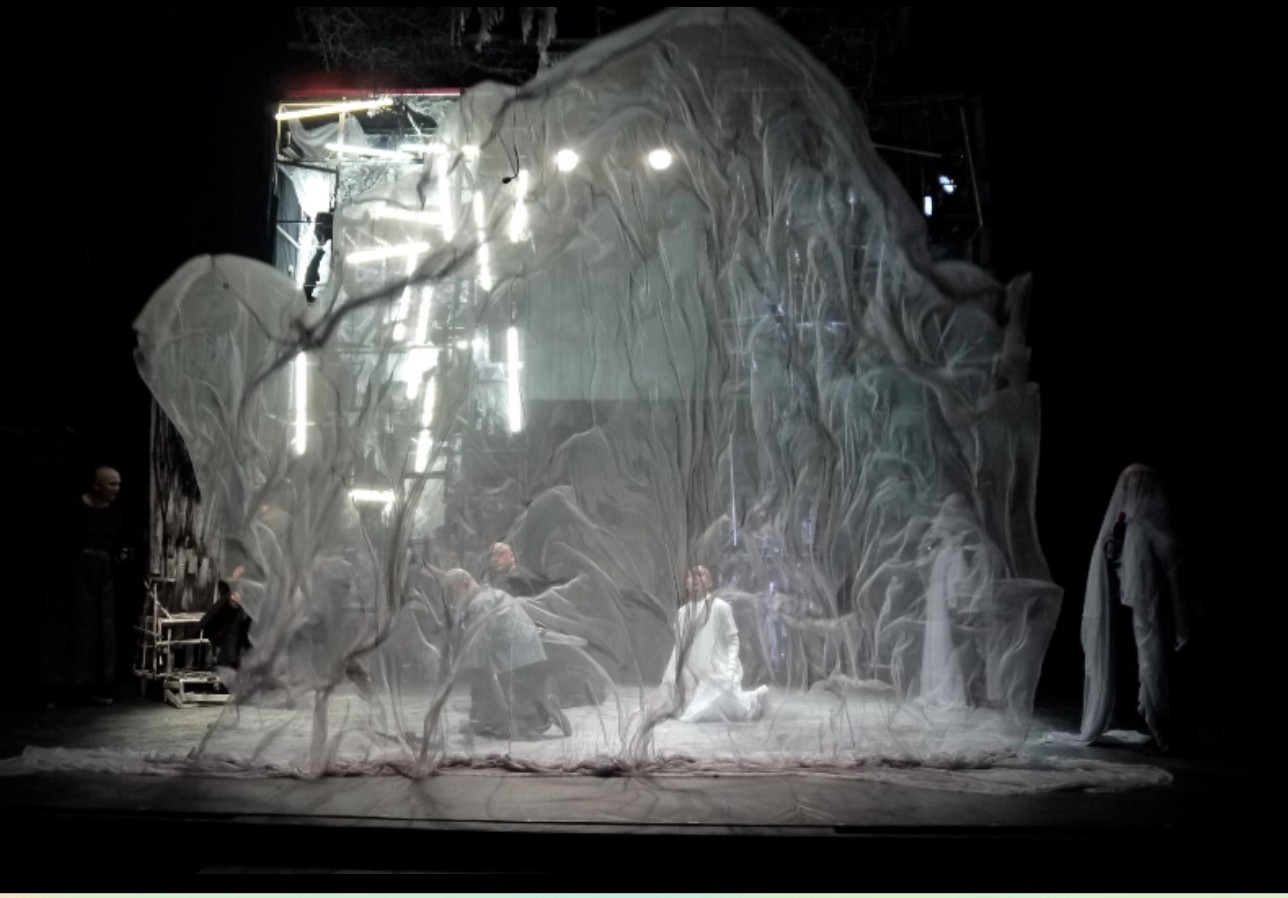
Dystopian setting of ‘Haring Lear’
Haring Lear (King Lear), in 2012, for PETA, was one of Gonzales’ favorite collaborations with Nonon Padilla. Its setting was a dystopian environment—a grid littered with plastic, twigs, fluorescent bulbs. Its costumes were a mishmash of Japanese dress, punk accessories, camouflage patterns, Hawaiian shirts.
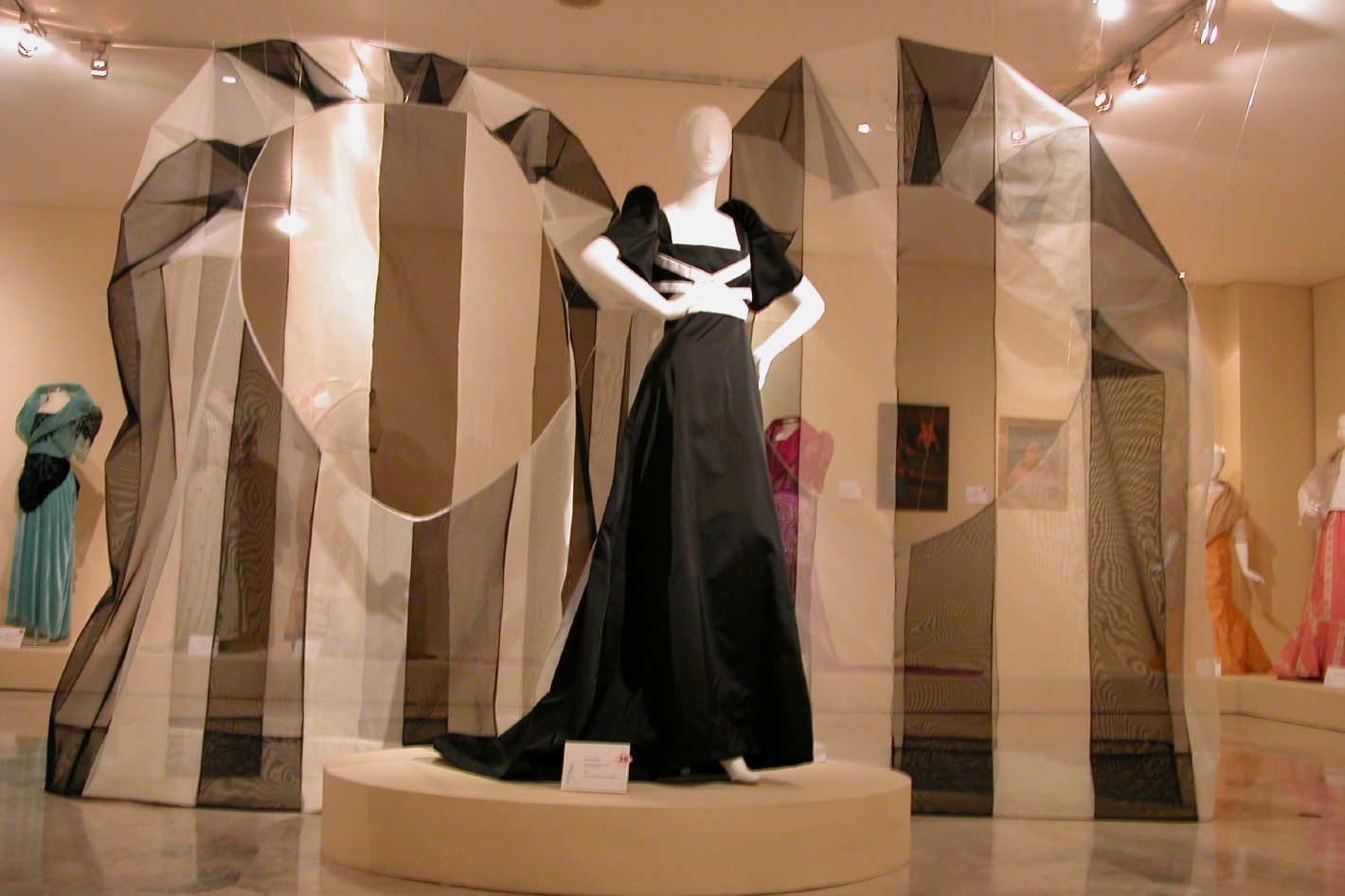
‘Turns of the Terno’ uses ‘pelon and canamazo to create giant butterfly sleeves.
My introduction to Gonzales’ work was in 2003, in a big year-ender at Metropolitan Museum which was still along Roxas Blvd. Curated by Ino Manalo, The Turns of the Terno was a retrospective on the national dress, and also the fashion design industry’s way of giving praise to Joe Salazar, who was battling cancer. The image of the setting left an imprint in my mind. Instead of the stereotypical elaborate native setting, it was a minimalist scene that put space to the best creative use. At the entrance to give the strong impact was a giant butterfly sleeve. Gonzales used pelon and cañamazo, both stiffening materials for the terno’s butterfly sleeves. Pelon was the running theme, painted black for mourning ternos, used as gigantic cockades for the ternos from the Malacañang collection, crumpled for the young designers’ area, and as floating clouds on bamboo poles for Angono, Rizal’s ceremonial ternos.
The course in advertising trained Gonzales to deal with people and clients and to have a create-a-brand mindset—all this applied in his passion for theater production. “It helped me traverse all theater companies,” he says.
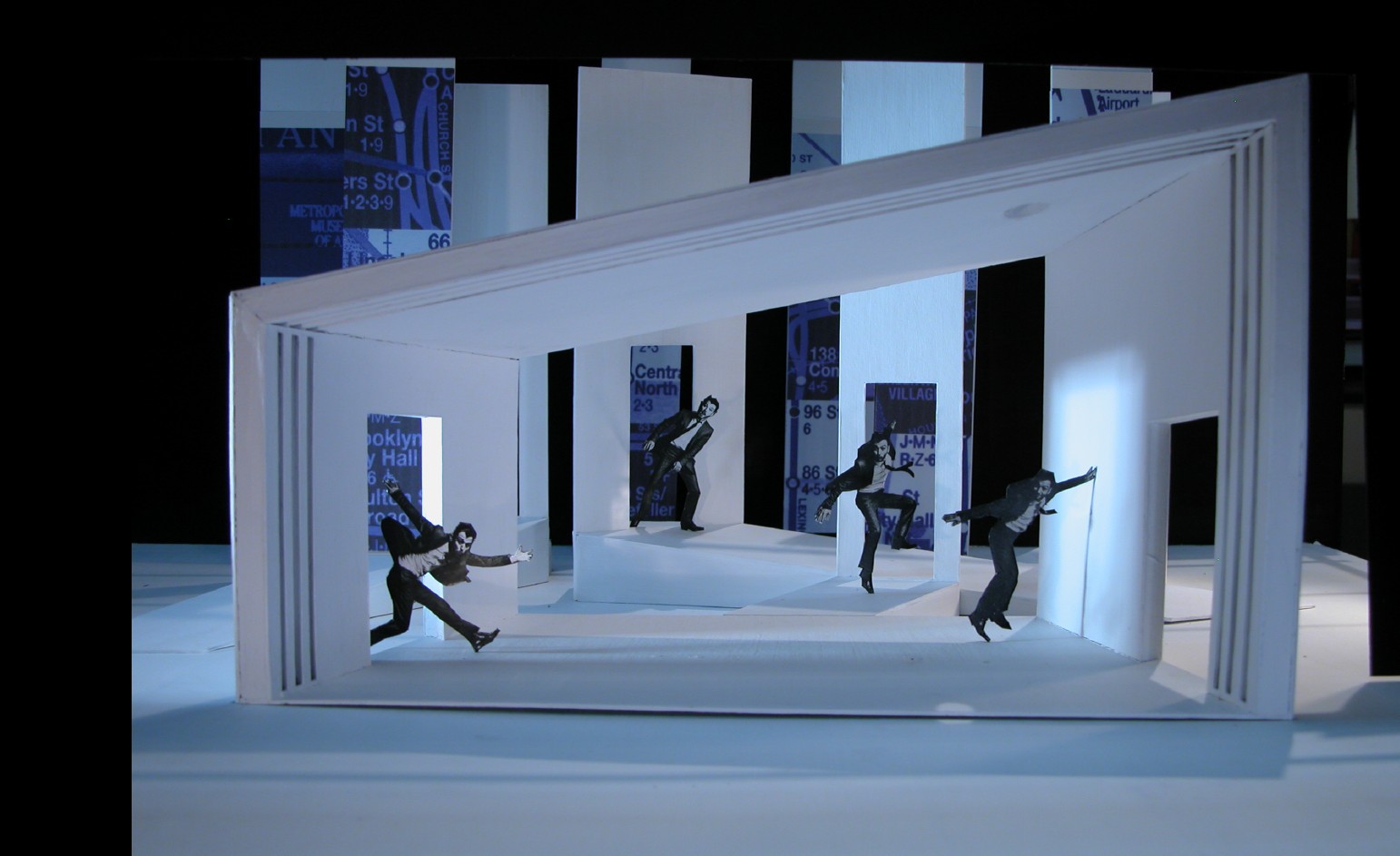
Repertory’s ‘Song & Dance’ uses old subway maps of New York as graphic content of the set.
Indeed he has worked in hundreds of productions here and abroad (e.g. Japan, Singapore, Taiwan), from campus repertories to major companies, from Dulaang UP, Tanghalang Ateneo, De la Salle-College of Saint Benilde to Tanghalang Pilipino, Repertory, PETA.
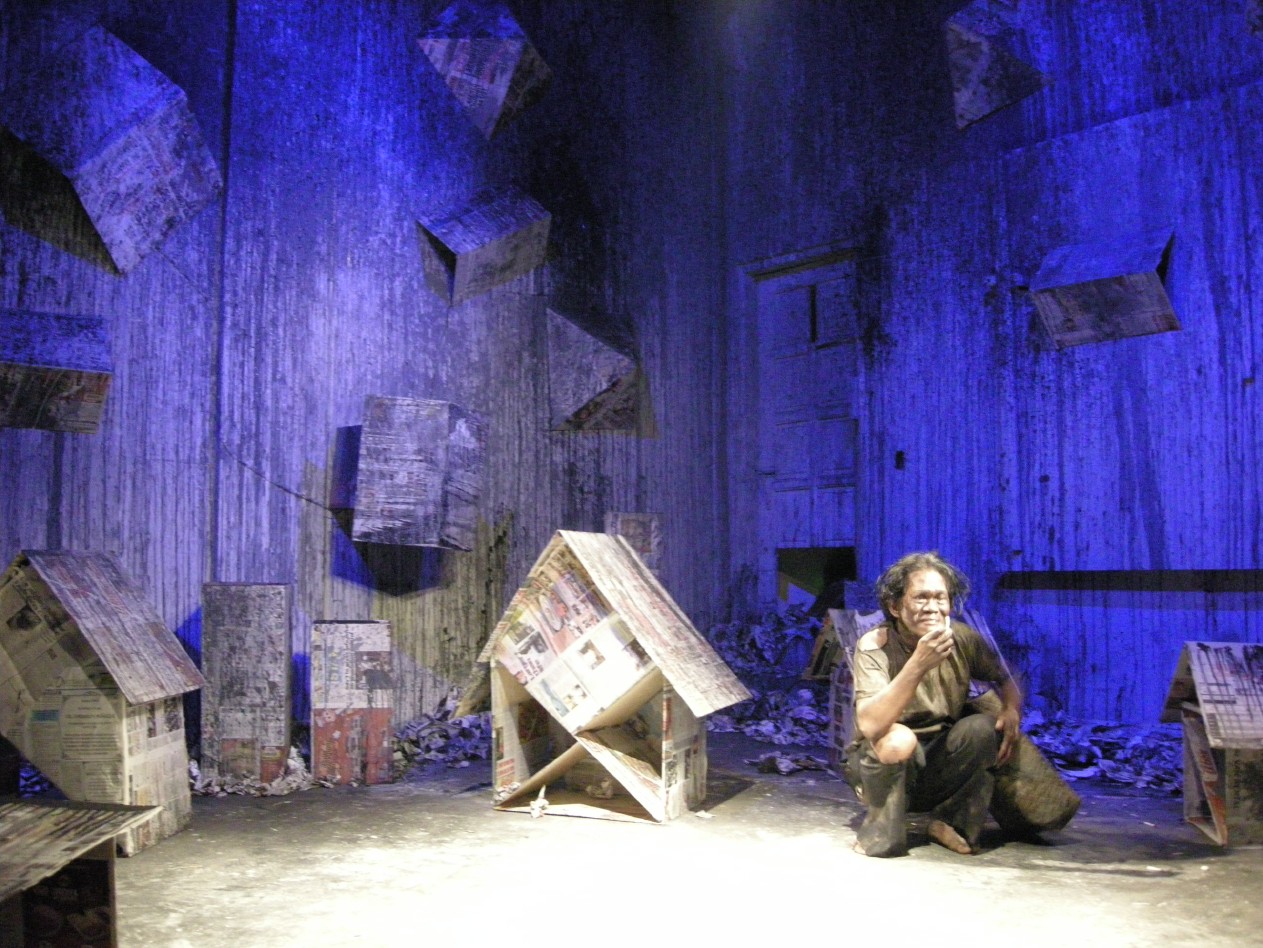
‘Taong Grasa’ uses newspapers as houses attached to theater walls.
In 2008, for the community theater Tanghalang Sta. Ana (Manila), he did the set design of Taong Grasa starring Lou Veloso. It was done in a very small space with small budget. He tapped the community folk to create small houses out of newspapers and attached these to theater walls, and worked with the trainees of artist Shoko Matsumoto in lighting design.
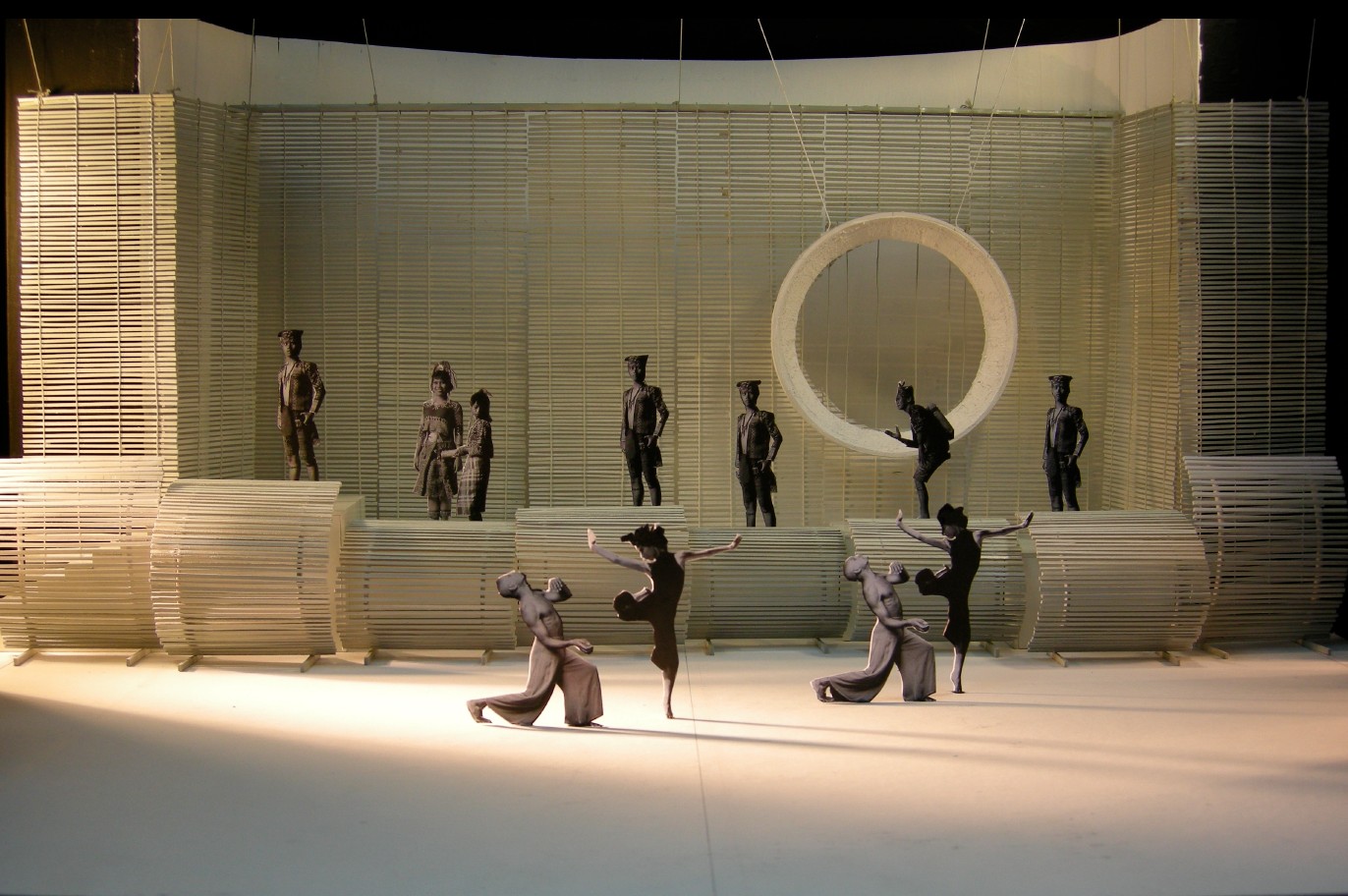
‘Neo Filipino: Katitaog’ of Ballet Philippines uses set made of ‘tanlak’ blinds sold in Tagaytay. ‘Katitaog’ is inspired by ‘pang-alay’ dance.
“I recall some solutions to address budget issues,” Gonzales tells TheDiarist.ph. “We’ve used folded yellow PLDT pages for the set of Unang Baboy sa Langit for Entablado, Post-It pads for the set of Wayside Cafe for Tanghalang Ateneo, clear plastic drawers for the set of Ballet Philippines’ Shoes++, scouring pads for armor in Tanghalang Pilipino’s Mulan, doormats as armor in Dulaang UP’s Nawalang Kapatid, and balikbayan boxes for Green Wings Entertainment’s Lorenzo…
“And as a result of Ondoy (typhoon), the damaged costumes of Repertory Philippines were literally taken apart and refashioned on the bodies of the cast of Sweeney Todd.”
He could do local without making it look baduy.
Gonzales has been turning upcycling and recycling into an art long before they became advocacies. But always he showed an unerring eye for details and possibilities, and more important, a cultivated fine taste. For instance, he could do local without making it look baduy.
This was proved in the national events staged for visiting foreign dignitaries, such as APEC 2015 in Cebu, the World Economic Forum (2014).
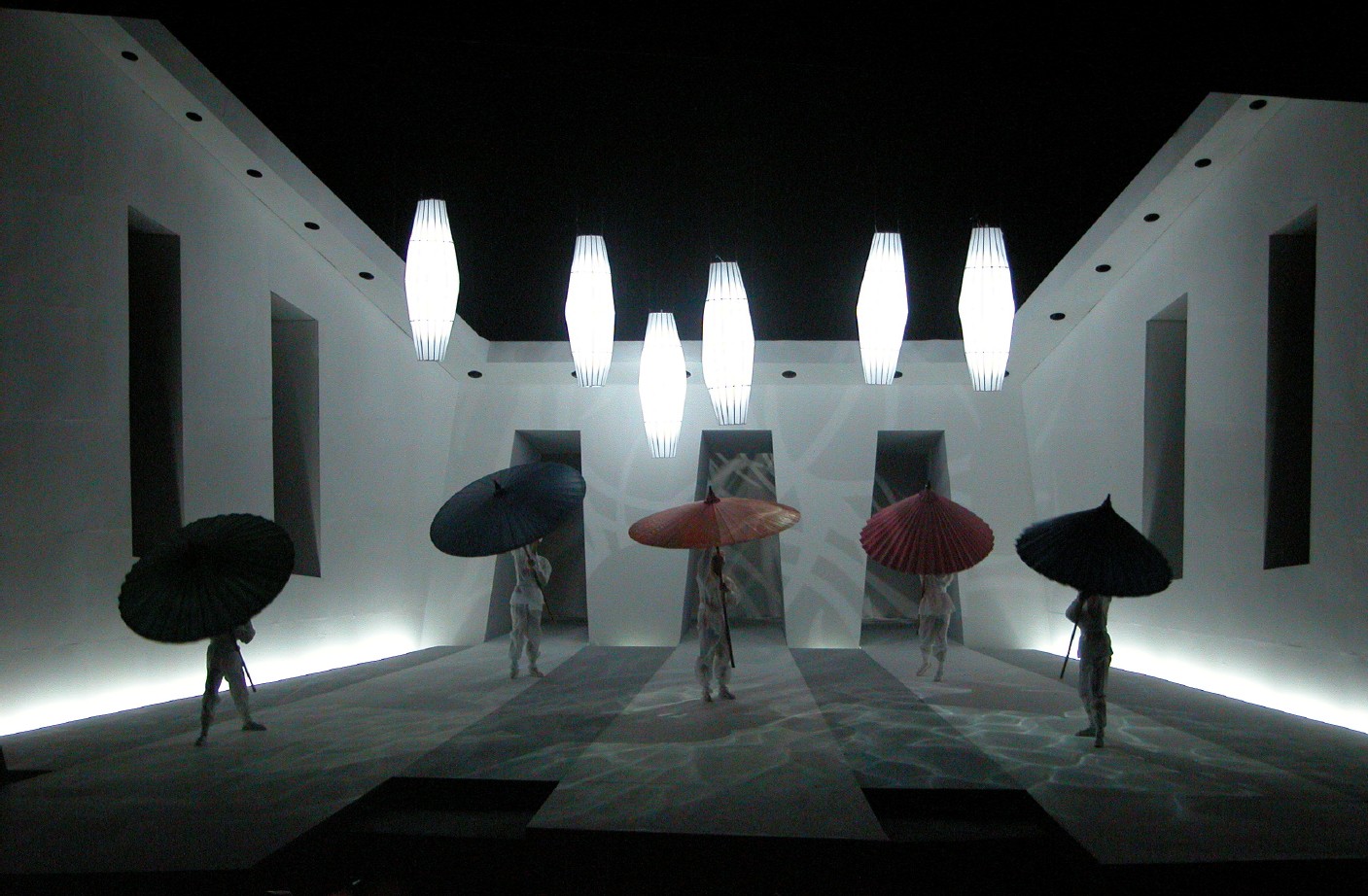
‘Ginintuang Moreno’
Gonzales traversed not only theater ensembles, but also sectors of lifestyle. Another unforgettable show for us was the retrospective he did in 2004 for Pitoy Moreno—Ginintuang Moreno: Tribute to Pitoy Moreno, produced by the UP Alumni Association and directed by Floy Quintos at CCP. The stage was given such depth of field that the clothes seemed like framed in a painting—“a false/forced perspective with three ramps to accommodate the models,” he describes it.
Not many know that upon his return from NYU, Gonzales immersed himself in the folk and common everyday stuff found while gallivanting and scouring the country with writer/artist and Filipino culture’s guiding light, Gilda Cordero-Fernando. Gonzales would tag along where Gilda went in search of native crafts, oddities, whatever caught their fancy.
Gonzales himself amassed a collection of these.
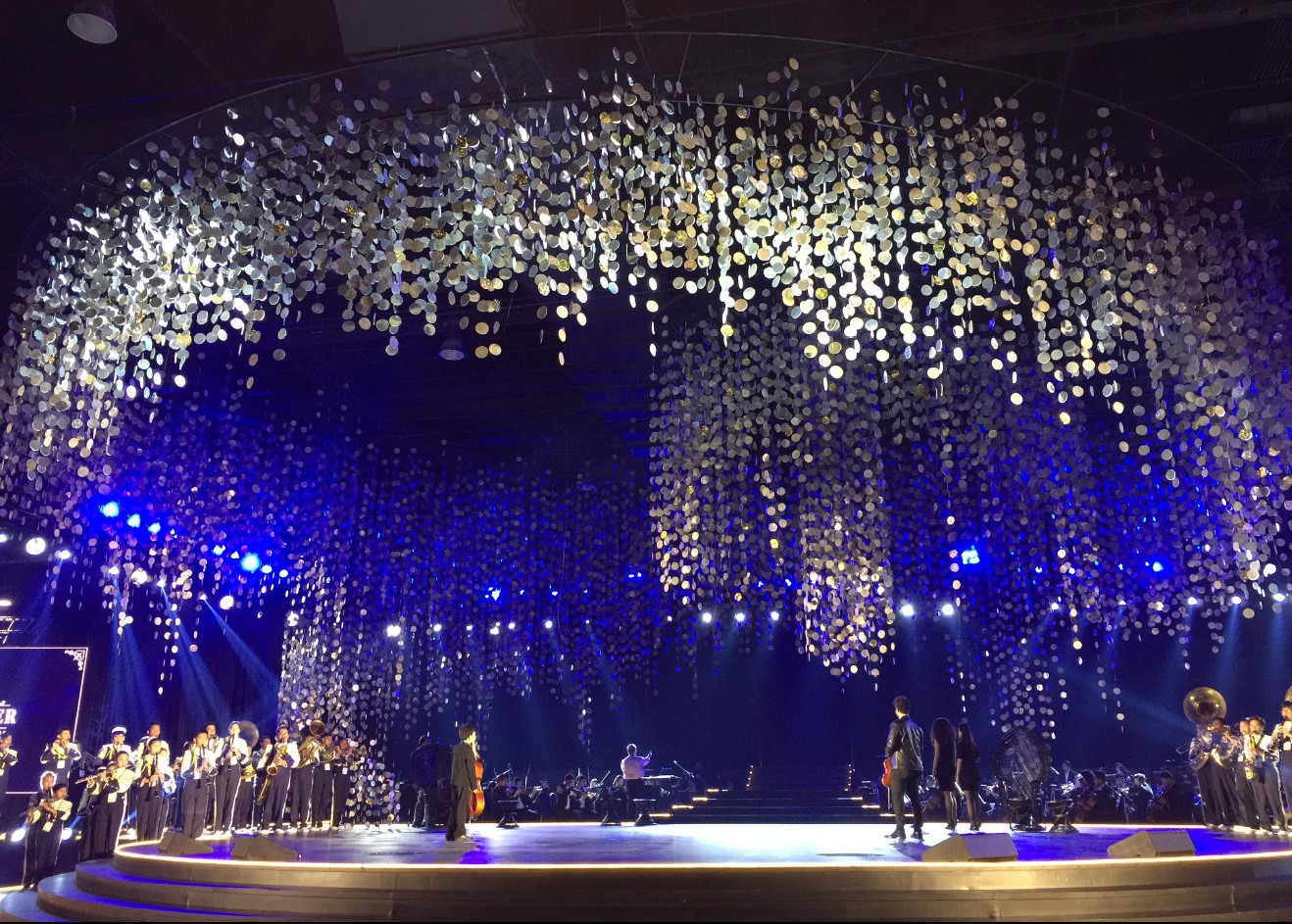
ASEAN State Dinner 2017 uses paper discs to simulate capiz shells.
“Looking at my studio and bodega, I realize I collect both lawiswis kawayan (folk crafts, textiles, shell crafts, Penal Colony products), and all sorts of contemporary objects (toys, lamps, miniatures, furniture).
“Friends bring me walis and curiosities from all over the country and the world. I am also given things—Tokidoki collectibles and kawaii objects. It’s really quite a diverse range of things.
“I like staring at them and touching them, figuring out what makes them beautiful. And eventually I find ways to merge the binaries—into what we call a contemporary Filipino brand.”
That partly explains how Gonzales is able to straddle worlds—the contemporary and modern, and the old and traditional; the folk and kitsch, and the sophisticated; the past and the present.
Gonzales is the Filipino of today—both the citizen of the world and a patriot of his country. That’s the Filipino we can be proud of.

‘Pepe’s Secret Christmas’ for Steps


