
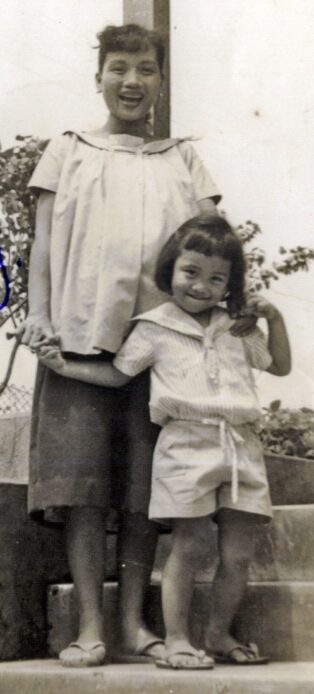
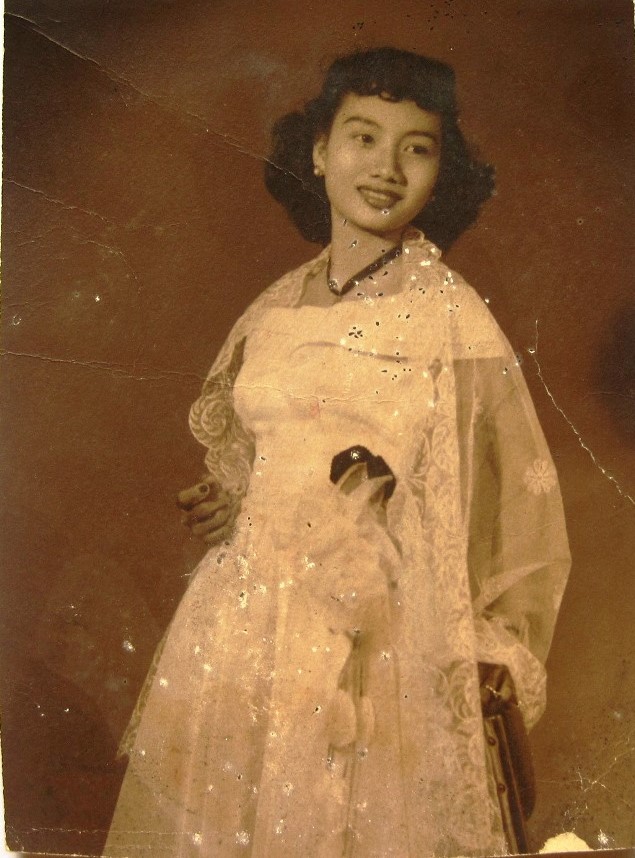
Gliceria Dula Lolarga as debutante in 1946

A mother’s ‘makuha ka sa tingin’ look
Photos from the author’s collection
My four sisters and I liked to joke, when Mommy (Gliceria Dula Lolarga) was still alive, that there were two physical things she bequeathed us. These were not the equivalent of material wealth but prominent or defining traits: our bunions and our indio noses.
My husband Rolly Fernandez observed, early in our courtship, that my brothers wore medium to high noses, whereas we girls were pango. Well, the boys took after our father, Enrique Cariño Lolarga Jr.
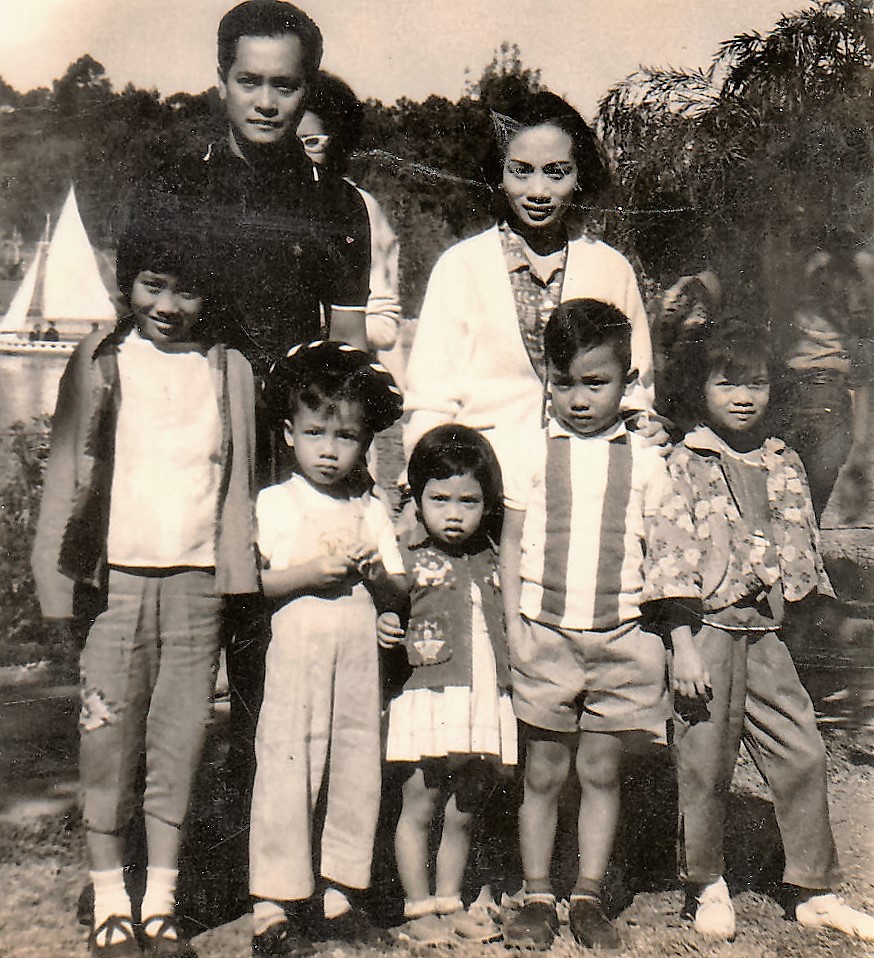
Junior and Nene Lolarga with five of their eight children
Mommy and Daddy were an odd couple. Imagine her carrying the nickname Nene while he was Junior. Junior and Nene sounded too much like Kenkoy and his Rosita. While Daddy was generally silent, a man of few words and an introvert, Mommy was talkative, outgoing and would even make easy acquaintance with the person seated beside her on a Baguio- or Cubao-bound bus.
But my memories of her as a mother were of a strict disciplinarian. To this day, in any house where I have a meal, I bus my dish to the kitchen sink. I learned to make my own bed, to wipe a mirror with a wet newspaper page, then wipe it again, this time with a dry page.
On Saturdays, instead of playing with the neighbors’ kids, we were required to clean the house first. That’s how I learned to work a coconut husk (bunot) to make the wooden floors of the second of three apartment floors shine. This was before my parents bought a floor polisher.
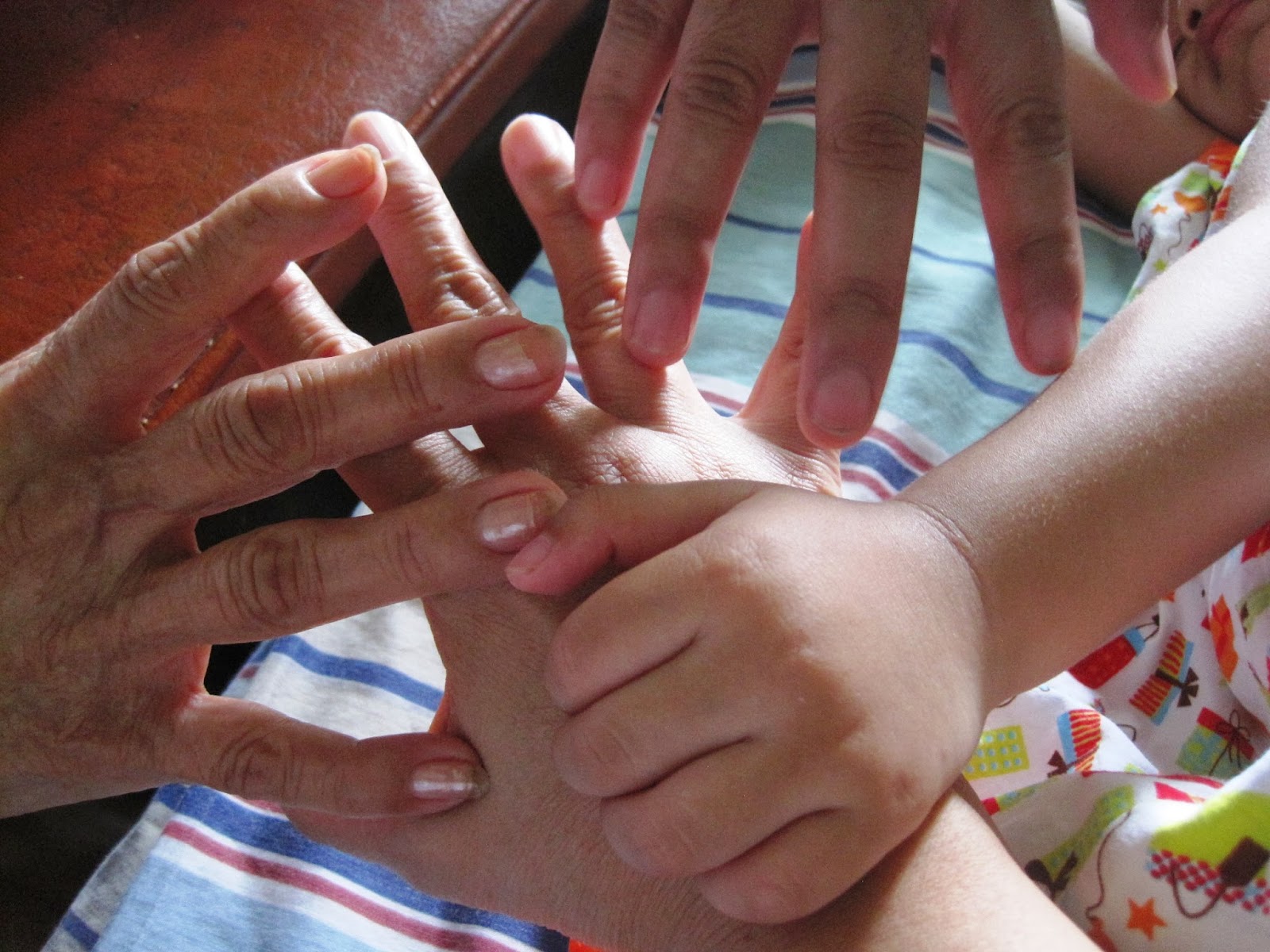
Four generations of hands, including Nene Lolarga’s nail-polished hands
As a 12-year-old, I was the babysitter to the family’s youngest, Gigi. But so engrossed was I one day with looking out the jalousies at the neighbors’ place that Gigi rolled over and fell to the floor with a loud bang. Having been taught to be honest, I confessed to my neglect. Mommy didn’t scold me although she was prone to pinch our legs or ears with her sharp nails for any misdemeanor. Daddy never laid a hand on us, but he left our discipline to her. She was from the makuha ka sa tingin (untranslatable) school of discipline.
But she had a friendly, trustworthy side. While we were living in an apartment in Sta. Ana, Manila, she befriended the neighborhood grocer, Tandoc, who had a store right across from the public market. Long before the use of credit cards, Mommy enjoyed her groceries on credit, which she religiously paid with her working woman’s 15-30 salary.
Saturday was also her market day, with Daddy carrying her bayong (native bag). Together they bought the freshest produce for storing in the tall refrigerator. She’d cook up a storm on Sundays where we’d have her trademark nilagang baka complete with potatoes, carrots and cabbage or its richer cousin, beef pochero, with an eggplant-squash vinegar and pepper dip.
From her repertoire of dishes, we got our first taste of arroz a la Valenciana, beef morcon, pork menudo, eggplant omelette, the occasional paksiw na bangus stewed in vinegar with bitter melons, eggplants and onions. For breakfast, she made Daddy’s frequent request of gisadong itlog (egg scrambled in tomatoes and onions), eaten with ketchup and fried rice or a slice of loaf bread.
One of my regrets is not having sat down to observe her or assist her in the kitchen, but then she would shoo us away, assigning us other tasks, like wiping the steps of the stairs with a rag, using our feet.
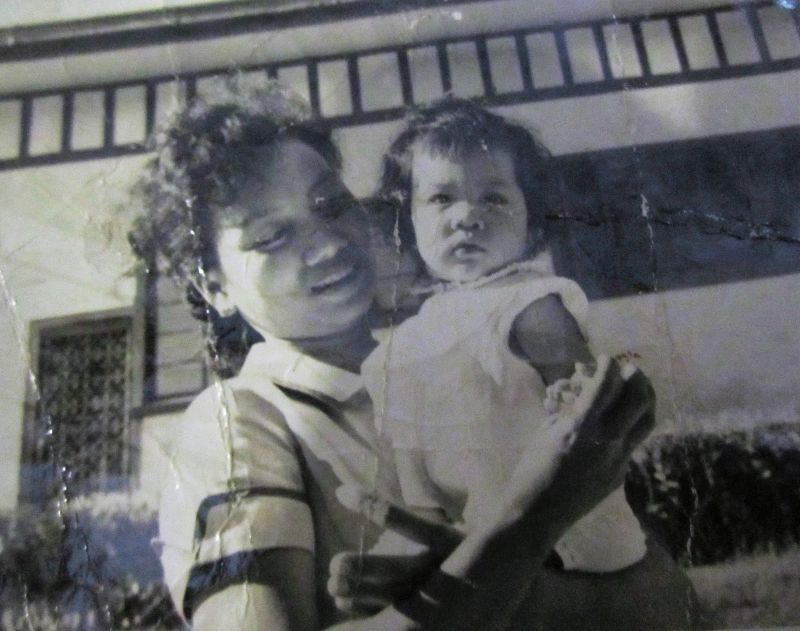
Nene Lolarga with her second-born Evelyn
Somehow, Evelyn, the sister after me, learned to do the morcon, and when Christmas season rolls around, we ask her to supervise us while we jam in our Pasig kitchen.
The Pasig house was realized, thanks to the gutsy work of Mommy. Daddy wasn’t one to stand in the construction site and check on the progress of the house being built. It was Mommy who cultivated ties with a hardware firm along Shaw Boulevard and got cement and similar materials on credit. Again she paid the hardware back with her earnings/commissions as insurance underwriter. Daddy’s temperament was such that he was content to live in an apartment, where he just crossed the street to reach his workplace—the then Trinity General Hospital.
But after we moved to Kapitolyo, Pasig, the gardener in Daddy was awakened, and he grew a garden that featured hibiscus bushes and flowering garlic vines.
As my siblings and I moved to young adulthood, and Mommy went through menopause, there would be pockets of rebellion at her conservative ways. To the end, she prayed the rosary daily, went to Mass on Sundays, became active in the Legion of Mary.
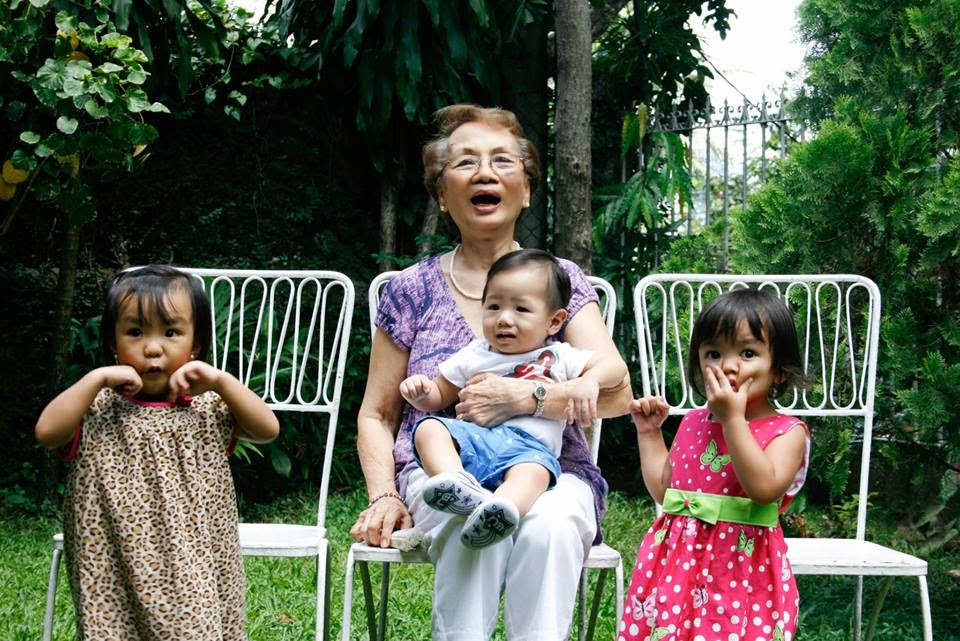
‘Lola’ Nene with great grandchildren Machiko, Jared and Kai
Now I realize that all that time, she had been praying most ardently for her family, especially when my daughter and a niece chose to be single moms. These decisions broke her heart and many a tear was shed by her. Later, when the babies, her first two great grandchildren, were born, she turned around and spoiled them, gave my first grandchild her first bath and crooned her to sleep.
I am most grateful to her to this day for making my own working years possible. Whenever Rolly would need to go officially out of Baguio on Inquirer bureau meetings and I couldn’t mind our children, Mommy could be relied upon to come up and cook meals for them, even hire taxis to safely bring and fetch the kids to and from school. I’d catch her during the weekends when she would make ready to return to Pasig and I’d give her an allowance for her own pasalubong shopping.
One time, Rolly’s aquarium sprang a leak, and she had to transfer the gasping fish to pails of water. She knew well enough to contact Rolly’s assistant to come to her aid and find new homes for the fish.
When Daddy died, she was visibly calm. My physician brother plied her with Valium to calm her down until the day after the burial when she spoke on the phone with her sister-in-law (Daddy’s Manang Fe Valdellon) who, in turn, encouraged her to cry her heart out, which she did.
During her last months, when a condition called myelofribrosis rendered her weak, unable to walk without assistance, bedridden and in and out of the hospital, I learned, with some reluctance, to take physical care of her and keep her company. I wiped her butt while I saw the apology and embarrassment in her eyes that were welling with tears. She lost all appetite, except for bland soup.
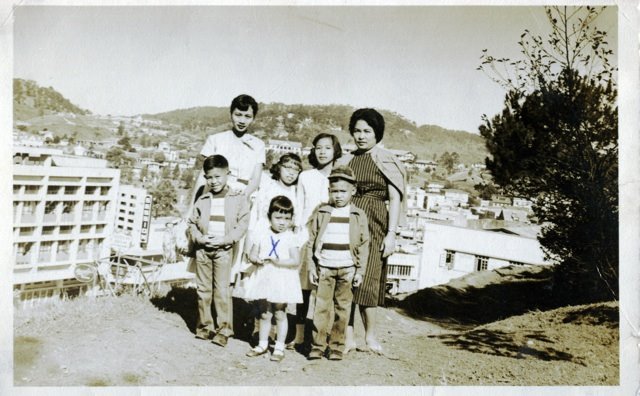
Nene Lolarga, standing left, in old Baguio with sister-in-law Pacing Romero and their children
During lucid moments when Mommy could speak, she made a roll call of friends and relatives and asked when they would visit her: Fe, Pacing Romero, Jack Nelle. All of them had died already. Then she would ask me to shoo away the little creatures at the foot of her hospital bed and hovering over bed. I consulted my siblings, and we were one in agreeing that she was either hallucinating, or the people who had gone ahead were fetching her already. The creatures may be angels.
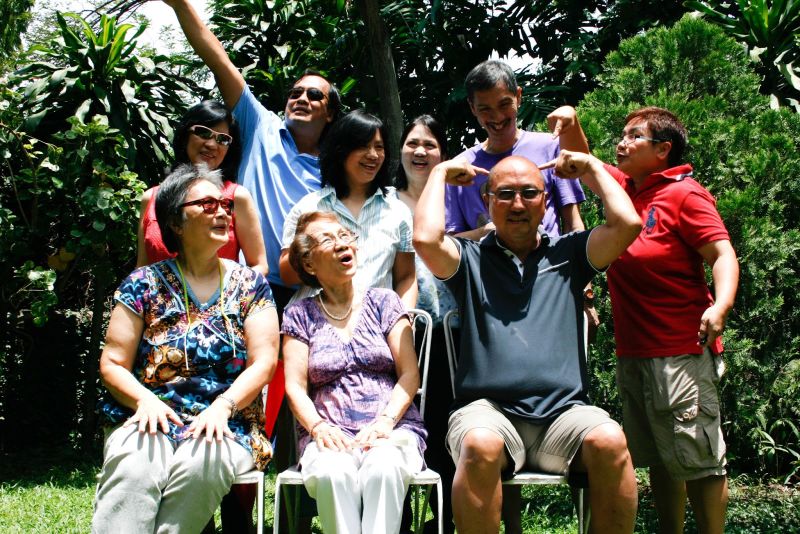
The family matriarch with her eight children
Today, when I fault myself for being an absentee mother in my youth (can’t bake a cake, can’t drive a car), for prioritizing reading, arts and crafts as activities for my children, I remember Mommy who paid for my piano lessons from Grades Two to Four and jazz lessons at Julie Borromeo’s Dance Arts Studio. I console myself that she taught a perfect balance after all. That was hard-earned moolah she spent on me, especially for a mother to eight children. She could’ve spent it on herself, but she didn’t.
And in this way, she was the perfect mother for imperfect me.


