
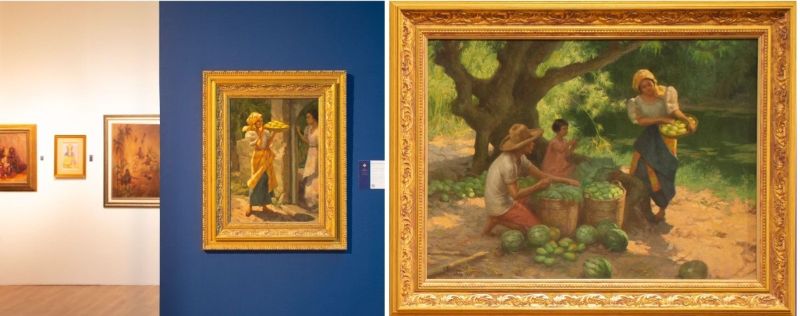
Salcedo Auctions has secured some of the rarest consignments for its September 12 (Saturday) The Well-Appointed Life sale this Saturday—a testament to the trust it has built over the years among collectors, families, and institutions holding the Philippine art deemed significant by both local and global communities.
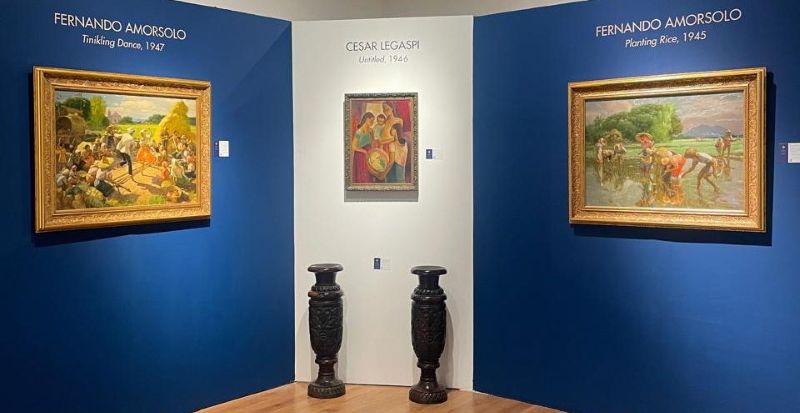
From left, ‘Tinikling Dance’ from 1947 by Fernando Amorsolo; Cesar Legaspi’s untitled oil on canvas from 1946; Fernando Amorsolo’s ‘Planting Rice’ from 1945.
Among the most talked-about acquisitions are two masterpieces by National Artist Fernando Amorsolo that were also being pursued by a leading international auction house. “I’m so sad,” an executive of the international auction house reportedly told friends in Philippine art circles, lamenting the decision of its owners to bring the works to Salcedo instead of the major sale in Hong Kong.
“I am very proud to have secured these works for the Philippines and for The Well-Appointed Life sale,” says Richie Lerma, Salcedo Auctions’ chairman and chief specialist. “They’ve been with their owners in the United States for decades and have remained with the same family for three generations. The owners made it very clear that they didn’t need the money, so I suppose in the end, after getting offers from many other houses and dealers, they decided on Salcedo Auctions because our reputation of trust—if I may say so—won them over.”
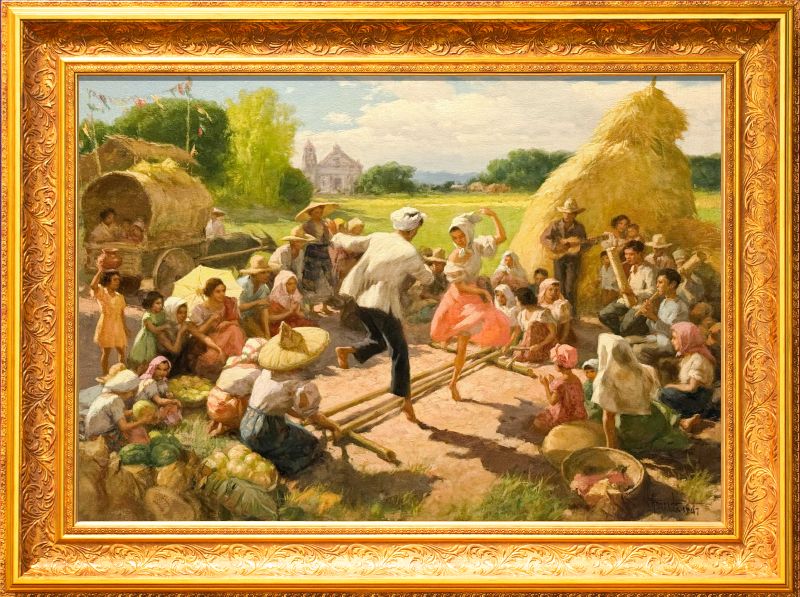
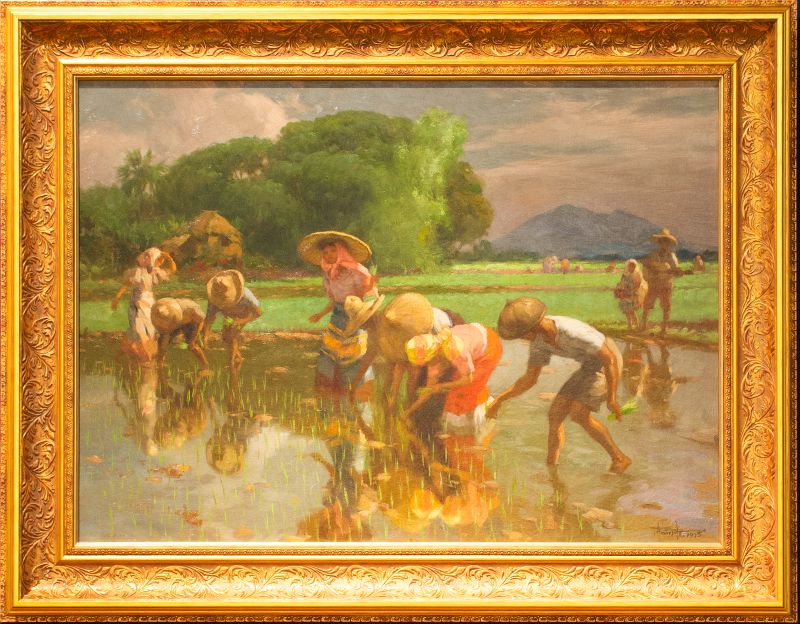
Fernando Amorsolo’s ‘Tinikling Dance,’ 1947 (left) and ‘Planting Rice,’ 1945, both oil on canvas board
The works are two pre-war paintings by Amorsolo: The Fruit Vendor (1937) and Under the Mango Tree (1939). Together, they illuminate different facets of the artist’s celebrated Golden Period, evoking a Philippines that was at once pastoral, cosmopolitan, and on the threshold of modernity. The archetypal dalagang bukid in The Fruit Vendor reflects Amorsolo’s idealized vision of the Filipina, while Under the Mango Tree captures his enduring vision of rural abundance in a richly composed tableau.
This period in Philippine history is remembered as “Peace Time,” or the years before the devastation of the Second World War. These works transport viewers to this idyllic time of innocence, abundance and optimism.
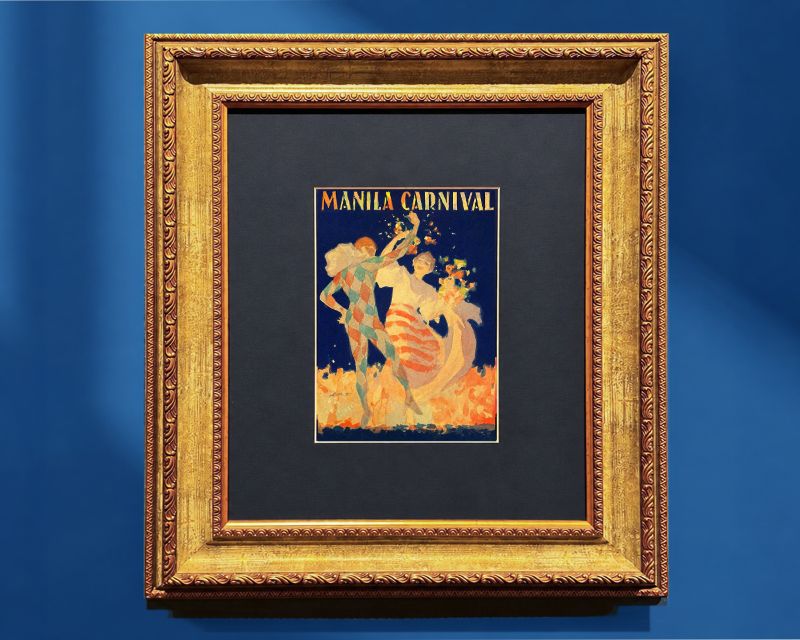
Fernando Amorsolo’s 1930s watercolor study for a Manila Carnival poster
Amorsolo returned to these subjects right after the end of World War II, though his countryside has become more than just picturesque sceneries, but a repository of continuity, cultural memory, and national identity. Planting Rice (1945), painted in the final year of the war, is particularly poignant. Its vision of cultivation and renewal assumes an almost allegorical dimension. There is joyful celebration in the artist’s Tinikling Dance (1947). Painted two years after the war, it transforms a rural community into a stage of a culture actively expressed through dance, music, and shared ritual.
“These four paintings from the ’30s and ’40s by the National Artist present a homecoming, having been outside of the country for generations,” Lerma says. “It is a great opportunity for the growing number of collectors of Amorsolo’s works to reclaim such extraordinary examples from his acclaimed Golden Period.”
There’s also another set of keenly awaited lots from the same Amorsolo-collector family, a passionate collector whose engagement with Philippine art spanned decades. “These pieces were in our house for over 40 years,” says the collector’s son, who consigned some lots for the September 12 auction.
“He was a business executive,” recalls the consignor, whose father became the COO of a big company in the 1970s and ’80s. “So it was during that time that he became a collector. He became quite an avid collector and made friends with a lot of artists. He befriended them and supported them. I’m assuming he told a lot of his friends to support artists as well. He probably even gave some of the works as gifts.”
Described by his estate as a certified dandy, the collector had the taste and sophistication for art collection. Among the works from the estate is Amorsolo’s vibrant 1930s watercolor study for a Manila Carnival poster, a fascinating urban counterpart to the folkloric and pastoral imagery associated with the artist from the same period.
There is also a drawing by Félix Resurrección Hidalgo, an exceptional example of the artist’s command of line, gesture, and tonal modulation. Its provenance adds another layer of significance: inscribed on the obverse by Felipe Hidalgo, the artist’s nephew and an important custodian of his legacy, the drawing was quite possibly dedicated to the painter Miguel Gálvez, providing material evidence of its passage between two significant figures in Philippine art.
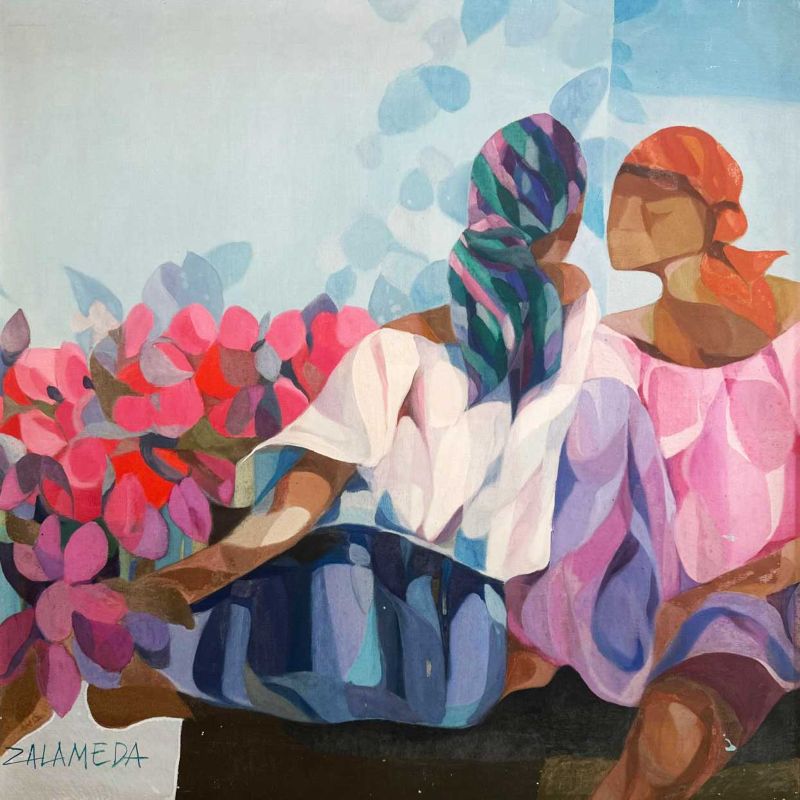
Oscar Zalameda’s ‘Flower Vendors,’ 1967, oil on canvas
Though his father was initially drawn to the traditionalists, there are also significant paintings by the modernists, including H.R. Ocampo’s A Song for a Couple (1978), from the artist’s Visual Melody period, and Oscar Zalameda’s Flower Vendors (1967), which exemplify a highly personal pictorial vocabulary, where recognizable forms are distilled into essential shapes without losing their warmth or character.
The consignor remembers his father taking him along on trips to the home of Oscar Zalameda. “They were close. (In a previous conversation, he had also intimated that his father called the artist by the affectionate moniker, ‘Oscaring’! ) We saw Zalameda a couple of times. As you can imagine, he was very flamboyant.”
And perhaps this is what makes this season’s haul especially meaningful. It’s not just about the art but the stories that they carry as well. Some have crossed oceans after decades abroad; others have left family homes where they have been cherished for generations. Their journeys converge at The Well-Appointed Life, where these paintings will find new collectors who will carry their stories forward.
Presented in association with Education & Public Programs Partner Asia Society Philippines, the full selection in The Well-Appointed Life available in the following catalogue links:
Morning online aale (starts at 10 am) https://members.salcedoauctions.com/auction/twal_12sep2026_10am
Afternoon live and online sale (starts 2 pm) https://members.salcedoauctions.com/auction/twal_12sep2026_2pm; or browse the full E-Catalogue here https://publuu.com/flip-book/517524/2601310
Preview is open to the public from September 3 to September 12, 9 am–6 pm daily (except Monday) at Salcedo Auctions, NEX Tower, 6786 Ayala Ave, Makati City.
For inquiries, contact info@salcedoauctions.com or phone/SMS +63 917 894 6550. Follow @salcedoauctions on IG amd FB


