
Text and photos by Raoul J. Chee Kee
The few times I’ve visited Dumaguete were mainly for work events, and while we would be given a few hours to explore, it was never really enough. What I do recall of those visits were the strolls taken along the city’s pretty, tree-lined Rizal Blvd that looks out into Tañon Strait.
Even then, I was impressed by this 780-m stretch of shaded pavement that gives locals a place to exercise, meet up with friends, or simply people watch.
Towering over the area are acacia trees that have acted as sentinels to the changes in the capital city of Negros Oriental. At dusk, hundreds of birds gather in one tree near the tourist information kiosk, creating a mini ruckus of simultaneous chatter, as if recalling to one another all they’ve seen during the day.
During a recent trip, we were able to explore parts of the city on foot as well as schedule day trips to the town of Valencia and the island of Siquijor. We chose a hotel across Dumaguete City’s public market because of its good reviews, and its proximity to the boulevard, the seaport, and other points of interest.
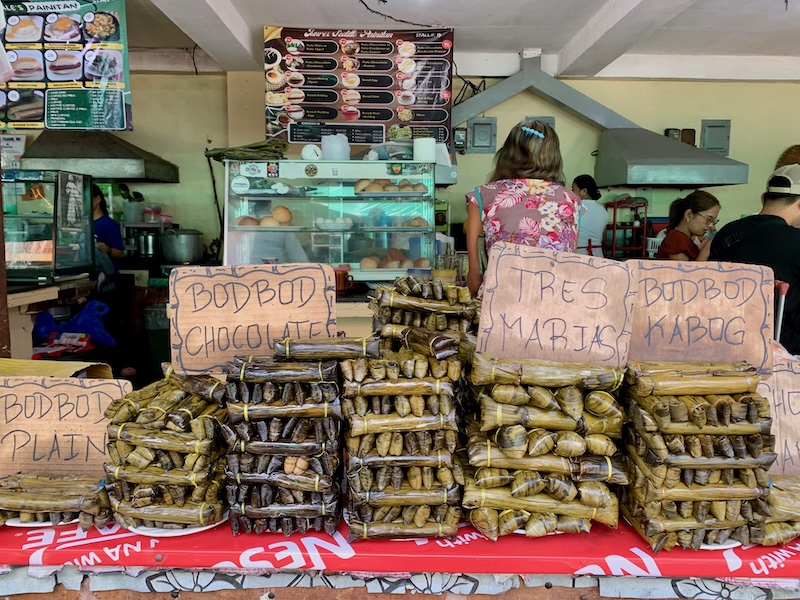
The first thing we ate in Dumaguete was budbud kabug and puto maya at the market. Budbud is traditionally made with millet, a gluten-free and nutrient-rich grain. At the market, the budbud is combined with coconut milk and sugar and seasoned with salt before being shaped liked cigars, wrapped in banana leaf squares, and steamed. The resulting rice cake gives off a whiff of coconut, has an oily sheen, and is tender to the bite.
Visayan puto maya is unlike the puto or rice cake many of us are familiar with. Their version is like biko made with sticky rice cooked in coconut milk and drizzled with native hot chocolate, syrupy peanut butter, or condensed milk. Depending on your choice of topping, an order of puto maya can range in price from P10 to P25.
Open from dawn till late, the market’s painitan—literally, “a place to get warmed up”—is the first stop of residents whose work starts at dawn. In the evenings, the road next to the row of food stalls is closed off and tables and chairs are set up. Vendors barbecue chicken or coat pieces in batter and fry them for pulutan (bar chow).
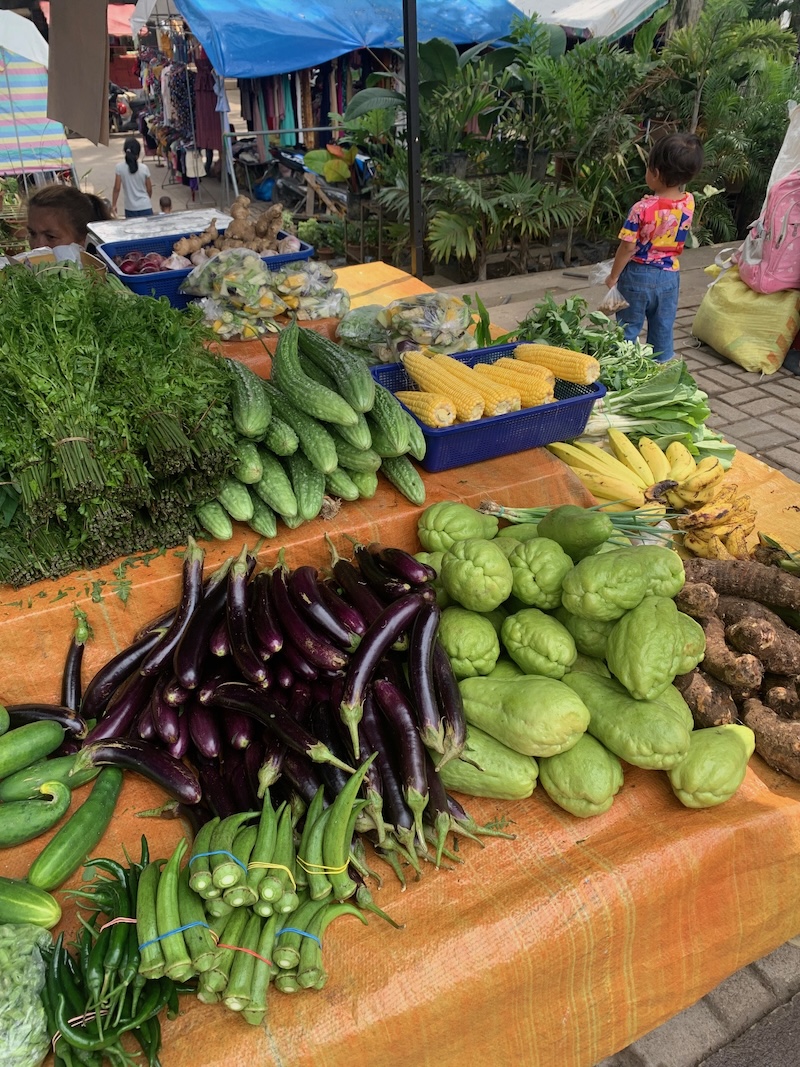
Valencia residents and visitors buy their produce at the Sunday market in Valencia.
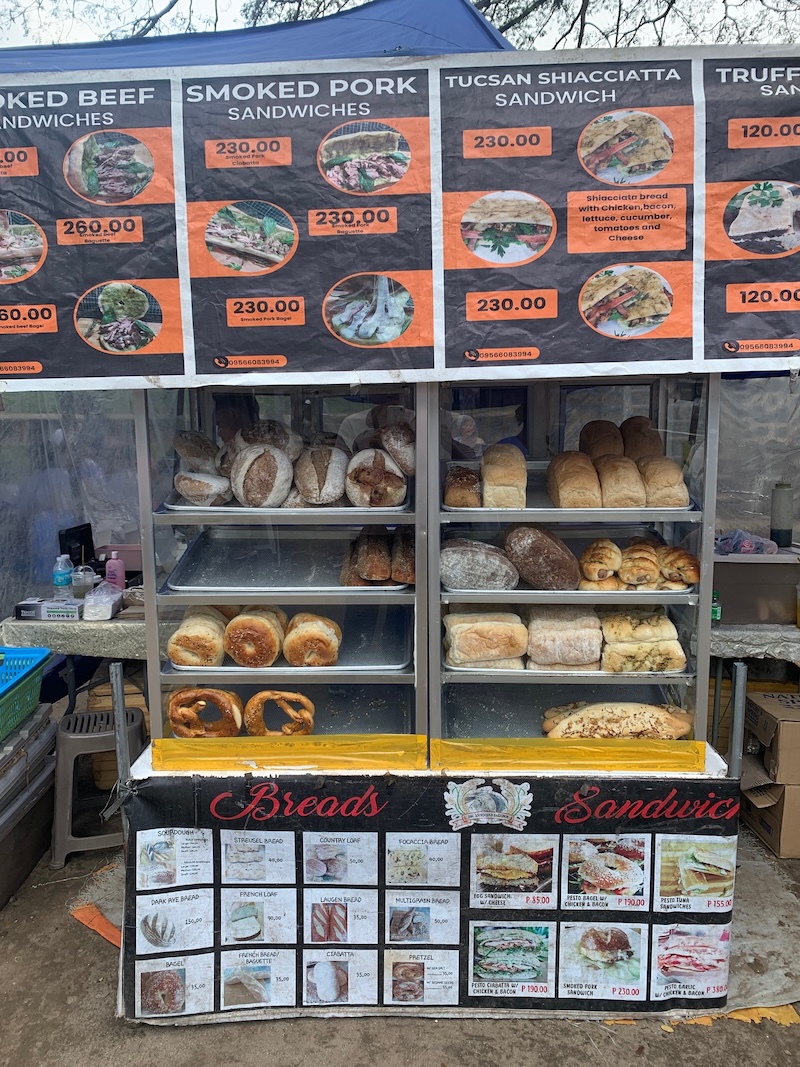
German breads and sandwiches for sale at the Sunday market in Valencia
After attending Sunday morning mass at the cathedral of St. Catherine of Alexandria, we contracted a tricycle driver to take us to the town of Valencia, less than 10 km from Dumaguete City, for their weekly Sunday market. Held at the Valencia Plaza grounds, the market is popular with locals who stock up on fresh produce as well as freshly baked breads by a German baker. There are also sandwiches and rice meals for sale that customers usually eat while seated at one of the makeshift tables or perched on the theater-style seats with a view of the market.
Armed with a small bunch of bananas and a couple of pretzels for merienda, we boarded the tricycle to our second destination, Pulangbato Falls, just 11.5 km from Valencia Plaza. The uphill drive usually takes around 20 minutes, but in a tricycle, it’s a little over half an hour. After paying a modest entrance fee, you’re rewarded with a close-up view of the falls and a choice of three mountain spring-fed pools. The place is a favorite of families and barkadas, as the property also offers overnight accommodations.
The following day, we headed to Siquijor on board one of the fast ferries that ply the route from the Dumaguete jetty. In less than an hour we were on the mystical island and on a tricycle headed to Tubod marine sanctuary. The white sand beach is a favorite of day trippers and backpackers, many of them foreigners who fearlessly bask under the searing afternoon sun.
Unlike Dumaguete, which is a university town, Siquijor has a more laid-back vibe. It has been likened to Bali in Indonesia with its high volume of visiting foreigners who you can see zipping down the narrow road on motorcycles that have been outfitted to carry surfboards.
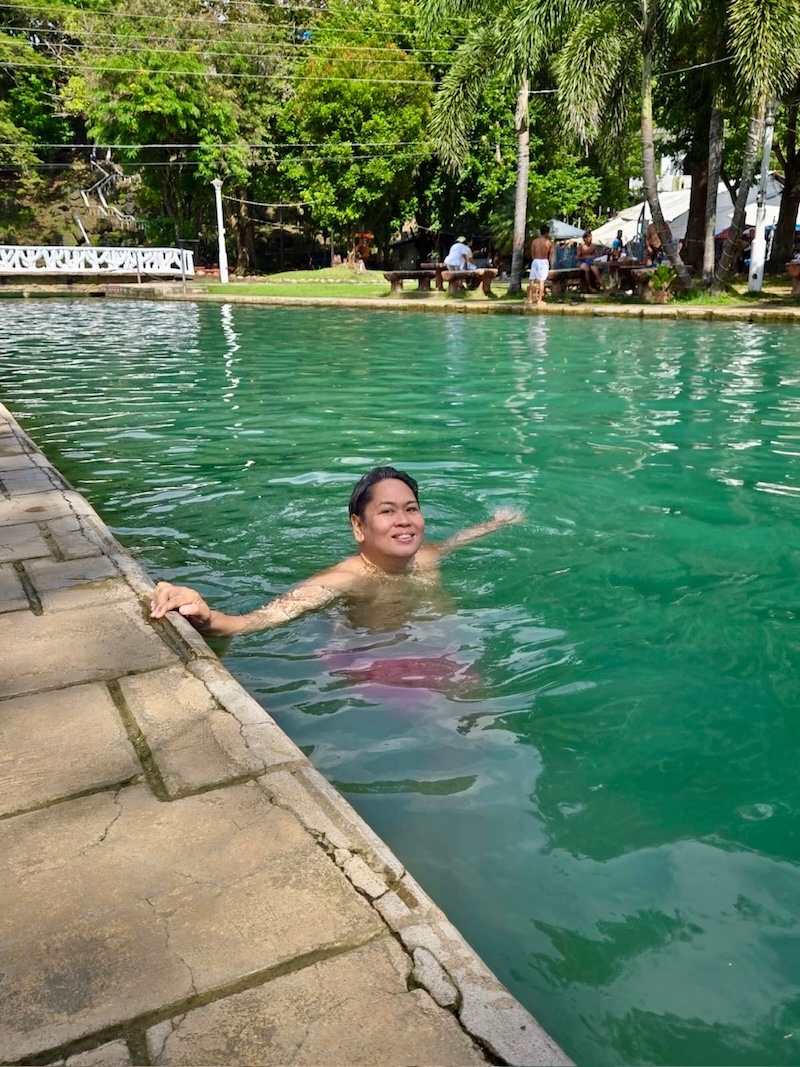
The author at Capilay spring park in Siquijor
After just an hour at the beach, we needed to cool off, so we went to the Capilay spring park. Located a few minutes away from Tubod, the park has a cold, spring-fed pool. We had visited this free pool during an earlier trip and remembered the slippery steps, so we proceeded with caution. The water was cold and dark green, and fish swam near the surface. I was reminded of the princess who lost her golden ball and ended up kissing the frog prince who returned it to her. The bracingly cold water made up for any squeamishness, and was a perfect foil after the heat at Tubod.
A trip to Dumaguete isn’t complete without a meal at Sans Rival, the restaurant on Rizal Blvd. Aside from their extensive range of cakes and pastries, they also serve hearty meals, making them a favorite of families. We also ate at Jo’s Chicken Inato, a Dumaguete original that first opened in 1970. The branch across Silliman University is popular with students who can eat well for a little over a hundred pesos. Their grilled chicken is juicy and served with not one, but two mounds of rice.
In the four days we were in Dumaguete, I’m not ashamed to say I ate three times at the painitan, sampling the different kinds of budbud kabug. The original, plain version is thinner, while the special ones are thicker and come flavored with native chocolate, ube or with strips of ripe mango.
Just before we headed to the airport for our return flight, I had one last puto maya with peanut butter and condensed milk, and bought a few bundles of budbud kabug to go. I know now that if I want a laid-back, frenzy-free vacation, Dumaguete will be top of mind.


