


Black ballgown with white dots made of organza-strip pleats

It’s the detail: Closeup of organza-strip pleats
Rhett Eala didn’t disappoint. In truth, not only did he not disappoint, he also, in quite awesome way, reminded us how the ‘80s and ‘90s (when he began to emerge) were the golden age of Philippine fashion design—one marked by deep-rooted elegance and sophistication, western contemporary yet Filipino to the core. Rhett Eala brought back glamour and classic elegance to the Manila runway, but made edgy and youthful. He knew how to wield craftsmanship. He did so at a time when the fashion design scene is all but consumed by deconstruction and upcycling—indeed a time of very complicated and cluttered looks.

At curtain call, Rhett Eala with Red Charity Gala organizers Kaye Tinga, Tessa Prieto, Ben Chan, guest model Piolo Pascual
Eala restored the simplicity yet mastery of design on the Philippine runway. A successful RTW brand himself, he gave us again a fashion devoid of complication and shock value. He showed a veteran’s confidence that he could make a woman look stylish and elegant in his clothes—without having to shock for TikTok views. We actually felt instantly nostalgic for the era of timeless elegance and style. His full collection for the Red Charity Gala Ball presented by BENCH over the weekend, October 4, reminded us how Eala, before he became a retail brand, was a force in made-to-order fashion, until he chose to focus on RTW in the 2000s. This was when he gave the local and global market the iconic image of the Philippine map on RTW shirts—that masterstroke proved the expertise of Eala as a visual and graphic artist, how he could distill a concept (i.e. patriotism) into simple imagery, his mastery of line, pattern and symmetry.
That is the context of the creative power that was Rhett Eala in the Red Charity Gala—a one-man show he claimed would be his last because he believes that it’s time for the NowGen designers to have the spotlight. We don’t believe this would be his last. Even the newbie batch of designers makes for an audience that would want to see his future collections.
-

- Frills made classic

-
- Judicious use of gold metal sculpture

-

- Mastery of construction

-
- Color is a design statement

His collection consisted of drop-dead formal gowns and cocktail wear for women, and tailored clothes for men—he was that definitive about his choices. Even his narrative was clear: he harked back to the period films of Fellini and Wong Kar Wai. Rhett belongs to the generation of Filipino fashion designers who read, researched and cultivated a diligent interest in films. He allowed the visual influence of these movie greats to shape his silhouettes, fabrication, color.
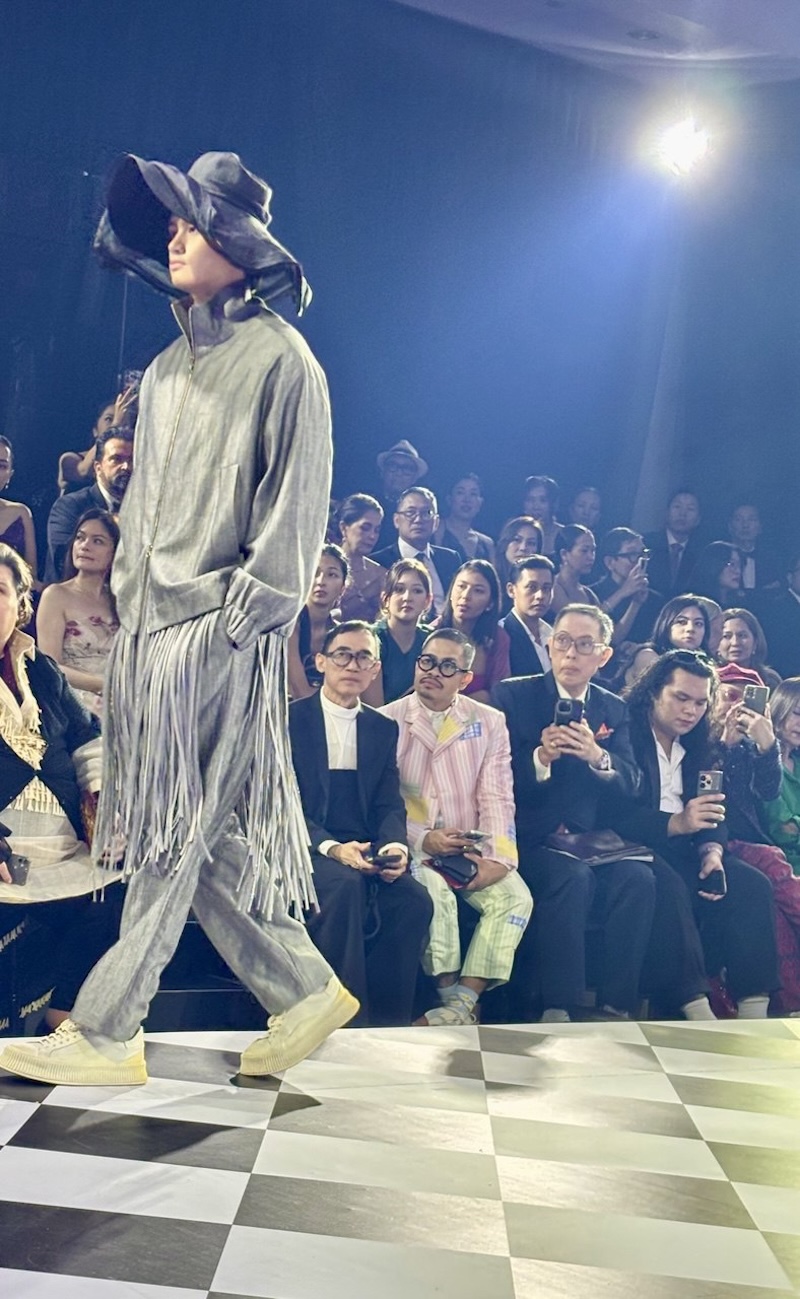
He didn’t reinvent a woman’s silhouette (like today’s designers do)—I mean, your waist stays where it is, and so do your breasts—but instead selected what to emphasize or hide, employing his signature touches: frills and giant ruffles or flounces, fringes. And he did so with evident restraint. A test of any seasoned designer is his ability to edit himself; he doesn’t need a stylist to do that for him.
-
- Tailoring and detail

-

- Lean line

-
- Craft and construction

-
- Jacket and fringes
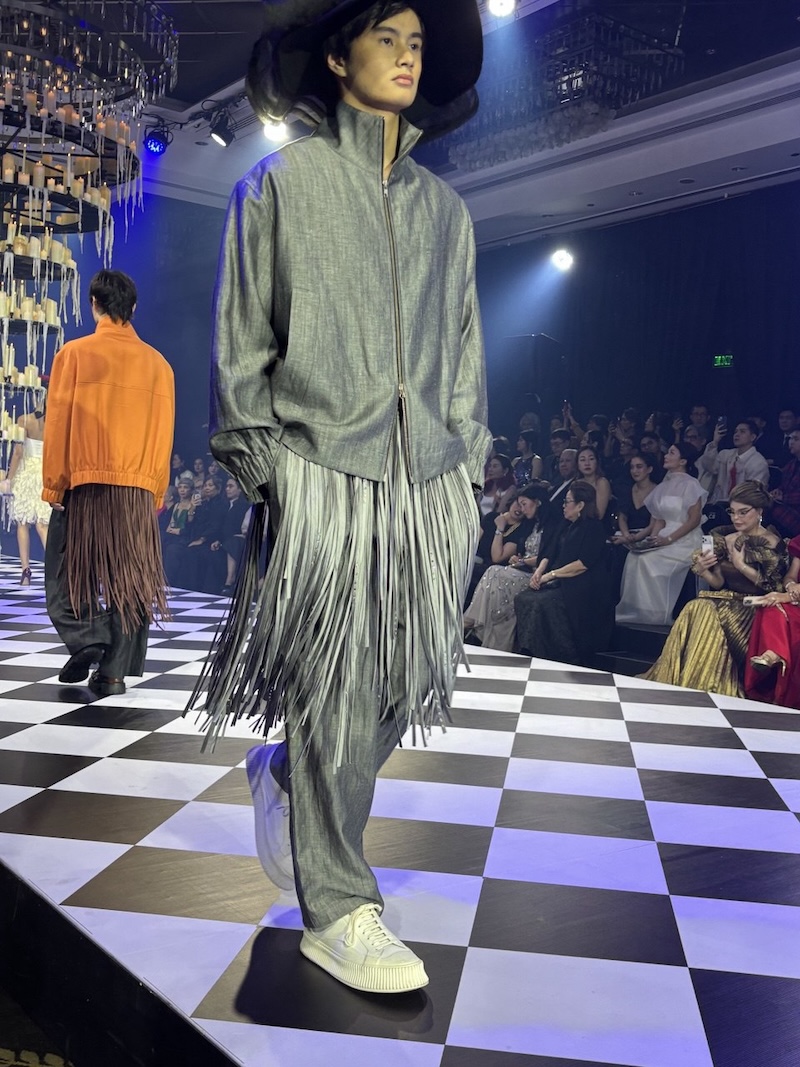
He contemporized his trademark poncho and made it adaptable. His fringe technique became so hip and clubbing-ready.
Eala the mentor could teach today’s designer a thing or two about the use of embellishment. You can use it; don’t let it use you. He didn’t get lost in embellishment; in fact, he hardly used it (if I recall right). Instead of embellishment, he used his detailing and proved his mastery of it. It was all in the details. Subtlety is sorely missed in today’s fashion design.
He knew how to incorporate in the look, for instance, the ikat pattern or other woven elements from Mindanao—the look defining the details, not the other way around.
Eala achieved flamboyance, even opulence, with the use of color—the vibrant reds, orange, yellow, the sweet pink, the calming celadon, and so on. In fine fabrics like silk or taffeta, color becomes luxury design. And Eala showed his adept hand here. No excess.
-

- Monochrome menswear
-
- Intricate

-
- Color is flamboyance.

We had almost forgotten that Eala was admired for his tailoring as well—until we saw his menswear in this collection. Men in well-tailored suits, pants—and skirts—looked hip and so now. But Eala gave an addition to today’s edgy and gender-fluid menswear: he gave it attitude. The detailing, the construction, the color gradation—he made these men look confident in their own skin. His menswear was no put-on fashion.
Among the show-stoppers, for us, was the ballgown with floral-design skirt of appliqued organza. Another was the black ballgown with white dots made of organza cut and sewn like pleats.
In the hands of Eala, craftmanship was a tool to produce a detail that made the gown a distinctive fashion statement.
In the run-up to the show, we chided Rhett that his niece, Alex Eala, shouldn’t be the only famous Eala. “Pressure,” Rhett said, with a giggle so typical of him.
Indeed, Rhett Eala—the other famous Eala.


