
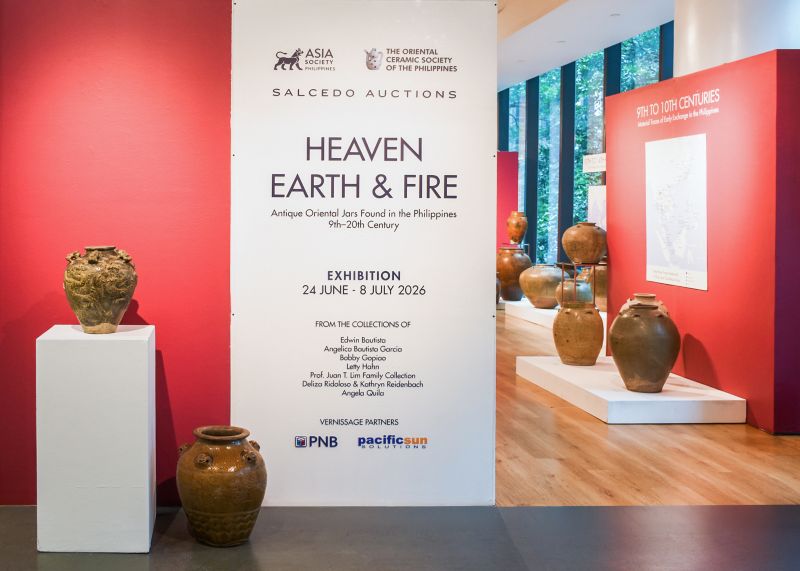
‘Heaven, Earth & Fire’ runs from June 24 to July 8, 2026, Salcedo Auctions, NEX Tower, 6786 Ayala Ave., Makati City.
Last June 23, Manila’s culturati gathered at Salcedo Auctions for the opening preview of Heaven, Earth & Fire, an exhibition of 9th- to 20th-century jars found around the Philippine archipelago, organized by the Oriental Ceramic Society of the Philippines (OCSP). It was presented by Salcedo Auctions in collaboration with its public programs and education partner, Asia Society Philippines.
-

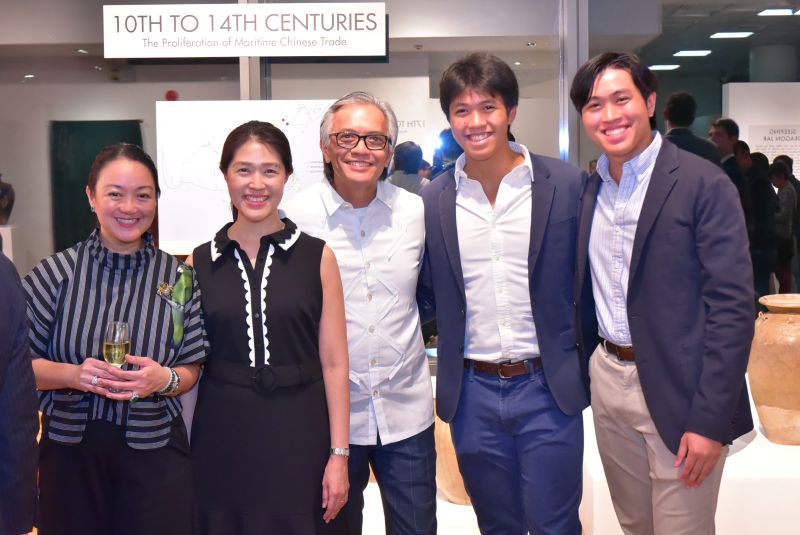
- Asia Society Philippines’ executive director Ching Jorge, Karen Lerma,Richie Lerma, the couple behind Salcedo Auctions and their sons, Diego and Joaquin
-

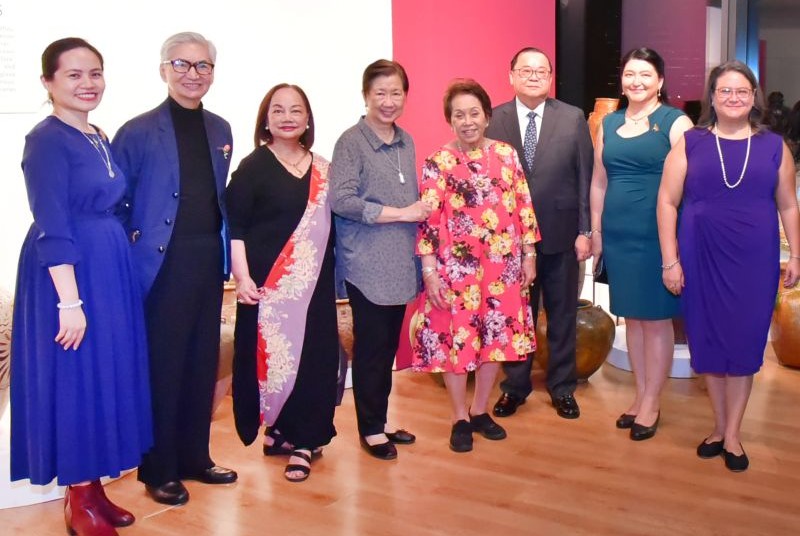
- Oriental Ceramic Society of the Philippines’ Tenten Mina, Tofi Sison, Menchu Tiglao, Nina Dizon, Erlinda Panlilio, Edwin Bautista, Deliza Ridoloso, Kathryn Reidenbach
The landmark exhibition brings together exceptional examples from distinguished private collections, including those of Edwin Bautista, Bobby Gopiao, Angelica Bautista Garcia, Letty Hahn, the estate of Prof. Juan T. Lim, Deliza Ridoloso and Kathryn Reidenbach, and Angela Quila. A number of pieces had, in fact, been discovered and acquired over the years at Salcedo Auctions.
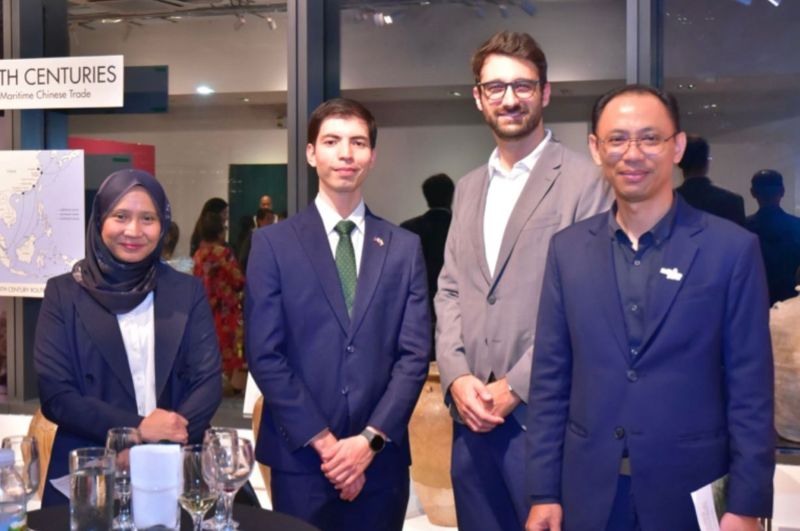
Farahliza Yazid from the Embassy of Malaysia, Farid Ronaldo Villamil Peralta from the Embassy of Colombia, Fabricio Sordoni from the Embassy of Argentina, Faizal Sharip from the Embassy of Malaysia
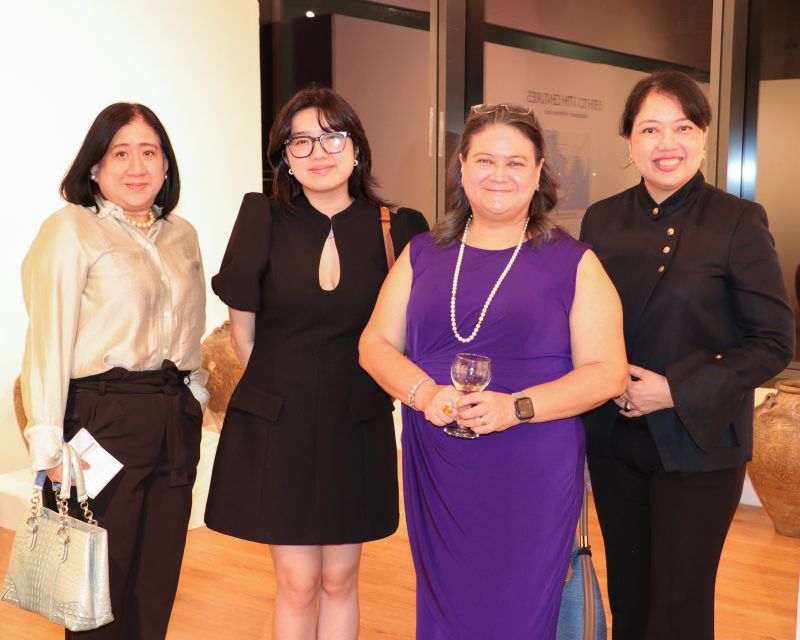
Cindy Reidenbach, Abby Chua, Kathryn Reidenbach, and Ellen Chua
To some, they may seem like the jars you see in museums, relics reserved for scholars. Look closer, however, and each jar becomes an enthralling storyteller.
Fashioned across China and other Asian countries over centuries, these vessels crossed the seas on merchant ships before finding new lives beyond the kilns that birthed them. There, they were embraced not simply as imported functional jars, but also as objects woven into the rituals, beliefs, and social fabric of local communities. Their meanings evolved, shaped by the people who treasured them long after they had left the potters’ hands.
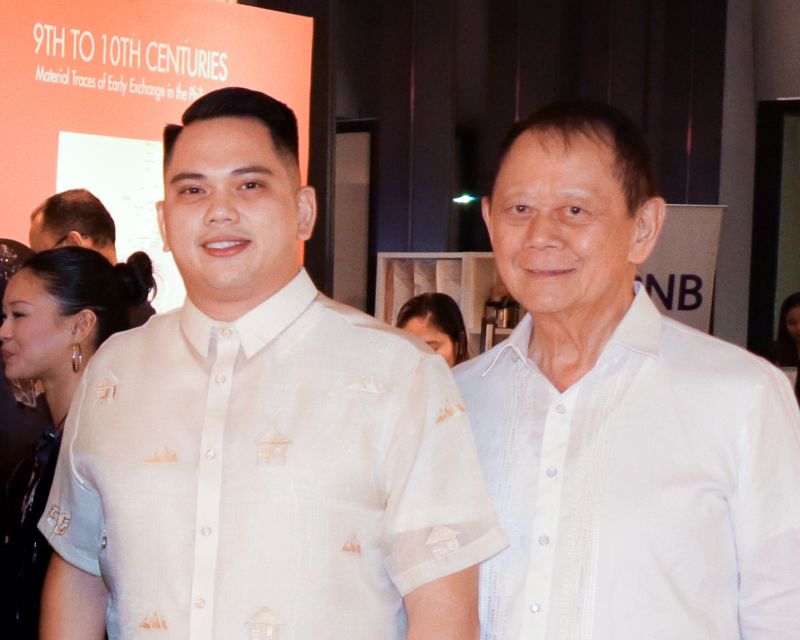
Karl Rodriguez, Romy Rodriguez.
The exhibition’s title reflects those stories.
Virgin jars, decorated with hand-painted dragons joined at the waist, were displayed outside the homes of families with daughters of marriageable age, quietly signaling that a young woman was ready to receive suitors. Peace jars, meanwhile, became symbols of warrior diplomacy, presented by defeated tribes to their victorious rivals to seal peace and restore harmony after conflict.
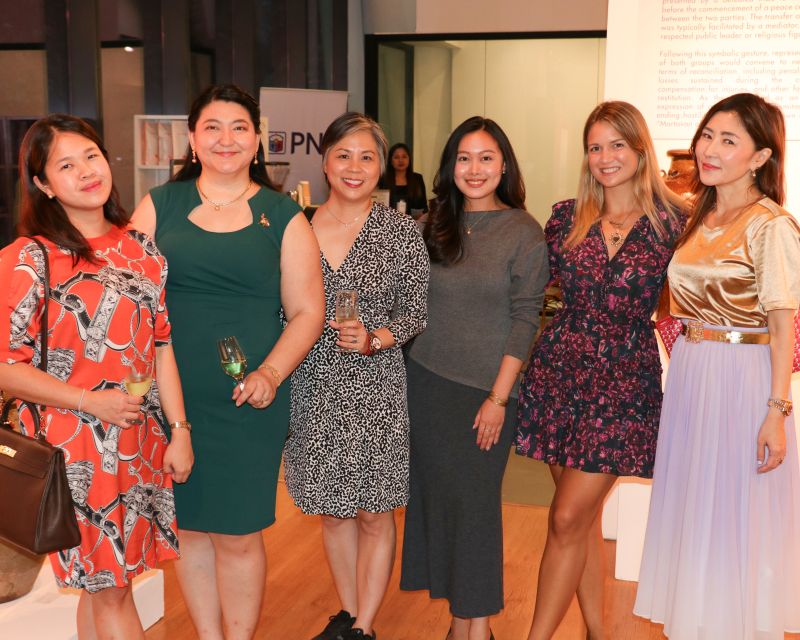
Angelica Garcia, Deliza Ridoloso, Donna Lina, Mikaela Usigan, Natalia Peña, Nikki Tang
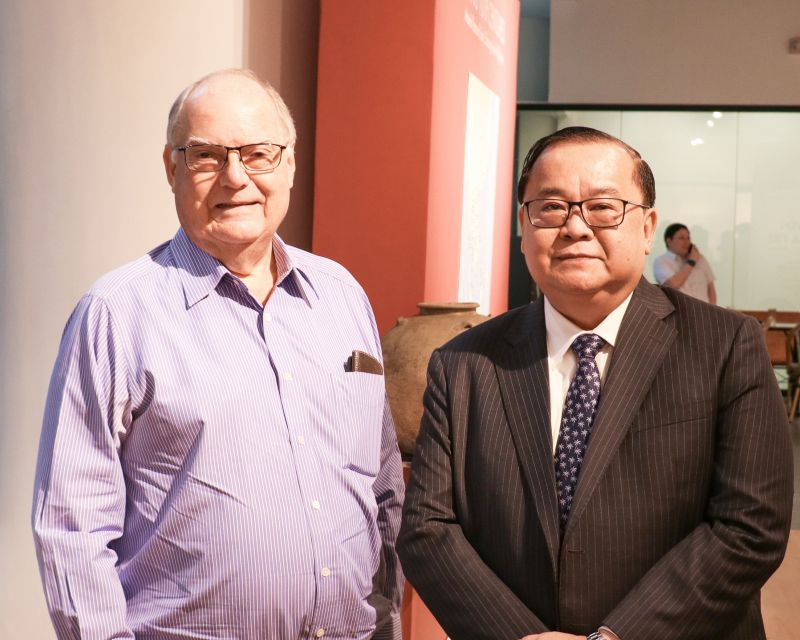
Peter Geldart, Edwin Bautista
Elsewhere, dragons appear in different poses and expressions, each carrying a distinct meaning. Ascending dragons symbolize good fortune, success, and prosperity, while sleeping dragons accompany the dead, serving as guardians on their journey to the afterlife. Jars adorned with the Eight Daoist Immortals, depicted standing above undulating waves, were believed to bring protection, longevity, and abundance to the families who owned them.
Ironically, while many of these vessels were manufactured in China, the traditions surrounding them were not. Their ceremonial uses developed in the societies that imported them, where indigenous customs merged with Chinese iconography to create rituals found nowhere else. The jars thus became more than trade goods. They became cultural ambassadors, embodying centuries of exchange in which commerce carried not only objects, but also beliefs, political alliances, and social traditions across the seas.
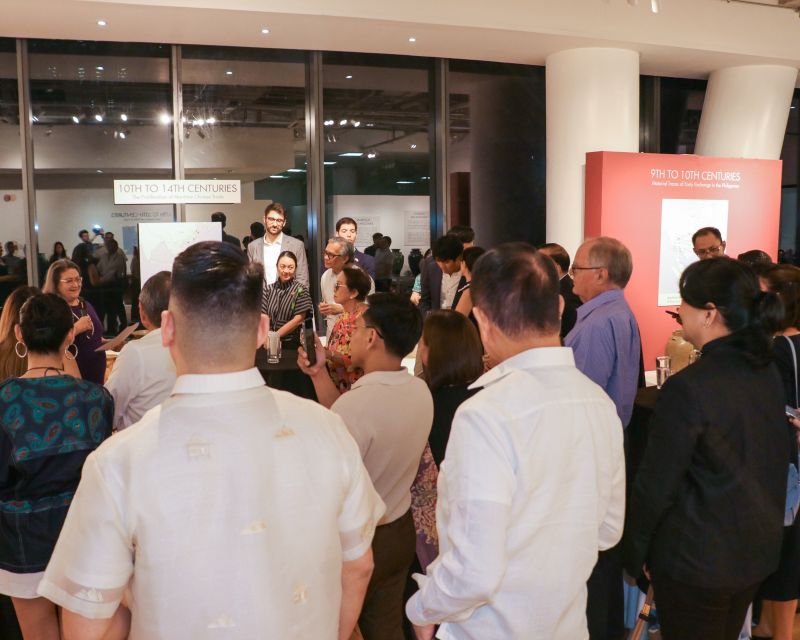
Guests gather at Salcedo Auctions for Oriental Ceramic Society of the Philippines president Candy Reidenbach’s welcoming remarks.
For archaeologists and historians, these ceramics are invaluable records of the past. Their forms, glazes, motifs, kiln origins, and archaeological contexts reveal how communities traded, forged alliances, honored their ancestors, and expressed status and identity. Every vessel adds another chapter to the story of a maritime world connected not by land borders but by sea.
Few scholars are better equipped to unlock those stories than renowned archaeologist Dr. Sharon Wai-Yee Wong of the Chinese University of Hong Kong, who arrived in Manila the day after the vernissage for the talk and workshop of Heaven, Earth & Fire. Fresh from her flight, she headed straight to the exhibition, eager to see the remarkable collection for herself.
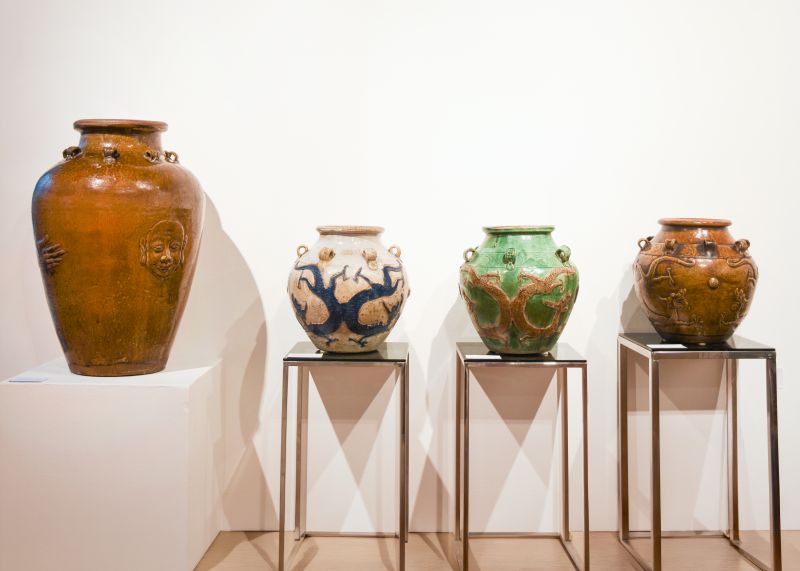
A ‘peace jar’ (far left), with a series of ‘virginity jars’ which feature two dragons conjoined at the waist
Moving briskly from one display to another, Dr. Wong seemed like a child on a visit to Disneyland, in awe of what she saw (some for the first time), and quickly taking pictures. She examined the jars from every angle.
It was more than an assembly of beautiful ceramics; it was an extraordinary gathering of artifacts that had traveled across seas and centuries
She lingered over pieces she had never encountered, even though many had been produced in the very regions she has spent her career studying. To an archaeologist, the exhibition was more than an assembly of beautiful ceramics; it was an extraordinary gathering of artifacts that had traveled across seas and centuries before finding a home in the Philippines.
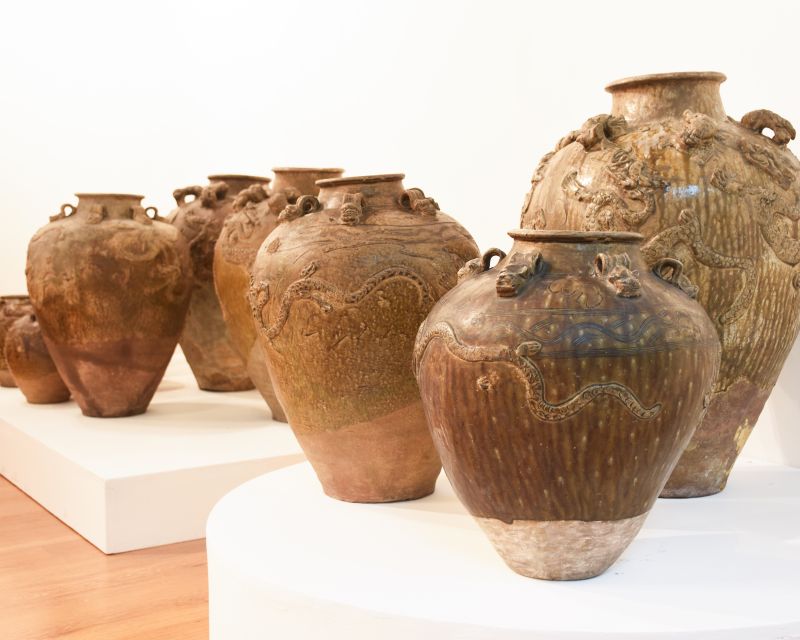
Jars from 14th to 17th centuries
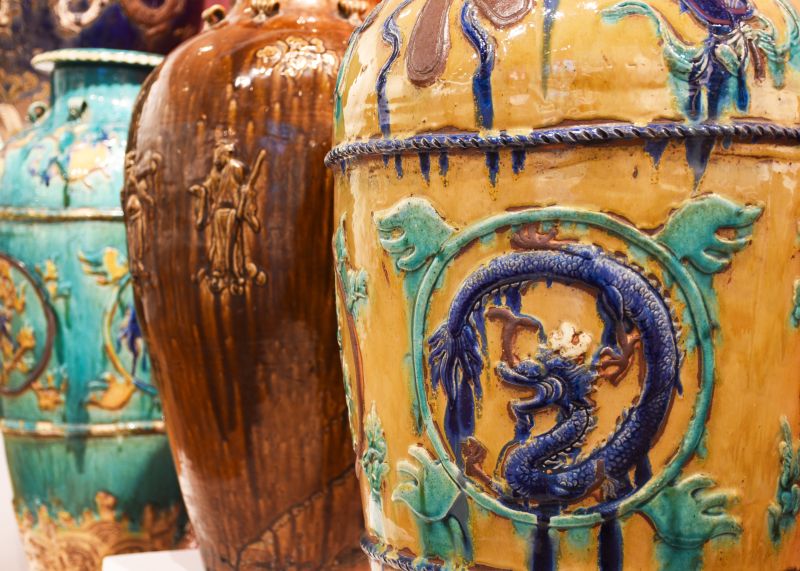
Details from the ‘Eight Immortals’ jars
What impressed Dr. Wong was the sheer number of ancient ceramics that have survived in the Philippines, thanks in large part to the country’s strong tradition of passing treasured objects down as family heirlooms. “For the Chinese, we usually keep objects like jade or gold bracelets,” she said.
Equally fascinating to her was how many Filipino families proudly display these centuries-old jars in their homes—a reflection of how different cultures, across generations, assign value and meaning to the objects they inherit.
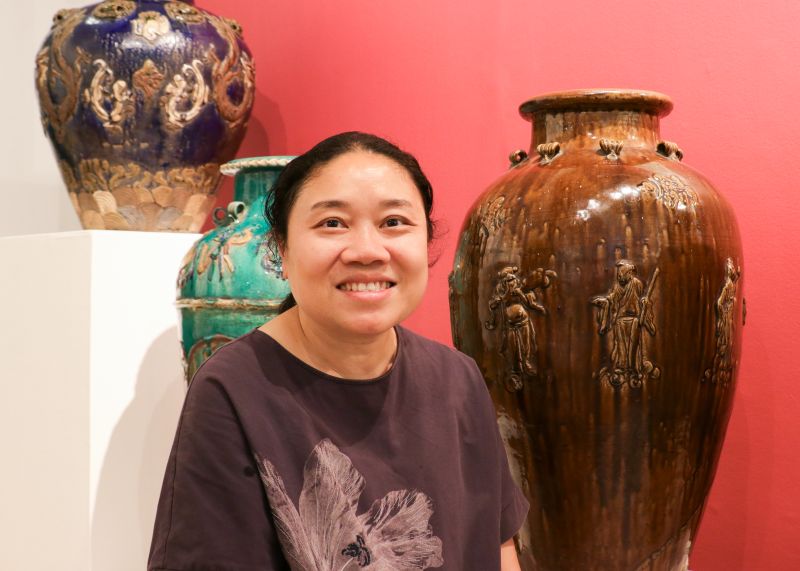
Dr. Sharong Wong Wai-Yee in ‘Heaven, Earth & Fire’ at Salcedo Auctions
Dr. Wong is a professor at the Chinese University of Hong Kong, but her path to archaeology was anything but predictable. When she was an undergraduate, a professor invited her to visit an archaeological excavation in Hong Kong.
“I thought, ‘Oh my God… Hong Kong has an archaeological site. That’s crazy,'” she recalled.
Captivated by the experience, she carefully assembled an album documenting the visit, filling it with photographs and newspaper clippings about the excavation. Shortly before graduation, she came across a newspaper advertisement for an archaeological assistant. With little more than boundless enthusiasm and carefully curated photo album, she went to the interview.
Her future supervisor flipped through its pages before looking up. “Oh my God,” he said. “You are the one.”
That encounter set Dr. Wong on a career path devoted to uncovering Asia’s material past. Today, her research spans Chinese ceramics, maritime trade, and archaeological heritage—and the objects assembled in Heaven, Earth & Fire are precious embodiments of these fields of study.
For visitors, the exhibition is an opportunity to admire and learn more about masterfully crafted ceramics. For collectors, it is a rare gathering of exceptional pieces. But through the eyes of an archaeologist, these jars become something even greater: they are an enduring witness to centuries of exchange, diplomacy, migration, faith, and cultural adaptation. Fired in distant kilns, then transformed by communities that embraced them, they remind us that history is sometimes written not on paper, but in clay.
‘Heaven, Earth & Fire’ runs from June 24 to July 8, 2026, Salcedo Auctions, NEX Tower, 6786 Ayala Ave., Makati City. For inquiries, email info@salcedoauctions.com or call tel. no. (+63 917) 894-6550.


