
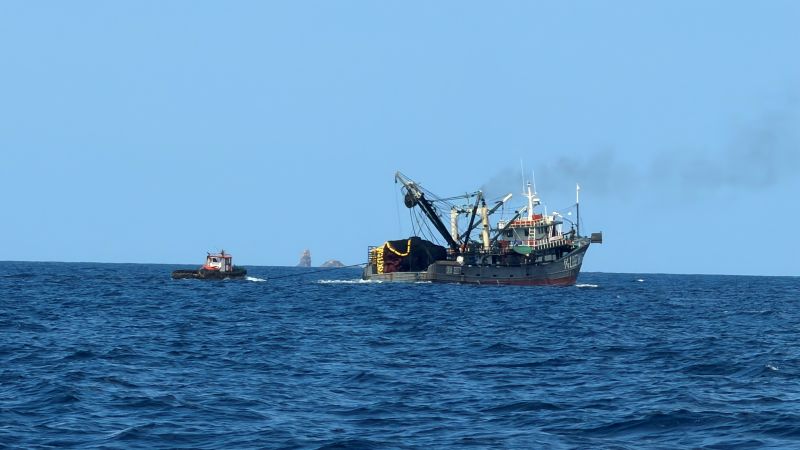
Boat photos by Danny Ocampo/OCEANA
IT is, in a word, sickening. In an excerpt from the 2025 British documentary film Ocean with David Attenborough, narrated by that global treasure of a conservation giant, he presents a never-before-seen view of how a commercial ocean trawler rakes across the ocean floor to indiscriminately catch fish. You see the animals swimming for their lives, while the huge net destroys everything in its wake, including generations’ worth of coral and ocean growth.
Excerpt from Ocean with David Attenborough: https://youtu.be/IzG9AwlypaY?si=EAQq4HQOjDvwegbY
If you enjoy the fish on your plate without really caring much where it came from, this may be a sobering and eye-opening sight. But you should also know that there is a fight ongoing in Philippine waters between large-scale commercial fishers and the small community fishermen who fish for subsistence—and are seemingly disadvantaged by the laws that are supposed to protect them.
Here’s a rough backgrounder. The Fisheries Code or Republic Act 10654, “An Act To Prevent, Deter And Eliminate Illegal, Unreported And Unregulated Fishing, Amending Republic Act No. 8550, Otherwise Known As ‘The Philippine Fisheries Code Of 1998,’ And For Other Purposes,” was passed Feb. 27, 2015. In this law, “municipal waters” are defined as the water up to 15 km from the coastline of cities/municipalities, to include streams, lakes, and tidal waters within the municipality.
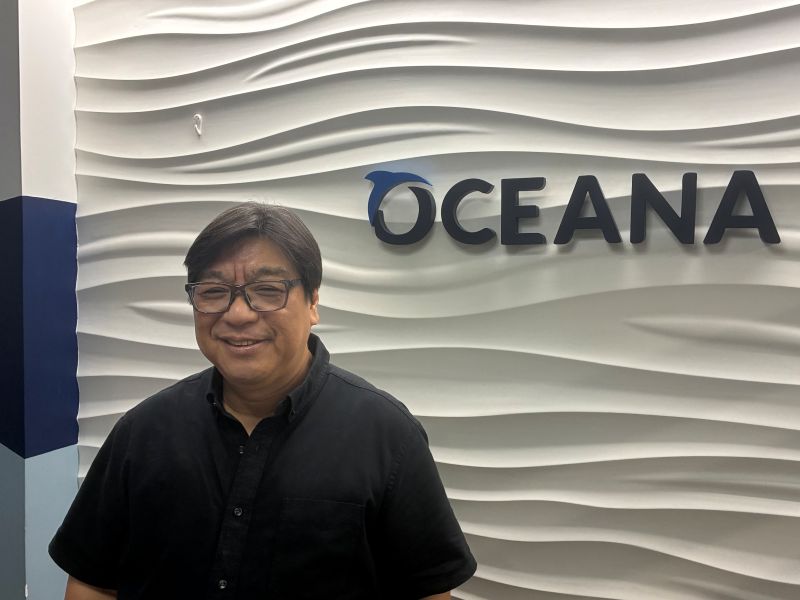
Oceana Philippines vice president Von Hernandez (Photo by Alya B. Honasan)
“The Fisheries Code has been there for two decades, but it was amended, precisely because it needed to be strengthened following objections and complaints from countries who were importing fish from the Philippines,” explains Von Hernandez, vice-president of Oceana Philippines, a non-government organization at the forefront of helping protect municipal fisheries in the country. “They wanted better traceability, and they wanted to make sure that the fish they imported was not coming from illegal, unregulated fishing.”
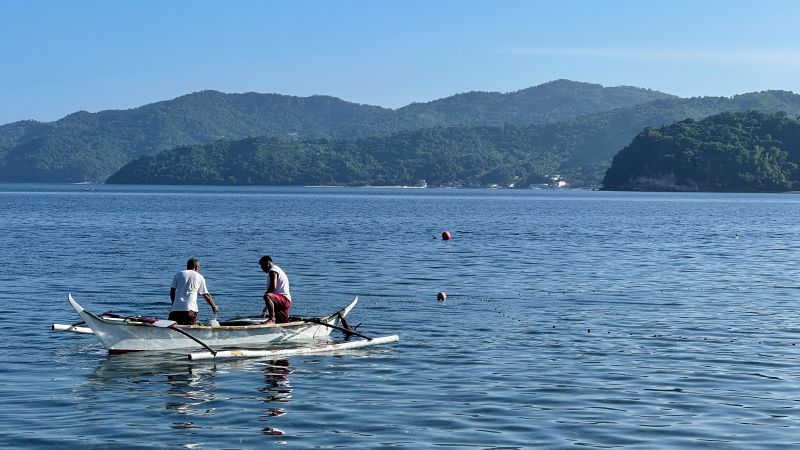
Subsistence fishermen in Mabini, Batangas
The key provision of the code reserves the 15 km near the shore for artisanal or small fishermen. But this is also in line with the social justice provisions of the 1987 Constitution, Hernandez notes, as it clearly states in Article XIII, Section 7 that subsistence fishermen, specially within local communities, have preferential use of communal resources.
“That’s the law,” Hernandez says, “because it recognizes that municipal fishers cannot compete with the big industrial fishers. They have bigger nets, refrigerated holds, sonar. And when they come in, they tend to scoop up everything, including juvenile fish, and destroy spawning grounds, which are located mostly in the 15-km zone. If you consider the municipal waters our bank account for fish, you’re basically taking from the principal. It’s a food security issue. Because once we throw out our fish savings, where will we get our fish?”
Artisanal fishermen are the ones who use small, low-impact fishing nets and devices or fishing lines to catch fish—certainly no match for the destructive behemoths you see in the above video.
Here’s the sneaky turn of events that created this mess. In December 2024, the Malabon Regional Trial Court (RTC)—in case you don’t know, Malabon is a bastion of the commercial fishing industry in the country—actually ALLOWED one particular commercial fishing fleet to fish in municipal waters, a decision incredulously upheld by the Supreme Court. In spite of the law and the Constitution, the ruling declared that the restriction on commercial fishing in municipal waters was—no kidding—“unconstitutional.” The Bureau of Fisheries and Aquatic Resources defended the 15-km restriction and appealed the RTC decision, but the appeal was denied because it was filed a day after the deadline for filing. Yes, the fate of Filipino subsistence fishermen was hung on the balance because of a schedule technicality.
Now think about it. If one commercial fishing company gets a break from the local justice system, in a city practically run by commercial fishers who fish all over the archipelago, what’s to keep every other company from filing their own protest—and how long before small fishermen will be blocked by bigger boats in their own supposed municipal waters?
“You’re actually stealing from one of the poorest sectors in the country—which is kind of ironic in this country,” Hernandez says. Ironic, because we are an archipelago with 36,000 km of coastline, according to a landmark study published by Oceana Philippines just this February, Net Loss: How Governance Gaps are Sinking Philippine Fisheries (download a copy here if you’re interested: https://ph.oceana.org/reports/net-loss-how-governance-gaps-are-sinking-philippine-fisheries/). There are 930 coastal LGUs and 2.5 million fisherfolk in a country where 88 percent of assessed stocks are overfished. There’s more, the study says: In 2023, there were 353,190 poor fisherfolk families, with 93,030 experiencing food insecurity.
“So aside from a social justice issue, it’s an environmental issue,” Hernandez says. “So where will we get our fish? We’ll probably end up importing more, or farming, because capture fisheries production in the Philippines has been declining for more than a decade.”
Instead of allowing waters to regenerate and recover, through the few marine protected areas (MPAs) that communities have managed to put up and defend—although a number of these are paper parks, Hernandez cautions—the response has been “more intensification of fishing. And now, allowing commercial fishing inside municipal waters. That has been the unfortunate response.”
Instead of allowing waters to regenerate and recover, the response has been ‘more intensification of fishing’
Hernandez, a veteran environmental activist with decades of experience, does not mince words. “Who’s campaigning for this? It’s commercial fishers, and most likely their political connections in government. The commercial fishing industry is composed of a few wealthy families with strong political connections. They even had the gumption to actually file a case and challenge the law to allow them to fish or intrude in these municipal waters.” Incidentally, the judge who ruled on this is now retired, Hernandez notes.
Oceana’s aforementioned eye-opening study does pinpoint gaps in governance or the failure to fully implement the fisheries code, which is why “parang pabagsak yung trajectory,” Hernandez says. “But the way we look at it now, it’s more than just governance gaps. It’s actually system failure, especially when you have a judiciary who rules on a technicality on a substantive issue, and you have the executive fumbling the defense.” Hernandez laughs at how “schizophrenic” one government agency is, submitting appeals for small fishermen on one hand, and asking to amend the code to allow bigger boats near the shore on the other. As Filipinos like to say, “Ano ba talaga?!!!”

UP students in a dialogue with fishermen for the ‘Kinse KM para sa Mga Mangingisda’ campaign (Photo from the Angat Kalikasan Pilipinas Facebook page)
In the meantime, other groups have thrown their support behind the underdog fishermen. On the University of the Philippines (UP) campus, members of Angat Kalikasan Pilipinas held a rally last June and invited fishermen to educate students on their “Kinse KM Para sa Mga Mangingisda” campaign.
In February 2025, 50 Catholic bishops led by Cardinal Virgilio “Ambo” David signed a statement on the Supreme Court ruling. The statement quoted fisher Luther Alison from Gingoog Bay, Mindanao: “Ang nakukuha ng commercial fishers sa isang gabi, 1,000 banyeras; mahina pa iyan. Ilang pamilya ng municipal fisherfolks ang puwede na sanang maghati-hati niyan? Ni isang banyera, hindi nga kami makakuha kapag nagpapalaot kami.”
“We will not stand idly by while the sanctity of creation and the dignity of our fisherfolk are undermined,” the bishops continued. “I urge all of you, as faithful stewards of God’s gifts, to advocate for the protection of our municipal waters and the rights of artisanal and municipal fishers.”
In April 2025, Christian Monsod (one of the delegates behind the 1987 Constitution), Cardinal David, and the Environmental Legal Assistance Center (ELAC) filed a petition with the Supreme Court to block such commercial fishers from small town waters. In an article that same month in Rappler, the petitioners noted how the case “has thrown the constitutional status of municipal fisheries regulations across the country into disarray and instability.”
In the meantime, other commercial fishing fleets are filing for access, citing the Supreme Court ruling. “So right now there’s confusion on the ground,” Hernandez says. “So when Bantay Dagat or LGUs see commercial fishing, they have to ask, huhulihin ba natin ito o hindi? Ano ba implication ng SC ruling? So that has to be fully settled and clarified.” Chew on that: How do you begin to rationalize the Supreme Court of the land going against the Constitution of the Republic of the Philippines?
‘Walang source of livelihood, so bibigyan mo ng ayuda that comes from taxpayer money. So the Filipino is hit twice over. We lose our fish, we lose our taxes’
Meanwhile, while big fishing companies get that opportunity to scoop everything out, small fishers become poorer—”walang source of livelihood, so bibigyan mo ng ayuda that comes from taxpayer money. So the Filipino is hit twice over. We lose our fish, we lose our taxes. It’s a cycle of subsidizing the powerful.”
So why is this important to the average Filipino who can afford their fish in restaurants, for example? Fish is the Philippines’ primary source of protein in the diet. “As our fish stocks are collapsing, that means more expensive fish in the future. The price of galunggong has doubled because of scarcity. And there are other factors, of course—climate change, the West Philippine Sea disputes.”
Studies have already proven that if given breathing space, the oceans can regenerate and provide increased fish stocks several times over in five years or a decade, so the mindset must not be “short-term greed,” Hernandez says.
Fisheries is really Oceana’s flagship campaign as an organization, and it is working with its allies in the Senate and Congress. Meanwhile, Filipinos can join campaigns, and more critically, be more mindful of who they vote into office. “So with elections coming in, what’s the agenda of the people who want to lead us in the next cycle?” Hernandez asks.
Beyond that, it may be as simple as being aware of how, even when it comes to access to the ocean’s resources, those in this country with less are still being trounced by those with so much more.


