
From a system that turns used cooking oil into ingredients for wellness products, to a disaster risk app and a zine on the Filipino gay community, this year’s Good Design Award Philippines showed how design is moving deeper into everyday life and public service.
Organized by the Design Center of the Philippines (DCP), the 2026 awarding ceremony was held at the Likhang Filipino Exhibition Halls, recognizing works across six categories. Winners ranged from objects and architecture to digital platforms, materials, and civic programs.
The jurors also conferred 22 Red Awards on entries that met five criteria: form, function, innovation, user experience, and malasakit.
Local winners will advance to the Good Design Award in Japan, known as G-Mark, an international program where winning designs from around the world are exhibited and evaluated. The 2026 G-Mark awards will be held in Tokyo in October.
Together, the selections point to a broader definition of design in the Philippines, extending beyond objects to systems, services, and social impact.
Rhea Matute, executive director of the Design Center of the Philippines (DCP), said malasakit gives Filipino design its distinct character. Design thinking starts with empathy and an understanding of users, but malasakit goes further. It reflects a personal commitment to solving problems, rooted in the Filipino value of pakikipagkapwa (solidarity with others,)
When the Good Design Award Philippines was established in 2017, organizers sought an identity beyond being an international partner of Japan’s Good Design Award. They drew from Philippine literature, Filipino psychology, and local design practices to define a distinctly Filipino framework.
The core criteria remain form, function, and innovation. Malasakit was added to measure how designs respond to the United Nations Sustainable Development Goals in a Philippine context. To support this, DCP partnered with the United Nations Development Program to assess whether entries deliver real impact rather than sustainability claims or greenwashing.
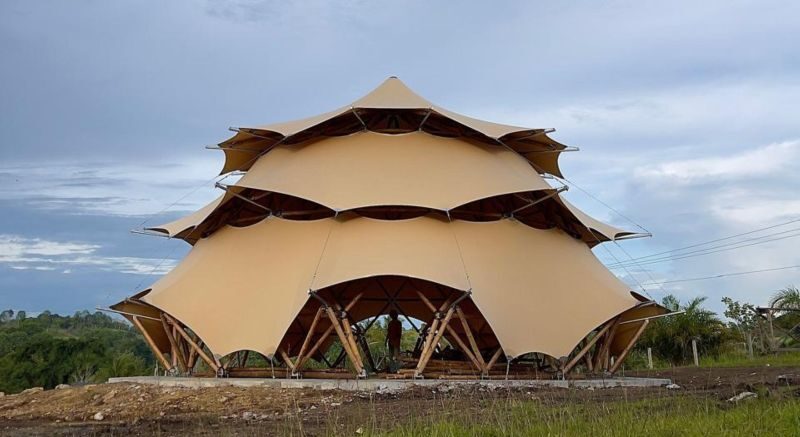
The Banwag, winner of the Grand Prix/Malasakit Award, is a 15-m bamboo dome in a star-shaped geometric lattice of bamboo connected to steel nodes.
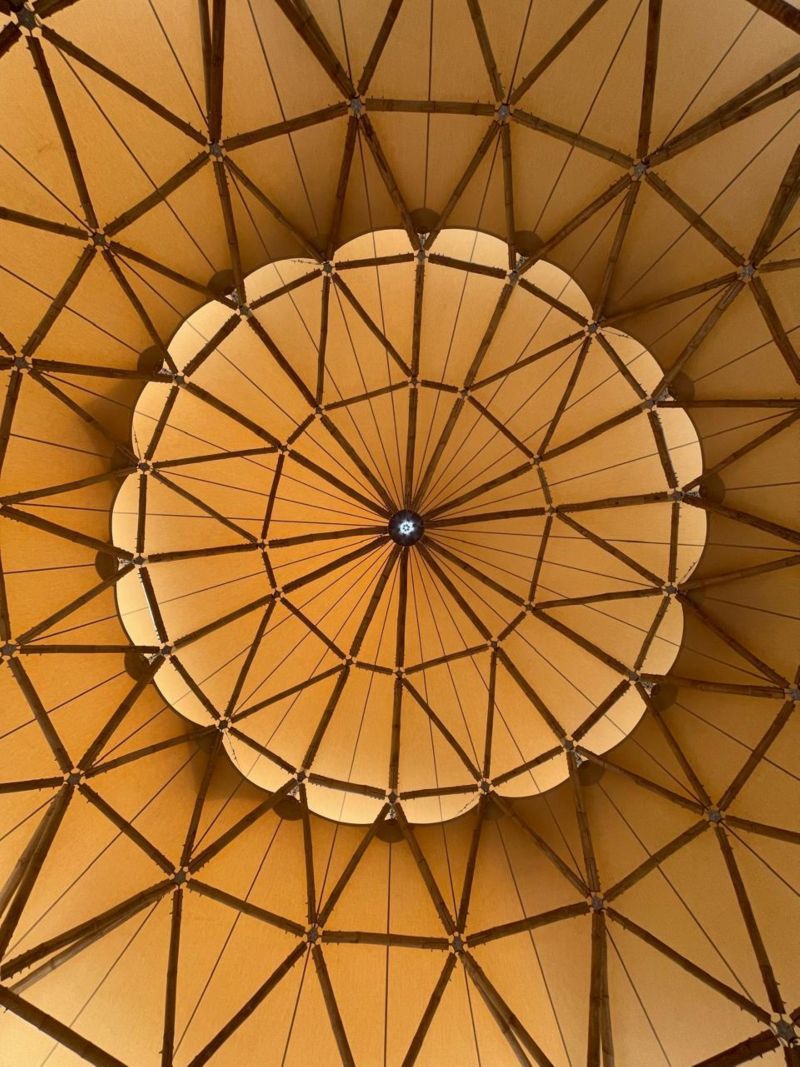
Every pole in the Banwag in Parang, Maguindanao del Norte was digitally mapped, pre-cut, and assembled by hand.
The Grand Prix/Malasakit Award went to Banwag, a bamboo pavilion in Parang, Maguindanao del Norte designed by Studio Impossible Projects. Commissioned by PS Group of Companies, it was conceived as a symbol of hope and a gathering place in a region that has long grappled with armed conflict and political tensions. As the Bangsamoro Autonomous Region in Muslim Mindanao prepares to transfer its regional government headquarters from Cotabato City to Parang later this year, the pavilion is intended to support a growing civic center and provide a neutral space where communities can meet.
Named after the Cebuano word for “beacon,” Banwag serves as a venue for events, local government activities, schools, tourists, and partner organizations. Oscar Sarmiento Jr. COO of PS Group, said the space is open whenever communities need a safe place to gather.
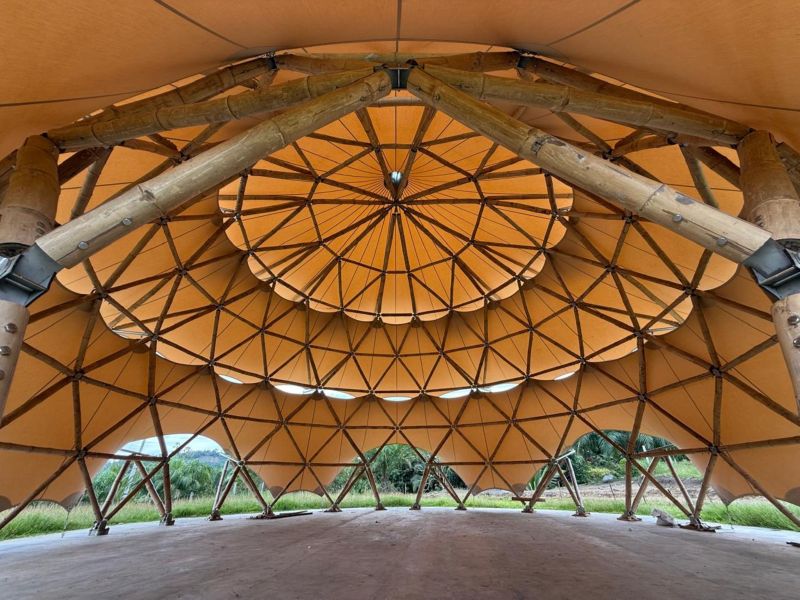
The pavilion transforms bamboo, long regarded as a humble building material, into a sophisticated architectural landmark. Its star-shaped lattice is made from locally sourced bamboo joined by engineered steel connectors and covered with sail cloth (tensile membrane in construction terms) that overlaps like scales. The bamboo bracing can withstand winds of up to 270 km per hour. Banwag is said to be the world’s first digitally mapped and prefabricated bamboo pavilion of its kind. Every bamboo pole was digitally modeled, mapped, and pre-cut to exact specifications before local workers assembled the structure in just 15 days without specialized machinery.
For Matute, Banwag shows that world-class design can emerge far from the country’s major cities. By combining indigenous materials with digital engineering, Studio Impossible Projects created more than an architectural landmark. It created a public space that brings people together and demonstrates how design can foster dialogue, resilience, and hope in Mindanao.
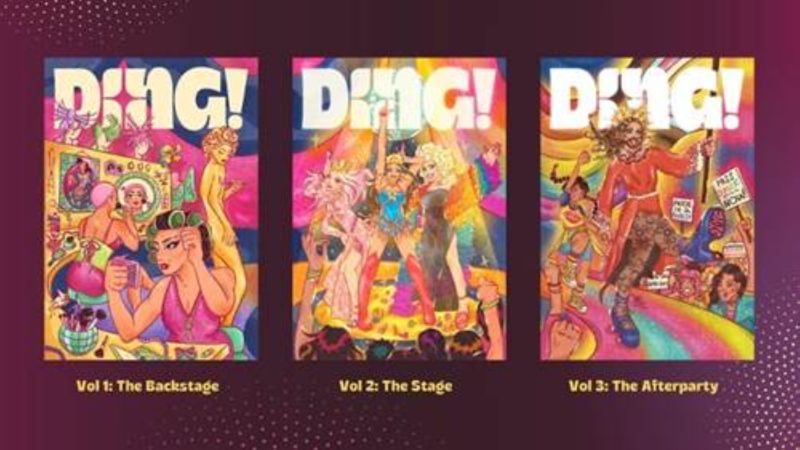
‘Ding Zine Para sa Bading’
Ding! Zine Para sa Bading won Gold in the Image Making category. Designed by students of the CIIT College of Arts and Technology, the editorial zine series explores the history of drag in the Philippines and the personalities behind it. Three volumes evoke the rhythm of a drag show—the backstage, performance and afterparty, and drag as a protest
Matute said the project reflects inclusivity as a core value of Filipino culture. The zine gives space to conversations about identity and acceptance. It also reflects pakikipagkapwa, the Filipino value of understanding others before passing judgment.
The project highlights how design can help communities tell their stories and create greater awareness of experiences that are often overlooked.
The set design of Request Sa Radyo by Tony Award winner Clint Ramos was a Red Awardee recognized under Image Making, a category focused on communication through visual experience. Without removing seats, the audience area was transformed into a performing space evoking an apartment framed by shipping containers. It used space and objects to communicate themes of solitude, labor, and displacement. For Matute, image making goes beyond traditional graphics and print. It includes any visual language that shapes how stories are experienced and understood.
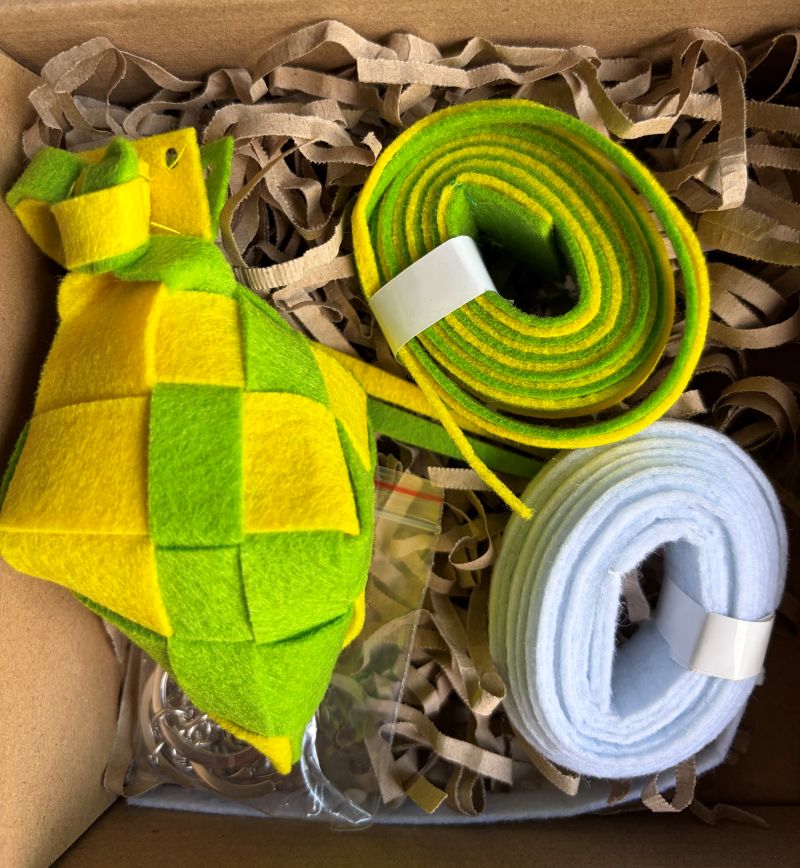
Make a Puso DIY kit consisting of felt ‘puso’ (handwoven pouch) with cords for experimenting, and for the final product and added chain accessory
Originally designed as a pasalubong for tourists during Sinulog, Make a Pusò DIY Kit by White Brick Creative Studio Corp. Making Space won a Red Award in the Object Making category. The kit recreates the pusò, a Cebuano term for a hanging woven rice pouch, and makes it an accessible cultural craft experience. The kit includes a felt woven pusò pouch and two weaving strips, allowing users to recreate the traditional Cebuano rice container while learning a Filipino craft.
The winning kit recreates the ‘pusò,’ a Cebuano term for a hanging woven rice pouch, and makes it an accessible cultural craft experience
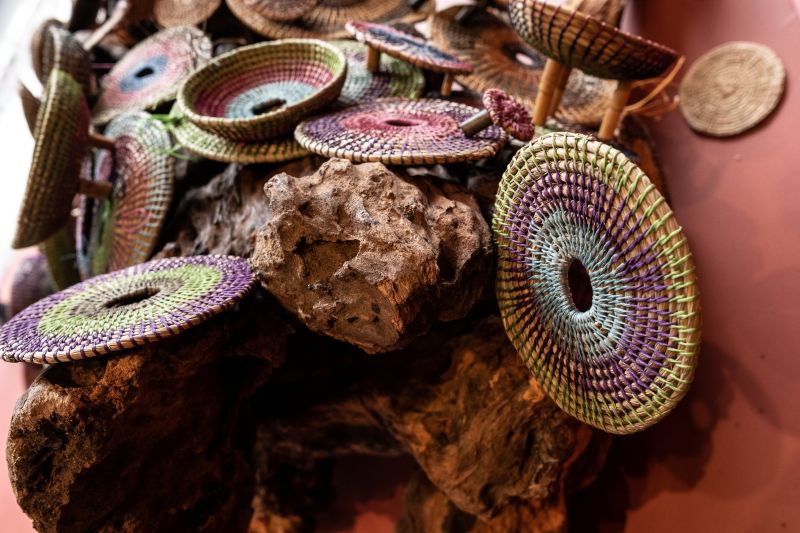
Celestina Mats, woven products made of wild ‘cogon’ grass by weavers in Brgy. Celestina Villacin, Cadiz, Negros Occidental, under the guidance of Hacienda Crafts and Milo Naval
Another Red Award winner in the Object Making category was the Celestina Mat, designed by Milo Naval for Hacienda Crafts. Made with residents of Barangay Celestina in Cadiz, Negros Occidental, the woven mats grew out of smaller pieces first created for the Philippines’ debut at Révélations Paris 2025. The community was established through a government peace and order initiative in what was once a rebel stronghold. Now it is home to indigenous peoples and farming families.
Hacienda Crafts introduced weaving as an additional livelihood, teaching residents to transform discarded coconut fiber, once burned as farm waste, into handcrafted mats. Building on traditional weaving skills, the project has opened new markets beyond the community, made possible by improved farm-to-market roads. Hacienda Crafts founder Christina Gaston said teaching farmers a new craft takes time, but it has given them a sustainable source of income and confidence in their work.
Three new citations were introduced this year.
The White Citation went to KADLIT (Kindling Aid for Disaster-Linked Ignition Tool), developed by Bohol Island State University. The project turns rice bran into a sustainable fire starter designed for use during disasters, strengthening emergency preparedness while creating value from an agricultural byproduct.
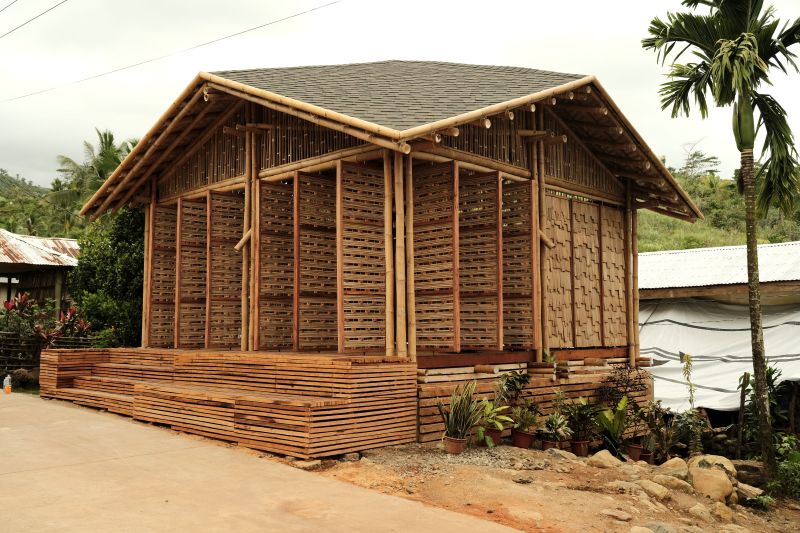
Mamanwa Community Center in Surigao del Norte is a multi-purpose space built as a project with German students and the Mananwa community.
Winning the Green Citation for sustainability, the Mamanwa Community Center was built in Surigao del Norte through an international DesignBuild project completed in early 2024.
Sixty students from the University of Applied Sciences Kaiserslautern in Germany worked alongside members of the indigenous Mamanwa community and the Philippine bamboo advocacy group Kawayan Collective to construct the center using locally sourced bamboo.
The project was developed after the Mamanwa village was forced to relocate after the savagery of Typhoon Odette in 2021. Designers and community members worked together to create a building that respected local traditions and met everyday needs.
Bamboo was chosen because it is abundant in the area, affordable, and durable. The material also stores carbon, making it a more sustainable alternative to conventional construction materials.
The building was completed in five weeks. Villagers helped build the foundation, framework, roof, and staircase, while local basket weavers created 25 handcrafted lampshades for the center.
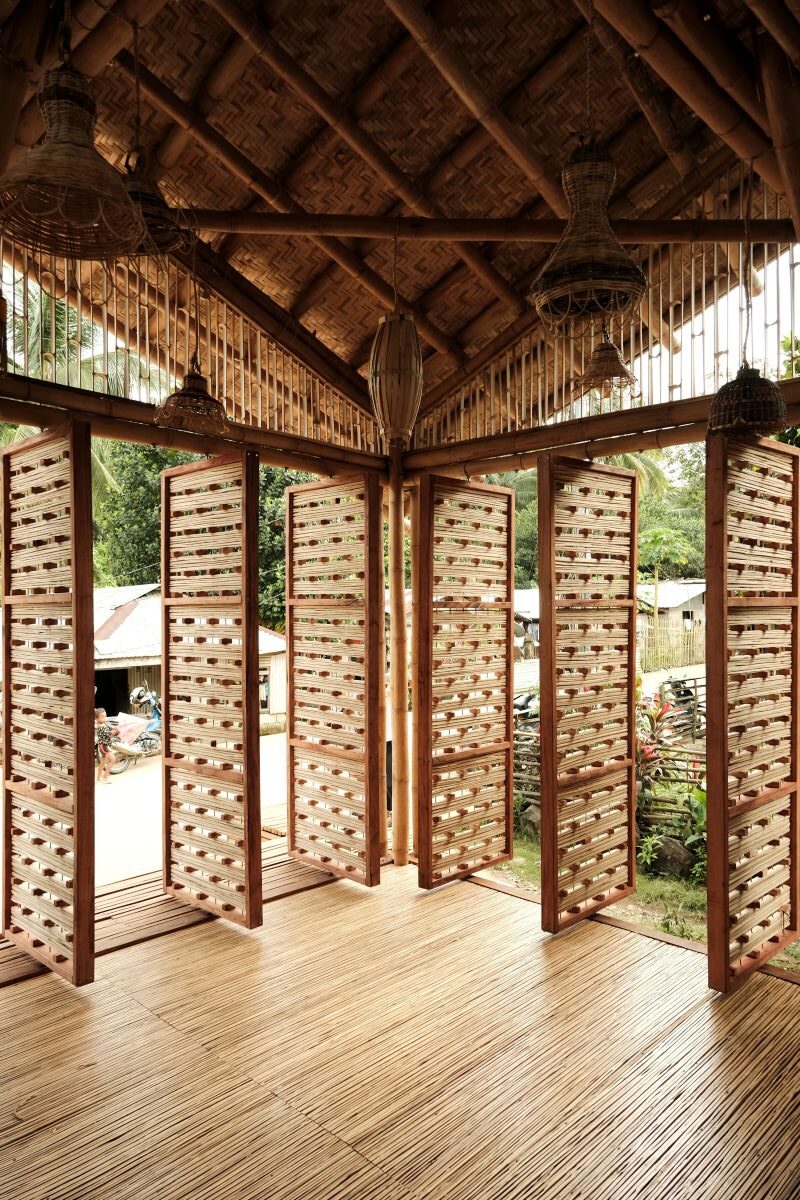
The Mamanwa Community Center interior combines local building traditions with modern construction.
Today, the Mamanwa Community Center serves as the village’s main gathering place. It is used for medical visits, food distribution, training sessions, and workshops for children and adults, providing a space for education, healthcare, and community support.
Oyloop by Klimatech Innovative Solutions, Inc. won the Blue Citation under System Design for turning discarded cooking oil into raw materials for products such as wellness and aromatherapy items. It addresses the problem of improper cooking oil disposal in the Philippines by turning waste into a resource.
While Oyloop focused on sustainability through recycling, another new recognition shifted the spotlight to public service. The Good Design Award introduced the Governance and Civic Design citation for government-led systems that improve people’s lives and can serve as models for other local government units.
One example is IRISE UP (Intelligent, Resilient and Integrated Systems for the Urban Population), which developed a disaster recovery and preparedness model through the Quezon City government. Instead of only responding after floods or storms, the system uses local forecasts and real-time data to provide early warnings and guide evacuation, particularly for vulnerable communities.
For Matute, these projects show how design can reshape government systems by making them more responsive, accessible, and centered on public needs. They also reflect a broader shift in how design is viewed in the Philippines.

Design Center Philippines deputy executive director Lucky Lopez and executive director Rhea Matute, Department of Trade and Industry (DTI) assistant secretary Nylah Rizza Bautista, Malasakit Award and Gold Award for placemaking category recipients Enrico Atienza and Oscar Sarmiento, Jr., Good Design Awards Philippines placemaking head juror Arch. Dominic Galicia, DTI assistant secretary Al Valenciano, and Design Advisory Council chair and juror Mylene Abiva
In all, the Good Design Award reflects the expanded mandate of the Design Center of the Philippines under Republic Act 10557, or the Philippine Design Competitiveness Act. The law broadened the agency’s role beyond product design and branding to support the creative industries and promote design as a way to solve everyday problems.
That approach is now being applied to public services, disaster preparedness, and other social challenges. The Design Center is also working with the Department of Education and the Technical Education and Skills Development Authority to introduce design thinking in schools and vocational training.


