
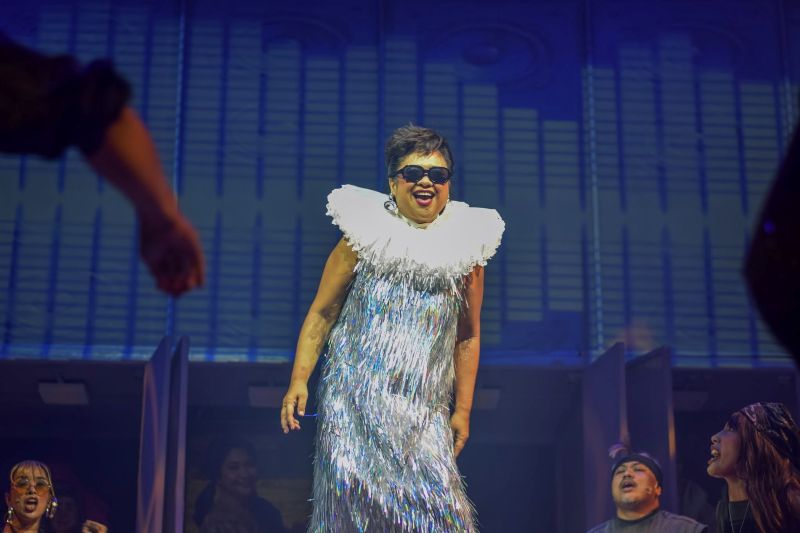
‘Ang Babae sa Septic Tank 4: Oh Sh-t It’s Live sa Cheter’ runs until Aug. 16, 2026 at the PETA Theater Center in Quezon City. Tickets are available at https://premier.ticketworld.com.ph/shows/show.aspx?sh=ABSST26.
We can comfortably propose that satire is the zeitgeist. It used to be considered just a subgenre of comedy that emerged now and then. But with the rise of social media, coupled with the many absurdities of our political life (which social media, in turn, amplifies in a self-perpetuating cycle), satire has evolved to be a lens through which we process the political issues confronting society.
The memes, reels, vlogs, and long-form videos flooding social media, with the occasional political satire on free television, thrive on irreverence, blasphemy, and impersonations of public officials, including farcical representations of social institutions. This content, as it is now called, unpacks the inner logic of satire—often celebrated, sometimes rather sanctimoniously, as the highest form of comedy and even as an act of political resistance.
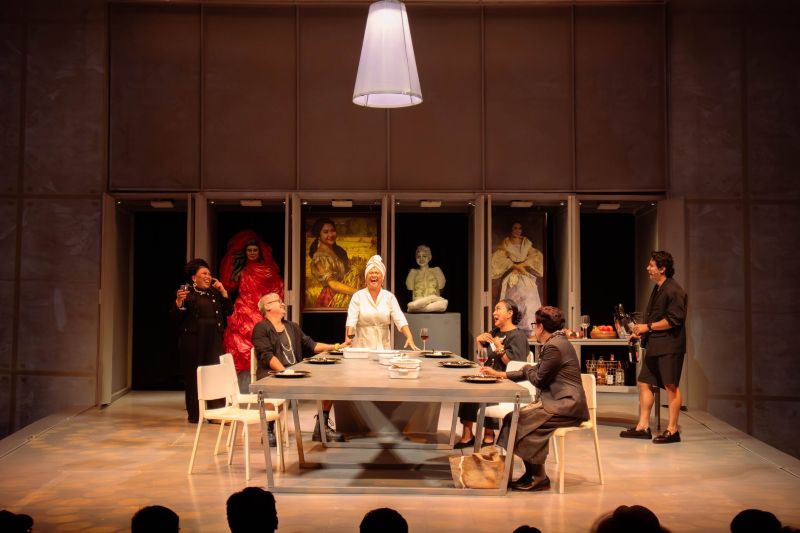
Eugene and her ‘cheter’ friends
PETA’s season opener proudly proclaims Ang Babae sa Septic Tank 4: Oh Sh-t It’s Live sa Cheter as the signature satire of the theater industry—and of itself, in fact, as one of the prime movers in the “Philippine theater ecosystem,” with all its foibles, vanities, egomania, and occasional bad faith. Yet it is also an industry propelled by passion—madness, if you will—and a steely determination to survive, often with little more than its head above water. As the country’s oldest professional theater company, PETA (the Philippine Educational Theater Association) understands exactly what survival entails.
Following the commercial success of the theater adaptation of Star Cinema’s One More Chance, the Ang Babae sa Septic Tank franchise is another marketing masterstroke by PETA, stoking the possibilities of popular culture to deliver theater that appeals to the sensibilities of contemporary urban audiences while assuring itself of commercial viability.
Central to this is Eugene Domingo, whose portrayal of a fictionalized version of herself has become the franchise’s irreplaceable draw. In this fourth of the franchise series, she plays an ego-driven, self-anointed doyenne of Philippine theater who approaches her nationalistic role with confidence and comic delusion.
-

- Marlon Rivera
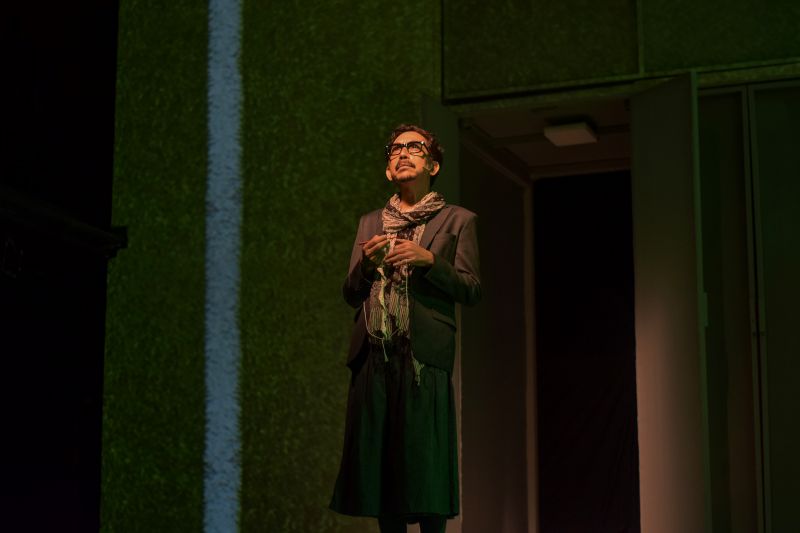
-
- Andoy Ranay
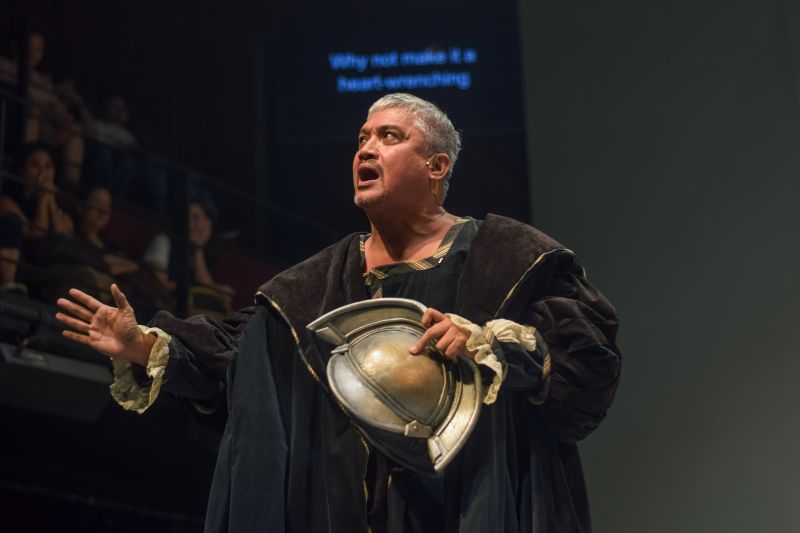
-
- Melvin Lee
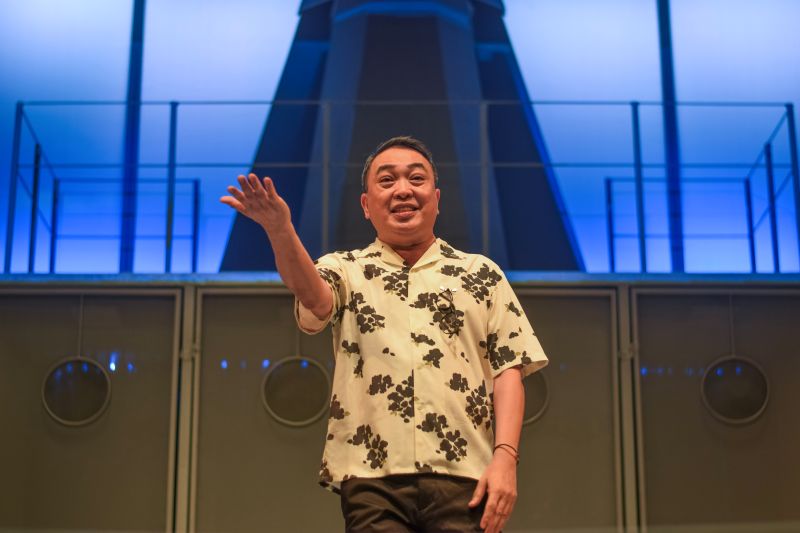
-
- Stella Cañete-Mendoza
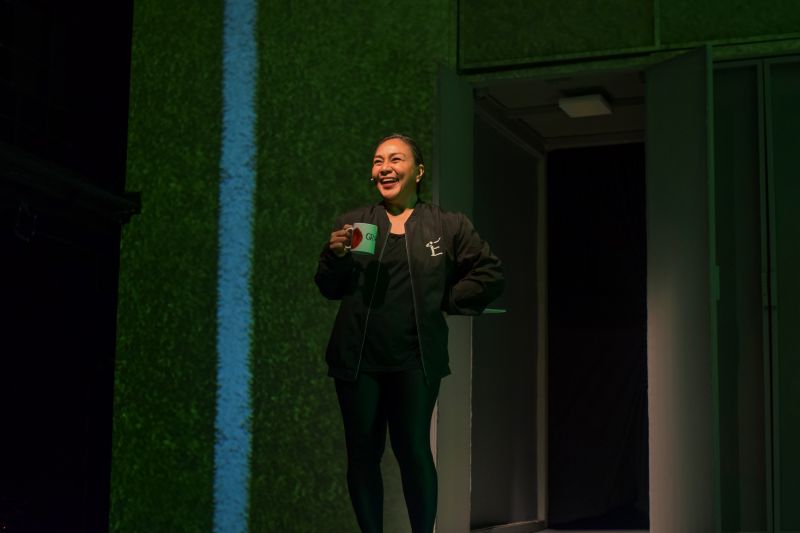
-
- JC Santos
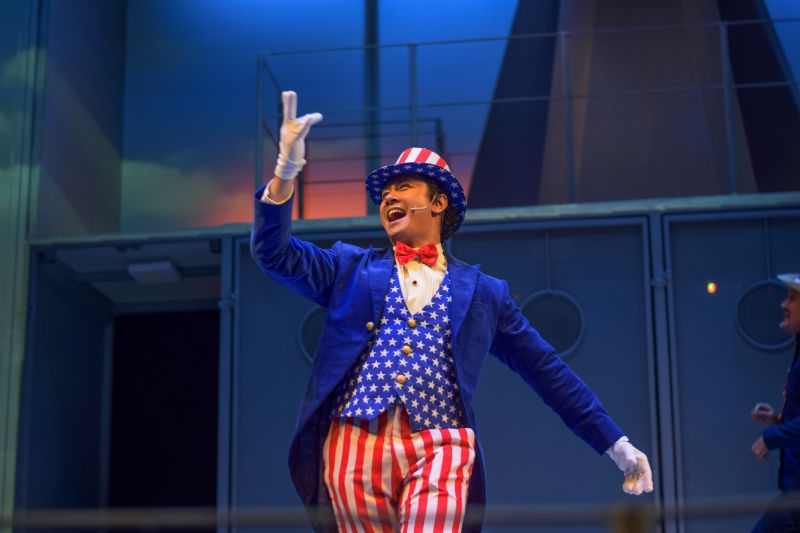
-
- Joshua Lim So
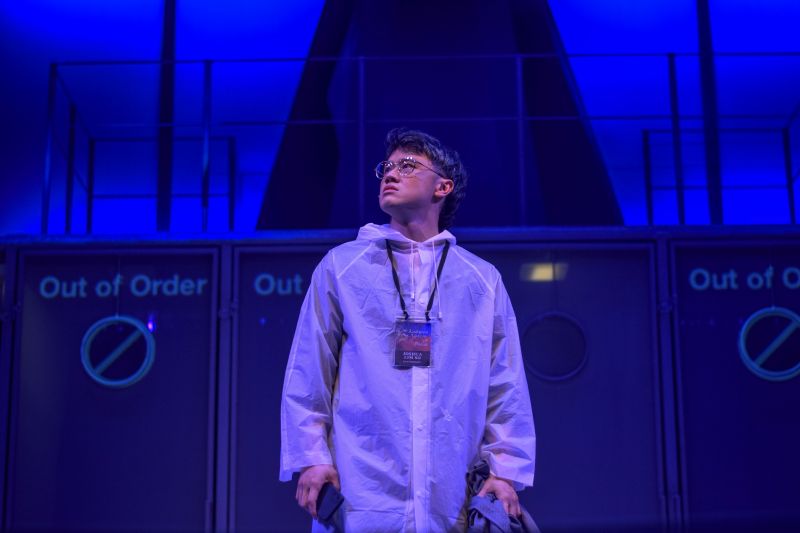
Meann Espinosa
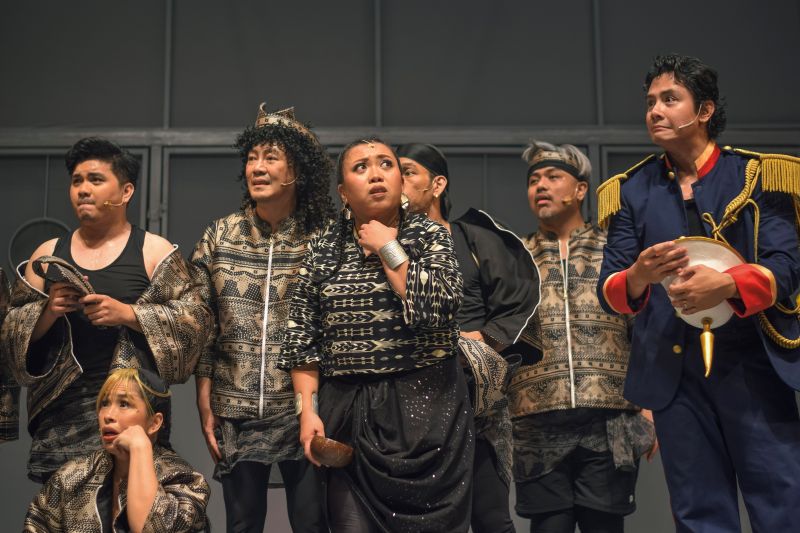
In Act One, Eugene gathers her closest friends for dinner, allowing us to see this fictionalized self interacting with several others: theater stalwarts Marlon Rivera, Andoy Ranay, Melvin Lee, Meann Espinosa, Stella Cañete Mendoza, JC Santos, and Joshua Lim So. She unveils her latest grand artistic vision: to stage Aurelio Tolentino’s Kahapon, Ngayon, at Bukas (KNB)—an unmistakable reference to PETA’s 1991 production of the American colonial-era seditious play—on the contested waters of the West Philippine Sea.
Of course, there is some historical incongruence to her suggestion. Tolentino’s play, produced during the Philippine-American War, was fundamentally an anti-American crusade, whereas contemporary geopolitical tensions surrounding the West Philippine Sea revolve around China’s rejection of the Philippines’ territorial claims, with our sovereign state relying heavily on the US for both political and military support.
Ensemble
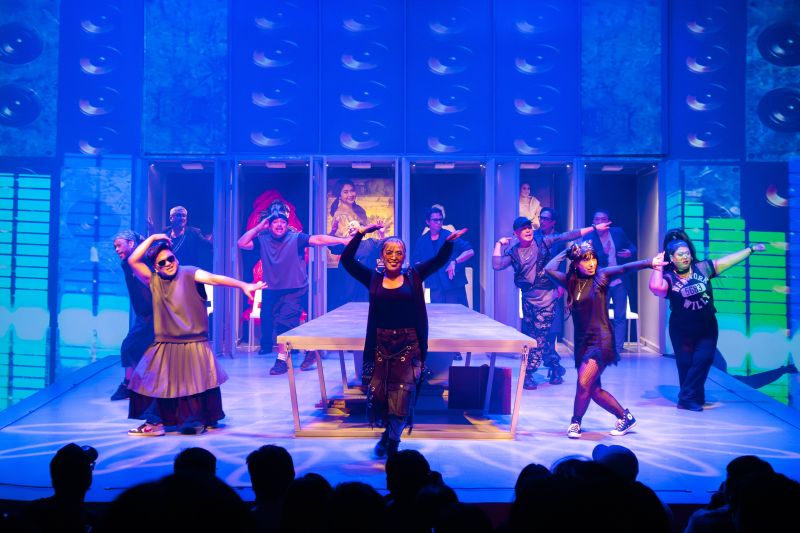
What seems like an anachronism serves as both the backdrop and the driving force for the satirical tone of the KNB adaptation, which comes into full display in Act Two. Eugene Domingo tackles the lead role of Inang Bayan, the allegorical persona of a country under siege. During rehearsals, Domingo repeatedly requests script revisions from playwright Joshua Lim So and director Marlon Rivera, frustrating both, as they are convinced these changes compromise the integrity of a very important piece of literature (“This is a canon,” says the millennial playwright Joshua Lim So). Rivera and Lim-So resist, but production manager Melvin Lee yields every time to Domingo’s suggestions, recognizing perhaps that even the 1903 play may be altered to build stronger connections with today’s audiences and, in so doing, draw more market mileage. Playwright Chris Martinez extends the satire to throw jabs at the Philippine theater‘s lingering preference for the English language, including the perverse use of British accents.
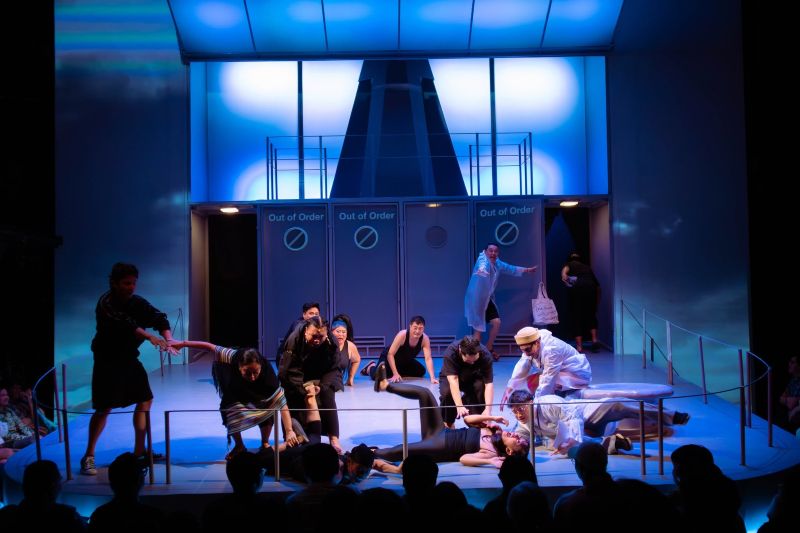
As the play moves to its climax, cast and crew are now preparing for the actual performance on one of the ships patrolling the contested waters of the West Philippine Sea. Predictably, events turn chaotic. A series of mishaps—including some broken toilet cubicles—threatens the upcoming performance, so deux ex machina comes striding in so that the events can lead to the franchise’s de rigueur, where slush combines with sludge, and, spectacle be damned, the last scene pushes shamelessness to its limits of shame.
Eugene is Eugene—a national treasure—but the ensemble is something else
There is Eugene the actress, and then there is Eugene the meta-character—an outrageously exaggerated version of herself. Gather as many superlatives as you can, but it is enough to say that Eugene Domingo is a national treasure. Deliriously funny and devilishly irreverent, she is a comedian of great instinct, capable of thinking on her feet while delivering every line with wit and precision. Throughout the first act, Domingo effortlessly transitions between her “real” self and her metafictional persona. Without a doubt, she is the most intelligent comedian of her generation. Even across a three-month run spanning 50 performances, sans an alternate or understudy, expect her to attack each show with the same energy, leveling up and pushing her boundaries from time to time.
Director Maribel Legarda may well have stumbled upon the secret formula for an ensemble with the most potent chemical alchemy. Consider gathering together a generation of actors who have spent years growing up together—artists who know one another inside out, or as we would say, magkakadugtong na ang bituka. They have likely shared countless hours drinking, hustling, whining, celebrating, and simply inhabiting the same theatrical world. Add a Gen Z or millennial theater person whose mixture of naïveté and impishness may disarm those theater veterans just enough. The sum is an ensemble that operates with almost telepathic intuition, pouncing on every cue and nailing every punch line; so palpable is the delight they find in the craft of acting.
Chaos on the boat as the show heads to its climax
Laughter, by its very nature, is cathartic. In satire, it is merely the first layer of our engagement with a performance. Laughter is our reflex of recognition. We recognize our awareness of an issue or a reality; we even acknowledge our complicity. We engage with the issues and institutions that are thrown into the light. The punch lines land because they reveal something we already know, but, perhaps, have refused to confront.
Grand Curtain Call
Satire is serious business because, for the satirists, tragedy always lurks behind laughter. And while PETA promised a “signature satire of the theater world,” the narrative did not commit itself enough to the disruptive work that satire demands. Satire is known to confront uncomfortable truths, and confound wielders of power. In Ang Babae sa Septic Tank 4, those truths are cushioned by an overarching impulse towards levity. The play is so cautious in its attacks; it almost seemed they were reluctant to ruffle the feathers of their own community. Like the muck that the ensemble led by Eugene Domingo quite literally wrestles with onstage, Ang Babae sa Septic Tank 4 wallows in the septic tank of spectacle, mistaking mess for muckraking.
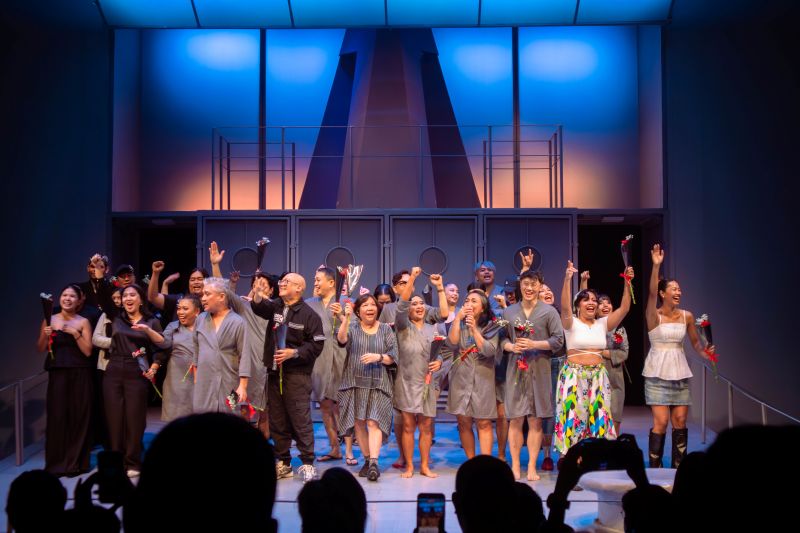
But maybe PETA’s intent is just for us to roll and tumble in laughter, and of course we did. Entertainment may be the be-all and end-all of its intents, so who are we to ask for more? The sold-out performances and the standing ovations speak for themselves, as every curtain call affirms the pompous declaration—‘tis the golden age of Philippine theater. Critics be damned. Just sit and putter, as the song says, don’t even bring around a cloud to rain on their parade.


