
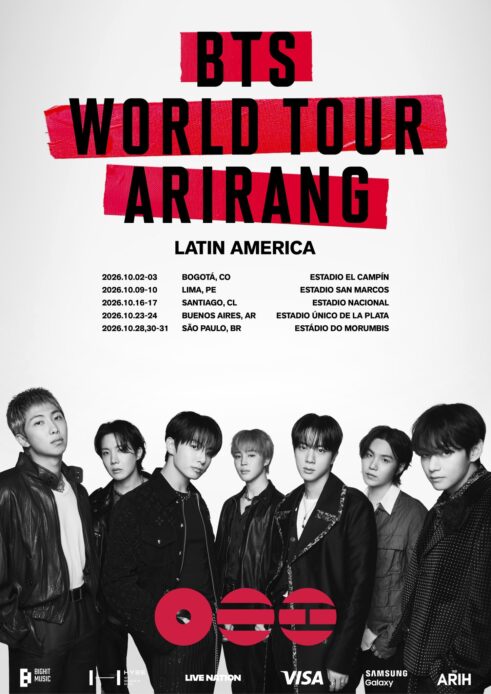
In the last few years, I actively avoided listening to BTS. They were, in a way, a consistent “skip” in my Spotify radio.
I couldn’t find it in me to listen to what I call the group’s “Americanized” period of music. This started around 2020, when Dynamite was released. I scrunched my nose at it and wondered if there was something wrong with my ears. I just couldn’t get it on my playlists, or have it on repeat like I once did with their older music. Their songs played almost everywhere during the pandemic, and even after the lockdown, it felt like I couldn’t escape their “same songs in different fonts”—with Butter and Permission To Dance.
Before ARMYs send a barrage of hate, know that I have plenty of love for the group. I’ve been following them since they debuted in 2013. I took a K-pop dance class (before they were a thing) for their second title track, N.O, and I was there for their first daesang (K-pop’s highest award for music). I like to believe that I’m as OG as it gets.
So when they started releasing songs that felt too “generic” sonically, for me, it felt like they were departing from the BTS I grew up with. It felt like, with their new appeal, they had to stay as generic as possible to retain their newfound growth. Of course, change has to happen for growth. But in terms of sound, I couldn’t but feel heartbroken, believing that their talents were being put to use in songs that, frankly, most other generic pop boy groups at the time could have done as well. Could those same boy groups generate the same effect? Probably not. But that didn’t make it any more bearable.
BTS is seven, always.
BTS: THE RETURN, a new documentary film, is now on Netflix. #BTSTheReturn #BTS_ARIRANG pic.twitter.com/XTLj2b2ltF
— netflix⁷ (@netflix) March 27, 2026
As the fandom grew bigger, the more isolated I felt in my love for them. Yes, it was great to see so many people showing BTS love, but with toxicity in the fandom, and the music steering away from what I initially fell in love with, I figured it would be better to keep my distance. I would always be happy to follow them, but maybe it was time to move away from the avid fan I had once been.
So I did. I cheered for them from the sidelines. I moved away from online discussion forums and put their older music on repeat. I became some “remote island” of a fan. I didn’t care for whatever new thing was coming out, and rather than scurry to stay on trend with the group’s happenings, I appreciated them at my own pace. It was a quiet resolution, one that, looking back, helped me appreciate them in a different light.
BTS WORLD TOUR ‘ARIRANG’ LIVE VIEWING
IN GOYANG & JAPAN Special PosterGet ready for the big screen experience!
Two full-length concerts live in cinemas worldwide.📅 LIVE VIEWING from GOYANG: Apr.11
📅 LIVE VIEWING from TOKYO: Apr.18
🎟️ Get tickets at https://t.co/4fsmRtT9KW… pic.twitter.com/pjm1nc5D9N— BTS_official (@bts_bighit) March 28, 2026
Come Arirang, I had little expectations for it. It had been years since I was wound up into a frenzy when it came to BTS news. Most news passed me by like water; I would catch it in my field of vision, then let it go with little consequence.
But something about Arirang felt different. I had a strong gut feel to give it a listen. Coincidentally, my avid ARMY friend reached out to ask me if I listened to it already. Whether it was out of mere curiosity or an ARMY’s dormant affection—I listened to their first song, Body to Body, as soon as it dropped.
The first few notes alone gave me goosebumps. This was nothing like what I imagined from the group post-military service—maybe from a solo, but not them together as BTS. It wasn’t bubbly or pop. It was grittier, more mature, hip-hop and rap. Clearly, they’d grown as artists.
I could feel the fearlessness and authenticity in their work. The rest of the album felt like a marriage of the younger BTS who were hungry to succeed, and the mature BTS who want to channel that hunger into becoming always-improving artists. They still wanted to do good, but it felt like they no longer cared to prove it to anyone else other than themselves. They weren’t simply idols; their sound has matured with them as they became full-fledged artists as BTS the group. In their solo eras, they explored and discovered themselves as individuals, then came back together with a sound and lyrical prowess that came from their maturity formed in their time apart.
I could feel the fearlessness and authenticity in their work…They still wanted to do good, but it felt like they no longer cared to prove it to anyone else other than themselves
Get ready! Another week of the ‘SWIM’ Listening Party is coming to @STATIONHEAD 🎶
👉 https://t.co/vE1gPLX8p8
📅 Schedule
3/28 11AM (KST) | 3/27 10PM (ET)
3/29 11AM (KST) | 3/28 10PM (ET)
3/30 11AM (KST) | 3/29 10PM (ET)
3/31 11AM (KST) | 3/30 10PM (ET)
4/1 11AM (KST) | 3/31… pic.twitter.com/XLD6diyN96— BTS_official (@bts_bighit) March 27, 2026
Arirang felt like a siren call to older fans like me. Not that I’m some special person, but if you identified with BTS before they made it big, you’d be familiar with the older “BTS sound.” They had that hunger and drive that they poured into their lyrics with the authenticity and willingness to call out society for its flaws. Arirang’s theme centers on reflections and takeaways from years in the spotlight, and also the time away from this spotlight. There was a mix of personal and professional elements expressed in their songs and lyrics, and fans jest about how BTS is no longer afraid to sing about more mature themes (such as SWIM).
BTS (방탄소년단) “KEEP SWIMMING” with Seven Member Remixes Visualizer are out now!
🎵 Apple Music
RM (Chill Hip Hop Remix)https://t.co/aqqOP12cWY
Jin (Alternative Rock Remix)https://t.co/oCykFWNAYM
SUGA (Melodic Techno Remix)https://t.co/h7jmRnaCMj
j-hope (Afrobeat Remix)…— BTS_official (@bts_bighit) March 28, 2026
It was the authenticity and willingness to bare themselves in their music that I missed so badly. Yes, Butter and Permission to Dance were fun, but to me, they rang hollow (but no hate or judgement to anyone who had it on repeat). That’s the best part about music and artistry; so many sides to an artist can be shown in their music, and we don’t have to love it each time. The lesson I learned from BTS—like they did momentarily from fame, I had to step away even from them to appreciate their new music more.
[Weverse Magazine] #방탄소년단 이 정체성을 확장하는 방식
로컬을 자산으로 만든 ‘ARIRANG’의 선택들#BTS: bigger, better, on their own terms
How ‘ARIRANG’ turned where they’re from into an asset▶️KOR: https://t.co/LzQrFJAE54
▶️ENG: https://t.co/62qHq28OFQ
▶️JPN:… pic.twitter.com/QAHHfqAgfR— BIGHIT MUSIC (@BIGHIT_MUSIC) March 27, 2026
I believe that Arirang was their return to the spotlight without fear, making it truly their own. Preparing for this album, they went into a creation process that was honed after so many years in and out of the spotlight. They created an album that was distinctly them, with its hip-hop, R&B, soft and harder rock elements, and a whole lot less boy group-pop—a huge gamble indeed for a comeback album.
.@bts_bighit performs “2.0” at The @Guggenheim!
Watch the full performance ⬇️https://t.co/5YeXKBbdb4#FallonTonight pic.twitter.com/Rf7J8yKSXc
— The Tonight Show (@FallonTonight) March 27, 2026
I can’t imagine the pressure of having millions, even billions, of eyes on you for over a decade. Not only were they THE boy group of the 20th century, but they were also the first K-pop group to hit it big globally, a feat the likes of which we’ve never seen. There was no blueprint for a group transcending language barriers and borders like they did. You snap up the brands they endorse so that they sell out the next day, out of fear of the “BTS endorsement curse,” making it sell out the next day. Their influence is once in a lifetime.
『BTS WORLD TOUR ‘ARIRANG’』OFFICIAL MERCHANDISE (1/4)
商品詳細:2026年3月30日(月) 11:00
販売開始:2026年3月30日(月) 18:00#BTS #BTS_WORLDTOUR_ARIRANG#BTS_WORLDTOUR_ARIRANG_JAPAN pic.twitter.com/moCdrDe7DD— BTS JAPAN OFFICIAL (@BTS_jp_official) March 27, 2026
So imagine trying to balance the demands of fame with trying to be your authentic self as an artist. To create under insurmountable pressure. Coming back from a long time away as “BTS”— daunting would be an understatement.
And so Arirang was born—not out of the need to appeal to people, but out of their love of music and artistry as performers. It doesn’t sound like the old them, but that doesn’t make them any less BTS. Having learned to temper my fandom energy, I now appreciate their music in a deeper level.
Like them, I find there is less pressure to conform to the fans around me. I used to feel pressured to like and keep up with everything BTS. That, if I didn’t, I shouldn’t even consider myself a fan. But I feel that couldn’t be farther from the truth. With the way the group writes their music, they don’t seem like the type to want blind worship, especially as they continue to grow farther away from the idol label. They often write about their struggles in the spotlight, constantly reminding everyone that they are just as human and as fallible as anyone on earth.
Like them, I grew up, too. I wasn’t afraid to cover that distance, so that when I finally came back, I became a person who was more than ready to listen to and appreciate their music the way I believe they would have wanted. They don’t seem like the type who want blind adoration; they want people who appreciate their music because it’s good, not just because it’s tied to the name of BTS.
Once I removed the pressure and saw things clearly, there is a freedom in how I listen to BTS now. I can read into lyrics better, appreciate the flow of their raps more, and allow myself to be serenaded without thinking, “Am I a good enough ARMY?”
And with Arirang, it felt like they were inviting me back with open arms saying, “Thank you for appreciating our music to the fullest.” There wasn’t any shame or an exclusive club. Arirang called me back home to them.


