
The word “endo” has a blunt meaning in the Philippines. It is short for “end of contract,” the moment a worker learns he no longer has a job.
That word returns to the stage as veteran thespian Melvin Lee directs a theatrical adaptation of Endo, the 2007 film by Jade Castro that examined the precarious lives of contractual workers. It will run from April 10 to May 10 at PETA (Philippine Educational Theater Association) Theater in Quezon City.
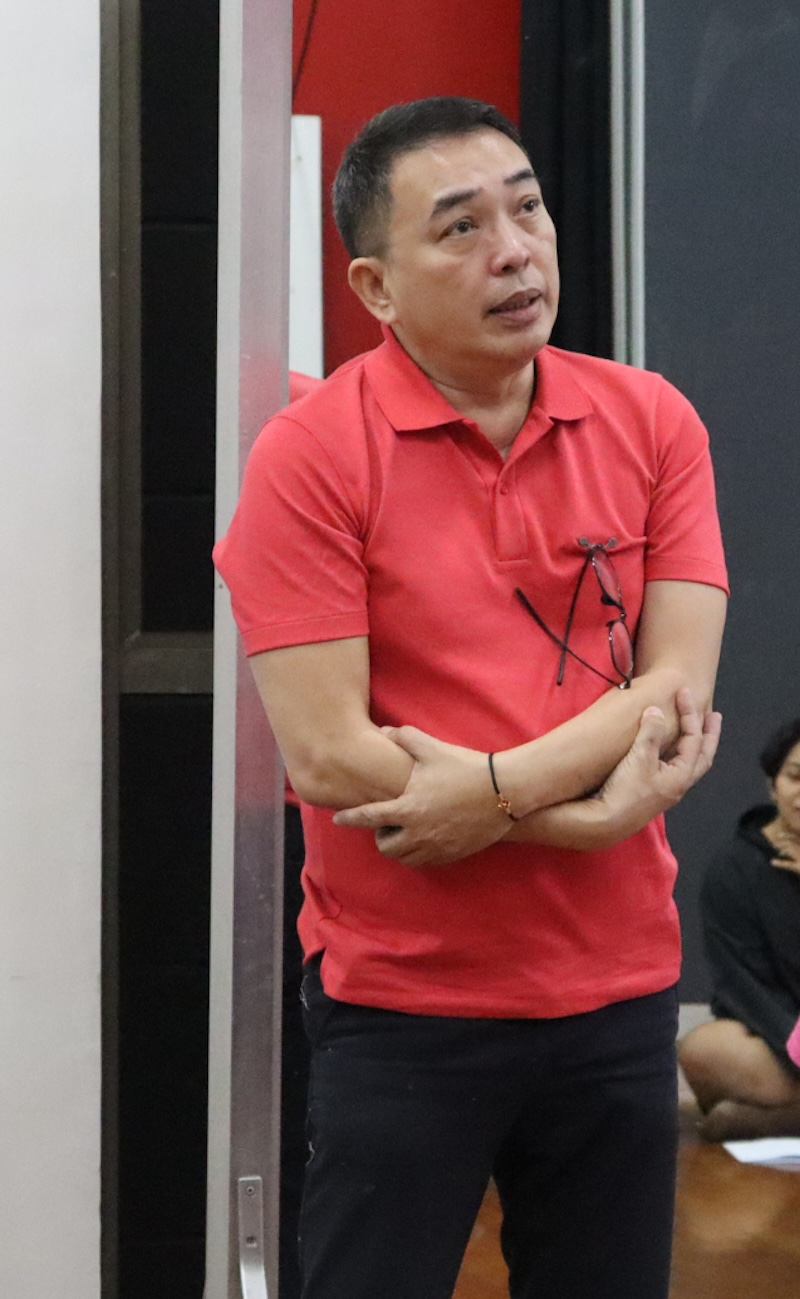
Director Melvin Lee
Lee’s production keeps the original film’s characters, but moves the story to 2026. The workplace has changed. The instability has not.
The adaptation by Liza Magtoto places the story in the gig economy, where each job comes through an app and disappears just as quickly. Leo remains the central character. He is a working man with bills to pay and a family to support. Romance, as it turns out, is the easier part of his life.
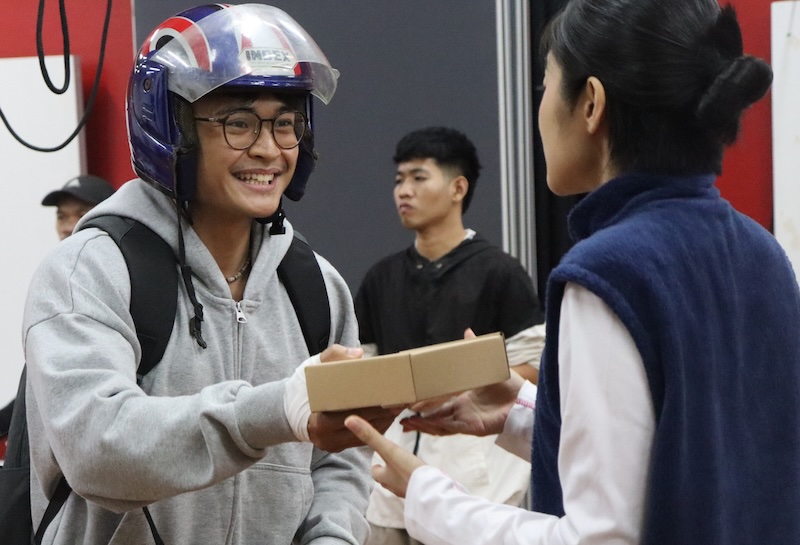
Leo now juggles jobs. He delivers packages and drives for a ride service similar to Grab or Move It. At one point, he lands work as sales staff in a department store. Each job promises income. None promises permanence.
Tanya remains a contractual worker navigating the same fragile system. Candy belongs to a different corner of the modern economy. She is a vlogger and influencer, whose office is the phone and whose audience lives online.

Jasmine Curtis-Smith as Tanya
The story remains a love triangle among Leo, Tanya, and Candy. The difference is—in 2007, contractual labor defined the problem; in 2026, the gig economy has simply given it better branding.
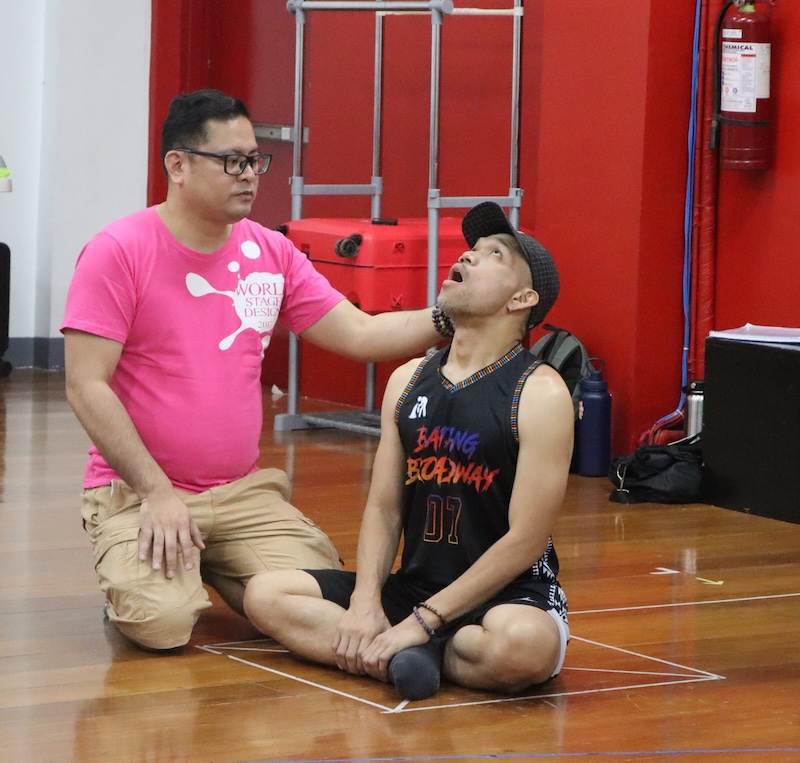
Assistant director and dramaturg Eric dela Cruz facilitating conditioning exercises for the cast
The production is in partnership with Ticket2Me, a ticketing platform. Atty. Darwin Mariano, the owner of Ticket2Me, holds the rights to the original film. He has long admired the material and saw an opportunity to bring it as theater to a new generation.
Material adapted from film can easily turn into a stream of dialogue onstage, says Lee. In this production, the staging blends realism with physical theater. This genre offers another language for storytelling, where the body becomes an instrument of expression. Choreographed by Christine Crame and performed by dancers, the movements create a sense of mobility in both literal and metaphorical ways.
That idea is central to the story. The lead character works in logistics, moving around the city as a courier and ride service driver; the choreography mirrors that constant motion.
Movement is integrated in the scenes to convey the effort, rhythm, and instability that shape the characters’ lives, while also reflecting the pace of urban living.

Esteban Mara and Jasmine Curtis Smith rehearsing an intimate moment
That same sense of instability extends to the visual design. Because the characters live in constant uncertainty, precariousness becomes the idea that binds the production. In the stage adaptation of Endo, the concept moves from theme to staging, the set itself reflecting the unsettled world the characters inhabit.
The scenes unfold on wobbly platforms. Inner and outer platforms shift and feel slightly unstable underfoot. The design turns the actors’ environment into a physical reminder of the precarious lives the characters lead.
The idea mirrors the larger instability of the country’s economy. In the world of Endo, the characters exist in a state that is indefinite and fragile. Work is temporary. Security is never guaranteed.
In the gig economy, the next income depends on the next job. If a worker declines a booking or fails to secure one, the situation quickly becomes precarious. That sense of vulnerability hangs over the characters’ lives.
In the gig economy, the next income depends on the next job. If a worker declines a booking or fails to secure one, the situation quickly becomes precarious
Lee has been with PETA since 1982, rising to become its president while maintaining focus on socially engaged theater. As director, he has tackled subjects ranging from HIV to mental health, blending realism with physical theater to create visually dynamic, movement-driven storytelling. His most recent major work, his postgraduate thesis, was the staging of his trilogy Kumprontasyon. It merged three one-act plays on unresolved historical and political events in the Philippines, and asked the audience to consider how these echoes continue to shape the present.
‘I can’t really accept the idea of art for art’s sake,’ Lee says
“I can’t really accept the idea of art for art’s sake,” Lee says. “I was raised in a company like PETA, and starting as a teenager, I absorbed its socio-political perspective. Everything I create, I try to root in real experience, grounded in reality, because that is the essence of theater—to reflect the human experience and spirit.”
The theater audience is expanding. “Young professionals are increasingly drawn to live performance because of its ephemeral nature. GenZ thrives on experiences, which is why theater is seeing renewed energy and support from both younger and older generations,” Lee says.
Tickets at PETA start at P1,000, but people are willing to pay. “Audiences are saving up for shows and tracking what’s new and trending. GenZ seems to have a constant FOMO, fear of missing out. They want to be in. Older generations, by contrast, respond to nostalgia. That is why productions like Bagets resonate with audiences, evoking the 1980s.”
After Endo on May 10, PETA will stage Ang Babae sa Septic Tank, starring Eugene Domingo. The 2011 indie hit is about three amateur filmmakers determined to make a masterpiece for international filmfests. As a fictionalized Eugene Domingo, the actress brags about her fearless versatility, yet recoils at the one thing the role actually requires: a dip in the sewer.
Chris Martinez, who wrote the original screenplays, created the stage adaptation. It will be directed by Maribel Legarda. The play is a meta-comedy that playfully examines the pomposity and chaos of live theater while keeping the audience thoroughly entertained.
In the original movie and sequel, Lee served as assistant director to Marlon Rivera; in the stage version, he appears as himself, playing the producer.
Lee says being in a meta production means portraying an exaggerated version of himself. “It’s more performative,” he says. “You’re commenting on yourself, in a way, while also commenting on the state of Philippine theater.”
As of early March, presales for Ang Babae sa Septic Tank have already begun through Metrobank credit cards and have exceeded expectations. The production is set for a 50-show run in the PETA theater, which seats about 430. It opens June 19.
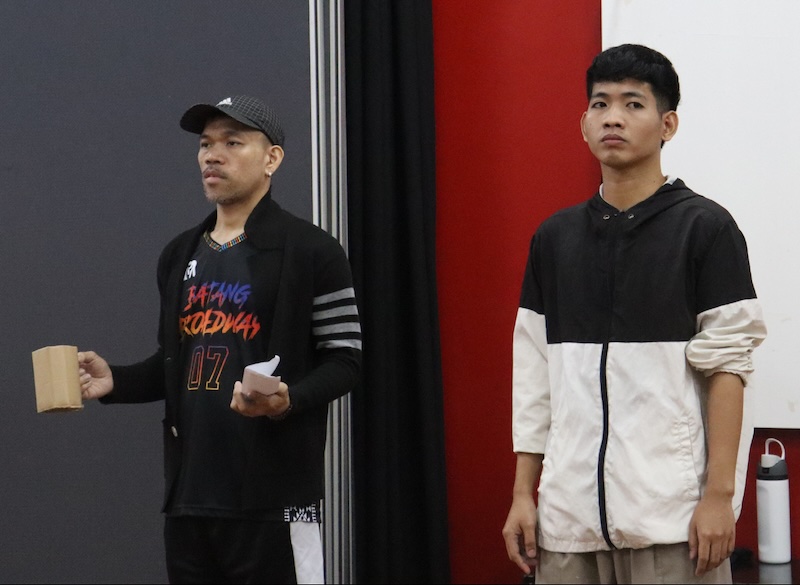
Carlon Matobato as Rey and Denmark Brinces as Pol, members of Leo’s family
Lee has refined his directorial style over decades. “I try to innovate as much as possible. Along the way, you discover your strengths and work on your weaknesses. Every chance and opportunity lets you apply what you’ve learned from previous productions,” he says. The work is more visceral now, incorporating movement to convey abstract ideas, a method he calls essential for clarity.
“As a creator, I must be clear on what I want to convey. Then I translate that into staging devices so the audience understands it beyond the dialogue. That’s how I view my layering as director.”
After these two plays, Lee is turning his attention to PETA’s 60th-anniversary celebrations in July. “Sixty years overlap two fiscal years. We operate from July to June. Our founding year was 1967, so technically our 60th is in 2027. That is how we will celebrate it,” he says. The plan includes co-productions, remounts, and entirely new works, all designed to showcase the company’s legacy and its future.
For Lee, every production is a lesson, every stage a laboratory, and every audience a test of how theater can move with the times.


