
(Cinemalaya runs at Shangrila-Plaza Mall Red Carpet Cinemas, Gateway Cineplex 18 and four Ayala Malls branches until Oct. 12, 2025. The festival continues at the UP Cine Adarna. Dates to be announced soon)
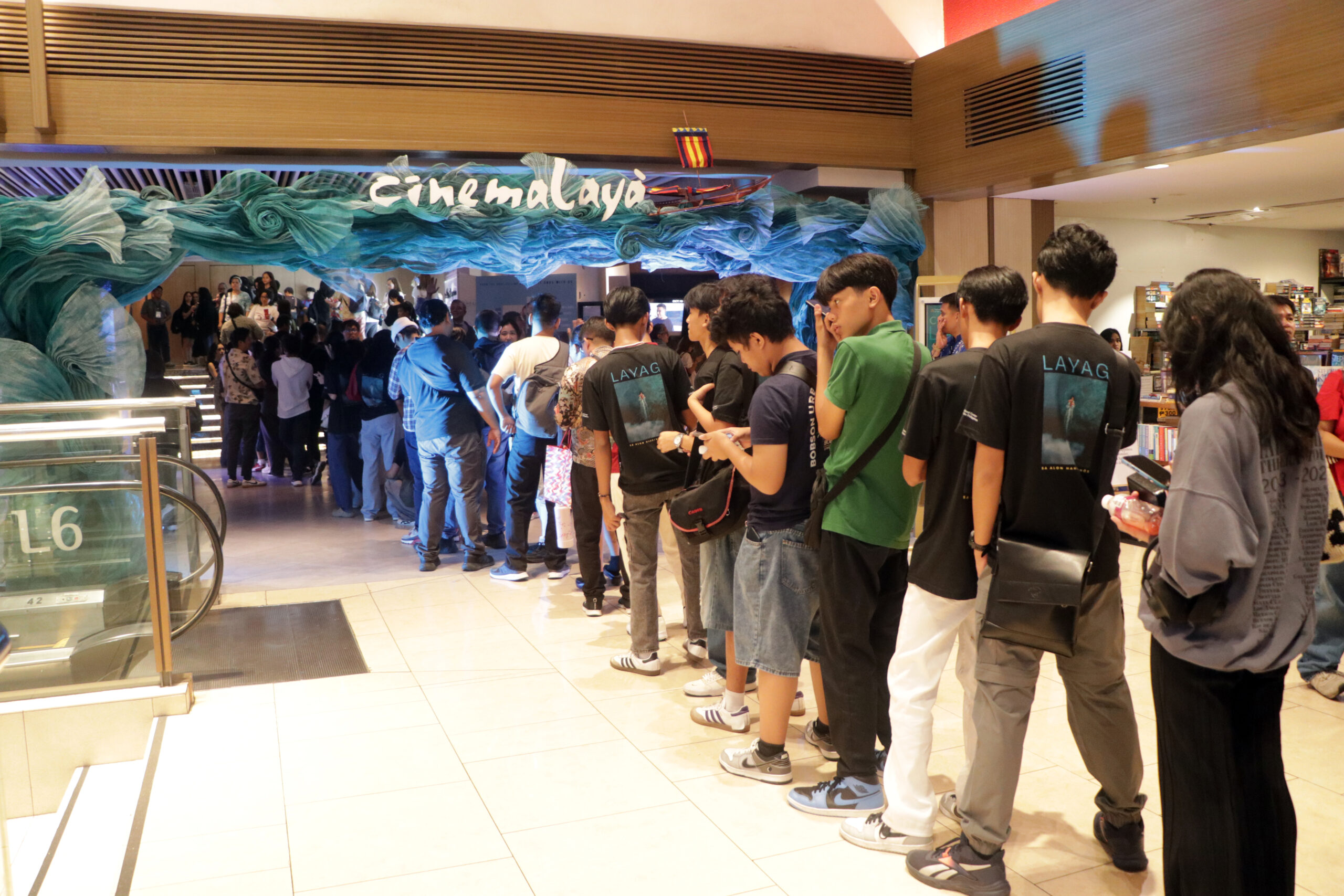
Long lines everyday for Cinemalaya films at Shangri-La Plaza Mall Red Carpet Cinemas (Photo by Kiko Cabuena)
Build it and they will come. The 21-year-old Cinemalaya Independent Film Festival, which ends Sunday Oct. 12, 2025 with the awarding of winners, is making its films available in regular cinemas, a one giant step taken in the hope that more audience will come.

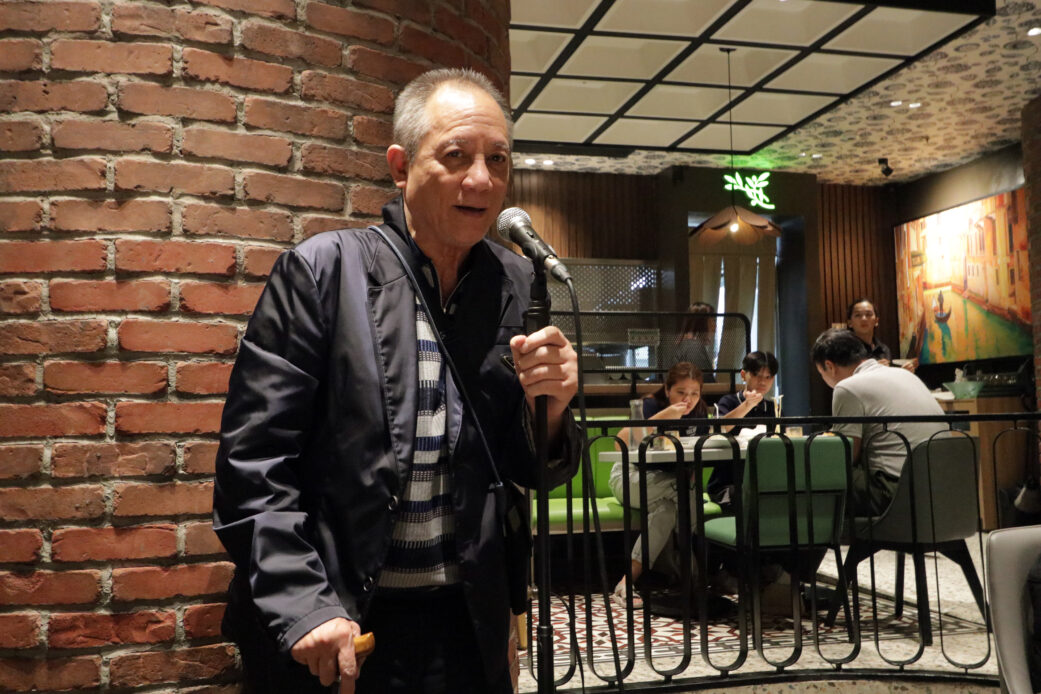
TonyBoy Cojuangco expresses his utmost appreciation of the filmmakers, judges and organizers for this year’s Cinemalaya. (Photo by Kiko Cabuena)
“I’m part of the Shangri-la group and there have been plans to close two theaters this year due to falling revenues. But hopefully, with the holding of our Cinemalaya here and the seeing the interests of people watching, they will probably open and change their minds about closing the two theaters. We’d like to do an agreement with them to show Cinemalaya films and other films curated by Cinemalaya in the two theaters,” said TonyBoy Cojuangco, the founding chairman of Cinemalaya at the annual Chairman’s Dinner at Shangri-La Plaza Mall in Mandaluyong City.
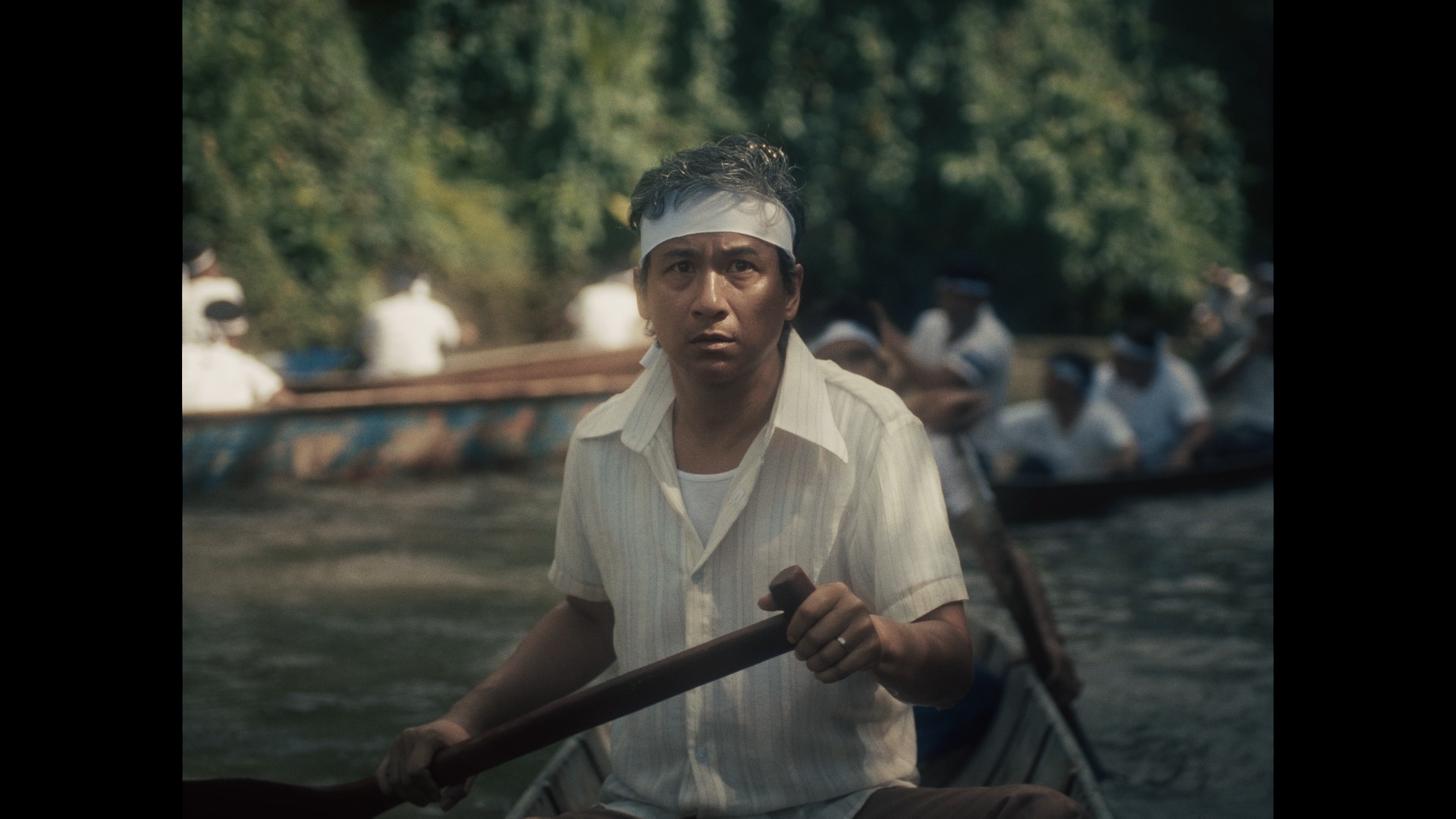
Ely Buendia, in his first lead role, plays a father searching for his missing son during the Martial Law years in ‘Padamlagan’. (CCP photo)
Last October 9, on the seventh day of the 10-day-long festival, Cojuangco gave a short but moving appreciation speech for filmmakers, organizers, judges and others involved in the much-anticipated annual event.
He revealed plans to continue the screening of Cinemalaya films from the present and previous years in two of the five theaters of Red Carpet cinemas at Shangri-la Plaza Mall, the festival’s home this year, even after it ends on Sunday, Oct. 12.
This year, Shangri-la’s Red Carpet Cinemas allotted four theaters for the festival.
If everything falls into place, cineastes who follow the Cinemalaya festival would have a temporary venue at Shangri-La Plaza Mall for the rest of the year.
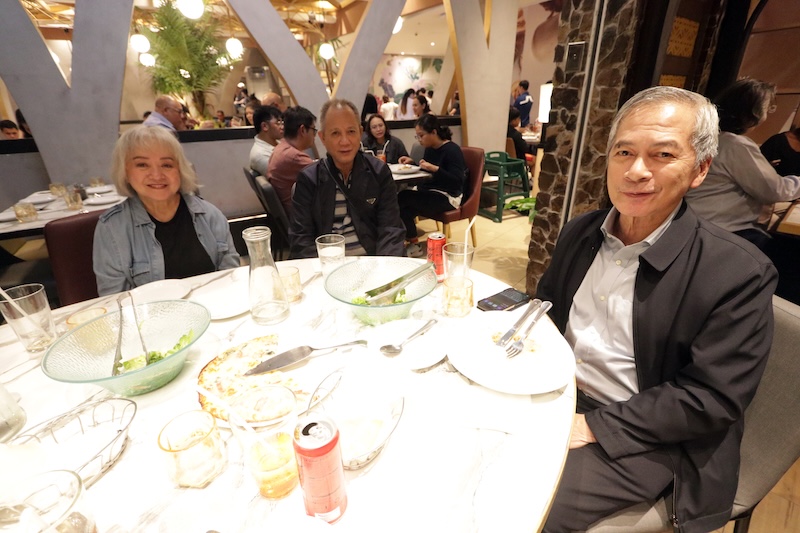
Chairman’s Dinner with (from left) Cinemalaya Foundation Inc. president Laurice Guillen, Cinemalaya founding chairman Tony Boy Cojuangco and board member Nestor Jardin. Photo by Kiko Cabuena
In an earlier interview, Cinemalaya president Laurice Guillen said the plan is to have at least once-a-week or two-days-a-week showing of select titles from its film library of the past two decades. The uncertainty of the actual opening date of the renovated Cultural Center of the Philippines is a major factor behind Cinemalaya 2026 setting up base at Red Carpet Cinemas.
Cojuangco continued: “We lost half of the funding early on but thanks to our good friend, Jose Javier Reyes. He was able to find a way to get some funding for us. If not for his effort this year’s festival would have been postponed to next year.”
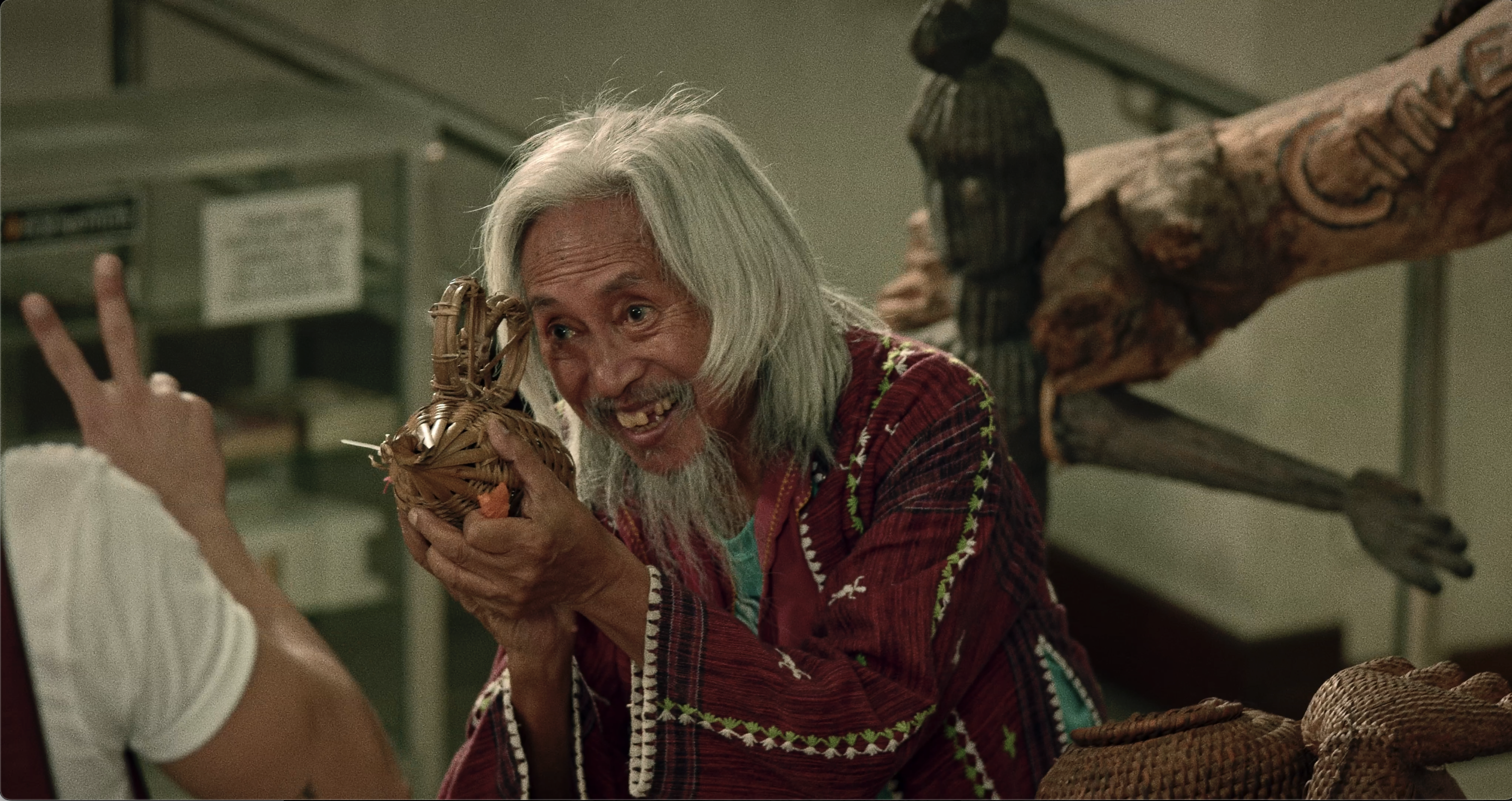
National Artist for Film Kidlat Tahimik in Sari Dalena’s ‘Cinemartyrs’
Reyes is chairman of the Film Development Council of the Philippines (FDCP), which has been assisting Cinemalaya since 2023 by providing P1 million for each of the 10 finalists in the full-length film category. In previous years, the CCP usually gave another P1 million as seed grant to each filmmaker.
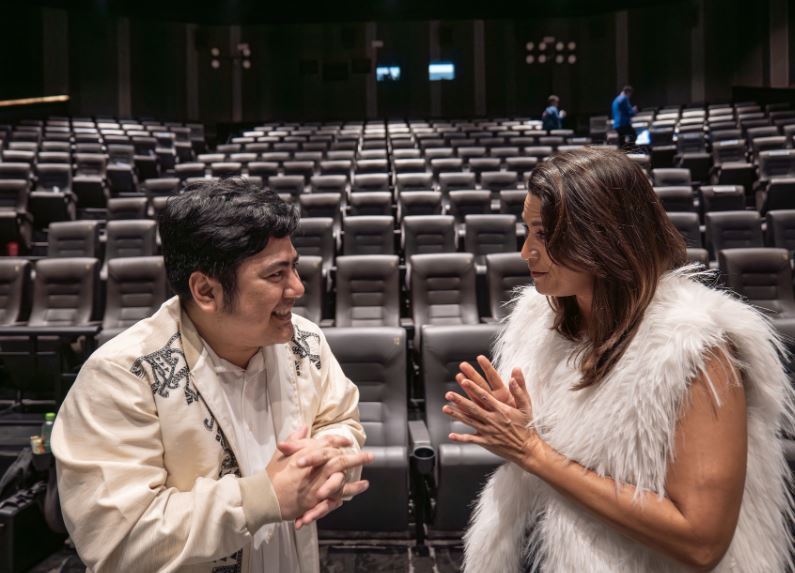
Director Dustin Celestino and ‘Hydra’s’ actress Mylene Dizon after the gala night (Photo courtesy of Dustin Celestino)
In the first decade, the Cinemalaya Foundation was giving P500,000 seed grant to each filmmaker. CCP stepped in on the 11th year and continued to this year, the 21st edition of the festival, when budgetary constraints made it impossible to continue the grant.
In a story for TheDiarist.ph, festival director Chris Millado revealed how Cinemalaya was delayed for nearly three months due to lack of funding. He said P25 million was needed to subsidize the films and run the festival. “And since the CCP Main building has been closed for renovation since 2023, this meant additional money had to be sourced out for sprucing up the venue,” Millado said.
But due to the bayanihan spirit of major stakeholders like the FDCP and CCP, the festival sailed on.
Cojuangco added, “I hope we resolve our funding problem to move forward. I’d also like to say I appreciate the artists and the judges who made all this possible. I know that despite the revenues coming down, you’re still dedicated to your craft,”
“And lastly, I’d like to tell you the other advocacies I have in the arts,” Cojuangco said, citing Ballet Philippines, the Manila Symphony Orchestra and Tanghalang Pilipino Foundation, Inc., which the business leader has been supporting for decades.
‘You are important because we need stories that document history…. especially now when we can no longer ask traditional media to (document) what’s (really) happening in our country’
“The people in these companies are all so dedicated. They are all suffering and (surviving) from subsidies for their expenses, but the people involved in these companies are so dedicated to their craft, they and you guys (Cinemalaya people) continue in winning awards internationally and locally. So, thank you for your continuous support of Cinemalaya. You are important because we need stories that document history, the lives of people, especially now when we can no longer ask traditional media to (document) what’s (really) happening in our country,” he said.
This year’s Cinemalaya drew big crowds to the Red Carpet Cinemas.
The selection was the result of intensive judging process. Of 200 scripts submitted in 2023, around 20 were chosen. There are 10 finalists for this year and 10 for 2026. We’d like to think this is the good effect of the pandemic, when writers and filmmakers created stories during the lockdown from 2020 to 2022, probably out of anxiety, boredom, depression or an overflow of creative ideas.
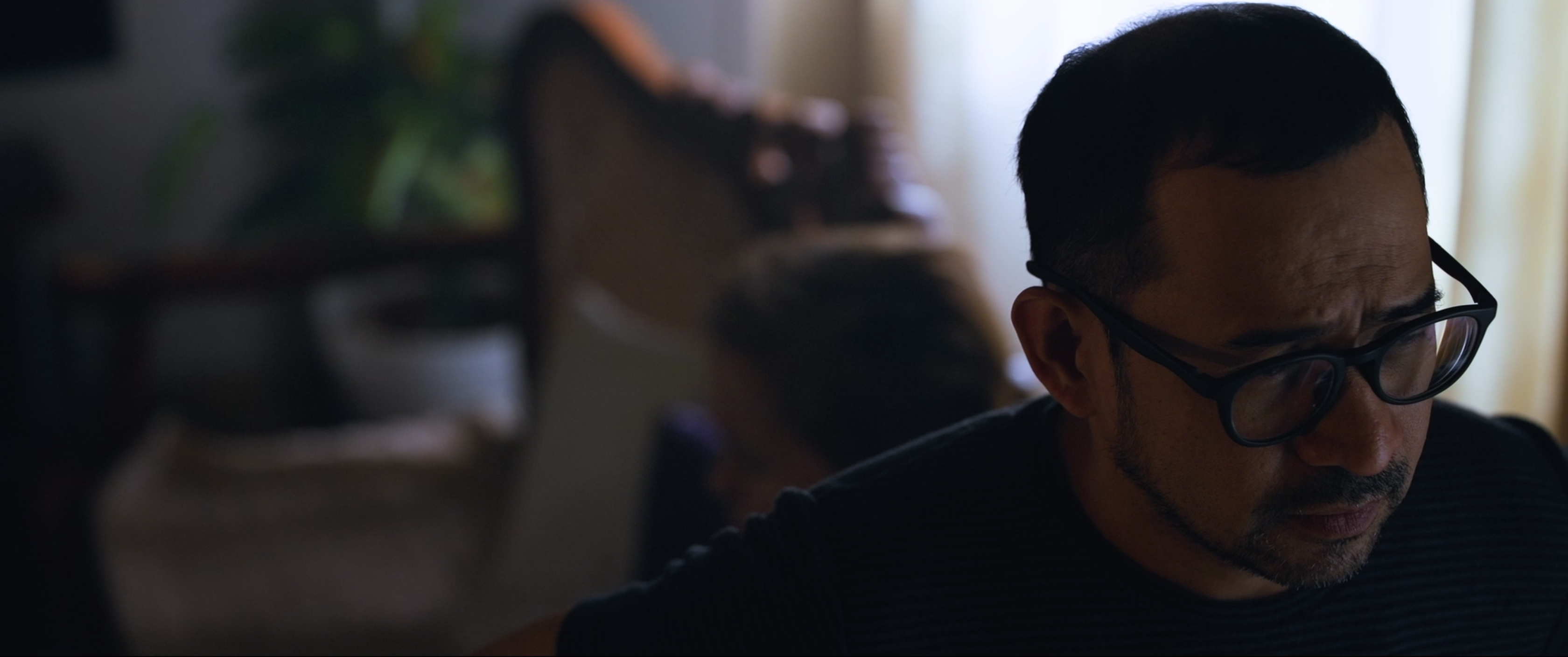
Jojit Lorenzo in ‘Habang Nilalamon ng Hydra ang Kasaysayan’
It’s a big help that the Foundation formed Film Lab, where chosen scripts were taken up in intensive workshops by established filmmakers. So this year, the expectations for the selected titles were higher than in previous years.
Cinemalaya is a festival that prioritizes new concepts of aspiring directors, most of them first-timers. If grants are given seasoned filmmakers, it’s for stories that mainstream studios won’t gamble on. Aspiring filmmakers are given seed money, and just to finish their films before deadline, they seek help from other sources. The result: some debut films are rushed and substandard, given the shoestring budget.
Now, there have been attempts to address that.
Of the 10 full-length films in competition, I managed to see seven.
I ran into this veteran, much-awarded multi-platform actor, who I know for casual sarcastic remarks on everything under the sun. He told me, “Kapatid, maganda yung napanood ko, parang hindi Cinemalaya film (I saw a good one, not typical of a Cinemalaya film).” He said this with eyebrow raised, half smiling.
If a cynic like him could appreciate a film, how much more regular viewers like me.
The films I managed to catch and some honest observations:
Child No. 82
Child No. 82 by Tim Rone Villanueva was the first we chose because we knew it would make us laugh. It is loosely based on the real story of not one but of many children allegedly sired by a famous, wealthy action star hailing from Cavite.
Newcomer actor JM Ibarra plays a teenager who grew up in the inabel-weaving town of Pinili in Ilocos Norte, raised by a single mother (Rochelle Pangilinan-Solinap). He knows his father is the famous actor, with the alias Boy Kana, played by comedian/TV host/dancer Vhong Navarro.
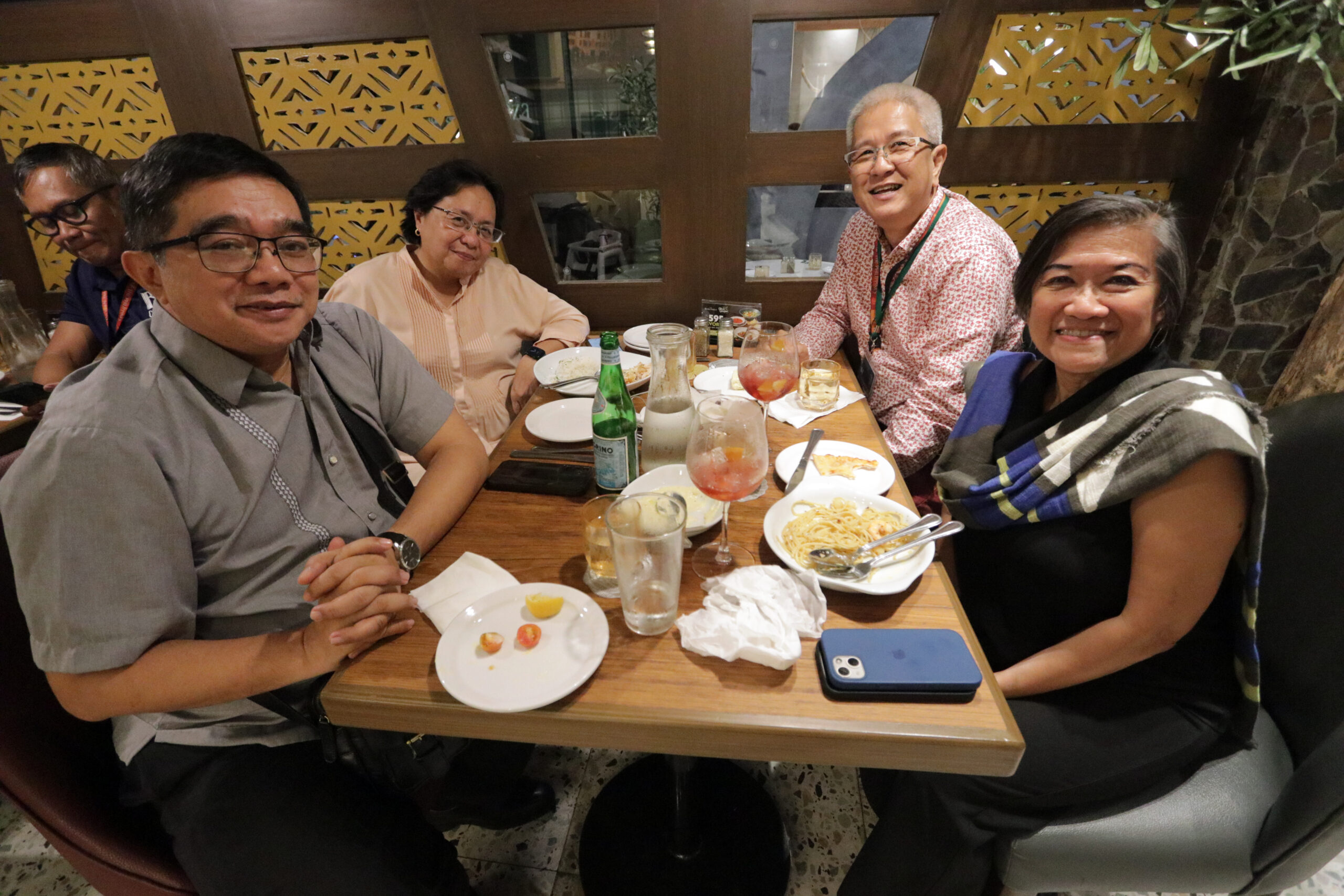
At Chairman’s Dinner, an appreciation event in the 21st Cinemalaya festival, from left: CCP VP-artistic director Dennis Marasigan, CCP arts education department manager Eva Mari Salvador, CCP production and exhibit department manager Mauro Ariel Yonzon and Cinemalaya deputy festival director Tess Rances (Photo by Kiko Cabuiena)
Boy Kana appears in his dreams and never gives him peace, so he goes to Cavite to claim his rightful place as the 82nd child. But it’s not an easy journey. The director uses video games and references to Fernando Poe Jr.’s signature role in the fantasy action film series, Panday. There are Boy Kana scenes that look grainy and full of scratches, but this is intentional. It’s like paying homage to ‘80s escapist films the same way Quentin Tarantino’s character archetypes and visual styles look like Cirio Santiago-produced films from the 1970s.
Child No. 82 is feel-good comedy, a satire on how we venerate celebrities. In a subtle way, it is how Filipinos readily embrace myth to escape their sad realities.
Republika ng Pipolipinas
For the same reason, the light-hearted, mockumentary Republika ng Pipolipinas by Renei Dimla is a must-watch.
It’s about Cora Vitug, a female farmer played by Dulaang UP alumna Geraldine Villamil, who loses her land to government. She is offered financial compensation to start a new life somewhere, but she refuses the “bribe.” She holds her ground despite pressure from local authorities and friends. She stays and proclaims she is now president of her own micronation.
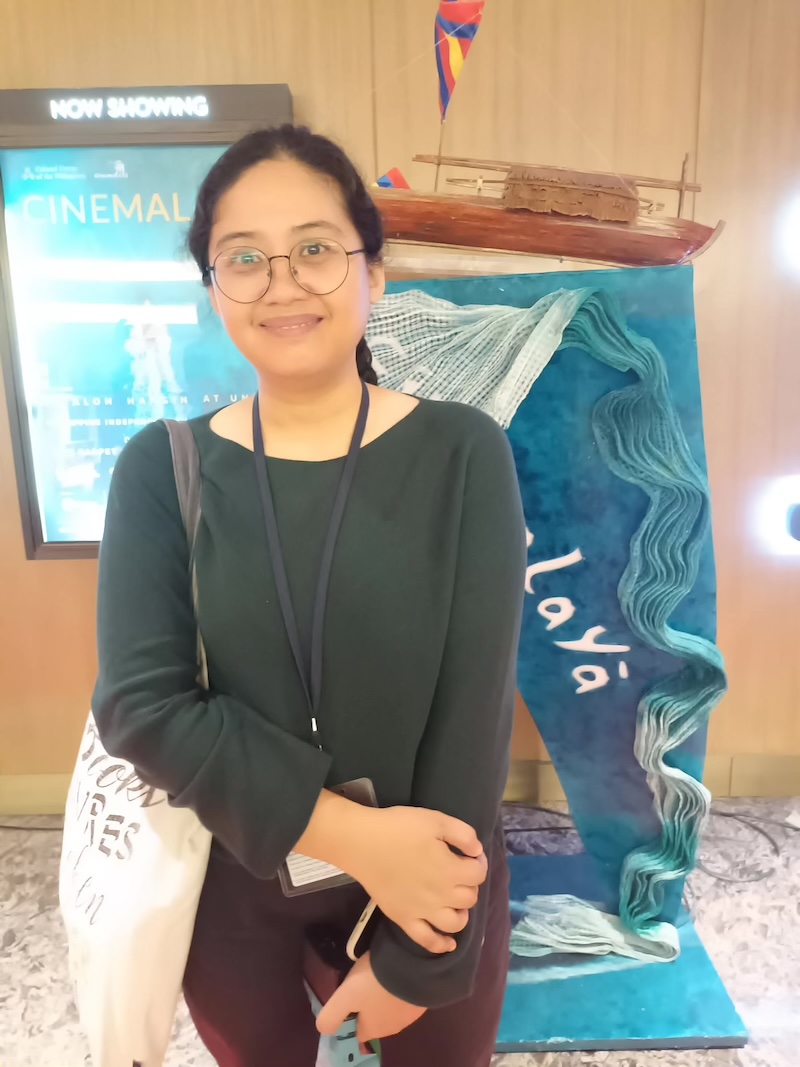
Young filmmaker Renie Dimla directs the mockumentary Republika ng Pipolipinas. Photo by Totel V. de Jesus
Soon, she gains sympathy and supporters who believe in her independent nation called Pipolipinas. Allesandra de Rossi, a natural comedian, plays a supporter who becomes her vice president. Theater actress Kakki Teodoro, who won Best Supporting Actress in last year’s Metro Manila Film Festival for Isang Himala, plays the antagonist.
We learned from the young director that she based Cora Vitug not only on one person. She said that there are many disillusioned, desperate Filipinos who established their own versions of the Philippines. We googled and found out there is actually a group called the Association of Micronations in the Philippine Islands (AMPI).
Open Endings
Another feel-good entry is Open Endings by Nigel Santos and Keavy Eunice Vicente. It’s about four single queer women, who at some point in their young lives were lovers or casual partners. They all end up as close friends.
The characters are played by top-notch mainstream talents Janella Salvador, Klea Pineda, Leanne Mamonong and Jasmine Curtis Smith.
Open Endings is a Cinemalaya-born film with blockbuster potential, and we won’t be surprised if it becomes a hit in commercial theaters soon.
Ang Paglilitis
Ang Paglilitis by Cheska Marfori and Raymund Barcelon is the fictional story of Jonalyn Samuel, played by Rissey Reyes-Robinson. She’s a secretary who experiences repeated sexual harassments by her sleazy boss, a milk tycoon, played by Leo Martinez.
She is illegally dismissed from work. She chooses to lead a quiet life, working as virtual assistant at home. But her ordeal, the past she tries to bury in her memory, continues to haunt her. Jonalyn files charges upon the prodding of an ambitious clout-chasing vlogger-lawyer, played by Eula Valdes, and her mother (Cherry Malvar), who keeps reminding her, “kelangan natin ang pera para sa pag-papa-aral ng kapatid mo at pagpapagamot ng tatay mo (we need money for your sibling’s tuition and your father’s treatment).”
The premise is not new, but the film shows the struggles of the victim after being exposed and judged by the clueless public.
For introductory role, Rissy Reyes-Robinson shows depth and conviction. She is the saving grace of this advocacy film that might connect to viewers who experienced similar traumas.
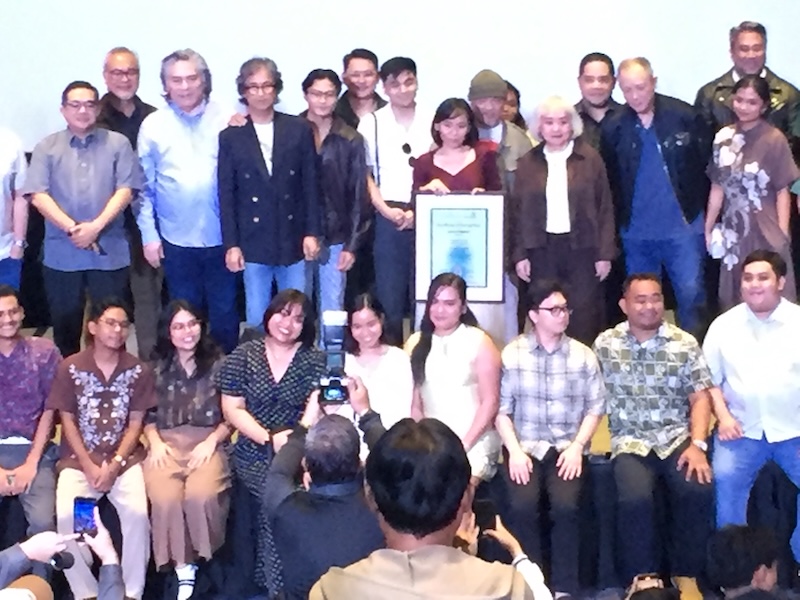
The cast and crew of “Padamlagan” led by director Jenn Romano and lead actor Ely Buendia receiving the Certificate of Recognition during the film’s gala night. They are joined in by Cinemalaya officials led by founding chairman Tony Boy Cojuangco, festival president Laurice Guillen and festival director Chris Millado. Photo by Totel V. de Jesus
Padamlagan (Night Light)
Bicolano filmmaker Jenn Romano’s Padamlagan (Night Light) revisits the tragedy of the Colgante Bridge collapse on Sept. 16, 1972, in Naga City.
During the Peñafrancia fluvial procession, the wooden bridge collapsed, resulting in the deaths of 138 devotees. Some of the bodies were never recovered.
Romano chooses popular, contemporary OPM torchbearer Ely Buendia, erstwhile lead singer-main composer of Eraserheads, to play Doring, a father who loses his teenage son in the tragedy. Until Martial Law is declared on Sept. 21, 1972, Doring continues his search, only to discover hidden truths about his son.
Some reviews focus on Buendia’s acting, but from the get-go, he’s not someone as intense and experienced like a John Lloyd Cruz or Ronnie Lazaro. The production design by Jeric Delos Angeles is highly commendable. The use of old TV sets, wooden tables, chairs, cabinets, even the outrigger boats, owner-type jeepneys, all transported us to the ‘70s.
Beyond nostalgia and the political undertone, Padamlagan is about a father’s unconditional love for his son and how holding on to hope makes him survive the aftermath of a personal tragedy.
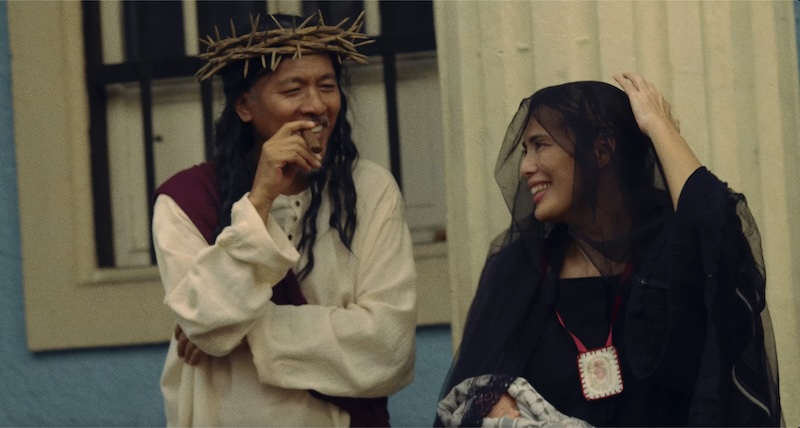
Internationally acclaimed auteur Lav Diaz and Angel Aquino do cameo roles in ‘Cinemartyrs’. Publicity photo
Why you shouldn’t miss seeing Cinemartyrs
A material developed during the pandemic was Sari Dalena’s docu-fiction, Cinemartyrs, a film within a film.
Through the eyes of a young, female filmmaker named Shirin, played by Dulaang UP alumna Nour Hooshmand, Dalena pays homage to two pioneering Filipina filmmakers, Carmen Concia and Susana de Guzman. Shirin is making a film that reenacts the nearly forgotten massacres of Muslim Filipinos in the early years of the American Occupation.
In our patriarchal society, Carmen and Susana proved that women filmmakers could also create considerable and popular body of work. Concia made films before World War II, while De Guzman became one of LVN Pictures’ more prolific directors until its closure in the 1960s.
In the script, Dalena incorporated the strange occurrences that happened during the filming of her first documentary, Memories of a Forgotten War, which she directed with Camilla Benolirao Griggers and was finished in 2001. The story is about the US military atrocities during and after the Philippine-American War in 1899.
The documentary covers the Bud Dajo massacres, a counter insurgency measure by the US military led by Major General Leonard Wood, which took place from March 5 to March 8, 1906. The American soldiers made a surprise attack on a wedding. The armed confrontations went on for three days, resulting in the deaths of more than a thousand members of the Tausug tribe, including women and children.
There was a rare, surviving photograph of American soldiers proudly standing over dead bodies of Muslim Filipinos. It can still be googled today. This haunting image was re-enacted in the film. Reportedly, there was another similar incident in the same Tausug enclave in 1913, also led by General Wood.
When Dalena and Griggers shot their scenes in Jolo, Sulu, some of the crew members were reportedly possessed by spirits of those who died in the Bud Dajo massacres. In her story, Shirin is determined to re-create the massacres with her young crew. From the start, she faced difficulties. Film negatives—new ones—bore scratches in the final product. Then, there were the usual actors and crew members giving her headaches.
As a parallel to how Carmen Concia and Susana de Guzman survived the male-dominated, chauvinistic film industry of the last century, Dalena shows how this twisted culture continues to this day.
When Shirin tries to get extra funding from a government culture agency, she faced more hurdles. She is questioned about how a young, female, neophyte director could shoot a film in the outskirts of Mindanao. An unfriendly member of the selection committee tells her, “Mas mabuti, umuwi ka na lang sa inyo. Mag-baby ka na lang! (Just go home and make babies)”.
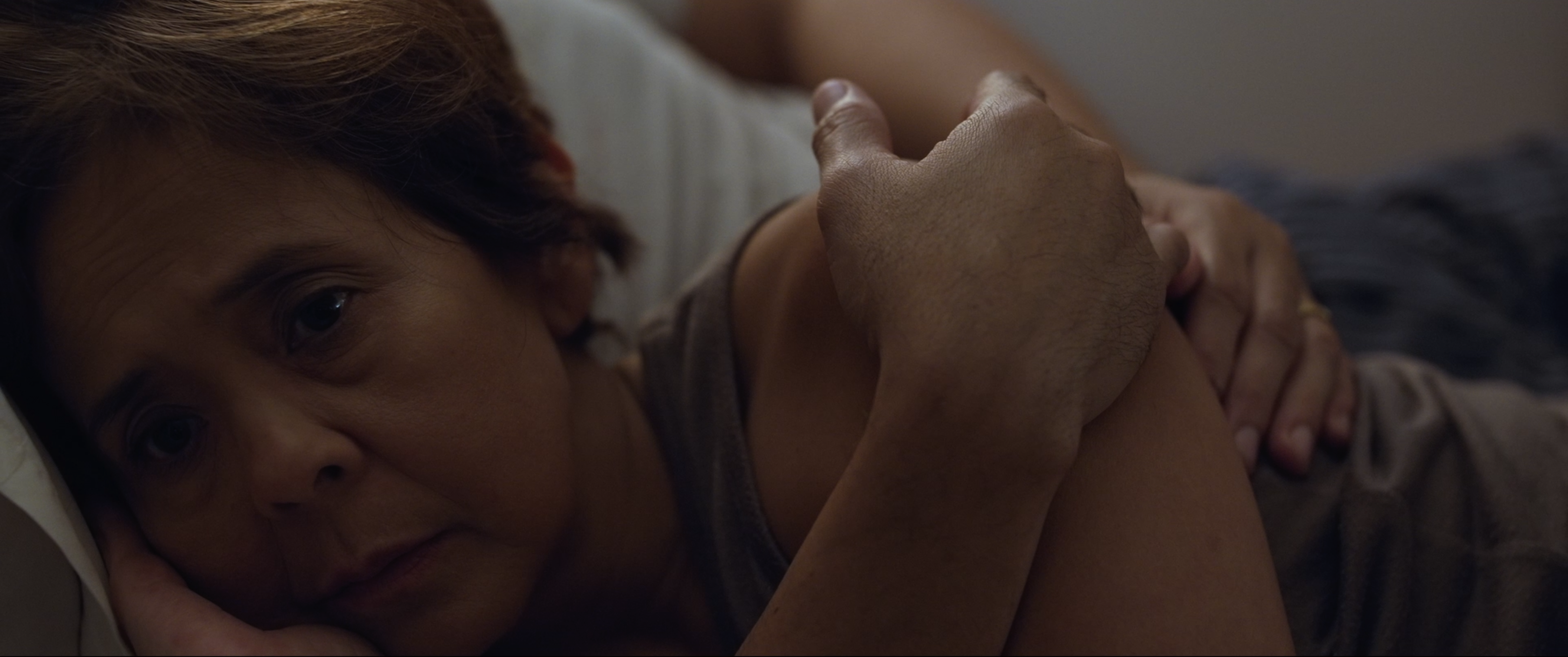
World-acclaimed actress Dolly De Leon as history professor in ‘Habang Nilalamon ng Hydra ang Kasaysayan’.
But she proves she can do it. The discrimination against women continues. In Jolo, she gets members of the tribal community to act as extras. During the shoot, she is told that it’s part of the tradition in the tribal community for men not to take orders from women, so she has to delegate the task of saying “action” and “cut” to the son of a local chieftain. She delivers.
Since it’s also a tribute to brave, daring independent filmmakers, Dalena gave cameo roles to National Artist Kidlat Tahimik and internationally acclaimed auteur Lav Diaz. “They have to be in the film,” she said.
READ: https://www.thediarist.ph/im-making-films-until-i-die-the-day-i-shot-lav-diaz/
During one of the talk-back sessions at Cinemalaya, Dalena said she developed and finished the initial draft of Cinemartyrs after she attended Ricky Lee’s scriptwriting workshop in 2018. When she offered it to local festivals and independent producers, she was turned down because it was “too experimental.”
During the pandemic, the late film archivist Teddy Co gave her the recorded audio interviews of Carmen Concia and Susana de Guzman, telling her it was her turn to re-introduce these nearly unforgotten filmmakers to the present generation.
“He interviewed them when he was in his 20s, sometime in the early 1980s. After hearing the interviews, I knew I had to revise my script,” Dalena said. They were like gems for film scholars and historians.
Dalena, who teaches film at the University of the Philippines Diliman, made use of existing materials from the libraries of LVN Films and UP Film Institute.
“From pre-and-post war cinema to the present, maraming layers. I just wanted for you to experience that. Di ka dapat matakot kung di nyo ma-grasp agad, kung bakit ganito ang look ng black and white and all that,” she added.
During the pandemic, the great filmmaker, Mike de Leon, who was restoring what was left in the film archives of the family-owned LVN Studios, uploaded on his You Tube and Vimeo channels, both named “Citizen Jake,” the digitized versions of the restored LVN movies directed by Susana de Guzman. They are still accessible for free.
Dalena said she was in constant communication with de Leon for the use of some materials in the LVN Films library.
“We were exchanging emails a week before he passed on. I didn’t even know he was in the hospital and in critical condition because he didn’t tell me. He was very kind and helpful up to the end,” said Dalena.
The story of Cinemartyrs is a quarter-of-a-century in the making since her Memories of a Forgotten War. Dalena has done other docufilms in between, such as the award-winning Dahling Nick, about the life and work of the National Artist for Literature Nick Joaquin, and The Guerrilla Is A Poet, about revolutionary leader Jose Maria Sison. No doubt, these are gems of documentary films.
Now, she pushes the boundary as Cinemartyrs successfully blurs the lines between myth and history, the supernatural and the factual.
In the age of fake news and historical distortions, that sounds pretty normal, but Dalena’s expertise as filmmaker and scholar gives us new insights on neglected chapters in our history.
Which brings us to…
Habang Nilalamon ng Hydra ang Kasaysayan (As The Hydra Devours History)
Dustin Celestinos’ 120-minute existential drama has been easily dismissed by some viewers and reviewers as another story about the 2022 national elections. It tackles the lives of two male speechwriters, played by Jojit Lorenzo and Zanjo Marudo, of a female presidential candidate (Frances Makil Ignacio) in 2022, after she lost the elections to the incumbent. We all know who the political personalities are.
Many say they’ve moved on and are now focused on the present problems, like the systemic corruption in flood-control projects.
But that, exactly, is why Celestino’s film is as relevant as ever. We easily succumb to amnesia even as we raise banners and wear shirts printed with “never again, never forget.”
In the film, Dolly de Leon is wife to Jojit Lorenzo’s character. She is a history professor who still carries the trauma of losing her father, an activist, during Martial Law. He was among the reportedly more than 3,000 desaparecidos. Her memorable line goes something like, “Anong silbi ng history professor sa isang bansang hindi naniniwala sa history? (What’s the point of being a history professor in a country that doesn’t believe in history?)”
Marudo plays a book author who returns to teaching. He is an intellectual active in social media, easily affected by its mundane, fake nature. His girlfriend, a lawyer, played by Mylene Dizon, is daughter of a retired high-ranking general (Nanding Josef) during Martial Law, who played a crucial part in imprisoning and executing thousands of activists.
Dizon’s character, to us, comes across as the calm, understanding and kind Filipino not easily swayed by the collective anger of strangers over a crime she seemingly inherited.
We’ve known Celestino for his plays staged and re-staged in the annual Virgin Labfest at the CCP; he’s one of the most well-read, introspective, brilliant young playwrights and screenwriters today. More important, his heart is in the right place.
The premise of his recent film is spot on. It is brave and brilliant. The nine-headed invisible hydra remains in our society and continues to erase, if not, distort our perception of what happened during Martial Law, the conjugal dictatorship, the rampant injustice and impunity during the past administration.
This film should be shown in schools or streamed in accessible platforms for all Filipinos here and abroad to see.
What matters in the end is how we react to the “truth” being served to us, and what we become after the experience. And isn’t that what great cinema is?
As Lav Diaz once said in an interview, “Mahalaga yung paglabas mo ng sinehan, kahit isa lang nanood, nabago sya, na-elevate ang kanyang aesthetics, nagkaroon ng mas malawak na discourse sa kanyang kamalayan at pakikibaka sa buhay (What matters is that, when you step out of the cinema, even if only to an audience of one, one is transformed, aesthetic elevated, the awareness broadened, the consciousness and struggle). ”
(Cinemalaya runs at Shangrila-Plaza Mall Red Carpet Cinemas, Gateway Cineplex 18 and four Ayala Malls branches until Oct. 12. The festival continues at the UP Cine Adarna. Dates to be announced soon)


