
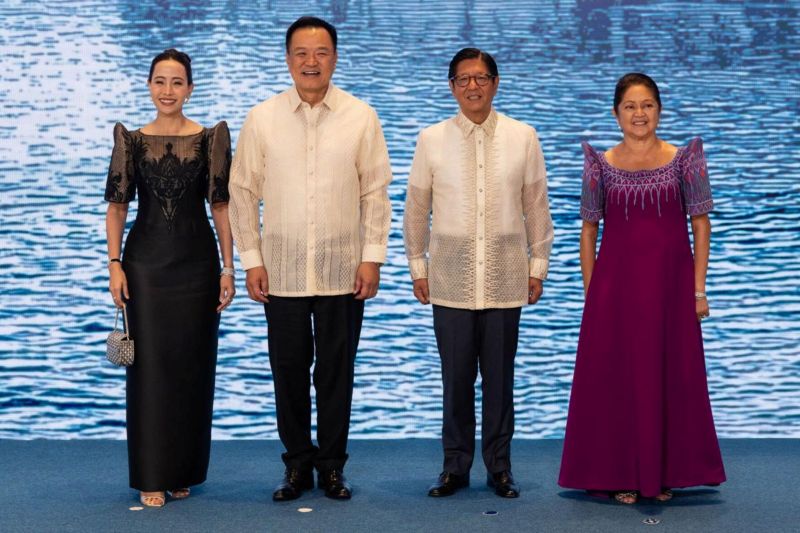
Sartorial heritage always takes center stage in international summits hosted by the Philippines. With the Philippines as chair country in 2026, the gala of the 48th ASEAN Summit in Cebu this May showcased soft power—the use of traditional dress as statement of both cultural identity and political intent.
Filipino designers outfitted heads of state, representatives, and their spouses in barong and terno, with motifs from their home countries. The move was a nod to diplomatic ties between the Philippines and ASEAN members and reinforced a shared regional identity.
Last year, the Office of the Social Secretary at Malacañang tapped style advisor Patrick Rosas to recommend designers to dress top-level officials and their spouses for the ASEAN Summit and Related Summits scheduled for May and November 2026.
Popularly known in this administration as First Lady Liza Araneta-Marcos’ makeup artist, he also serves as executive producer of fashion programs at Malacañang heritage mansions. He has been a long-time friend of the First Lady, has moved in the Marcos family circles, and she has leaned on his skills beyond fashion and cosmetics.
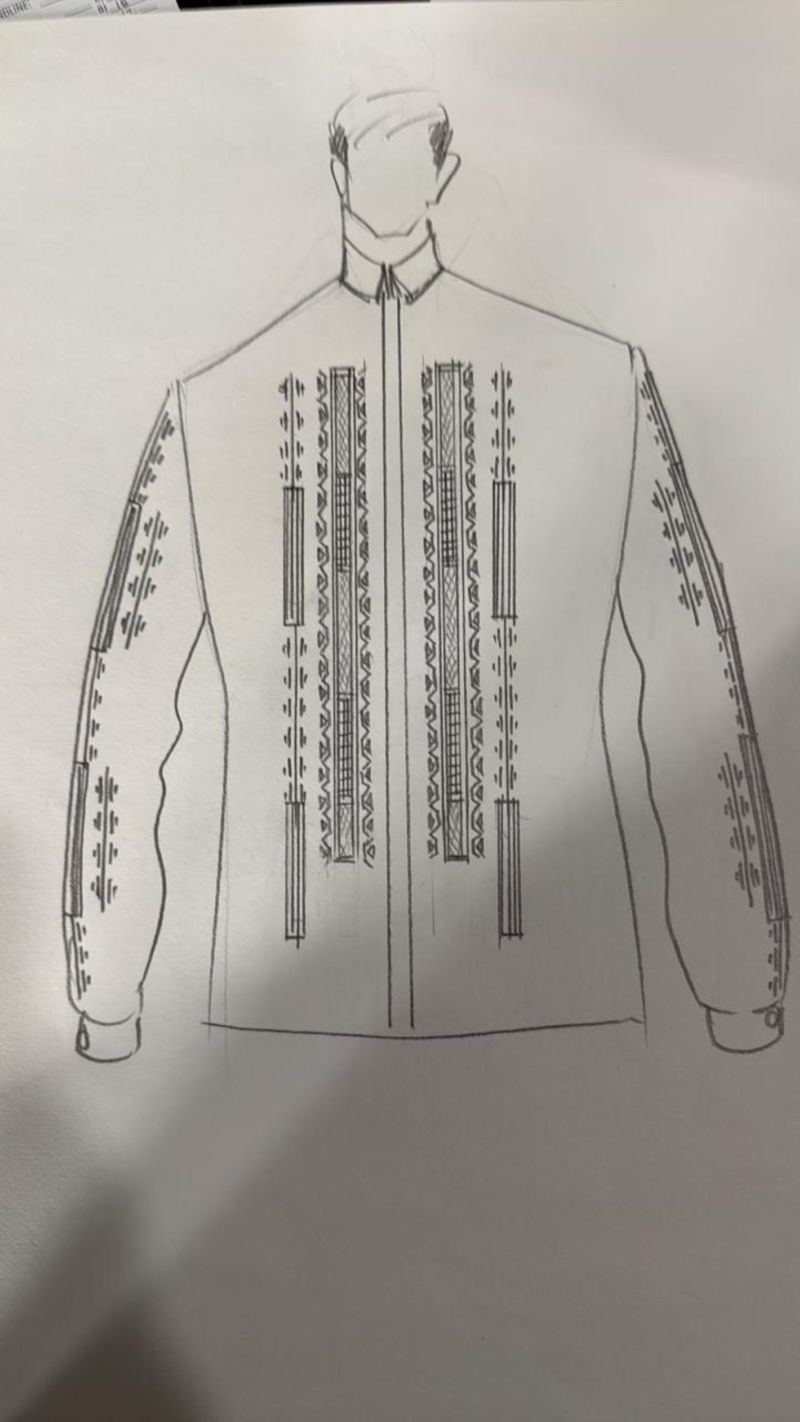
Paul Cabral’s sketch of the barong of the Myanmar Foreign Affairs Secretary
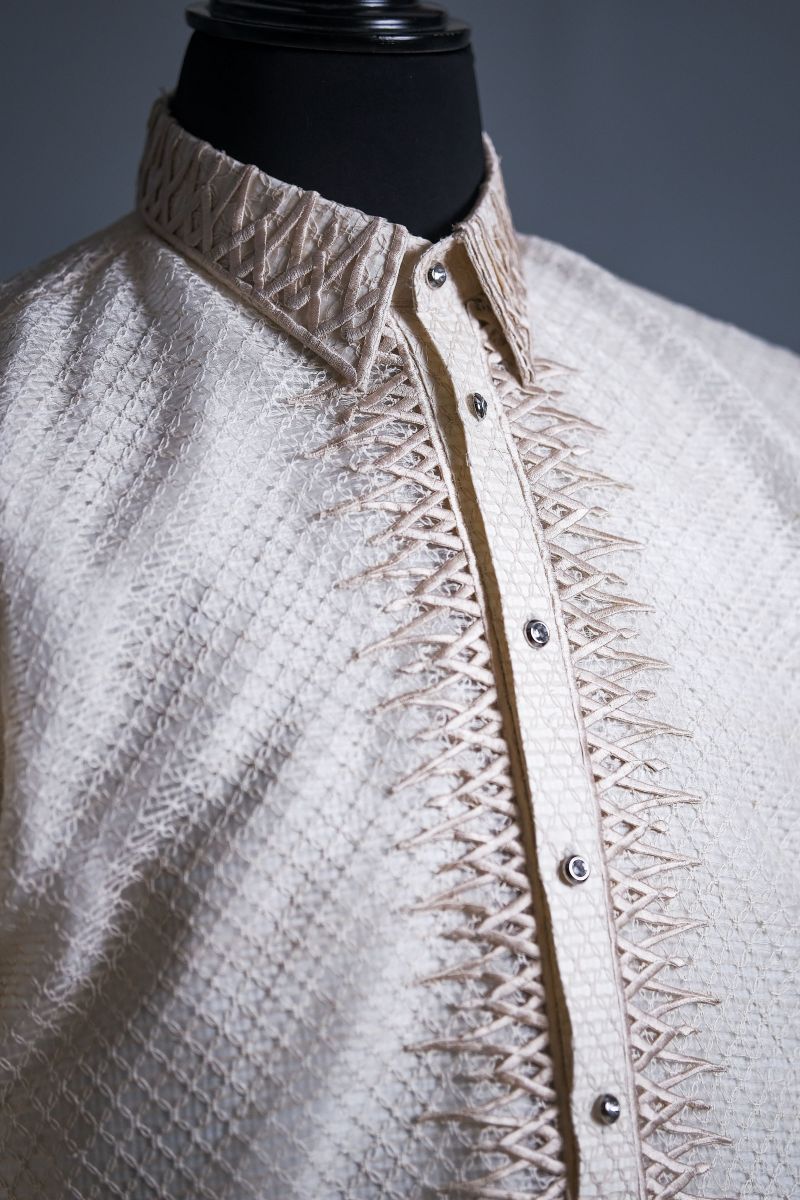
The embroidery details on President Marcos’ ‘barong’ echo the patterns on the First Lady’s ‘terno’.
Under his watch, the Goldenberg Mansion has hosted designer-funded private runway shows, and the newly restored Presidential Guesthouse has featured the collection by Paul Cabral. Rosas also initiated Cabral’s show at the Philippine Ambassador’s residence in Tokyo in May 2025. It was organized by the Department of Trade and Industry under its Malikhaing Pinoy or Creative Philippines program, with Her Imperial Highness Princess Takamado among the VIP guests.
Rosas has organized a visual arts program as well, including Ronald Ventura’s Astig Mata at Goldenberg Mansion, and exhibitions tied to Likha, the satellite showroom for artisanal crafts along Roxas Blvd. in Pasay. Sourced through Likha and local weavers, the pieces merged Philippine craft with Asean regional stories.
To ensure a fair process, Rosas proposed a lottery to assign designers to leaders and spouses from ASEAN and partner countries including the US, Canada and Russia. In a merienda hosted by the First Lady, designers drew lots to select the countries they would design for. Francis Libiran drew the Philippines; Mark Bumgarner, President Donald Trump and First Lady Melania Trump. Paul Cabral took Myanmar, Cary Santiago Thailand and the United Kingdom. Lulu Tan Gan took Singapore.
The First Lady urged designers to source indigenous textiles to support the local weavers through Likha, the heritage advocacy of her office. Most selected piña from Aklan for the barong.
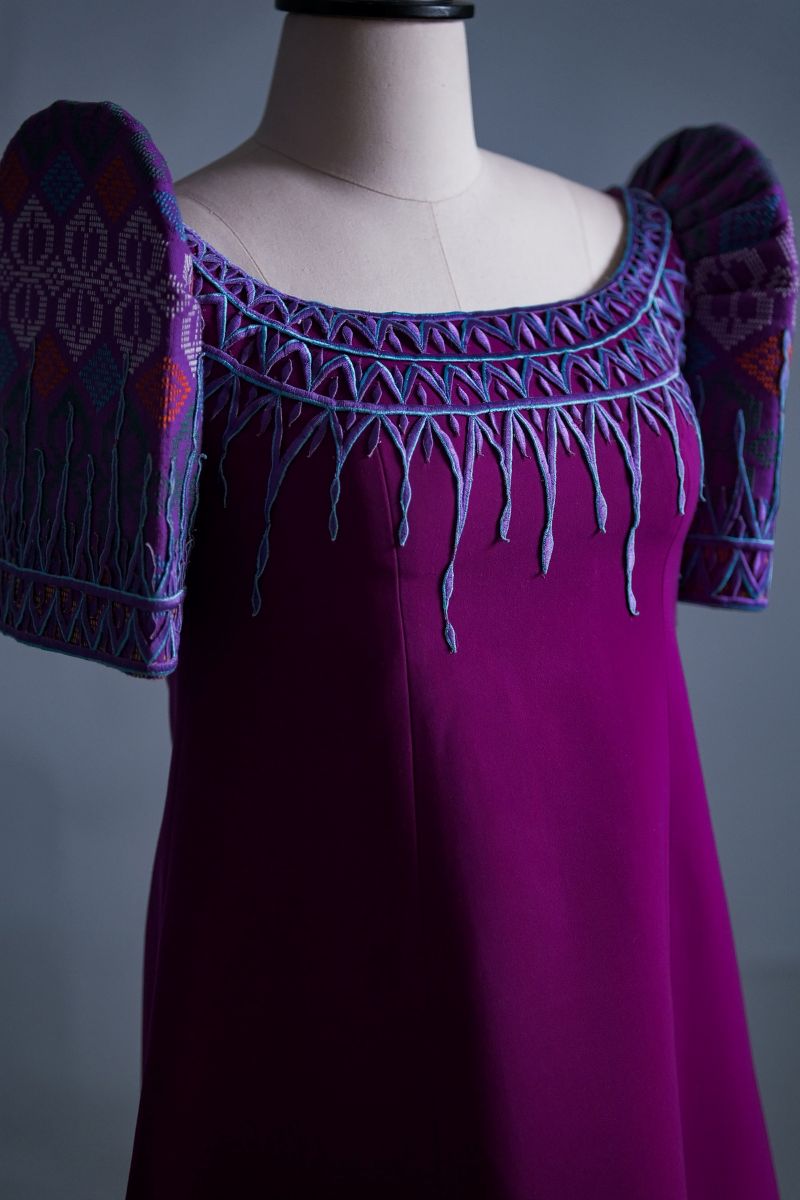
Embroidery details on the First Lady’s ‘terno’ inspired by Yakan weaving
Libiran dressed Mrs. Marcos in a violet terno inspired by the shade of the vanda orchid. The Yakan fabric patterns of triangles, diamonds, chevrons and elongated spikes reflected Yakan structure and rhythm. Horizontal and vertical bands trimmed the butterfly sleeves and neckline.
President Marcos’ barong carried the same visual language, with geometric repetition, banded borders, lattice surfaces and long spikes. The First Couple’s attire showcased Mindanao’s artisanal heritage, carrying a regional Southeast Asian sensibility rather than a Hispanic romantic look.
For Sultan Hassanal Bolkiah, Patis Tesoro followed protocol set by Brunei. Only the Sultan may wear royal yellow, the color of the monarchy. Through the Brunei Embassy, she sent piña swatches for selection. The Sultan’s palace provided a baju Melayu, a long-sleeved tailored silk shirt with stand-up collar, as reference for the silhouette. Tesoro’s workshop added suksok embroidery and used gold accents in the striped patterns.
Cary Santiago made the barong for Thai Prime Minister Anutin Charnvirakul, a piña callado with geometric patterns reflective of Thai aesthetics. “The triangles, lines and squares in the embroidery show the similarity between the two countries,” says Santiago. For the ASEAN Summit in November, he will use Philippine fabrics to interpret the national clothes of Thailand and Britain.
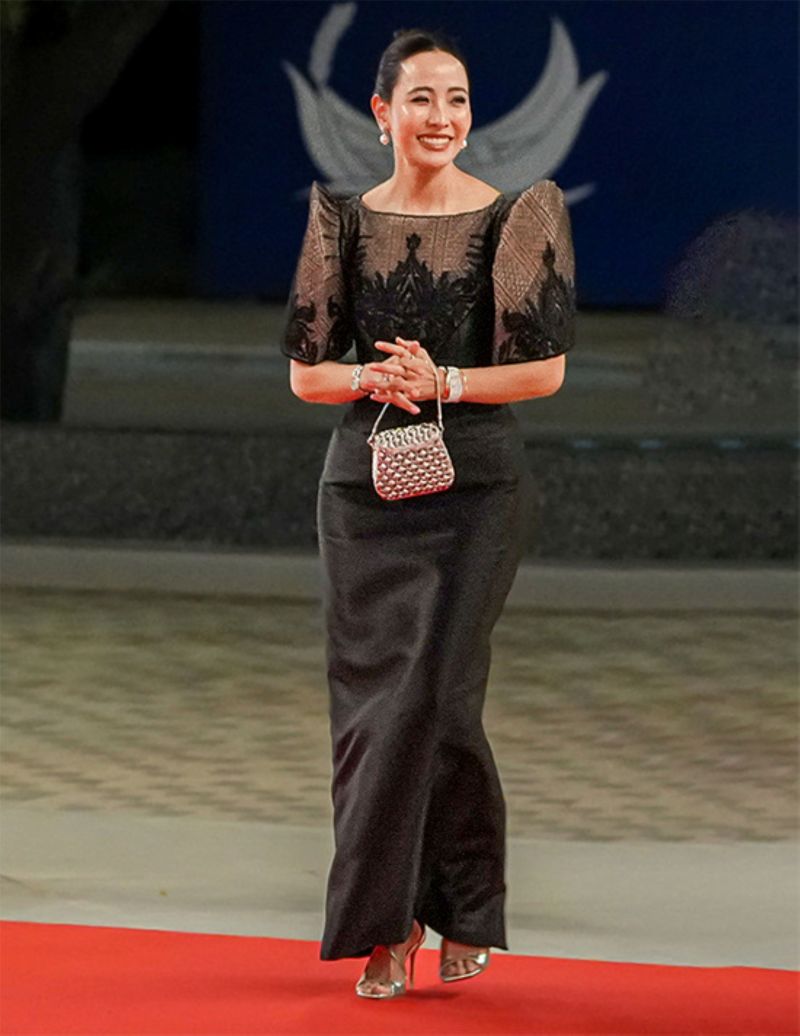
Thananon Niramit in a ‘terno’ by Francis Libiran
However, due to previous commitments, Santiago could not produce a terno for Thananon Charnvirakul (also known as Niramit), the wife of Thailand Prime Minister. To further support the organizers, Libiran offered to make for Ms. Charnvirakul and sent two sketches for her to select. Upon Ms. Charnvirakul’s arrival in Cebu, she fitted the terno, which turned out to be perfect, with just a cinch at the waist. Since Thailand was under a year-long mourning period for Queen Sirikit, who died last October, she had to wear black. Given that local indigenous weaves are mostly bright, Libiran created a terno using dupioni silk. As dramatic touch, the bodice and the butterfly sleeves had black callado with kranu embroidery, a pattern inspired by the lotus, a revered symbol in Thai culture.
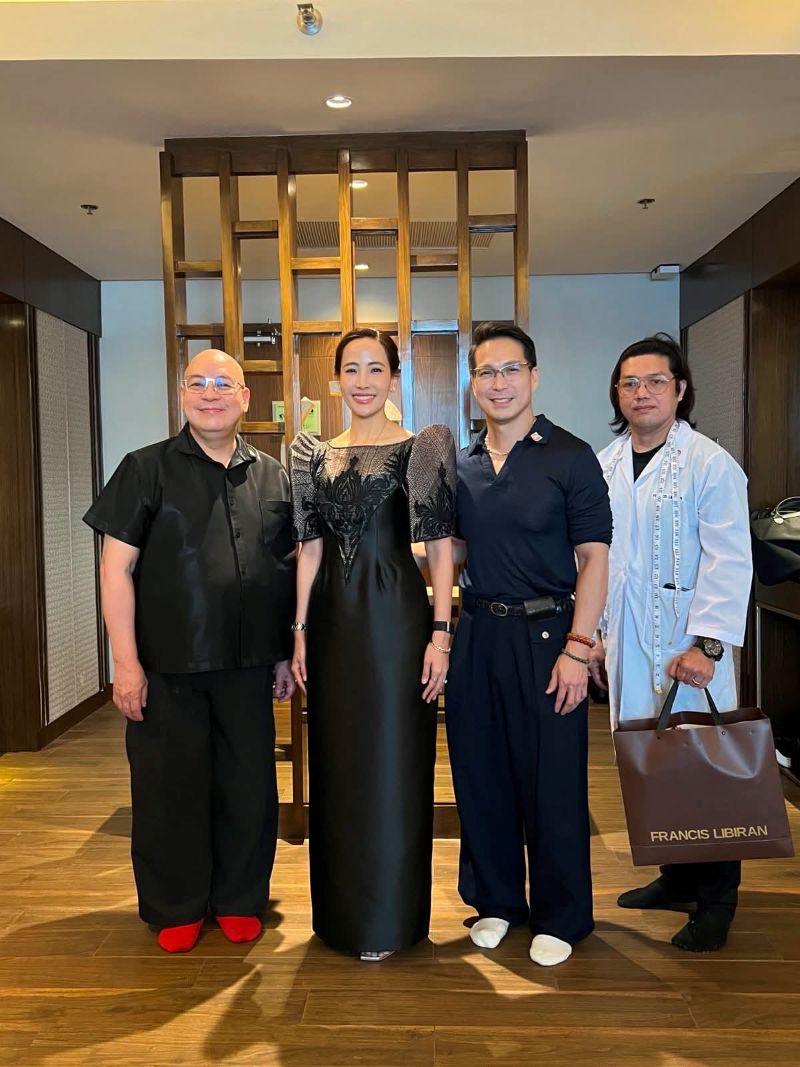
Thananon Niramit with designer Francis Libiran (second from right) and his team
Paul Cabral made the barong for U Min Thein, the Permanent Secretary of Foreign Affairs of Myanmar. The embassy sent a photo of garments worn by the Chins, a major ethnic group in Myanmar, that would be incorporated in the barong. Embroiderers from Cabral’s workshop replicated the Chin tribal patterns in tonal embroidery, including strong symmetry, diamonds, stepped motifs, checkerboard grids, zigzags and narrow vertical bands.
“The intricate geometric motifs evoke indigenous craftsmanship, while the clean, linear arrangement lends a modern, dignified sophistication befitting formal state wear,” says Cabral in a message. “The sleeve detailing further enhances the ethnic narrative, giving character and a distinctly Filipino identity rooted in tradition yet interpreted with contemporary restraint.”
In the recent 48th ASEAN Summit in Cebu, clothes did more than dress a gala. Guided by the First Lady and the Office of the Social Secretary, designers chosen through lottery used creativity and craftsmanship for diplomacy, the fabric, embroidery of the Filipino wielding the soft power of a people.


