
ALMOST two months after the historic Frankfurt Book Fair (Frankfurt Buchmesse or FBM) held last Oct. 15-21 in Frankfurt, Germany, where the Philippines was the Guest of Honour, and almost 129 years after his execution in Bagumbayan on December 30, 1896, I’m still stoked over everything new I learned about our national hero, Jose Rizal.
The FBM and the Philippines’ special role, the result of the hard work over several years by the office of Senator Loren Legarda, the National Book Development Board (NBDB), the National Commission for Culture and the Arts (NCCA), and the Department of Foreign Affairs (DFA), highlighted Rizal, the person whom Guest of Honor (GoH) curator Patrick Flores referred to as the event’s “rock star,” in several events.
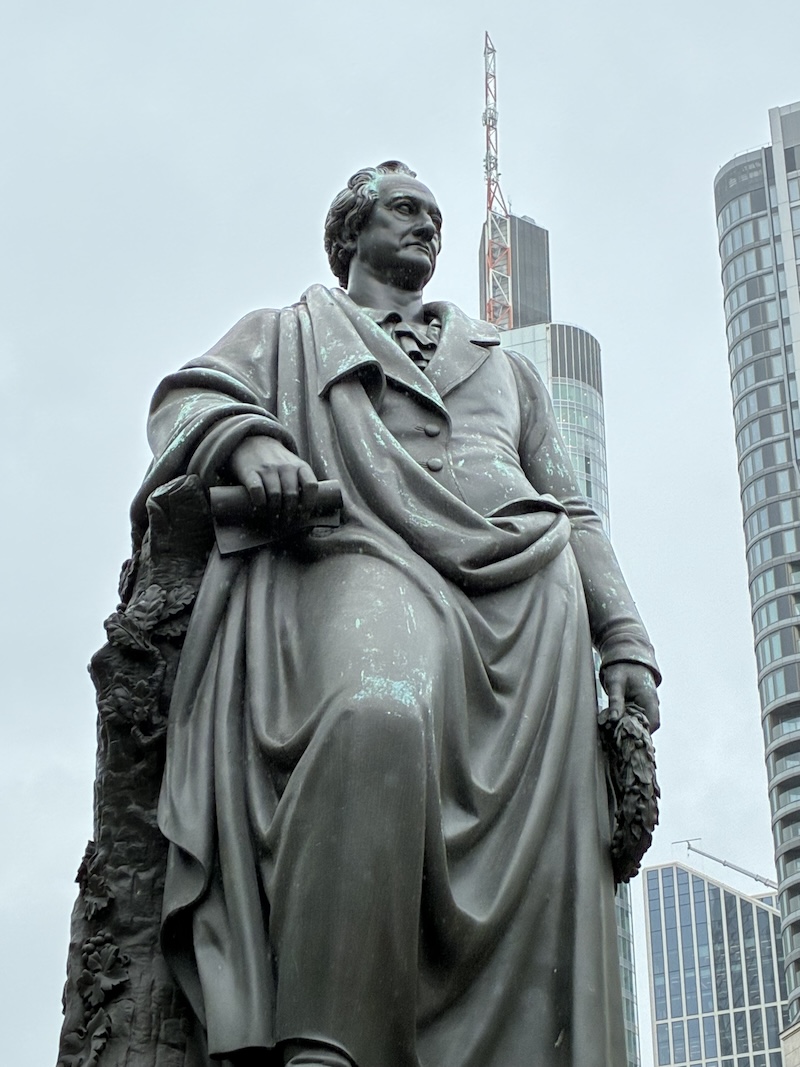
The imposing statue of German writer Johann Wolfgang von Goethe, whom Rizal admired
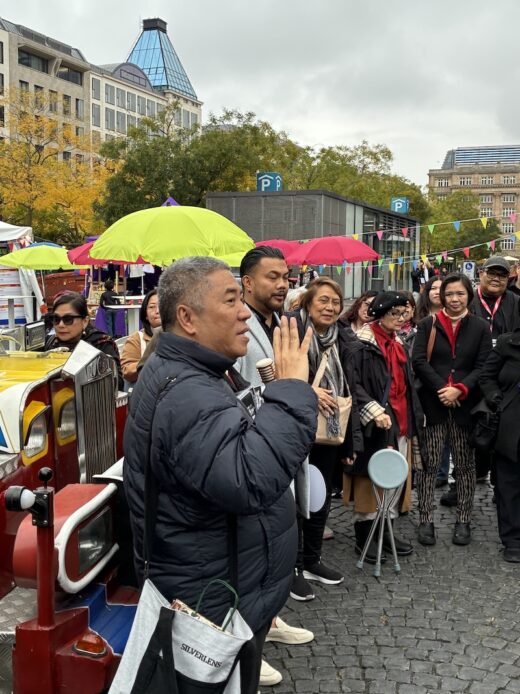
On October 16, Thursday, several Filipinos gathered at the Gutenberg-Denkmal Monument in Rosmarkt, downtown Frankfurt, for “Jose on the Go,” a totally fascinating, over two-hour-long walking tour by historian Ambeth Ocampo. What made it more amazing was that, although our national hero spent less time in Frankfurt than he did in nearby Heidelberg, where traces of his presence are everywhere—this is where he finished the Noli Me Tangere, after all—Ambeth still managed to find places of interest, in his characteristic engaging way. “So he looked at it and said, ‘It’s a very bad monument,’” Ambeth actually quoted Rizal on the aforementioned monument, which features the inventor of the printing press, Johannes Gutenberg. “He said, ‘I don’t think I will waste my time looking at it.’ So from this monument, he walked to the nearby one, which is the monument to German writer Johann Wolfgang von Goethe, who Rizal admired. So we have his sketch of the head of Goethe in his notebooks.”
When Ambeth took us through a square in Frankfurt, with a fountain, he revealed how the city of Heidelberg donated a fountain to Manila in 1961, which they claim Rizal drank from. “It’s in Luneta, and nobody knows about it. If you’re standing facing the monument, it’s on the right. So the Heidelberg fountain is there together with a small bust of Ferdinand Blumentritt, Rizal’s Czech friend. Almost every Filipino knows who Blumentritt is, but when you go to the Czech Republic, even in his birthplace, nobody knows who the hell Blumentritt is!”
Rizal also made frequent references to water, Ambeth noted as we walked along Frankfurt’s River Main. “You will see in his diaries he’s always talking about rivers. So whether he sees the Seine in Paris, the Thames in London, the Neckar in Heidelberg, or even the river here in Frankfurt, his reference is always the Pasig River. It’s always, ‘The Pasig is better.’ So the reference point, even when he’s abroad, is always looking at things through the lens of home. And I think, especially today, when we have so many expatriate Filipinos, it’s actually seeing the world through the eyes and experiences that you bring home. Rizal’s love for his country grew stronger when he was abroad.”
Ambeth’s amazing collage of Rizal’s depictions, from youth to death
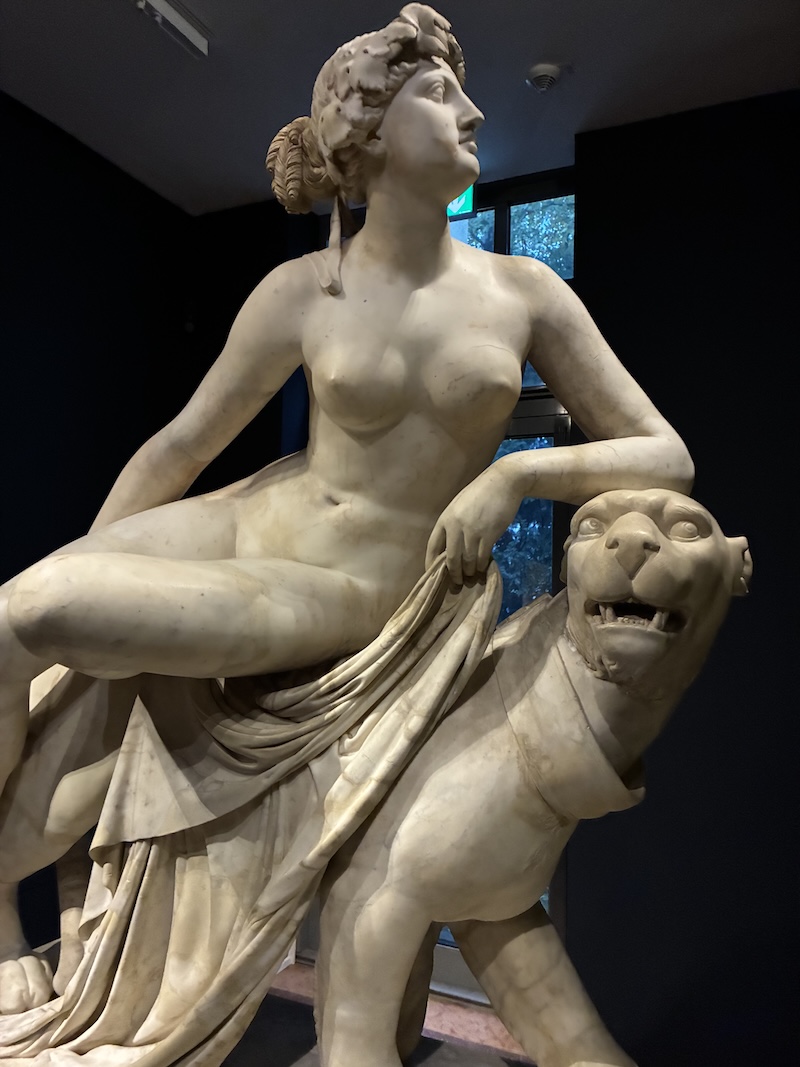
‘Ariadne on the Panther’ by Johann Hienrich von Dannecker at the Liebieghaus Museum
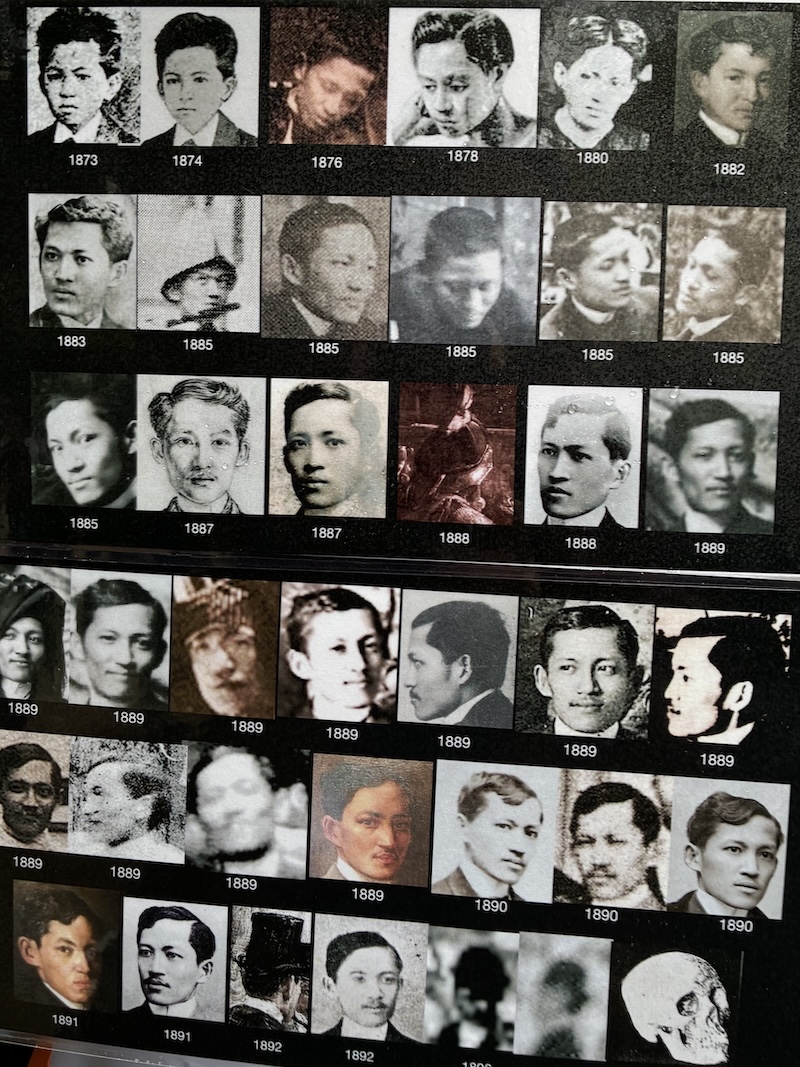
Last stop for the tour was the Liebieghaus Museum on museum row in Frankfurt, where Ambeth showed us an interesting collage he made during the pandemic. “I got all the pictures of Rizal from the time he was 12 years old till the time that he became a skull, and I arranged it chronologically. So, I’m actually looking for someone who will animate it so you will see him growing older.” This stop, however, was expressly to see the gorgeous 19th-century marble sculpture Ariadne on the Panther by Johann Hienrich von Dannecker, which Rizal had seen and admired. “Can you imagine him standing here and looking at this?” Ambeth marveled. “It’s nice that you can actually retrace the hero’s footsteps a century after.”
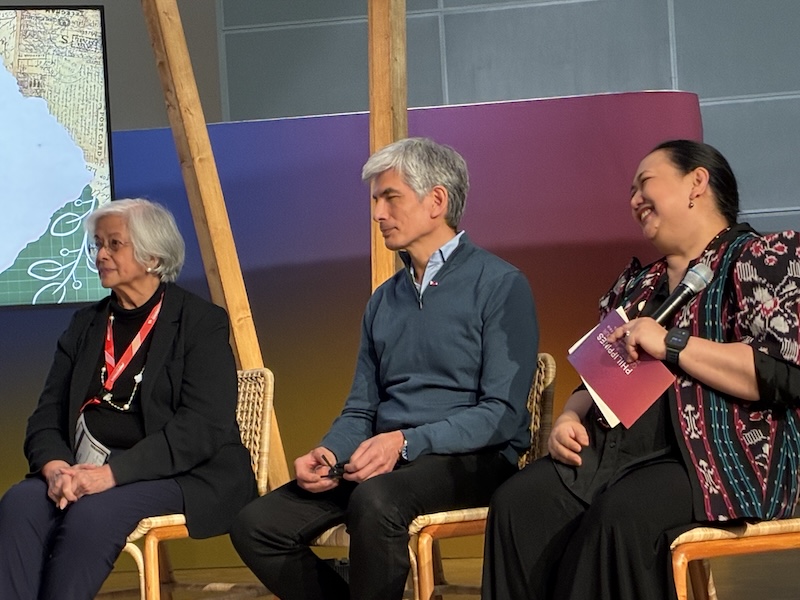
Noelle SyQuia, son Noel SyQuia, and panel moderator Nikki Carsi Cruz
On Oct. 18, Saturday, one of several interesting discussions held at the Philippine Pavilion at the Festhalle Messe was “Rizal and Remembrance,” which featured some of Rizal’s descendants led by Noelle SyQuia, great granddaughter of Rizal’s older sibling Maria. Her son, Noel, spoke about “the privilege that comes with this. There are so any ways in which Rizal is being used or interpreted, and it poses on me a sense of obligation to broaden my knowledge.” He also remembered how, when his grandmother would read Mi Ultimo Adios, “she couldn’t get past the first stanza without breaking down in tears. It was the intensity of emotion and the proximity of it; my grandmother told me how the oil lamp with Mi Ultimo Adios was smuggled out before the execution, and it was my great-great grandfather who carried the oil lamp.”
Noel also recalled how his mother would point out the Luneta monument when he was visiting Manila as a child, telling him they were related to “that guy.” “I would say, ‘Huh?’
Rizal descendant Noel SyQuia recalled how his mother would point out the Luneta monument when he was visiting Manila as a child, telling him they were related to ‘that guy’
“Every country has an author used to torture school children,” he concluded with a laugh. “Shakespeare in the UK, Cervantes in Spain. My concern is how to turn down the torture and ramp up the joy.”
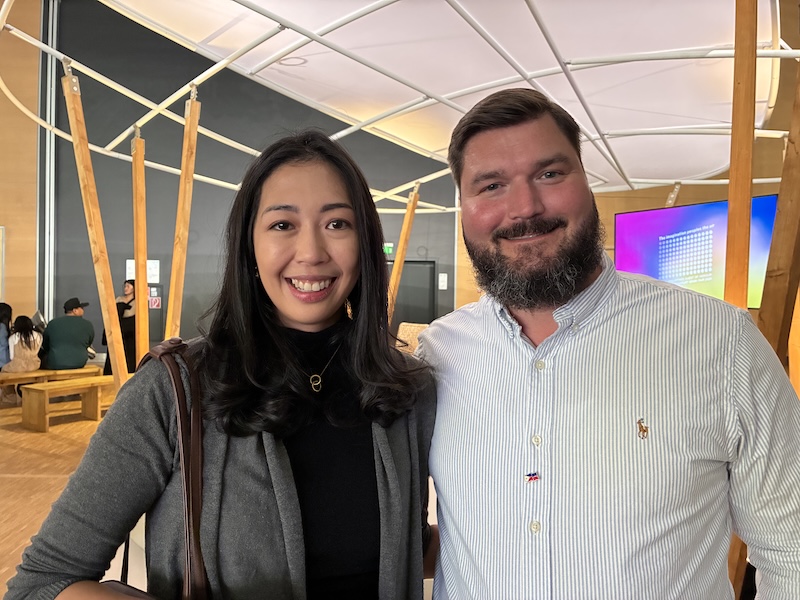
Alexa and Martin Gerstenberger
For Alexandra Marie Lopez Jacinto Gerstenberger, or Alexa, Mi Ultimo Adios was also required memorization, and a stanza had to be recited before the kids were allowed to eat lunch. Alexa, 39, is the great-great-granddaughter of Paciano Rizal, and is now married to Martin Gerstenberger and based in Munich, Germany. Paciano’s daughter was Emiliana Rizal, whose son was Francisco Rizal Lopez II, whose daughter Marlene Lopez Jacinto was Alexa’s mother.
Alex was born in the States, studied grade school and high school in the Philippines, then moved to Hawaii for college in 2007. “For me, it’s not difficult to live by Rizal’s values. I think that’s just something that I admire, because I don’t put it on my shoulders. I try to see it in everyone that I meet, and I try to also be someone like that. I’m not as brave as he was, and I can’t write books like he did, but I can stand for what is right, and speak up in my own way.” Alexa is a user experience researcher and a devoted furparent who does a good job of keeping her historic legacy in perspective. “I think we’re all heroes,” she said with a bright smile.
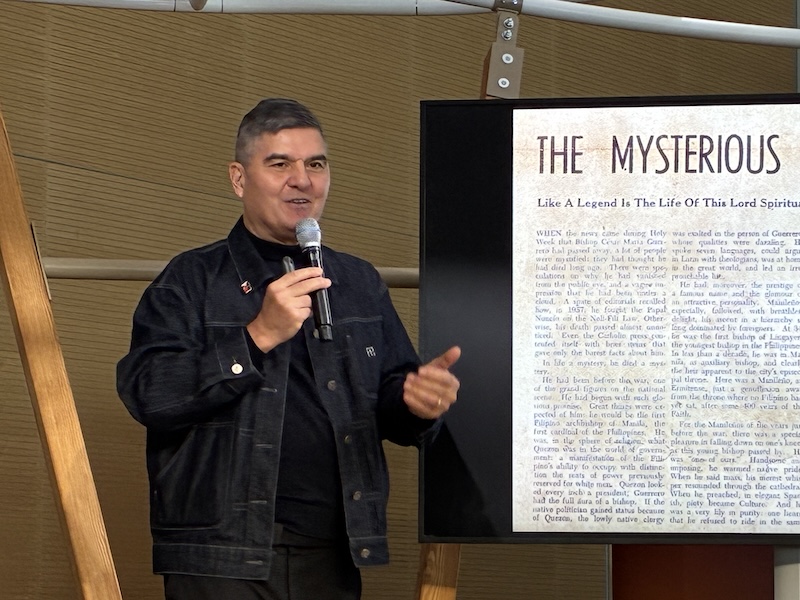
David Guerrero discusses his father’s work.
Also a speaker during the discussion was David Guerrero, the accomplished adman and creative chair of BBDO Guerrero (which is based in Makati, and marking its 27th year), and son of diplomat and author Leon Ma. Guerrero, responsible for the definitive translations of Rizal’s novels Noli Me Tangere and El Filibusterismo in the 1960s. “In fact, two books were presented to President John F. Kennedy on Rizal Day in 1962,” David said, showing a “gratuitous picture” of Jackie Kennedy holding them. Guerrero pere died in 1982, and the family was given back worldwide rights to the books; Guerrero fils had the covers redesigned, and the ads for the new editions won Clio Awards.
David touched on how author and political scientist Benedict Anderson, who studied Rizal, once described his father as an “alcoholic, anti-American author,” after which David sent him an email. Anderson responded, but died in 2015, without ever issuing an apology or making a retraction.
“We always felt reverence and pride in his work, although it was only later on my own volition that I read the books; we never talked about Rizal at home,” he said. “I wasn’t ready to read it, and my father died when I was 21; you don’t want to be in the shadow of your father when you’re young, you need some distance.”
That’s why he is not into defending what his father wrote at all costs, David said. “I don’t want to be that kind of executor or trustee. There’s a responsibility that comes with it, to preserve and protect, but you also have to be open to genuine debate. You want the work to be seen in its context and reserved for the future. It’s daunting now, as people don’t read books.”
Later, David told TheDiarist, “I want to do everything I can to make the translations as accessible and as available as possible, and to ensure their sustainability for the future. So that’s why we have agreements with publishing partners and within the family to make sure that it keeps going.” He’s keeping his day job, though. “Sadly, being a literary trustee is an unpaid part-time role,” he said with a laugh.
There are already different, newer translations, which he welcomes, David said. “I think there’s always room for more. And some of the world’s great books have been re-translated every year. It needs to be continually refreshed for a new generation.”
So what makes his father’s translations the gold standard, though? “I think he focused on readability, and on how to reach a non-Filipino audience. Actually, that’s what he was criticized for, that he made it accessible to people who don’t know the Philippines. In other words, he didn’t throw in too much specialist knowledge and vocabulary, like he might have said ‘native hat’ instead of ‘salakot’ and things like that.
“Now, you can just Google stuff and find out. So yeah, you don’t want to compromise your own culture. Just make it more accessible to others.”


