
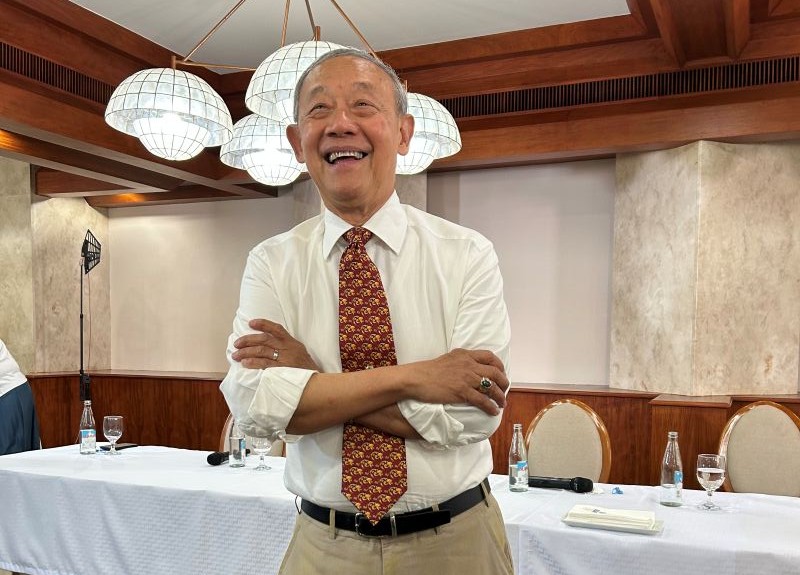
Afterglow: Seasons of the Heart, featuring Jose Mari Chan in concert, goes onstage at PICC July 11, 2026.
Multi-awarded singer-composer Jose Mari Chan is undoubtedly the only concert artist who remains active onstage as an octogenarian. He continues to perform, composes songs and jingles, guests on TV, and even welcomes product endorsements.
Now 81, he is deeply honored to do the concert with guest artists, Afterglow: Seasons of the Heart, titled after his very first single, Afterglow, released in 1967.
“After being a singer-songwriter for more than 60 years, this is a glorious event for me,” Chan told TheDiarist.ph. “I’m deeply honored….
“It’s so nice to be also singing with our young talents. I was wishing them a journey that will be long, gratifying, adventurous, romantic, and fulfilling. You know, the Filipino talent will never disappear on this planet.
“The Filipinos are really known for their love and talent for music. I’m very proud to see the next generation coming out and I wish them a great, great future. Thank you very much for this honor that you’re giving me.”
The concert will take audiences back to 1967, when Chan released his first recording of Afterglow. That was followed by Deep in My Heart (1968), Can We Just Stop and Talk A While (1969), and Refrain (1974).
Producer QR Events (Yuri and Beth Mercado) has prepared a set list of Chan’s classic love songs, timeless ballads, memorable OPM (Original Pilipino Music) tunes, and his most requested hits to delight music lovers of all ages.
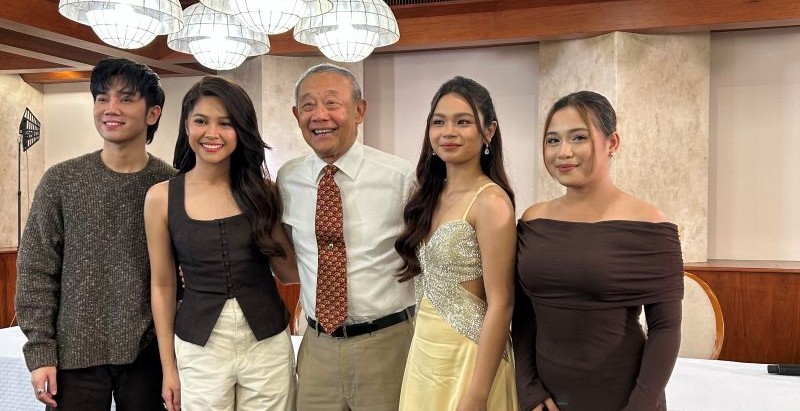
Chan with emerging artists in ‘Afterglow’: JM Dela Cerna, Marielle Montellano, Kolette Madelo, and Lyka Estrella
Joining Chan onstage are young talents JM De la Cerna and Marielle Montelibano, both Tawag ng Tanghalan Grand Duets champions and Your Face Sounds Familiar grand winners, Pinoy Big Brother Gen 11 third placer Kolette Madelo, and Tawag ng Tanghalan champion Lyka Estrella. Concert director is Carlo Jan Landrito.
“We wanted this concert to be something more of presenting Mr. Jose Mari Chan not just being a Christmas icon,” said Landrito. “But bringing him back to where it really matters, being an OPM icon.”
To be surrounded by all the young talents reminds Chan of his song, When Love is Young, which was part of the album Deep in My Heart. “It’s a lovely song. I don’t mind saying so. You know, when I talk about my songs, they’re like my children. I’m proud of each and every one of them. Even if they did not achieve so much in life, I still love them.
“The words go, ‘When love is young and life is new, you find that all the world belongs to you. You grow in love and richer with each moment, though most of your dreams…’
“The song When Love Is Young wasn’t released popularly because it was overshadowed by Deep In My Heart. But the melody of When Love Is Young is very special to me. When I composed that, it was in the middle of the night. I was alone in the house and the melody was inspired by the music of Henry Mancini and Michel Legrand.”
Chan reminded the young artists, “God has given you the talent, your voice, your expression, so use it to the best of your ability. That’s God’s gift, so don’t waste it. Sing your heart out.”
Through the decades, Chan has written many songs. “A few have been lost,” he said. “Some remain unrecorded, waiting to be given wings. Some dozens never even left the scratch paper I wrote them on. A great number of them were recorded but were never aired on radio.”
The natural journey of Chan’s song starts from his heart and soul, then down to paper, and on to a record, then to the listener, after which it runs its own life’s course.
“A song then becomes a part of our memories, and may either be kept away in the corner of our minds until someone decides to revive it, or it fades into oblivion,” he said.
‘A song then becomes a part of our memories, and may either be kept away in the corner of our minds until someone decides to revive it, or it fades into oblivion’
In 2000, Chan released the book Words and Music, which chronicled the birth of some of his most memorable tunes. “Music is God’s loving gift to me,” Chan said. “Songwriting is my gift back to God.”
His debut single, Afterglow, was penned in 1967, in his senior year in college at Ateneo de Manila University. He became the host of 9 Teeners, an early evening TV musical variety show on Channel 9 (ABS-CBN). The show was inspired by US shows American Bandstand, Hullaballoo, and Shindig.
That year, Chan and his then girlfriend (and future wife) Mary Ann had a brief lover’s quarrel. He sang Afterglow on the radio program whenever he was on. Surprisingly, the song immediately gained acceptance and Chan was offered his first recording contract late in 1967.
Afterglow was his first recording; Deep In My Heart was the first song he composed in 1964. The very first to hear Deep In My Heart was Chan’s Lola Mediong, who was visiting from Iloilo. “It was done in less than 15 minutes,” Chan said. “The song made its debut that same night at a party in Bel-Air, Makati, where our combo played.”
When Dyna Records produced Chan’s first long playing album in 1968, Deep In My Heart was the title track. The song soared to no. 1 in the charts throughout the country.
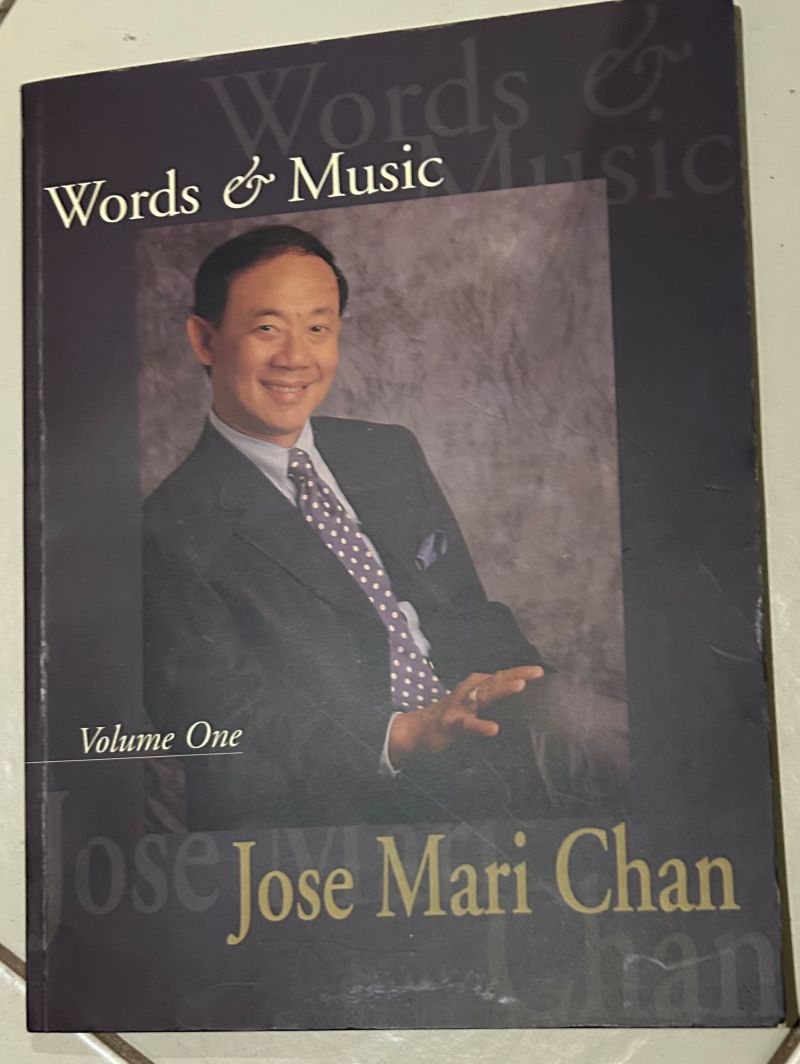
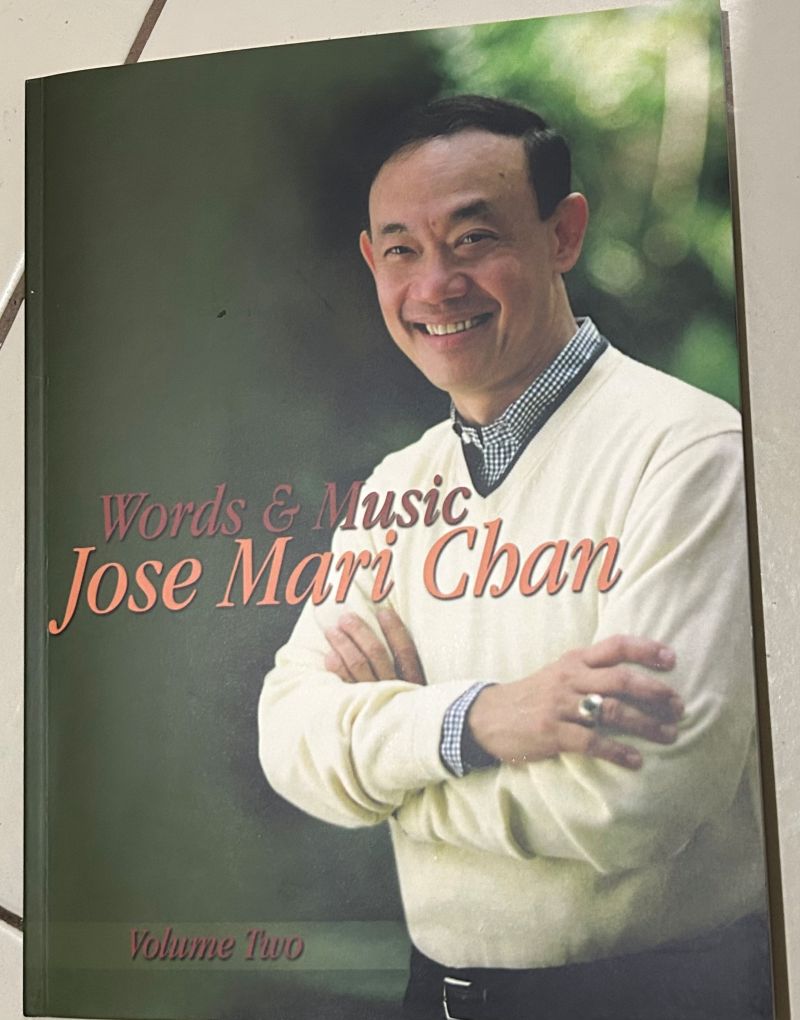
Two volumes of Chan’s book ‘Words & Music’ from 2000 and 2003
In the first volume of Words and Music were the stories behind Refrain, Can We Just Stop and Talk A While, Mr. Songwriter, Afraid for Love To Fade, Big Beautiful Country, Minsan Pa, Constant Change, Tell Me Your Name, and Sing Me Your Song Again, Daddy.
Three years later, in 2003, Chan released another book, Words and Music, Volume 2, which contained stories of more songs that Chan wrote: Beautiful Girl, Can We Start Over Again, Christmas In Our Hearts, Hahanapin Ko, Love at 30,000 Feet, No Rewind, No Replay, and Please Be Careful With My Heart.
There was an international song festival in Japan, the Yamaha World Popular Song Festival. “In the ’70s, I remember Vic del Rosario called me up and said, ‘Joe, they’re looking for a Filipino song,’” recalled Chan. “Can you submit a song? Just to let you know, I also asked four or five other composers to submit a song. So there’s no guarantee that your song will be picked by the Japanese.’
“So I came up with that song Can We Just Stop and Talk A While, and I waited. After several weeks, Vic del Rosario called and said, ‘Good news, your song was picked by the Japanese.’ So, I performed that song in Tokyo, at the giant Nippon Budokan Hall. I performed with about 46 other contestants from different countries. Wow!
“It was a wonderful moment in my life to sing in Japan, international stage and with other singers. That was an unforgettable moment for me. The song didn’t win, but that was immaterial for me. The important thing is, I was able to express my words and music to a wide Japanese audience.”
In the Philippines, Can We Just Stop and Talk A While became a hit. “That was a turning point in my career, and I’ll never forget that. That was my first international appearance. BBC on Channel 9 produced a series of television specials spotlighting my songs.”
After Japan, Chan had a concert at Carnegie Hall in New York. “I was very proud to see a packed audience, Carnegie Hall, of course, mostly Filipinos,” Chan said. “But there were also foreigners who were curious to hear my songs.”
Making the song timeless, the composition has to be melodious and catchy. “So I remember writing Mamang Sorbetero, recorded by Celeste Legaspi,” Chan said. “So that even children can sing it. That became the theme for a Dolphy comedy.”
That was originally an English song, Mr. Songwriter, which had a catchy melody. Gryk Ortaleza wrote the Tagalog lyrics, but the original had these lyrics: Mr. Songwriter/write me a song./ Make it a short and simple melody./ With words that will carry our message across, our message of peace to every country./Sing all your people all over the world./Sing out and be heard all over the world./Lay down your arms where we all belong to one another/ come and sing a song.
Chan’s ‘Mamang Sorbetero,’ recorded by Celeste Legaspi, was originally an English song, ‘Mr. Songwriter,’ until Gryk Ortaleza wrote the Tagalog lyrics
There are many songs of Chan that were recorded in the US. The CD (compact disc) is called The Manhattan Connection (2011). “I met Janis Siegel in a concert and I was introduced as a singer-songwriter, so she was curious,” Chan said. “She said, ‘I’d like to hear some of your songs.’ So I sent her several CDs. Unexpectedly, a few months later, she contacted me and said, ‘I like some of your songs and I think I can get American artists to sing them.’ Oh, wow. So, to make a long story short, she produced an album called The Manhattan Connection: The Songs of Jose Mari Chan.”
To date, Chan receives royalties of his songs from companies like Vicor, Universal Records, Dyna Records, and Alpha. “Unfortunately, nobody buys CDs anymore, so record sales are zero. They download it, so it’s hard to quantify the sales. I feel bad for the young singer-songwriters in our country. Where can they get their income? How can they support their families? They have to look for other jobs. How frustrating.”
For as long as Chan has an audience, he will continue to perform and make music. Last year, his musical, Going Home To Christmas, featuring most of his songs, was staged by Repertory Philippines in November.
“I’m happy to sing for the audience,” Chan said. “If God has given me that gift, I have to share it with the world. I have to write songs to express my love for music.” That’s why Chan has never thought about throwing in the towel and disappearing from the music scene. “My sons, they also compose and they sing, but they don’t have any opportunities,” he added.
During the administration of President Cory Aquino, Chan was invited to run for the Senate. “President Cory asked me if I could run for the Senate, but I had to respectfully decline because I said, I’m helping my dad in the business, so he needs me,” Chan disclosed.
“My father always told me that music can only be a hobby and cannot support a family. He attended my concerts at Carnegie Hall in New York. I didn’t know he was in the audience. At the end of the show, he went backstage and congratulated me for packing Carnegie Hall. His advice for me, don’t retire on your way down. You made it to the top, now you can retire. I told him music is only a hobby for me. You don’t retire from a hobby.”
Chan loves his children (Liza and TJ, Joe and Anna, Michael Philip, Franco, and Angelica) and grandchildren. “I love to spend quality time with them. In life, there is no rewind or replay. So spend as much time as you can with your children.”
He has been married for 56 years to Mary Ann Ansaldo. “We have developed a strong bond of friendship,” Chan said. “We trust each other. Trust is very important in any relationship. We share experiences together. We travel together. We do simple things together. We grow together.”
After they tied the knot, they went to Osaka, Japan, where Ansaldo had done missionary work before they got married. “We stayed in Osaka and worked as a missionary couple,” he said. “We taught English to the Japanese students. My experience there made me composed the melody, Cherry Blossoms, which later became the theme of Lino Brocka’s film with Hilda Koronel in 1972.”
Chan is still managing his sugar business, his “bread and butter” when he’s not pre-occupied with any concert. “I still enjoy my work,” he said. “I go to Negros if needed.”
He doesn’t eat pork or beef anymore. “I just eat fish, vegetables, and fruits, and exercise every morning, doing brisk walking,” Chan said. “Thank God, I remain healthy.” He recently went to the US for the graduation of his granddaughter.
For the Afterglow concert on July 11 at the PICC Plenary Hall, Chan will sing all 12 songs in his set list. “I had a cold about three days ago, so I got worried because I could not sustain my voice. I had to lower the key. But the performance has to go on.”
For tickets, go to https://premier.ticketworld.com.ph/Shows/Show.aspx


