
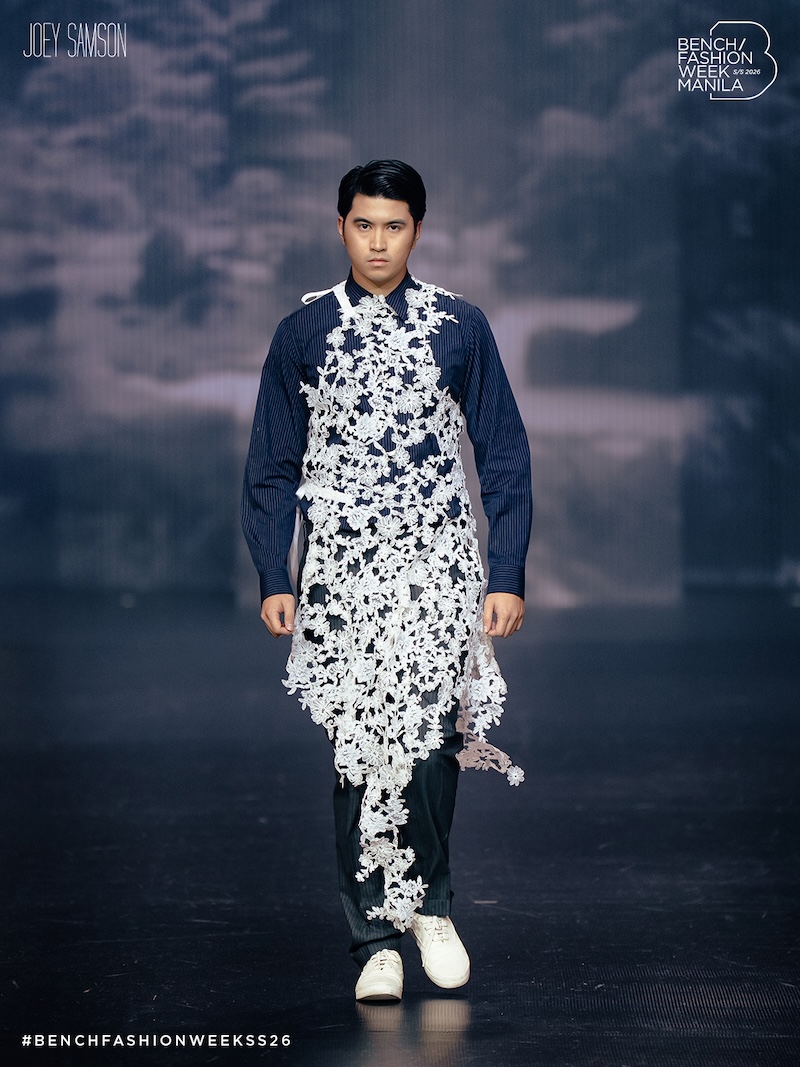
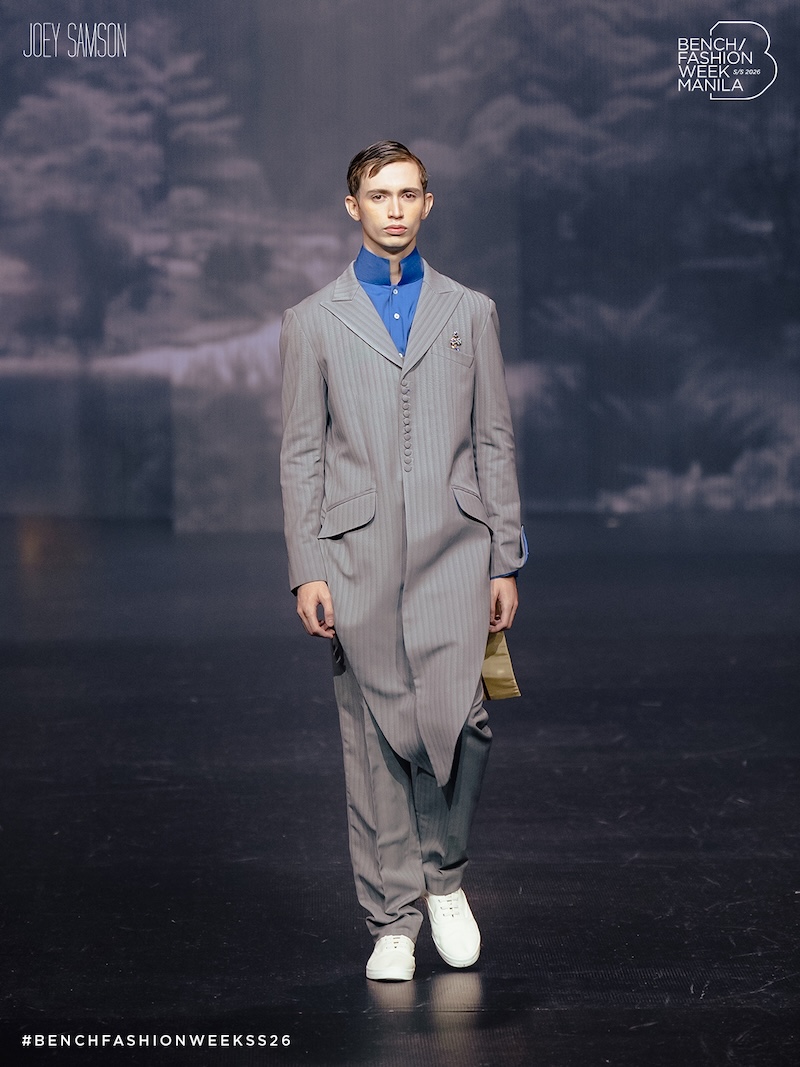
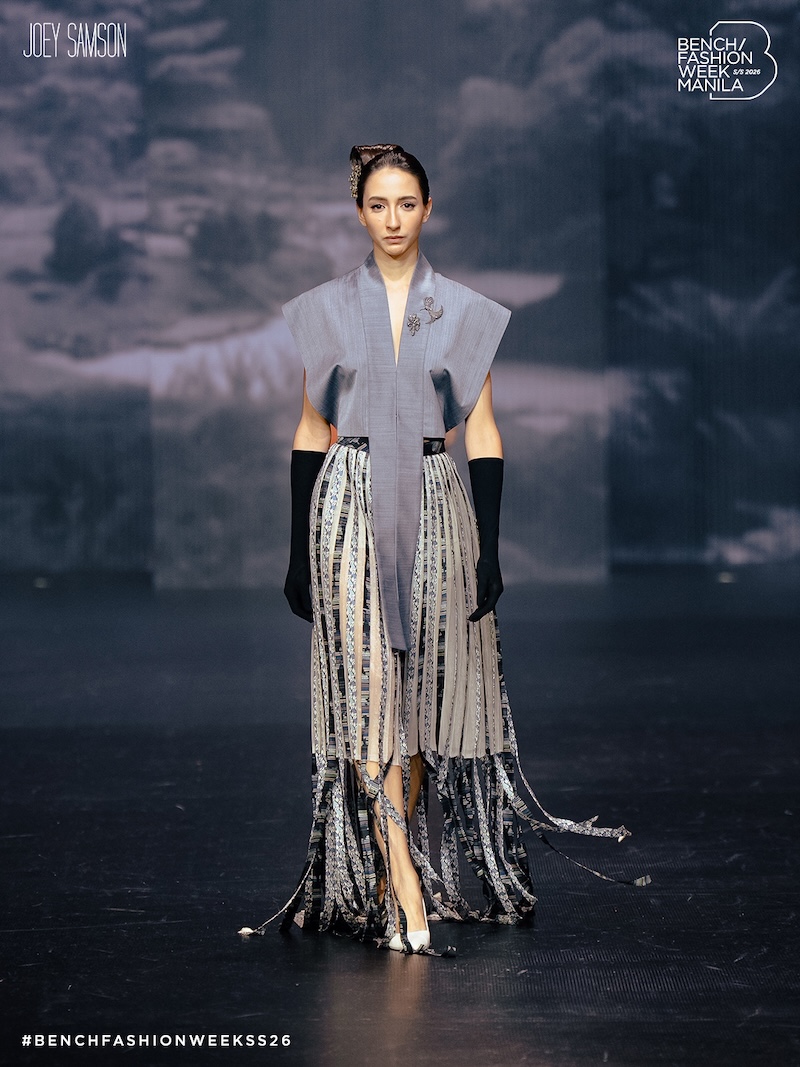
Joey Samson classic pinstripe outfit with an apron of corded lace
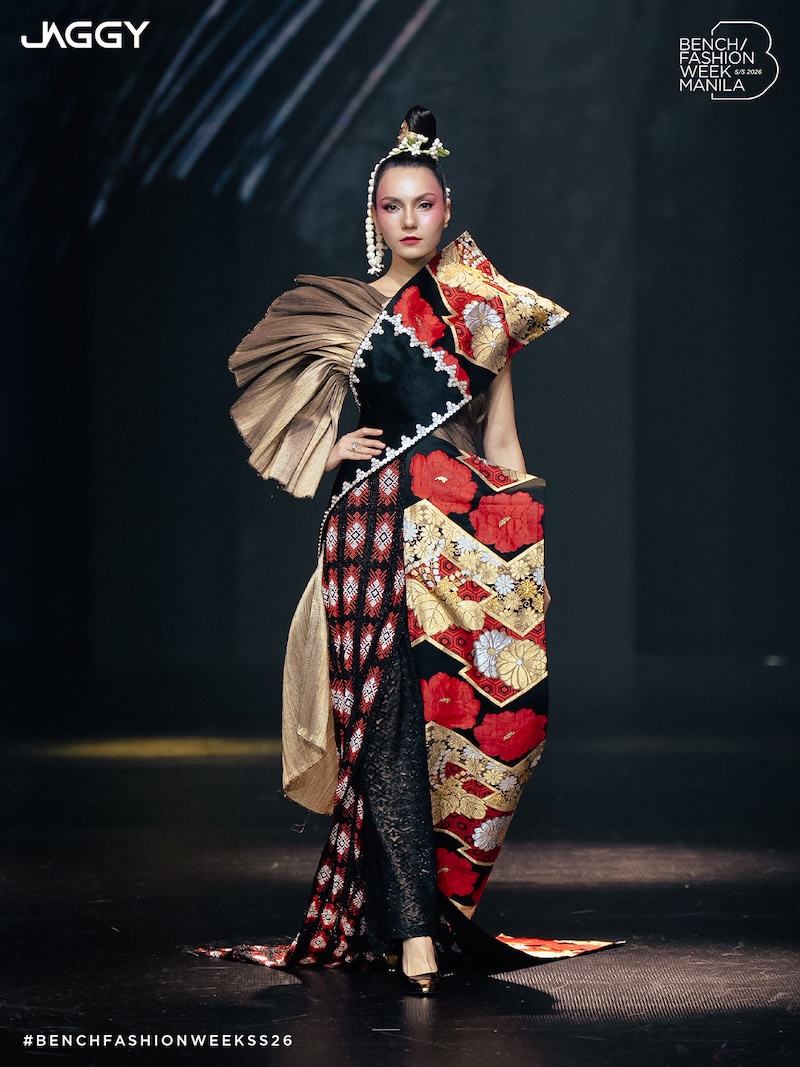
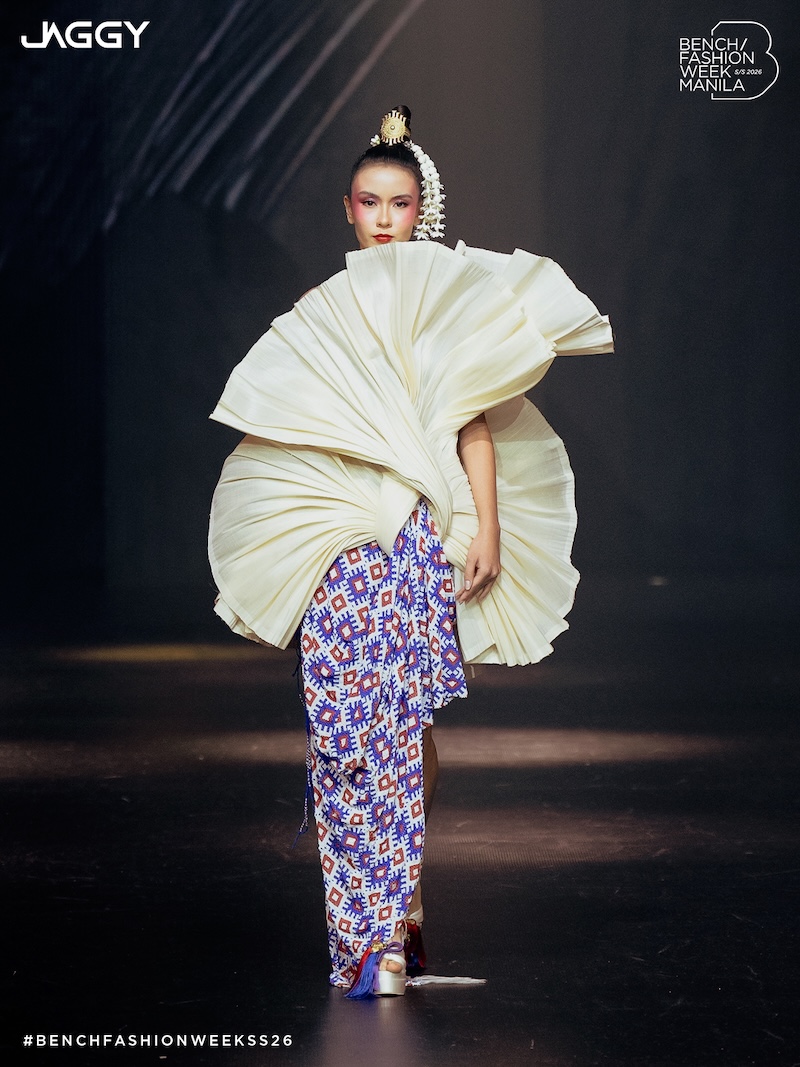
Jaggy Glarino beaded t’boli skirt with Japanese obi and abaca
In a dialogue of heritage and innovation, BENCH Fashion Week 2026 transformed the runway into a bridge between nations, commemorating the 70th anniversary of Philippine-Japan diplomatic relations in Threads of Dreams, held April 18, 2026 at the SPACE, One Ayala, Makati.
In a collaboration with the Embassy of Japan, the Japan Foundation, and BENCH, designers Rhett Eala, Joey Samson, and Jaggy Glarino dismantled and reconstructed the sartorial codes of the Filipino and the Japanese cultures.
The intricate solihiya weave turned into a rigid, samurai-inspired armor, harked back to the 1980s Japanese layered silhouettes using the delicate medium of piña, and re-engineered the classic tailored jacket into hybrid forms finished with trailing kimono drapes. This collision of traditions proved that when Filipino and Japanese aesthetics merge, the result is nothing short of a new, high-fashion language.
-

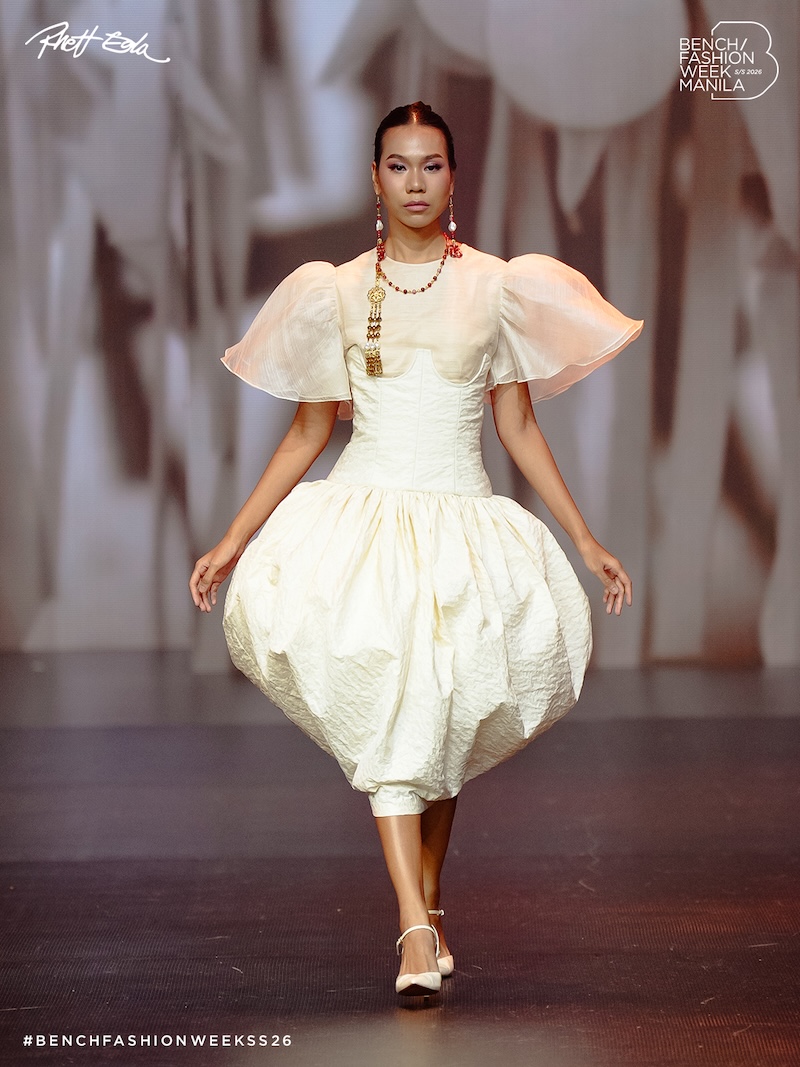
- Rhett Eala cotton organdy bulbous dress
-
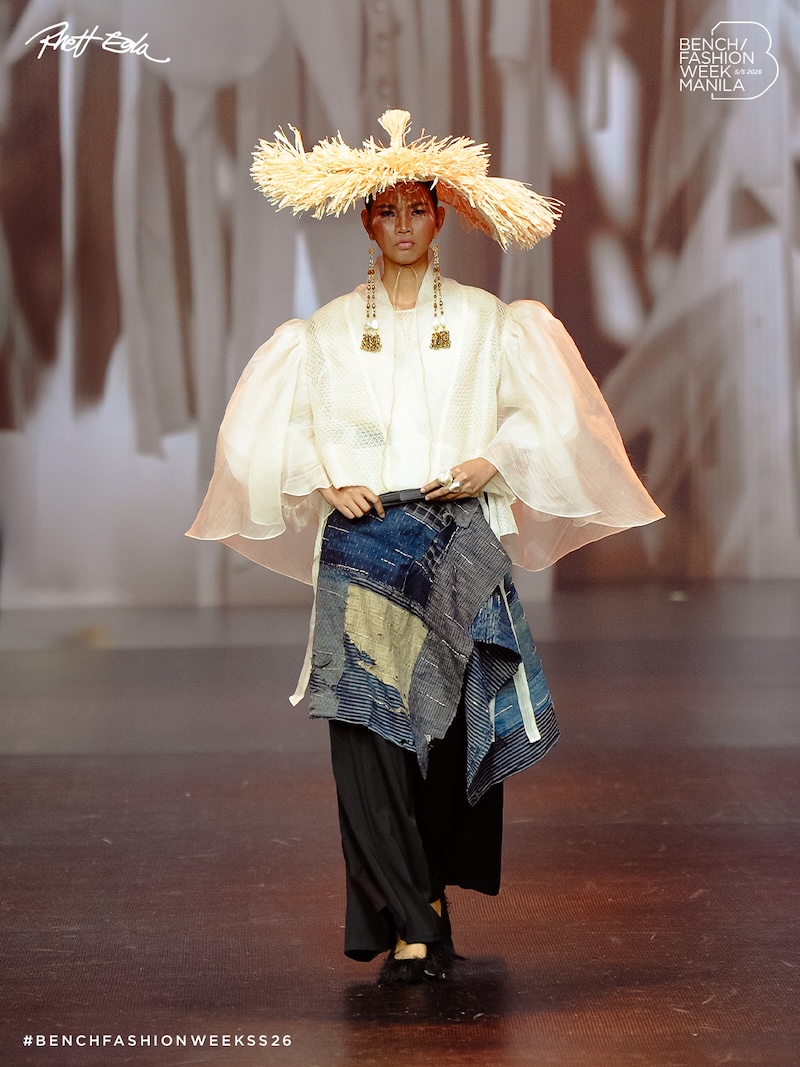
- Rhett Eala camisa with sashiko tapis and Japanese farmer’s hat
-
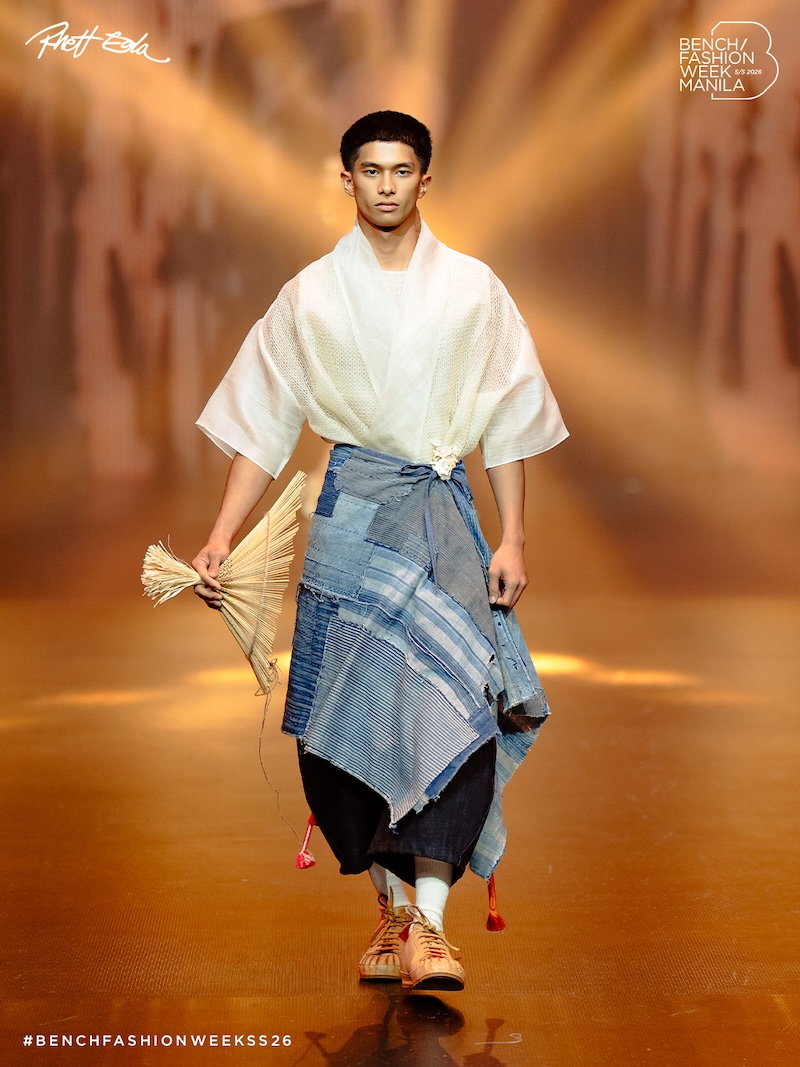
- Rhett Eala men’s kimono with sashiko tapis
Known for his modern classics, Rhett Eala pushed the envelope by exploring sculptural and oversized silhouettes and Japanese crafts on fabric. He drew on memories of Japan and on his mother Roceli Valencia’s collection of pottery and origami. The result was a series of mini dresses with skirts that curve like jars or lanterns. Similarly, a corset with a peplum flared into a mushroom shape over a sheer mesh dress, a nod to Japan’s reverence for nature.
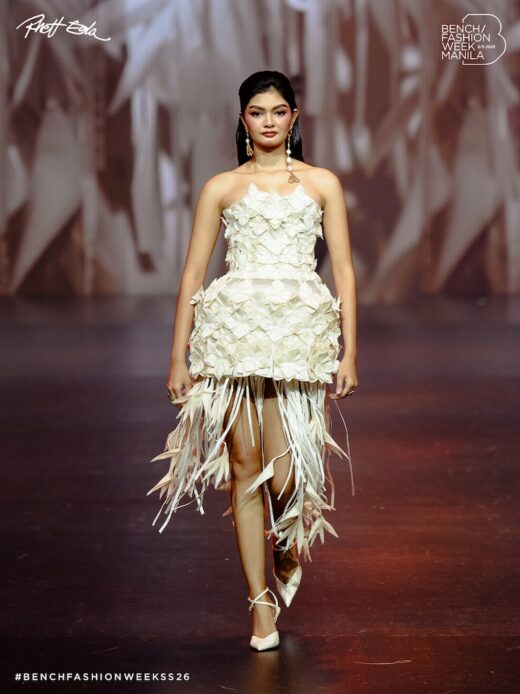
Their bodices or cropped tops were his take on origami and kirigami, the Japanese techniques of folding paper and cut-outs of leaves and flowers. Paper cut flowers and leaves moved as the models walked.
A black men’s kimono was paired with white shirt and subtle cutouts that resembled folded paper. A strapless dress carried repeating origami patterns with kirigami cutouts evoking the birds of paradise.
The tapis or overskirts, in patchwork denim, were made from century-old Japanese fabrics. The technique is similar to sashiko, where layers of worn cloth are reinforced by hand stitching to create something durable.
Among the accessories was a traditional straw farmer’s hat or sugegasa, its wide conical brim adding a sculptural finish and the fringes adding texture.
Eala used piña and Philippine hand embroidery, at times echoing Japanese needlework, to give the collection a tactile richness.
The silhouettes moved between the masculine and the feminine. A patchwork overskirt was worn with loose kimono top for men, while for women, it sat over a piña camisa (blouse) with voluminous angel sleeves that recalled the 19th century.
He favors Japanese cotton organdy for its crisp and paper-like quality. It was used to shape a white dress with bulbous skirt.
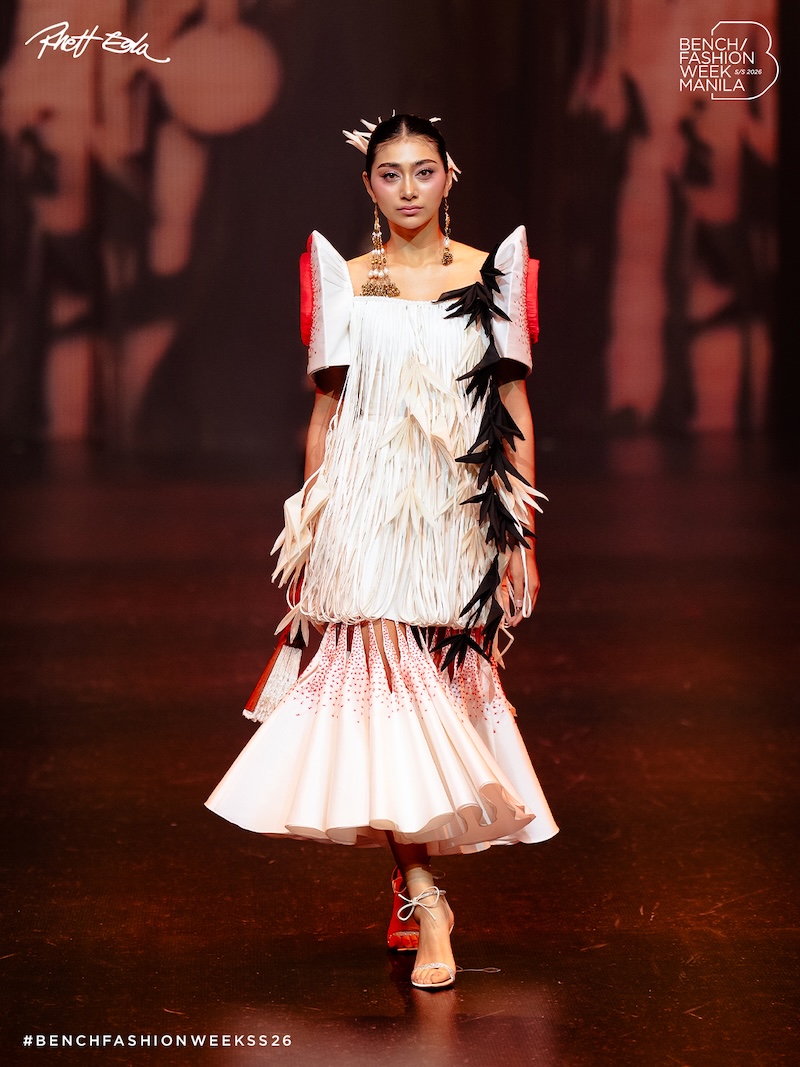
Eala reworked the terno through a Japanese lens, adding origami-inspired fringe to the bodice and setting it against a godet skirt that opened into soft, flared panels. The red sun, a recurring detail from past collections, returned on the terno sleeves, a reference to the Japanese flag. The look brought the Filipino form into dialogue with a more experimental structure.
-
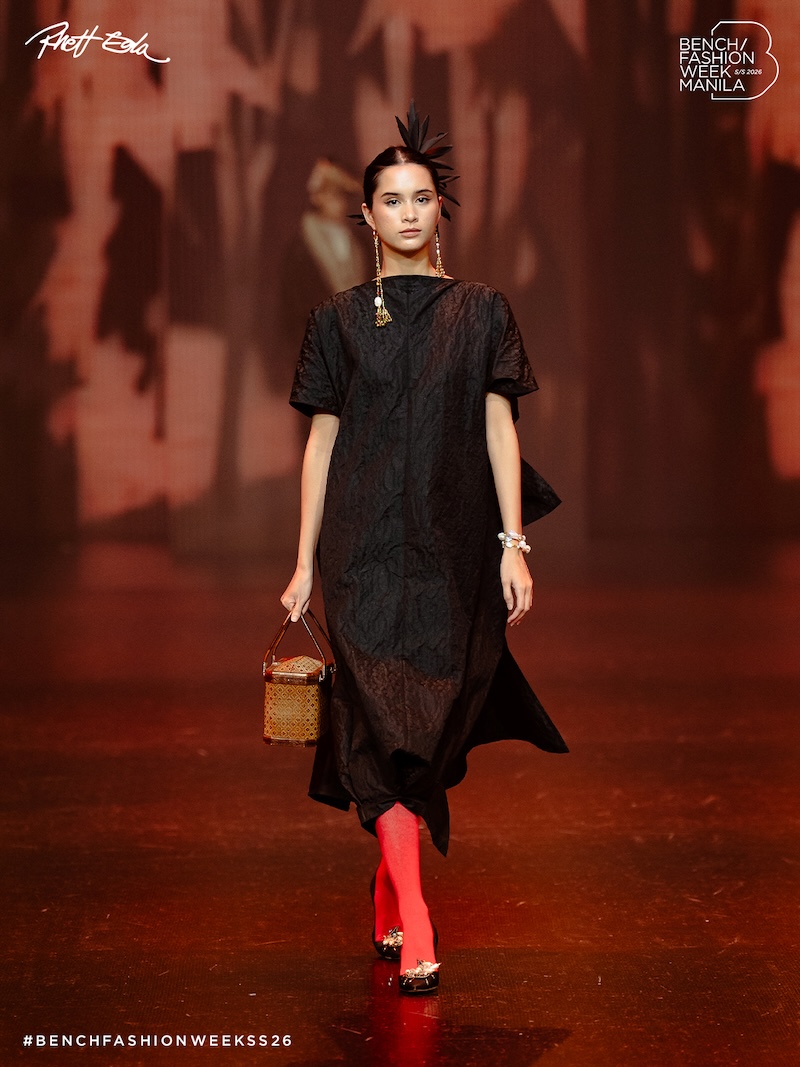
- Rhett Eala’s Ode to Balenciaga’s sack dress with an obi behind
-
- Rhett Eala’s Balenciaga-inspired balloon dress
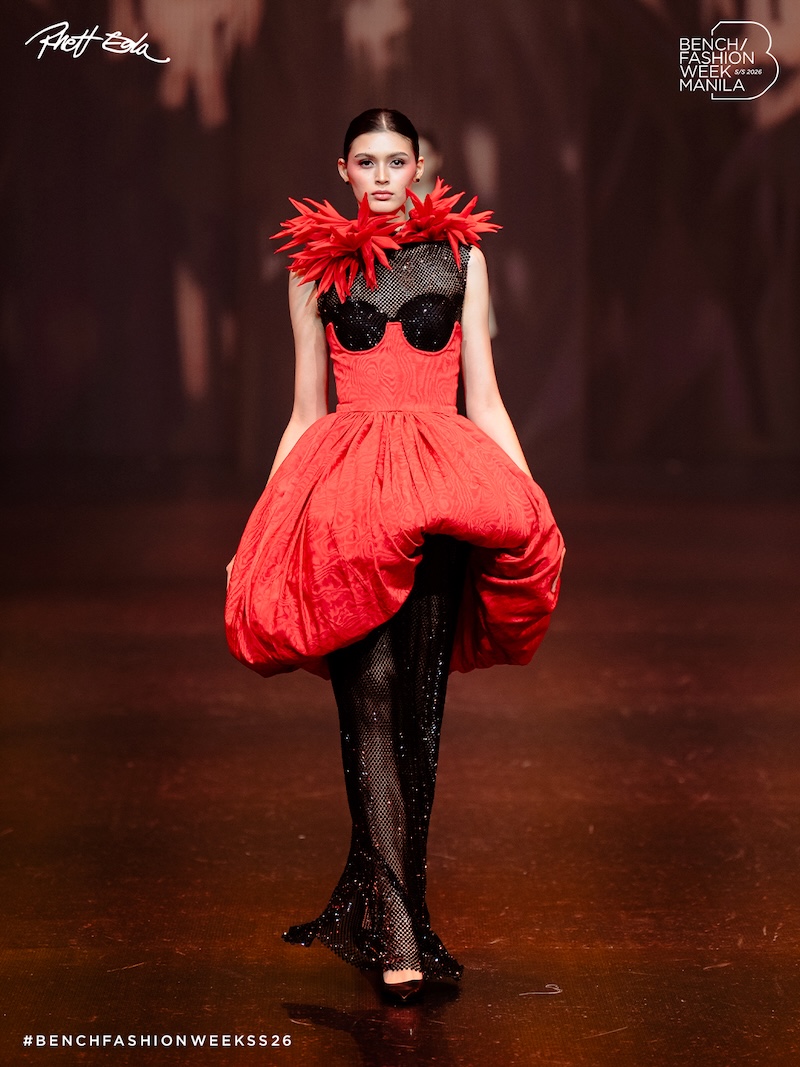
There were also nods to Cristóbal Balenciaga. A black sack dress, an obi at the back, recalled the Spanish couturier’s volume and restraint. Draped balloon capes in Japanese fabric were cut to produce a silhouette defined by shape rather than fit. The fabric was engineered to stand away from the body, forming rounded, inflated contours that held without internal support.
The balloon silhouette was more evident in the bubble dress worn over a fitted black underlayer. The look captured the tension between sculptural shape and a sleek base, typical of Balenciaga.
-
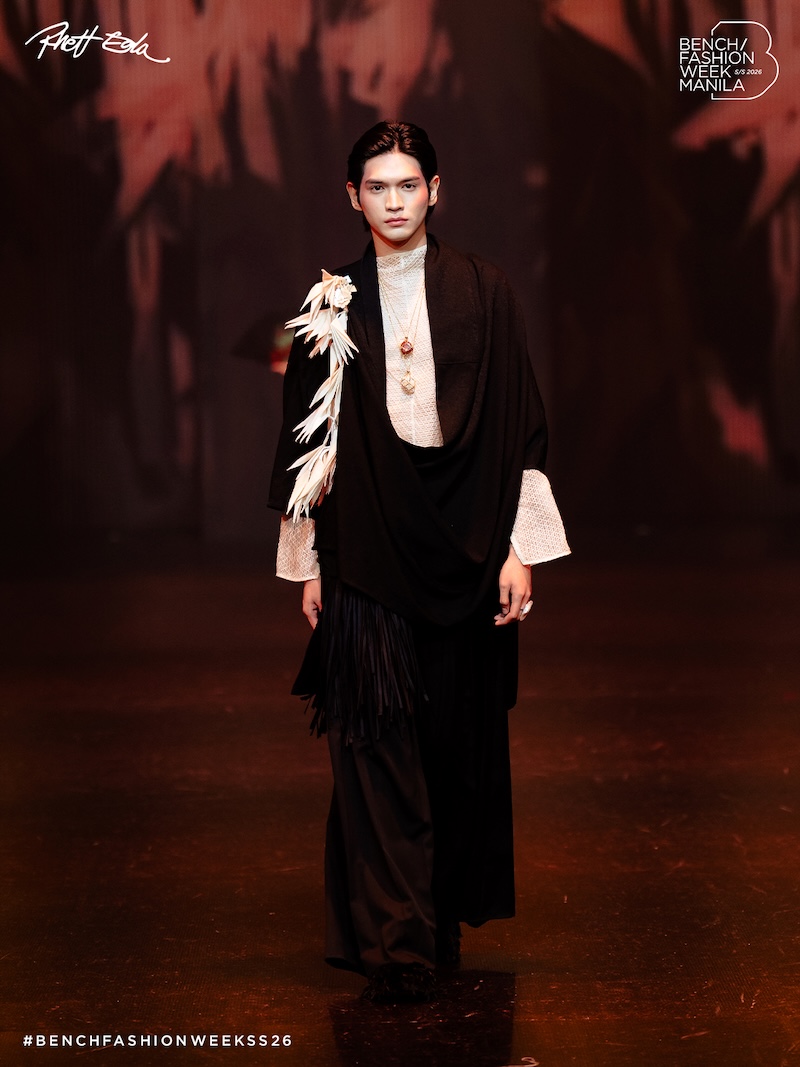
- Rhett Eala’s barong shirt, unstructured jacket, its defined shoulders, and streamlined, restrained lines reflecting the Tokyo avant-garde school of design
-
- Rhett Eala terno with sleeves inspired by Japan flag, fringed loops on the bodice, and godet skirt
Eala also referenced Japanese avant-garde design. In menswear, the focus shifted away from fit toward looseness and space between the body and the garment. A black suit hung off the frame instead of following it, creating a detached, fluid silhouette. It contrasted with trailing bird-of-paradise cut-outs that followed the body’s movement, adding motion and lightness to the look.
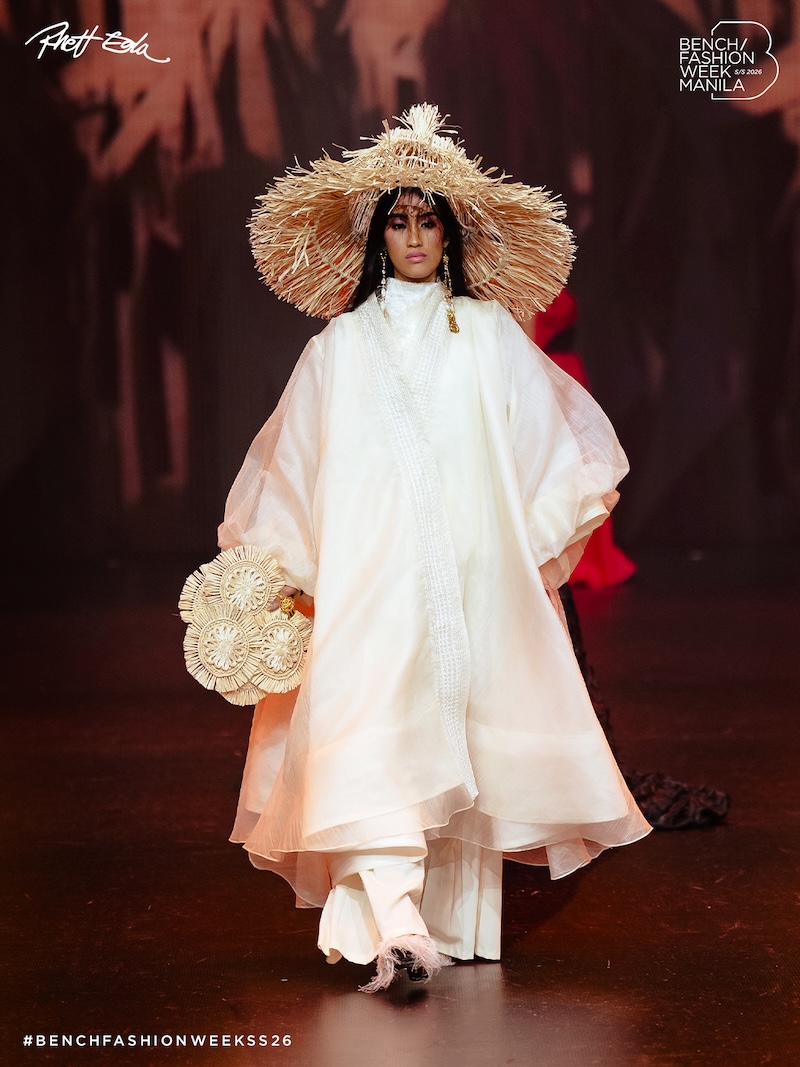
Rhett Eala’s pina layers create volume to obscure the body, a look inspired by Yamamoto
For finale, Eala used the ethereal quality of piña to create an exaggerated, layered silhouette that mirrored Yohji Yamamoto’s idea of a “space between body and fabric.” The oversized construction and the dramatic, unstructured drapes of piña echoed the way Yamamoto treats textiles as sculptural canvases, allowing the natural properties of the indigenous fiber to dictate.
Overall, Eala channeled Japanese high-fashion ideas using Filipino materials, shaping a look defined by experiment and tradition.
-
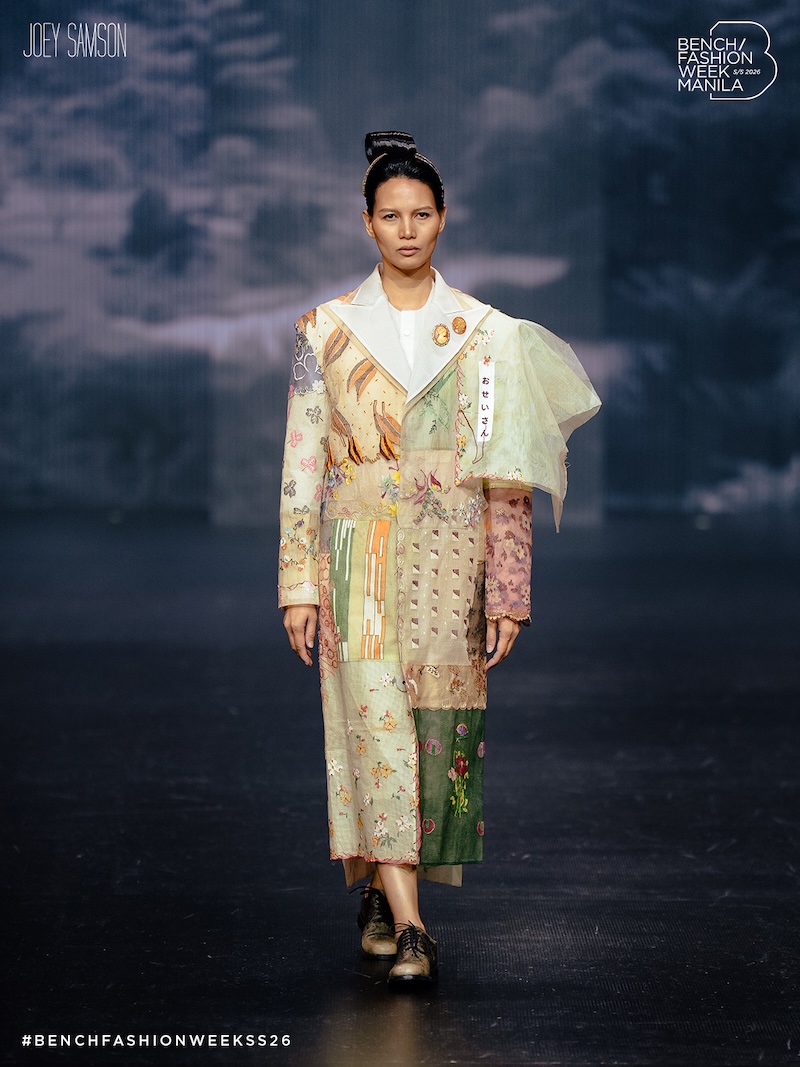
- Joey Samson’s patchwork of vintage cañamaso with piña accent
-
- Joey Samson’s striped suit with inverted coattails
-
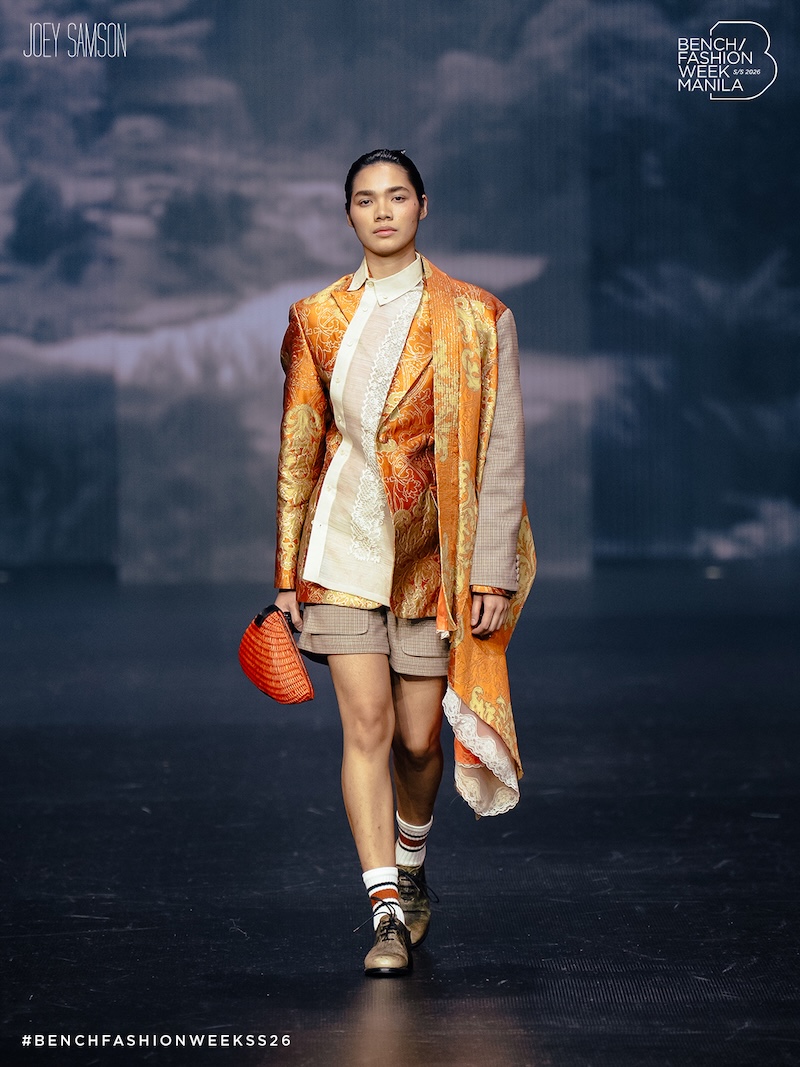
- Joey Samson’s hybrid suit of vintage obi and kimono with barong underneath
Joey Samson framed the collection as a dialogue between José Rizal’s consort Seiko Usui (aka O Sei San) and Juan Luna’s Una Bulaqueña (1895), a National Treasure of a painting that depicts an empowered Filipina in a traje de mestiza, rendered in piña camisa with a tapis and black saya (long skirt).
In his collection, Samson revisited the story of O Sei San, a 23-year-old samurai’s daughter who became Rizal’s guide to Japanese art and culture in 1888. Their brief connection was intense, but Rizal would choose his political mission in the Philippines over a life in Tokyo. O Sei San remained one of his most devoted romantic relationships. She later married an English teacher, Alfred Charlton, and lived until 1947, reaching the age of 80.
-
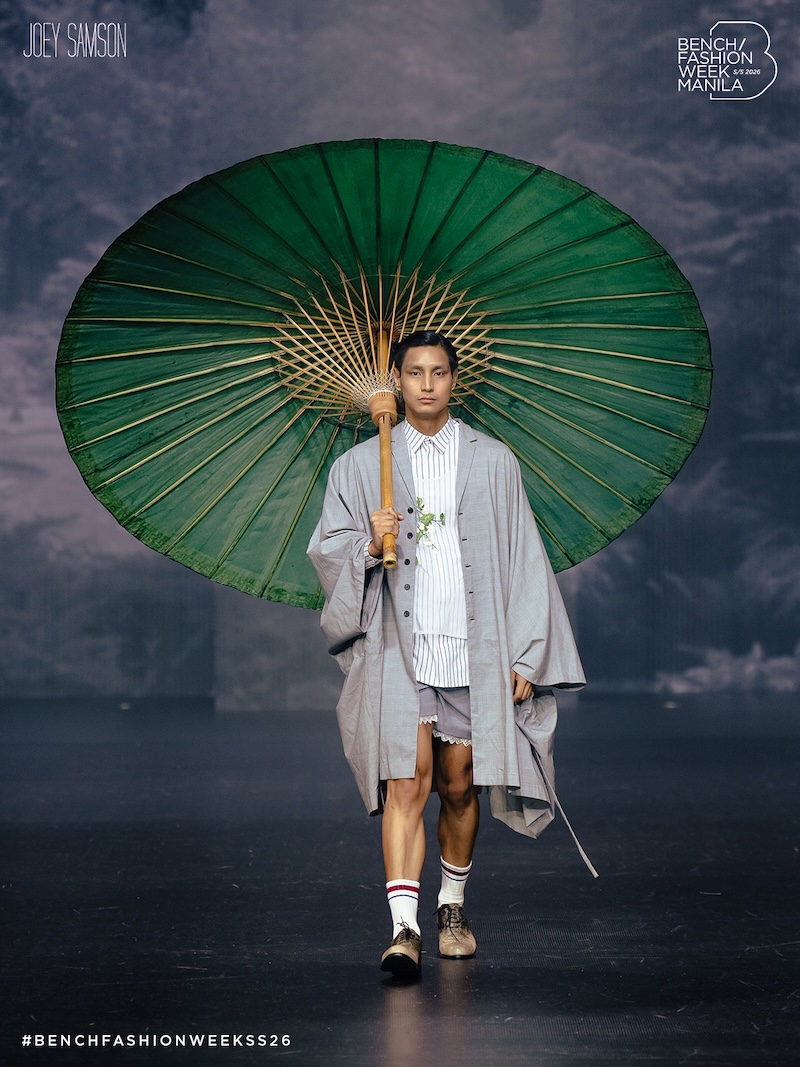
- Joey Samson’s oversized kimono in androgynous fashion
-
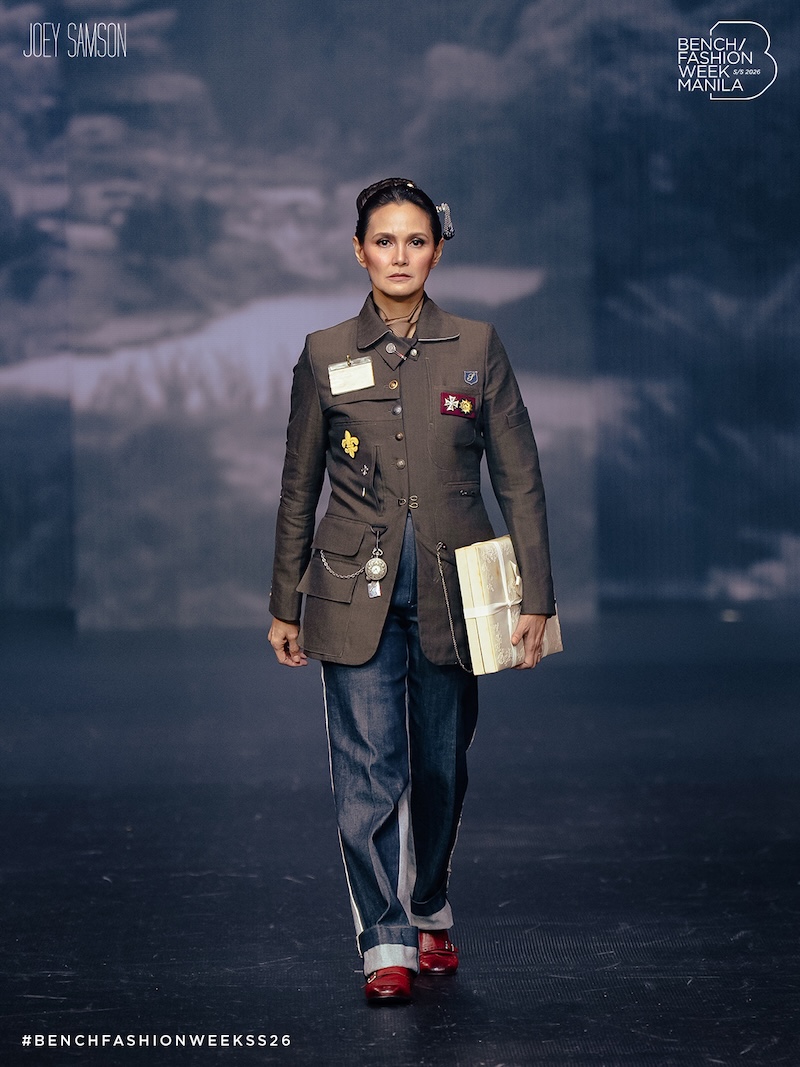
- For Joey Samson, Tweetie de Leon-Gonzalez channels Alfred Charlton in military jacket and denim
Samson used both Filipino weaves and embroidered and brocade obis and lighter kimono fabrics. Many of the accents worn at the waist, hips, or empire line used brocade obi collected from his trips to Japan. Local materials included piña, inabel, vintage barong fabric, and royal blue cloth from the SC Vizcarra collection. Antique barong pieces came from his maternal grandmother, while the cañamaso, a base fabric for embroidery used from the 1920s to the 1940s, was given by scenographer Gino Gonzales. These were reworked into patchwork skirts and outerwear.
Wedgewood pins and cufflinks from Samson’s father added a layer of personal narrative. “I try to incorporate my history in some of the looks,” he said.
-
- Joey Samson’s colors of fringed dress inspired by ‘The Great Wave Off Kanagawa’ art masterpiece
-
- Joey Samson’s modern ‘Una Bulaqueña’ made of piña, with obi accents
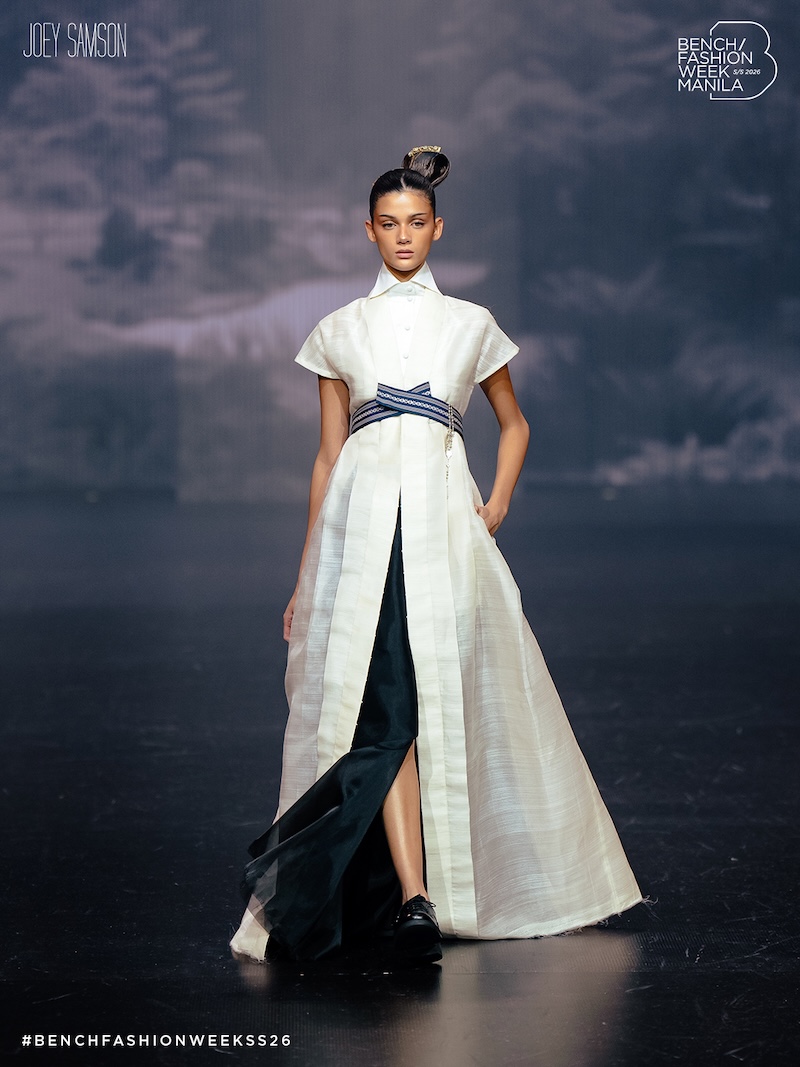
The collection moved between Filipino and Japanese traditions, using that exchange for experimentation. Samson’s interpretation of Una Bulaqueña was a hybrid figure shaped by Filipino and Japanese codes. A long piña dress was cinched with a narrow obi, with empire cut, crossing at the front and back. It was worn over a haltered white tuxedo shirt and black skirt.
An orange-gold obi became a tailored jacket-kimono hybrid with trailing drape. This vintage fabric, from his personal archive, was used in an asymmetric embroidered barong with sidestitch.
O Sei San is referenced as a painter who introduced Rizal to Japanese art. There was a painter’s smock dress in baby blue houndstooth wool layered over a piña barong shirt. The cuffs were attached not to the shirt, but to the smock’s pockets. A reversed version of the smock in brown was placed behind.
A fringed gown and dress in Prussian blue, indigo, white, and black outlines drew its colors from the famous block print The Great Wave off Kanagawa by Katsushika Hokusai. Samson linked the reference to O Sei San’s role in exposing Rizal to Japanese art.
The historical thread extended to menswear, where Samson looked to late 19th century dress. Historical images of Rizal show him in long-tailed coats worn over waistcoats, reminiscent of the 1880s and 1890s wardrobe—from his years in Europe. Samson referenced that period in a grey suit with coattails put up front, with royal blue high collar and layered obi sashes at the back.
From there, the silhouette loosened. An oversized kimono introduced an androgynous line for a male model. Beneath it, a sheer sleeveless shirt with sampaguita embroidery was layered over a pinstriped shirt. Samson added elements of Filipiniana, including lace underskirts, the zigzag trim peeking through shorts. He described this layering as hinagdan, a stepped construction built through attached layers.
Veteran model Tweetie de Leon portrayed Alfred Charlton, the Englishman who married O Sei San after Rizal’s death. Her look paired a severe military jacket with denim bottoms.
The collection closed with a bib made of metallic obi with floral details, worn over an extended-sleeve gray blouse and purple-maroon trousers. Samson suggested this final figure represented the daughter of O Sei San and Charlton.
Inspired by the love story of José Rizal and O Sei San and the imagery of Una Bulaqueña, Samson turned cross-cultural design into a narrative of intimacy, personal history, and shared artistic exchange between Japan and the Philippines.
-
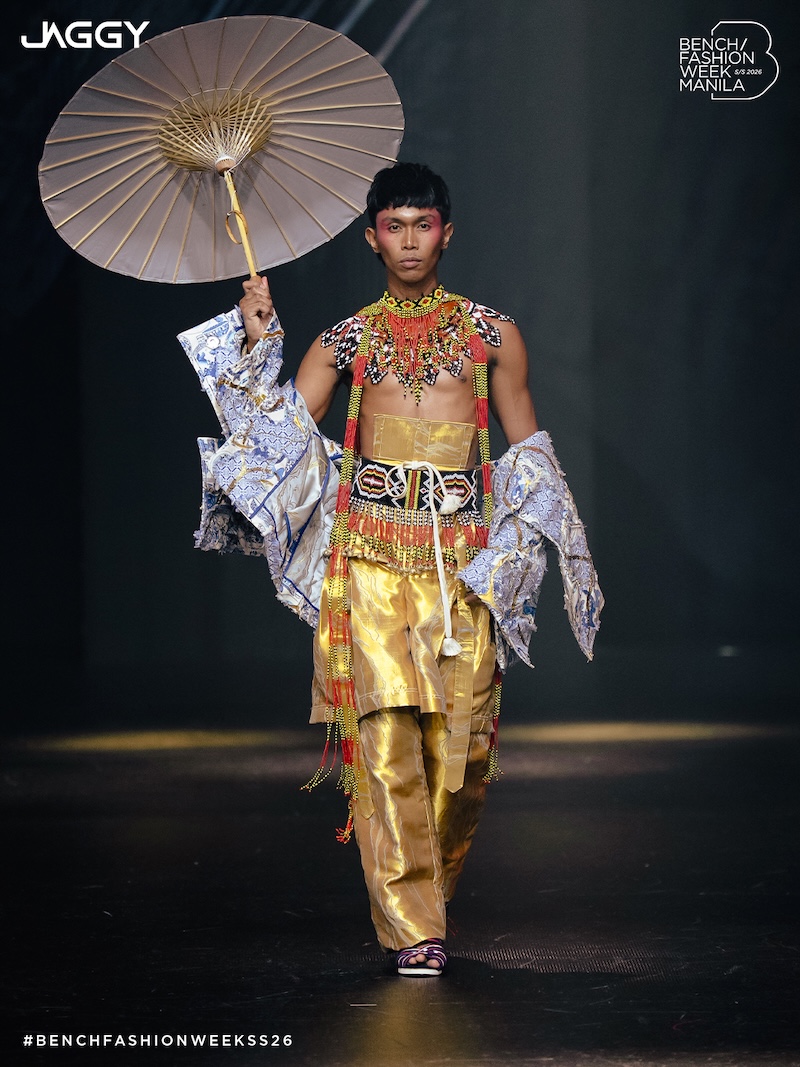
- Jaggy Glarino’s gold trousers paired with elaborate t’boli collar and belt; printed top with gold leaf tracery evoking kintsugi
-
- Jaggy Glarino’s beaded t’boli skirt with sculptural abaca from Cebu
-
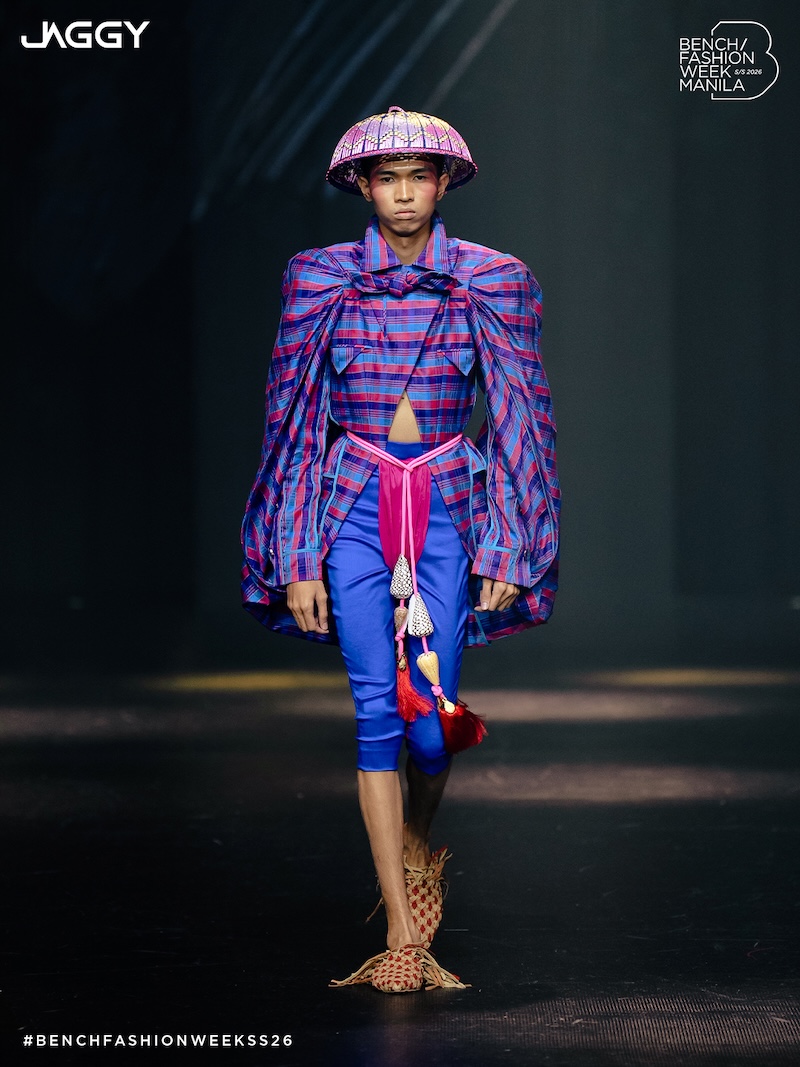
- Jaggy Glarino’s jacket with knotted cape inspired by the Gaddang warrior cape, with ‘patadyong,’ ‘salakot’ and capri pants
Rather than merely creating a surface-level fusion of two cultures, Jaggy Glarino turned his collection into a personal journey to his roots. Since his parents came from General Santos and he spent his youth in Davao, where he was exposed to the T’bolis and other tribes, he looked into the Japanese influences in the South.
Research showed the pre-war Japanese migration to Davao, given the region’s banana plantations, and the subsequent intermarriages between the Japanese migrants and indigenous folk.
He then imagined a hybrid aesthetic—a “what if” scenario of how indigenous pre-Hispanic Filipino aesthetics might have evolved and married with Japanese design if history had unfolded differently.
Glarino used his signature woven technique to mimic a solihiya weave and later, sliced bamboo panels. He recycled nylon from ocean fishnets to create structured, armor-like pieces, evoking the Japanese samurai and his architectural approach.
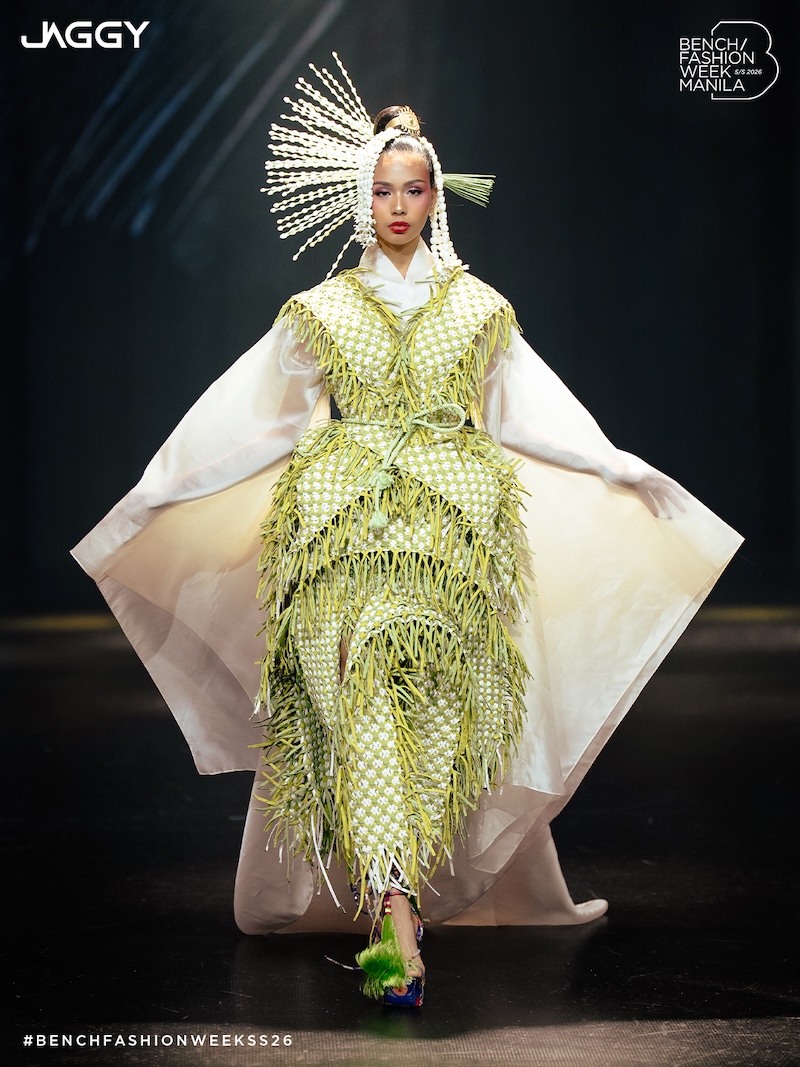
Glarino bookended his collection using his signature synthetic solihiya weave, from a rigid, yoroi-inspired samurai armor on the runway’s opening male look, to a crisscrossing woven bodice of a voluminous organza gown. This transition bared a sophisticated shift, contrasting the martial tension of his initial sculptural pieces with the graceful, fluid movement of his evening wear finale.
The collection heavily featured the work of t’boli artisans. One standout piece was a long, fully beaded red and black skirt bearing the patterns of the t’boli necklace in a fabric made by no less than 45 women. Glarino used abaca weaves from Cebu to construct sculptural bodices to complement the look.
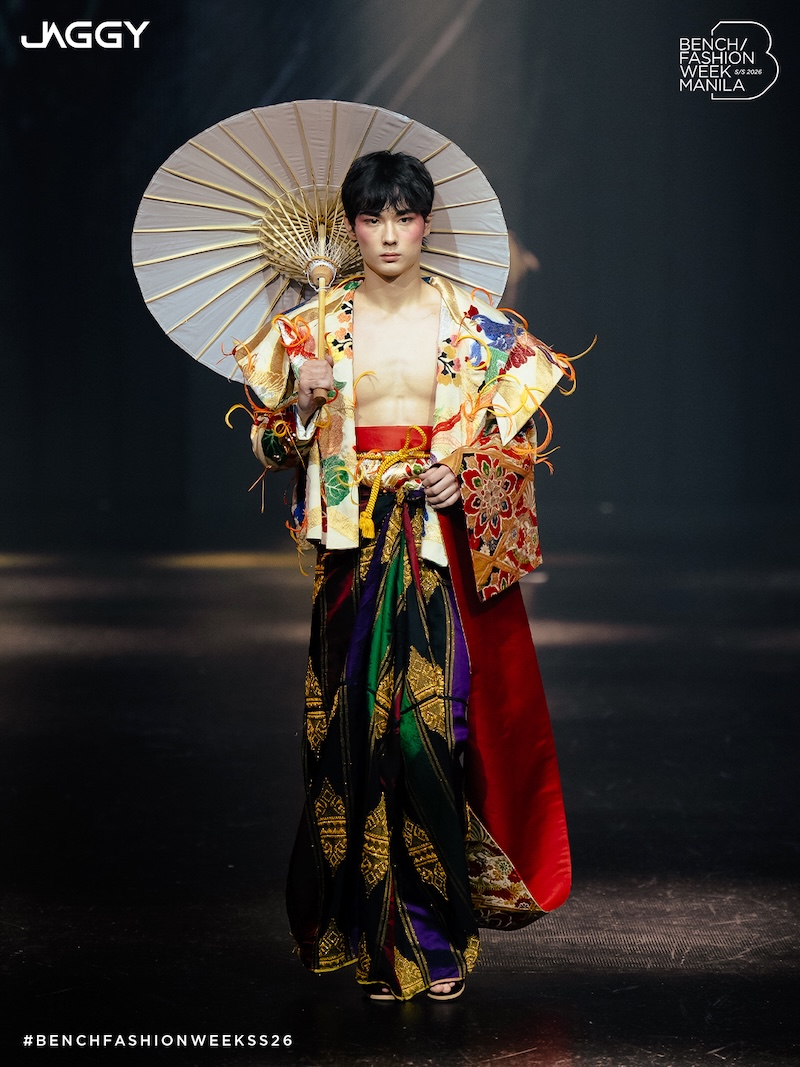
Jaggy Glarino’s obi jacket and pants made of ‘inaul’ of the Tausug
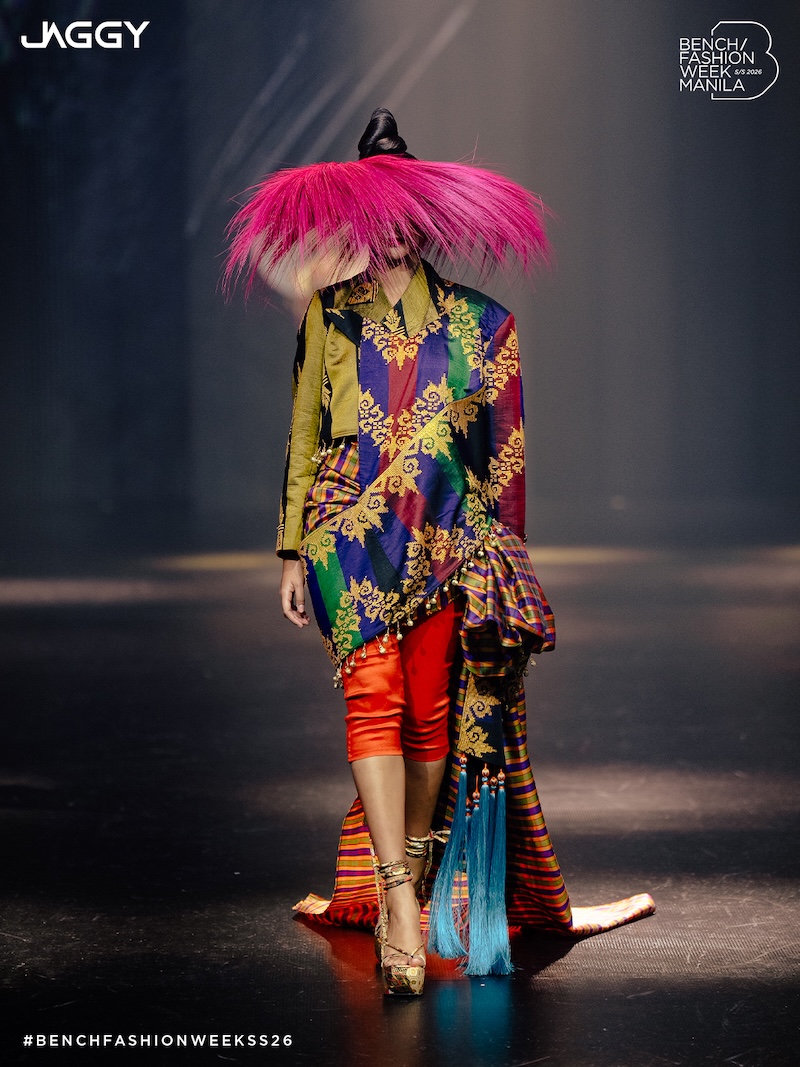
Glarino combined vintage kimonos, obi belts, and hair accessories brought from Japan with local craftsmanship. To suggest the Japanese art of kintsugi, the repair of broken pottery with gold, Glarino used frayed prints and applied gold leaf or foil printing, symbolizing beauty found in imperfections. He used the inaul of the Tausug and patadyong fabrics from Iloilo, his parents’ birthplace.
-
- Jaggy Glarino’s ‘inaul’ and ‘patadyong’ circular suit with capri pants and Japanese farmer’s hat
-
- Jaggy Glarino’s rigid weave inspired by the Japanese samurai is softened by billowy organza
-
- Jaggy Glarino’s signature ‘solihiya’ weave in a silhouette inspired by Japanese samurai plate armor
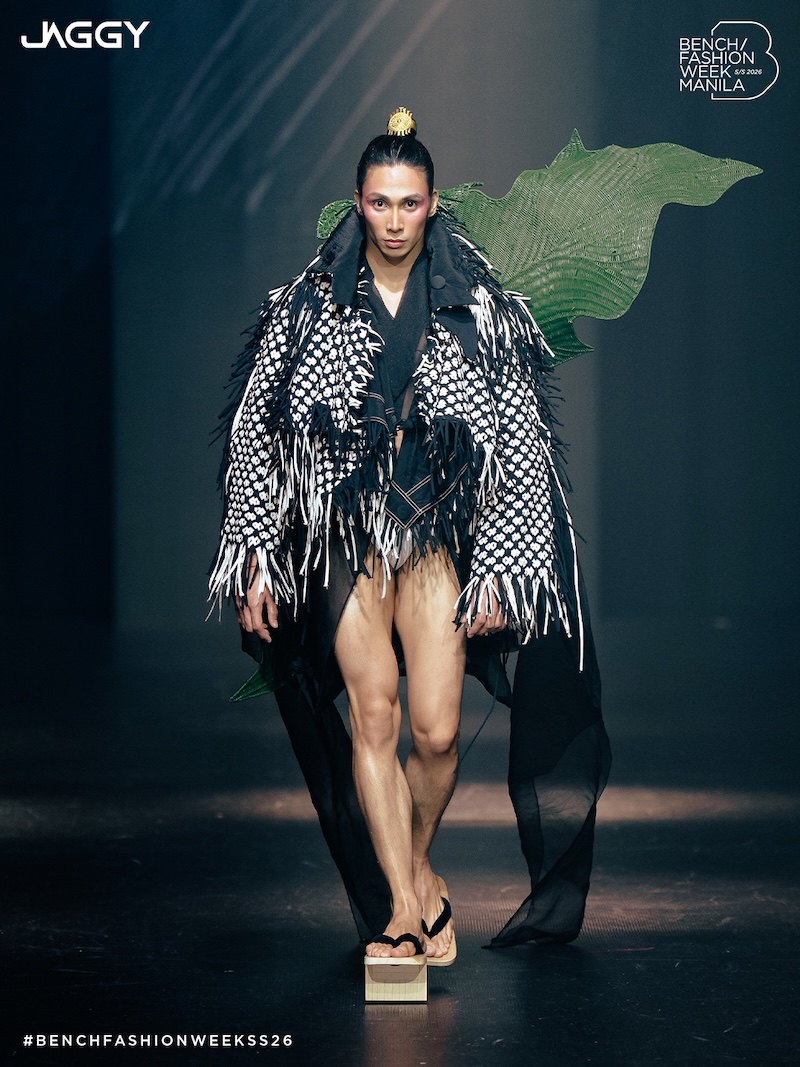
His collection created the image of a modern “maximalist” individual, with a Japanese mother and a Filipino father. They moved between Mindanao and Tokyo, intuitively mixing elements such as the mother’s obi belt with a father’s patadyong.
Glarino explained that his design philosophy was rooted in simplicity, noting that pre-Hispanic Filipino garments were inherently simple, devoid of the complex technical construction found in later periods. He attempted to incorporate the “circular” idea of the malong in his tailoring, creating suits that reflected a continuous, sculptural silhouette.
Ultimately, Glarino sought to blur the lines between the two cultures, deliberately avoiding a design approach that would place one culture above the other. By combining strong, architectural silhouettes, such as the Japanese armor or the Japanese emperor’s attire with Filipino materials and basketry-inspired textures, he created a hybrid identity that was avant-garde and rooted in a fictional yet plausible shared history.


