
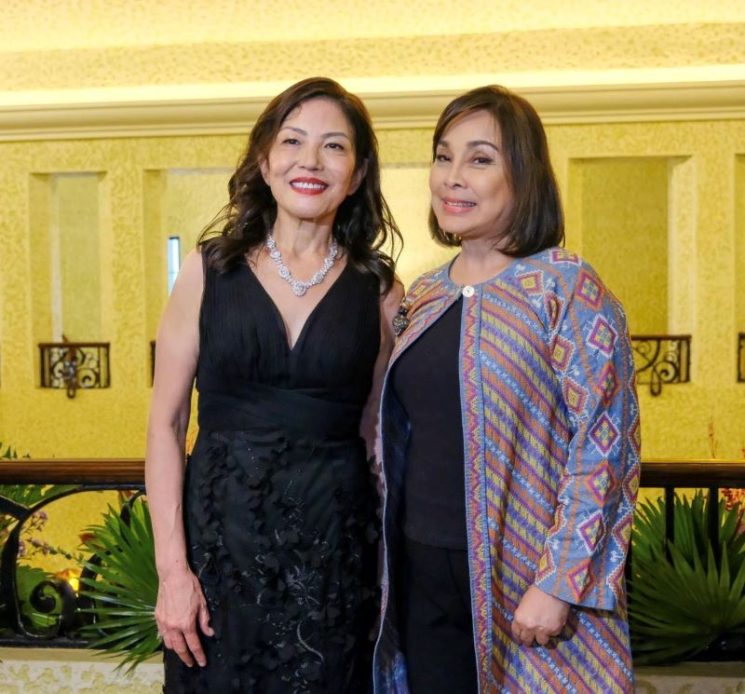
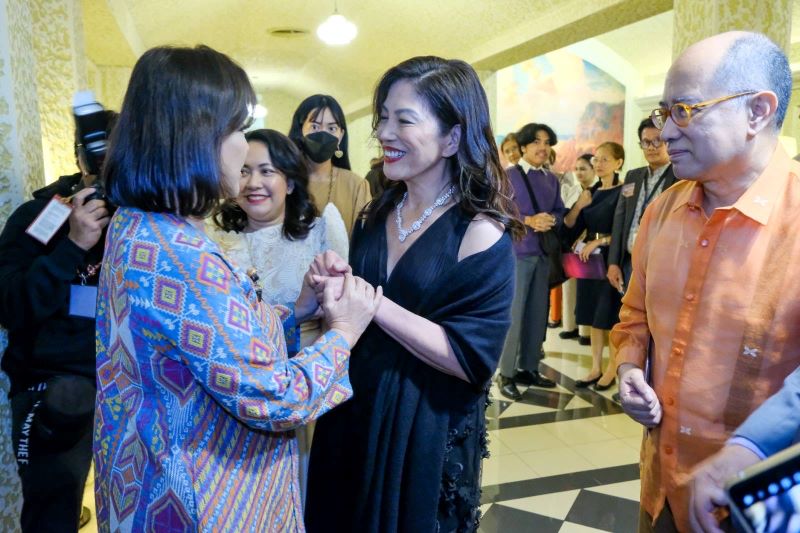
The pianist and the senator meet up after the concert, with NCCA chair Ino Manalo
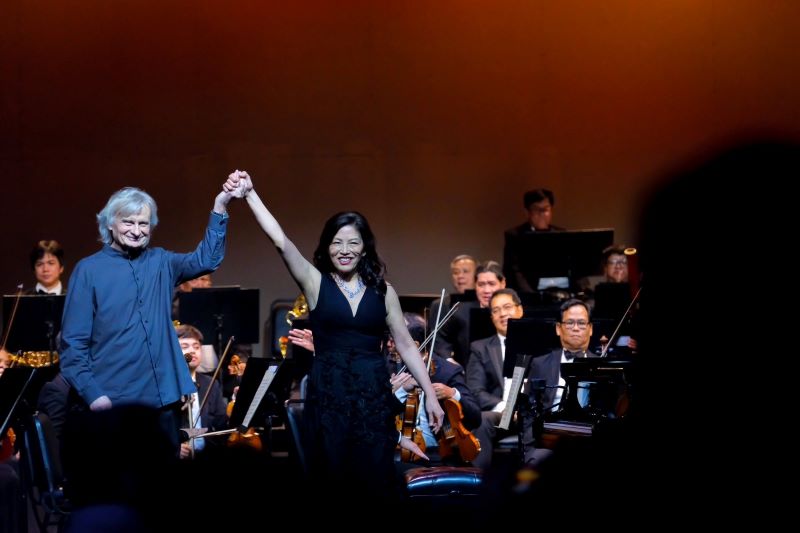
Licad and Maestro Grzegorz Nowak, PPO musical director and conductor, acknowledge the rousing ovation.
To celebrate Women’s Month, Cecile Licad, the Filipino pianist who has gained world acclaim, performed with the Philippine Philharmonic Orchestra (PPO) March 19 at the Metropolitan Theater. The invitational event brought together an audience faithful to Philippine arts and culture to experience the artist’s renowned rendition of Tchaikovsky’s Piano Concerto No. 1 in B-Flat Minor, Op. 23.
One of Tchaikovsky’s most famous works, Concerto No. 1 is a most powerful masterpiece, its dramatic intensity and moving melodies, its triumphant finale, making it a fitting homage to women empowerment, and more important, a most stirring experience for the Manila audience composed of the diplomatic corps, business leaders, socio-civic-culture advocates, government officials, educators and students invited from various universities, emerging artists and the culturati.
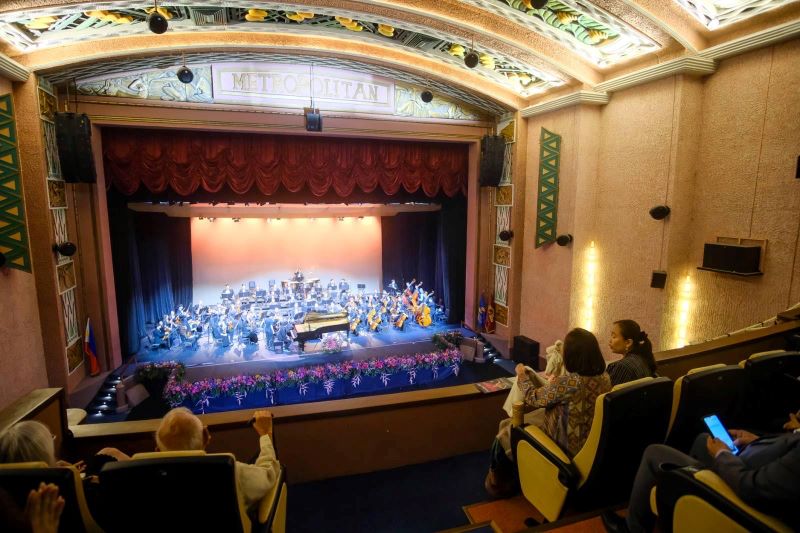
The awe-inspiring performance viewed from the upper level of the Metropolitan Theater
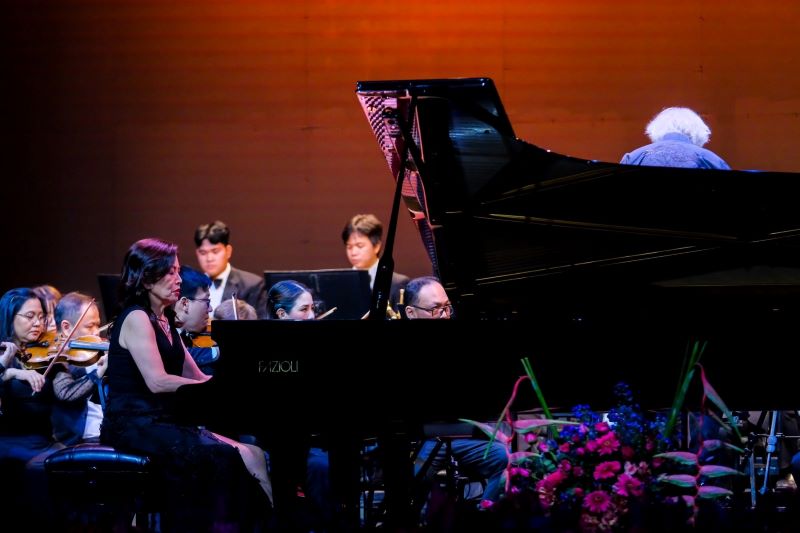
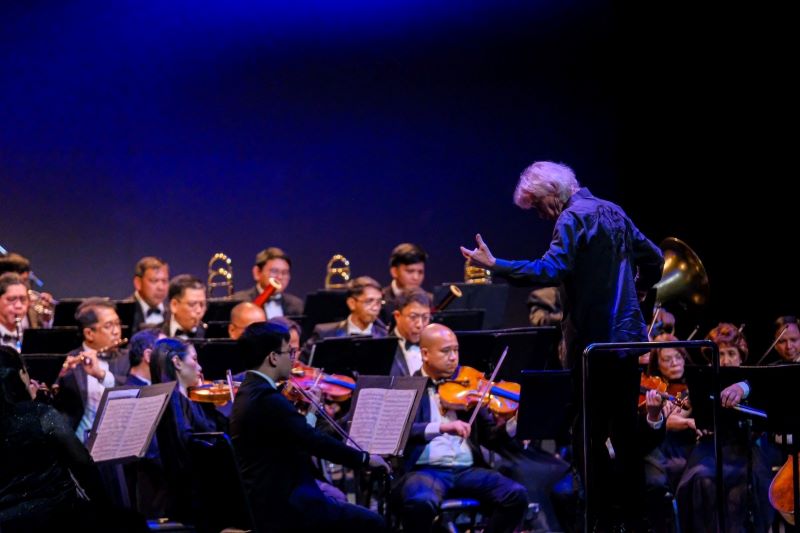
Licad and Maestro Grzegorz Nowak, music director and principal conductor of the PPO, made a formidable force in performing the Tchaikovsky masterpiece. In the first part of the program, the PPO, under the baton of Maestro Nowak, performed Brahms’ Symphony No. 2, Op. 73, D major.
This milestone event was done under the auspices of the office of Senate President Pro Tempore Loren Legarda, chairperson of the Senate Committee on Culture and the Arts, in collaboration with the National Commission for Culture and the Arts (NCCA) with chairman Ino Manalo, the Cultural Center of the Philippines (CCP) headed by chairman Dr. Jaime Laya, and the Philippine Philharmonic Orchestra Society, Inc. led by Zenaida Tantoco, who passed away Feb. 8, 2024, in the thick of the preparations for this concert, her dynamic presence missed not only by the senator but also by the rest of the culture movers.
Senator Legarda shares with TheDiarist.ph insights about the milestone event and her staunch patronage of the arts:
The Diarist: This concert must have held a special personal significance for you, since it came right after the unexpected passing of Mrs. Nedy Tantoco, who was instrumental in mounting this show.
Sen. Loren Legarda: It was a bittersweet moment for me as we finalized the preparations of the Cecile Licad concert, with the NCCA, CCP, and the Philippine Philharmonic Society. Nedy, a dear friend, was the one who first suggested bringing Cecile here. She admired Cecile’s talent and had organized concerts with her.
I was excited about the upcoming concert but sad that Nedy wouldn’t be here to see it. Still, I was determined to make it a fitting tribute to her. I ensured that everything was well prepared to inspire many people, especially the youth from various universities that we invited, through the beauty of classical music brought to life by the exceptional talent of a Filipina artist who brings pride to the Philippines.
Can you share your last encounter with Nedy Tantoco?
It was only last year when Nedy reached out to me with excitement about her plans to organize another concert of Cecile Licad. As someone passionate about culture and the arts, I felt my enthusiasm sparked by the idea of featuring such world-class talent alongside the PPO. It’s a cause I deeply believe in and support wholeheartedly, so I immediately expressed my eagerness to be a part of this exceptional initiative.
We wasted no time and started preparation last December. We convened our team in early January to meticulously iron out the details. We were thrilled to bring the power of music to inspire, heal, and uplift through Cecile Licad’s performance.
Can you share your thoughts about Licad?
I haven’t had the chance to have a close encounter with her. This project marked my first collaboration with her.
Cecile is renowned for her exceptional talent. Despite earning international recognition, she consistently embodies her Filipino identity. Every bit of applause from audiences around the globe feels like a collective acknowledgment of our country.
Your commitment to promoting Philippine arts and culture has been consistent, solid, and single-mindedly focused. What is the reason behind such conviction? At this point, what is your primary project?
My commitment to promoting Philippine arts and culture stems from the recognition of their pivotal role in fostering a deep connection to our surroundings, instilling pride in our roots, and promoting unity among diverse communities. Understanding and valuing arts and culture not only enrich our lives, but also serve as source of identity and resilience amid societal changes.
I championed various initiatives in arts and culture, having reintroduced Philippine art to the international stage after a five-decade hiatus from the Venice Biennale, one of the world’s biggest and most prestigious contemporary art exhibitions. I supported the improvement and establishment of museums and galleries, launched the Philippine Contemporary Art Network (PCAN) at the University of the Philippines–Vargas Museum, and supported outreach concerts by PPO. I’ve also authored key legislations, like the Cultural Heritage Mapping Act and the Philippine Creative Industries Development Act, affirming our commitment to nurture and protect our culture and talents in the creative sectors.
Another significant upcoming project is the country’s role as the guest of honor at the 2025 Frankfurter Buchmesse, a prime opportunity to showcase our publishing industry globally and highlight the richness of our culture and arts.
Supporting our indigenous communities is among my valued initiatives, from empowering them with culture-based livelihoods, and preserving and promoting traditions by giving them resources, to establishing schools of living traditions, and providing platforms for showcasing their skills, talents, and heritage. It’s like giving a lifeline to our culture, helping it flourish and making sure it’s passed on to the next generation.
Preserving our cultural heritage is crucial in maintaining a sense of continuity and belonging, while also acknowledging the necessity for adaptation and innovation to keep traditions relevant and meaningful in the present and future.


