

As Filipinos grapple with high prices, soaring electricity costs, food security concerns, and growing public disillusionment over corruption and government accountability, the Marcos administration set a restrained tone for the First Regular Session of the 20th Congress and the State of the Nation Address (SONA). The House of Representatives, which hosted the event at the Batasang Pambansa Complex, prescribed Simple Filipiniana and Short Terno for women, while Malacañang underscored that the occasion should focus on governance rather than spectacle.
For years, the opening of Congress was marked by women in Filipiniana gowns, often looking overdressed for a 3 pm affair, drawing criticism that the red carpet arrival had become a fashion show. During the pandemic, however, when public gatherings were banned, designers realized that special events were vital to keeping the fashion ecosystem alive, which included weavers and cutters, embroiderers and even drivers.
This year was different. Clients cut back on orders, and terno hemlines were noticeably shorter, as though skirt lengths had become an economic indicator.
The Hemline Index is the popular theory that skirt lengths get shorter when the economy is strong and longer when times are tough, although economists do not consider it a reliable measure of economic conditions. Still, the ternos at the SONA, ranging from the cocktail length of below the knee to above the ankle, seemed to echo the shrinking value of the peso and a more cautious economic mood.
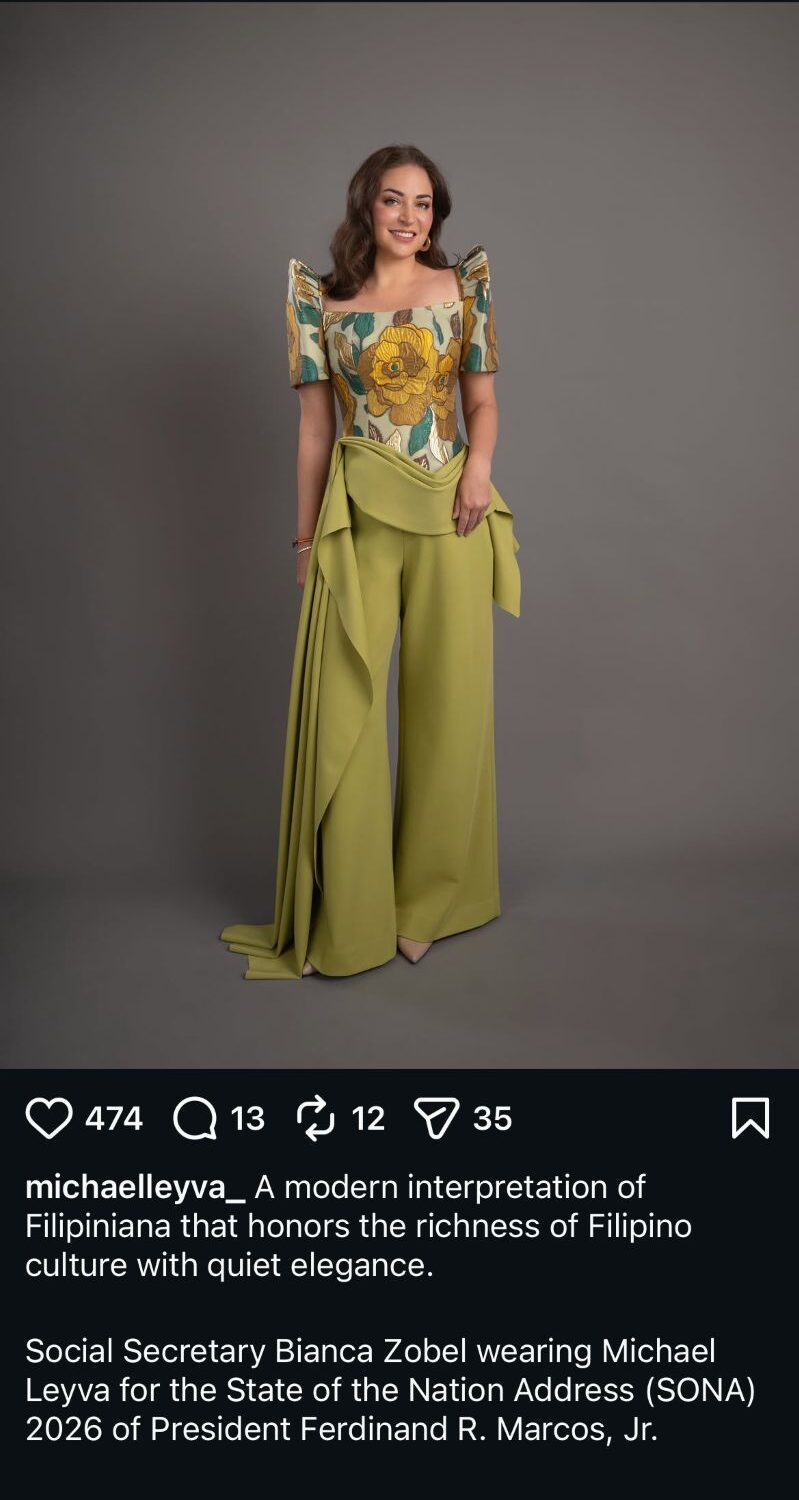
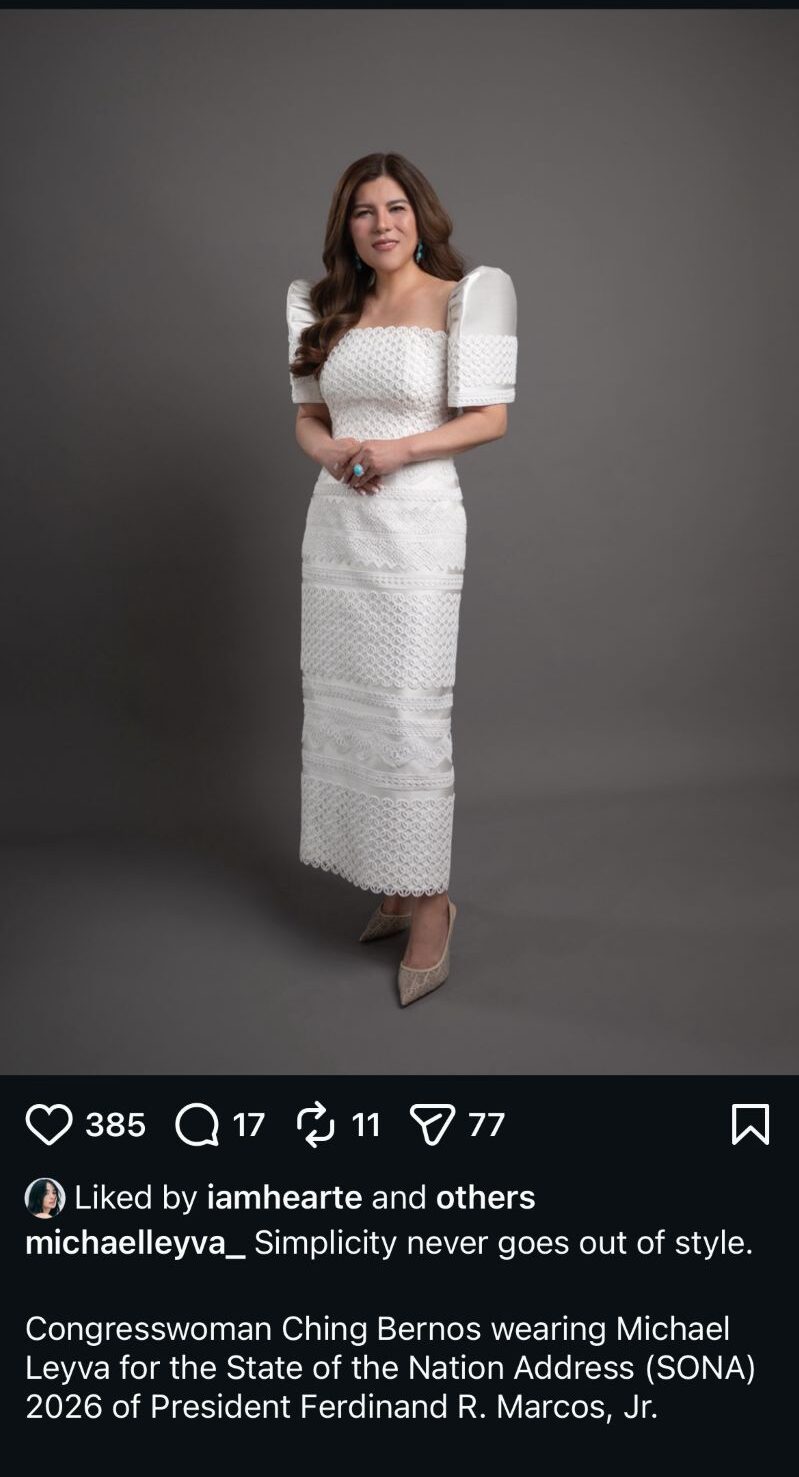
Orders dropped sharply. If his atelier produced about 200 Filipiniana outfits last year, Leyva said the number fell to 100 this year
Orders dropped sharply. If his atelier produced about 200 Filipiniana outfits last year for politicians and their families, designer Michael Leyva said the number fell to around 100 this year.
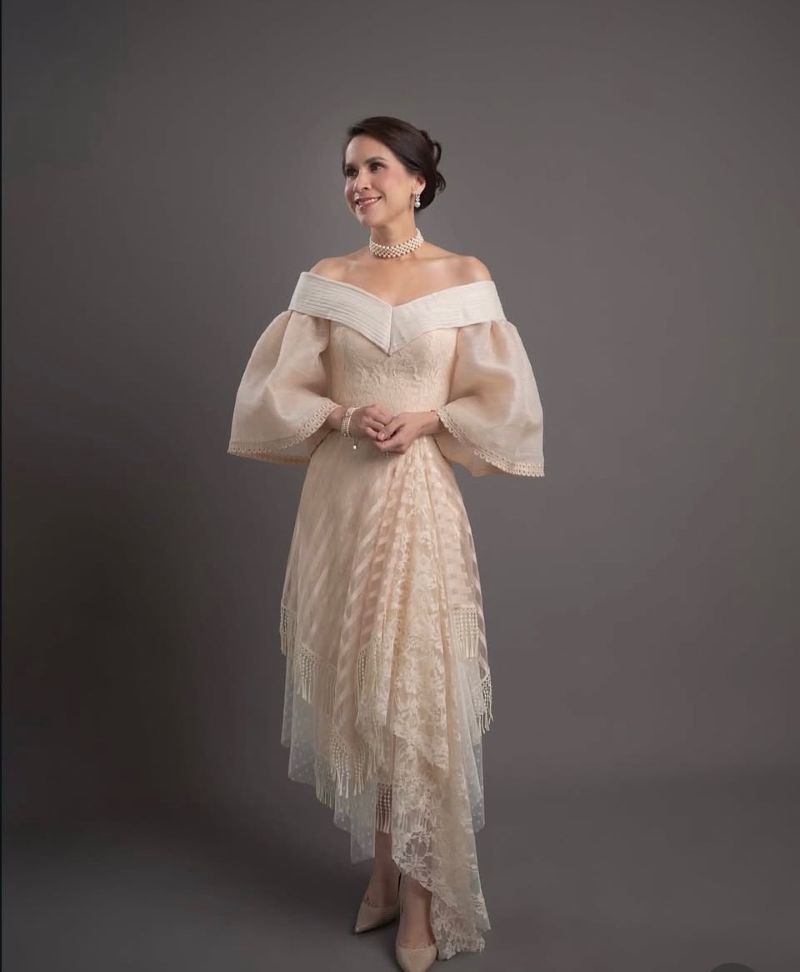
Audrey Tan Zubiri in Michael Leyva (IG Audrey Zubiri)
Many clients updated existing Filipiniana instead of ordering new ones.
“Some asked us to tweak the sleeves or update the terno,” Leyva said. “Repurposing is more sustainable.”
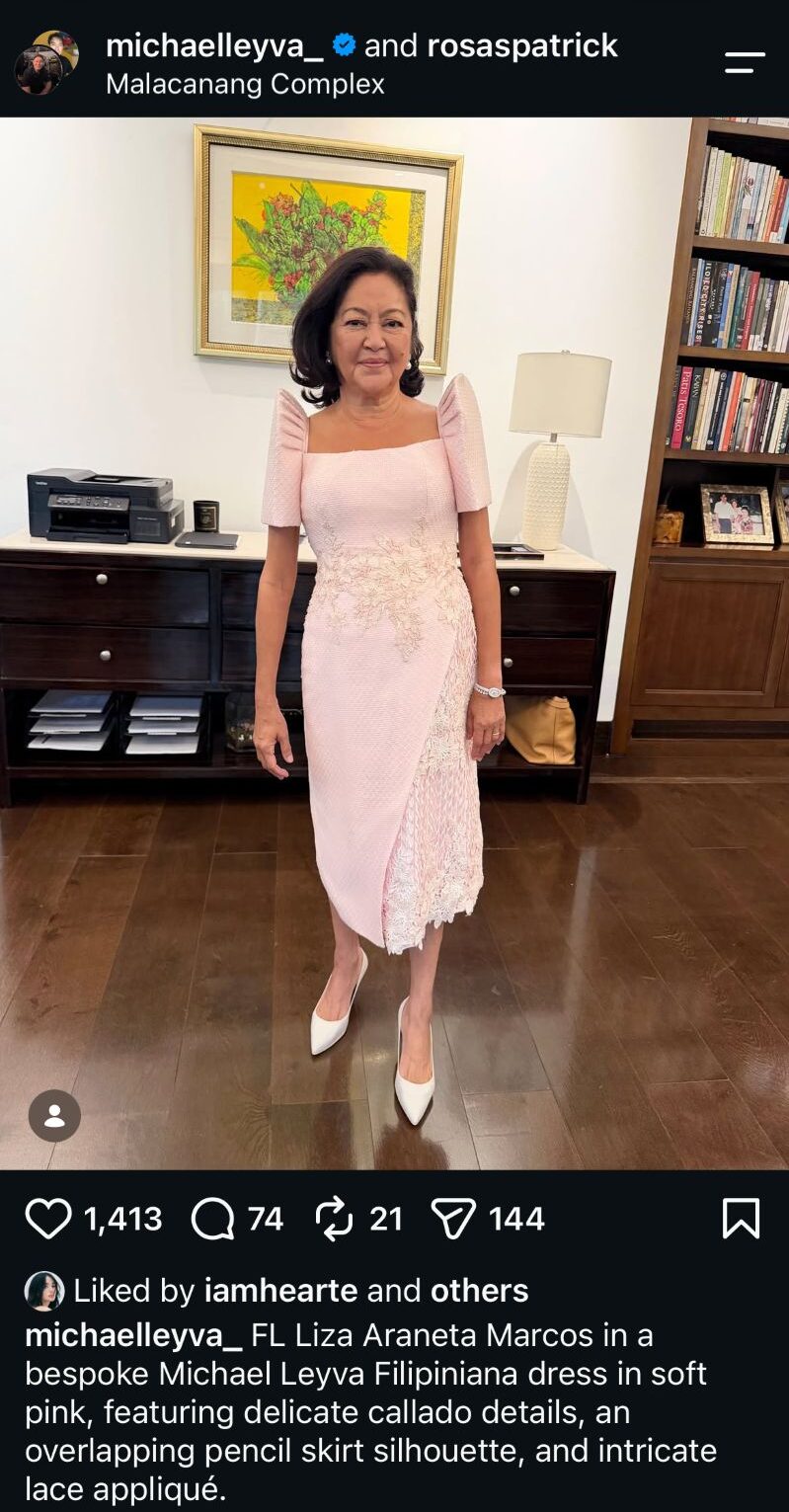
Even so, Leyva made 13 ternos with standard tea-length hems, grazing the midcalves. A standout was First Lady Liza Araneta Marcos in a baby pink terno with a fitted bodice, embroidered floral lace at the waist, and an asymmetrical panel of calado embroidery. Its cocktail-length skirt was polished and formal for the afternoon opening of Congress without the grandeur of a floor-length terno.
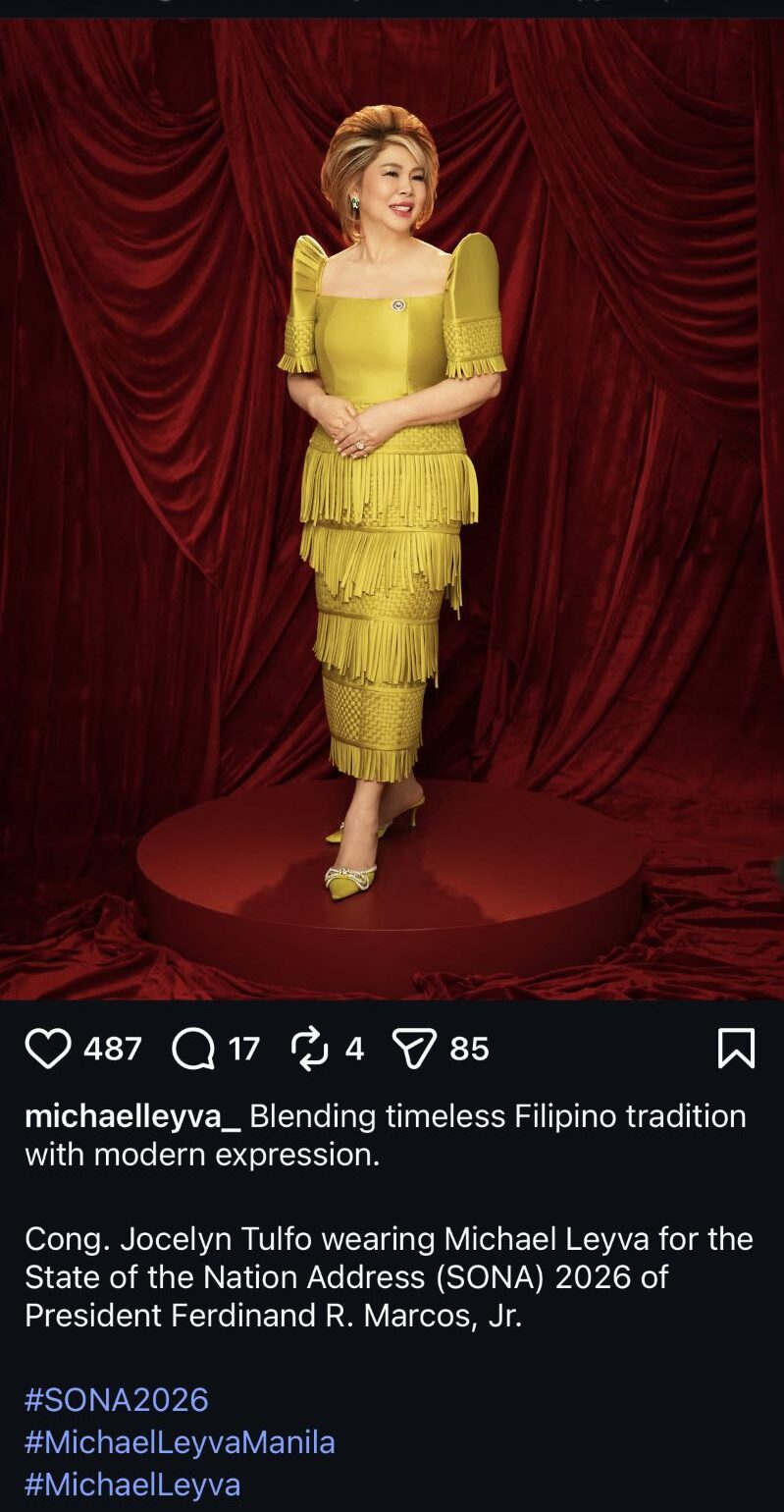
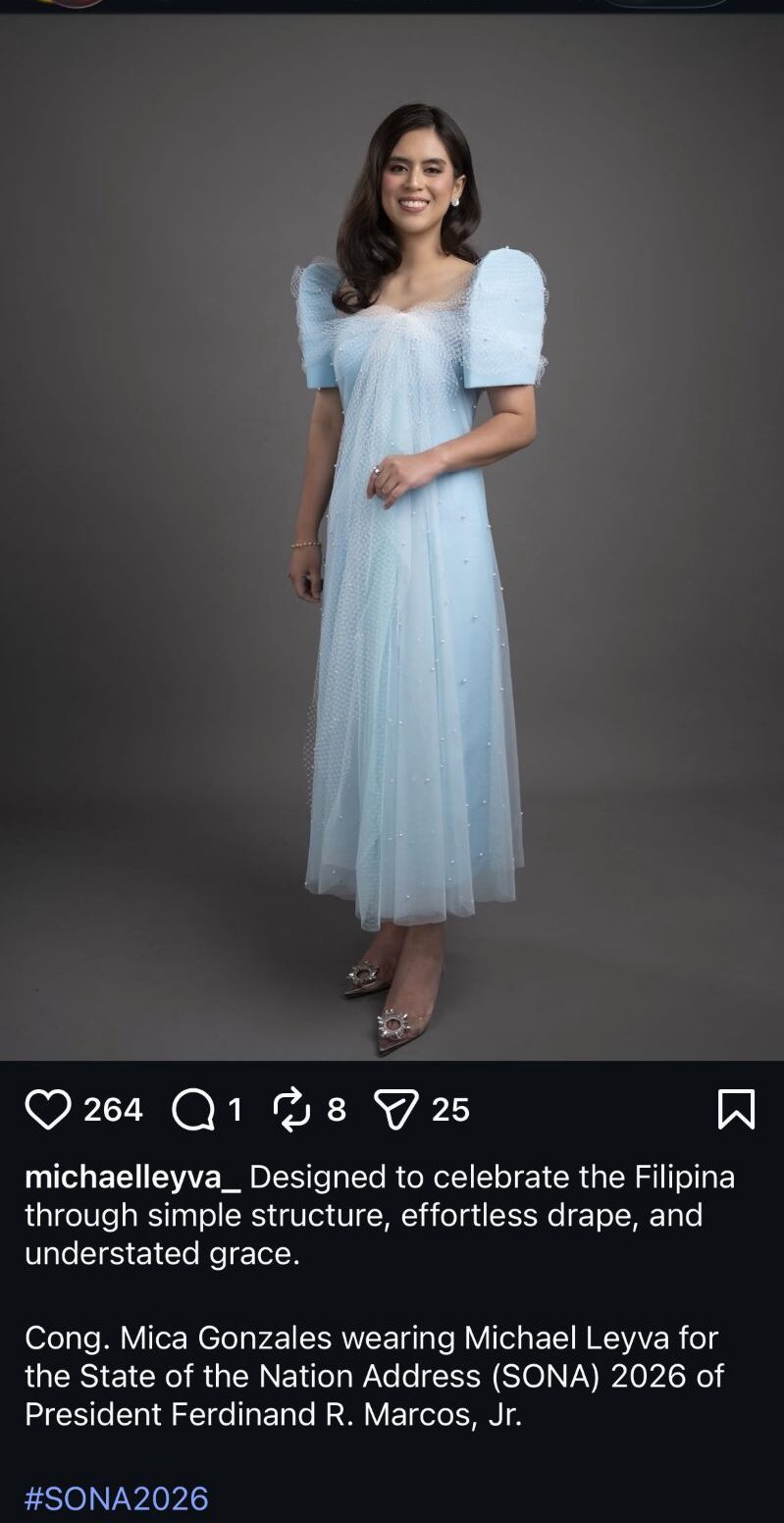
“With everything that has been happening in the country, it’s nice that the event has become simpler,” Leyva said.
Designer Rajo Laurel observed the same shift. Clients were noticeably more restrained this year. Fewer ordered new ternos, while others chose to wear pieces already in their wardrobes.
“The shorter length makes the terno more wearable,” Laurel said. “It works from day to night, and since the SONA is a daytime event, a cocktail length feels appropriate.”
He rejects the notion that a shorter terno diminishes the national costume. “It has to move with the times,” he said. “You can’t keep it in the past. It has to evolve with the needs of the present. If we keep doing what we’ve always done, we can’t develop. The SONA has become a place for dialogue rather than the fashion spectacle it was once perceived to be.”
Laurel points to Japan’s national dress as an example. In the 1970s, designer Hanae Mori reinterpreted the ready-to-wear kimono into slimmer, shorter silhouettes with abbreviated sleeves. Her designs adapted traditional Japanese motifs into contemporary dress.
“The shorter terno isn’t new,” Laurel said. “There were cocktail-length versions in the 1950s, mini-skirt ternos in the 1960s, and trouser versions in the 1970s. That’s what keeps the design alive.”
Paul Cabral also noticed a more restrained mood this year, with fewer clients ordering new ternos.
“The clients were more restrained. If the protocol calls for simplicity, why have new clothes made? Some even wore trousers,” he said.
‘With everything that has been happening in the country, it’s nice that the event has become simpler,’ said designer Michael Leyva
By June, Cabral had learned that Congress was encouraging simpler Filipiniana and tea-length dresses. He believes the shift makes the national costume more practical and relevant.
“If you want to promote Filipino dress, a shorter terno is something women can also wear to cocktail events,” he said. “The shorter hemline also makes it easier for women to move around. A floor-length gown can be awkward from the moment a woman steps out of the car and walks to the venue. You can’t always use traditional fabrics like piña because they’re difficult to maintain. After repeated dry cleaning, the fibers can deteriorate. Shorter Filipiniana is simply more practical.”
He contrasts this year’s subdued style with previous SONAs, when some Filipiniana gowns featured glitter, elaborate embellishments, and long trains.
“The State of the Nation Address is about the President’s report to the nation,” Cabral said. “Why wear something lavish? You’re not the main event.”

Ivarluski Aseron made two ternos this year. He says the shorter silhouette was fitting for the afternoon opening of Congress.
“The ‘short terno’ on an invitation does not mean informal dress,” he said. “It refers to the cocktail-length version of the national costume, which has long been considered appropriate for daytime state functions. The full-length terno is generally reserved for evening events and more ceremonial occasions.”
Several Philippine First Ladies observed that distinction. Victoria Quirino, who served as acting First Lady during the presidency of Elpidio Quirino, helped popularize tea-length and cocktail-length ternos. Eva Macapagal favored understated designs with restrained embroidery for official engagements. Although best known for her floor-length gowns, Imelda Marcos also wore shorter ternos for luncheons, provincial visits, and daytime functions. Amelita “Ming” Ramos continued the tradition, choosing cocktail-length ternos for charity work, cultural events, and other official daytime occasions.
Gino Gonzales, founding artistic director of Ternocon and co-author of Fashionable Filipinas: An Evolution of the Philippine National Dress in Photographs, 1860–1960 with Mark Lewis Higgins, says the shorter terno is hardly a recent innovation.
“Women were already wearing mid-calf ternos in the 1950s and 1960s. It’s part of the evolution of the national dress,” he said.
‘Women were already wearing mid-calf ternos in the 1950s and 1960s. It’s part of the evolution of the national dress,’ said Gino Gonzales
Before that, the daytime counterpart of the terno was the Balintawak, a mid-calf dress with butterfly sleeves worn with a matching alampay or shoulder scarf. Made of cotton, piqué, or jersey, it was embellished with wooden beads, native seeds, cording, ribbon work, or fabric appliqués.
The cocktail-length terno emerged in the 1950s as Filipino couturiers adapted the postwar cocktail dress, inspired by Christian Dior’s wasp-waisted New Look, into the national costume. They retained the butterfly sleeves while shortening the skirt for daytime wear. Richer fabrics such as brocade, crepe, lace, satin, and lamé distinguished it from the casual Balintawak and made it suitable for semi-formal occasions.
Pancho Uytiepo, the prominent Negrense couturier of the mid-20th century, was among the first to introduce a cocktail-length terno. He was soon followed by designers such as Salvacion Lim Higgins, who later became National Artist for Fashion.
“What is being worn in Congress isn’t new,” Gonzales said. “The SONA is an afternoon event, and there should be a certain level of austerity.”
He says the challenge is finding the balance between formality and practicality. “The dress code is semi-formal, so designers have to find the middle ground. It’s a matter of choosing the right silhouette, the right materials, and the right proportions. The terno naturally draws attention to the upper body, so proportion becomes especially important because not every woman is tall.”
For Gonzales, the terno has endured because it has evolved.
“The meaning of the terno in 1901 is different from what it means today,” he said. “It has survived because it adapts. I don’t see a problem with women wearing shorter ternos. A floor-length gown is impractical for an afternoon event. And when people are questioning how public money is being spent, a simpler dress code for the SONA just feels more appropriate.”


