
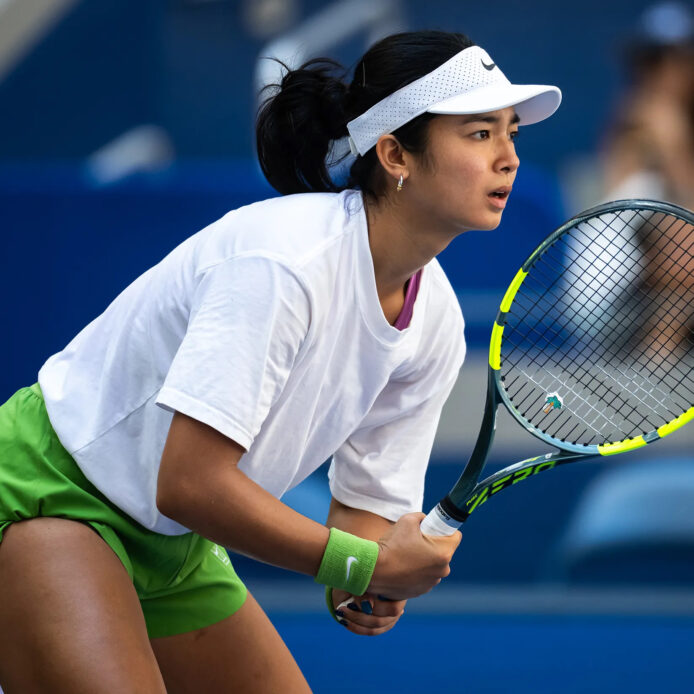
Naomi Osaka was in it. And so were Iga Swiatek, Rafael Nadal, and the newly inducted International Tennis Hall of Fame member Roger Federer. Now Alexandra Eala is the latest tennis star to be featured in the digital version of The New Yorker, the esteemed American magazine known for its long-form journalism, commentaries, essays on culture, entries on fiction and poetry, and trademark illustrated covers.
In the section The Lede (“A daily column on what you need to know”), How Alex Eala Became a Symbol of the Philippines, dated Aug. 29, 2026, was written by investigative journalist Albert Samaha, who, in 2018, told his own compelling story. As the nephew of VST & Co. guitarist Spanky Rigor, Samaha produced and narrated a 13-minute video of his uncle giving up the rockstar life for a job as a baggage handler at the San Francisco International Airport. The video waxes nostalgic on the Manila Sound of the ’70s; it also posits if leaving the Philippines to chase the American Dream is all that it’s cracked up to be.
For his piece on Alex, he focused on the phenomenon known as Eala Mania, that heady, global interest in and support for the 21-year-old tennis sensation. To say that Eala Mania has been good for tennis—make that women’s tennis—is an understatement. Long overshadowed by the big names and bigger cash prizes of men’s singles tennis, women’s tennis is now experiencing fast-going ticket sales and jampacked stadiums on weekdays, all to see the Filipino playing, even in her early rounds. World No. 4 Coco Gauff, who beat then No. 47 Alex in the quarterfinals of the Dubai Tennis Championships in February, actually thanked her opponent for helping fill the stands with her mere presence.
Alex has been good for Filipinos too, particularly at a time when widespread flooding, billions of pesos in misused taxpayers’ money, and the lack of accountability of the powers that be have left her countrymen demoralized yet forced to soldier on. Most Filipinos don’t play tennis, but they certainly possess the same qualities that Alex has to achieve greatness in whatever they choose to do.
Samaha writes about her steely discipline at an early age, training at 5 am, then attending school and doing her homework in the car on her way to evening practice. In grade school, she declared her dream of winning the four tournaments that make up tennis’ Grand Slam—the Australian Open, French Open, Wimbledon, and the US Open. “I am motivated by the fear of being average,” she wrote on her Grade 6 yearbook.
And yes, she’s just like one of us, professing her love for karaoke, and mouthing a Filipino cuss word in disbelief after winning a crucial point in last year’s US Open.
Alex’s pride in all things Philippines is a source of pride for Filipinos, too. Fans watching her live or back home can’t help but smile and applaud when she addresses the crowd in her native tongue. The player, who is a walking billboard for BPI and Globe, is also an ambassador for the sampaguita. Nike gifted her with a hair tie of the national flower just before Wimbledon 2025, and a commemorative T-shirt with a design of a sampaguita on a grass court. The pearl and diamond sampaguita earrings worn by Alex in last year’s National Bank Open were a gift from Kristine Dy Jewellery.
“History has left Filipinos hungry for solidarity,” wrote Samaha. In the past, the successes of boxers, beauty queens, Olympians, and entertainers were what brought us together and reminded us of our potential for greatness. Now, the No. 18 female tennis player in the world has taken on the mantle.
“People tell me I’m a role model for people back home,” said Alex on the Andy Roddick podcast, Served. “I really do my best to be on my best behavior and represent the best of the Philippines.”
And Filipinos are responding by coming in droves to her games, showing the world how we root for our own with heartfelt cheers, waving flags and all. At Practice Court No. 3 in the US Open in Queens, New York, Samaha spoke with a number of Filipinos who traveled far and wide with family and friends just to catch Alex in action.
Among them was Christian Battung, a 33-year-old from New Jersey, who ran into some acquaintances in the venue. “It’s like we’re in the Philippines,” he said.


