
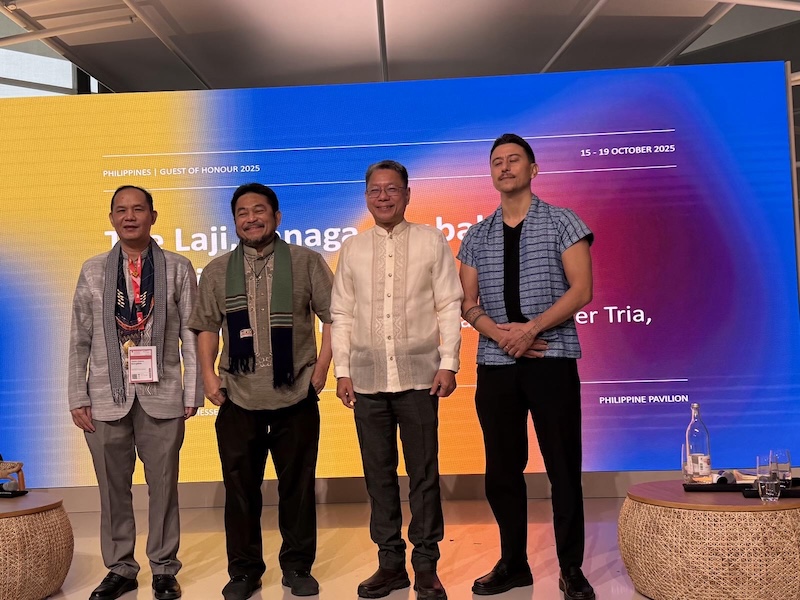
This is in celebration of February as National Arts Month, my special commemoration. This particular conversation on traditional forms of Philippine poetry in the Philippine Pavilion at the Frankfurt Book Fair in October 2025 specially stands out in memory—the tanaga, the ambahan, the tigsik, the laji, discussed by their special practitioners, and bears repeating because of this wealth in our legacy that many of us are just discovering and appreciating now.
This was an eye-opener, not only for the international audience but also for the Filipinos hardly aware of the richness of their oral tradition. And so there we were, totally mesmerized during this session, listening in rapt attention and awe at the performance of short samples of these traditional forms.

First Mangyan lawyer Renato Evangelista
Renato Zosimo Evangelista distinguished himself as the first Mangyan lawyer in 2001, and is president of the Mangyan Heritage Center. It was a challenging life journey, for as a child, he was bullied by classmates in Calapan, Oriental Mindoro. But today, he stood proud discussing the ambahan, the Mangyan indigenous poem.
The ambahan (song) is usually carved in Mangyan script on bamboo, and is vocalized as a chant but with no musical accompaniment. It is not a direct message, but offers advice. Because they were originally found on bamboo, the remarkable book of published ambahan in English, Spanish, and Filipino translations is entitled Bamboo Whispers. A short sample, Ambahan 231, has no prescribed length nor rhyme pattern:
Even with all that chaos
These petty grudges and fights
there’s no reason for good-byes
let’s both try and understand
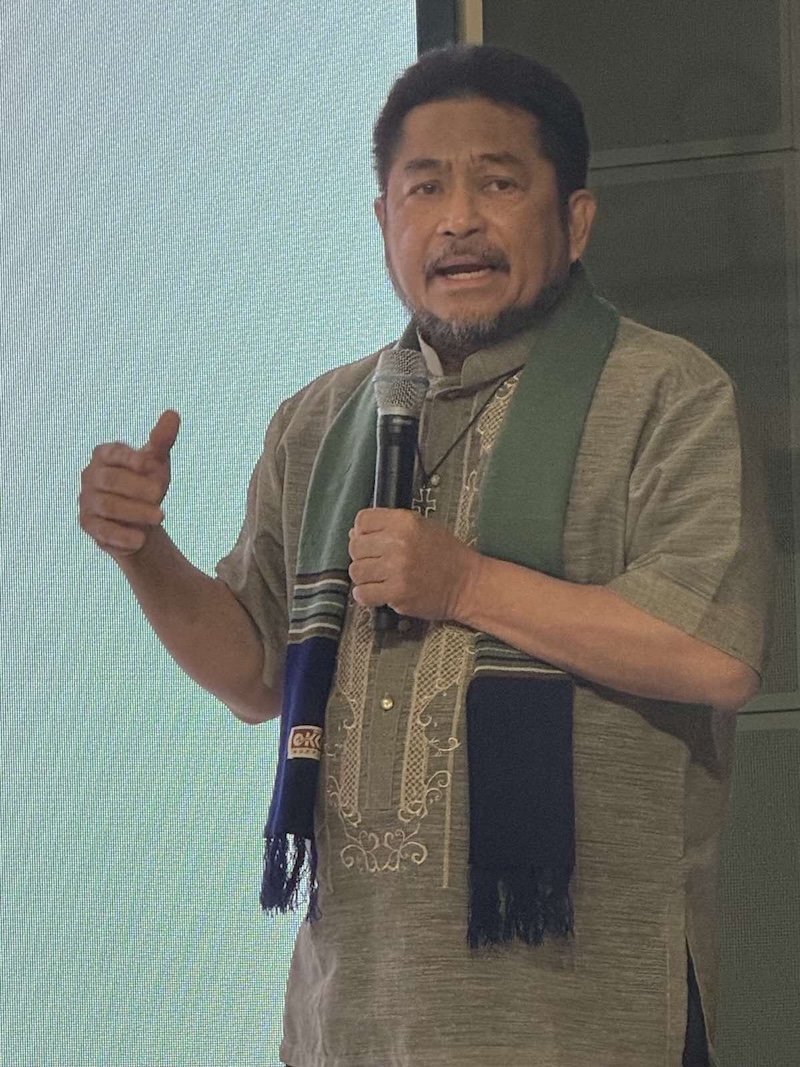
Fr. Albert ‘Paring Bert’ Alejo espouses the use of traditional Tagalog short poem, the ‘tanaga.’
Fr. Albert “Paring Bert” Alejo, SJ is an anthropologist, activist, and Filipino poet who espouses the use of the traditional Tagalog short poem, the tanaga. It has four lines, each line seven syllables long (7-7-7-7). It uses a rhyme scheme, and is often metaphorical and proverbial. Alejo has a published collection of tanaga, entitled Isang Kahig, Isang Tula: Mahigit 200 Tanaga (Ateneo de Naga University Press, 2019), which indicates his sustained work on the tanaga form. For Alejo, the tanaga is a medium to “evoke truth, social awareness, engagement with experience, and the Filipino interior (loob).”
Two examples in translation:
Gather all the unshed tears
Of those bereft of time to mourn
When all this plague disappears,
They’ll wash the earth at morn.
Briefly do I walk this earth,
Dust that feels the sun;
Yet in love, each moment’s birth
Holds eternity in one
Fr. Wilmer Joseph S. Tria is a published author and the vice-president of the Catholic Educational Association of the Philippines. Tigsik (sometimes spelled tigsikan) is a Bicolano form of poetic toast or verse, traditionally recited or sung to express admiration, celebration, or social commentary.
It’s a form of oral poetry, often performed during gatherings, fiestas, or drinking sessions for entertainment. The performer “tigsiks”—that is, delivers verses praising people, events, or ideals—sometimes with humor or satire. Tria likens it to a form closer to a rap battle, as today’s tagsik competitions demand composing extemporaneously. It often ends with an invitation to drink (“Tigsikan ta!”—“Let’s drink!”)
Two examples of tigsik as translated in English:
I toast our beloved town,
Full of good and generous folk,
Helping each other, loving all,
God is their faithful guide!
I toast the righteous few,
Who stand firm for what is true,
Our town shall rise again,
With wisdom as our gain!
Dorian Merina is a poet, journalist, and author who lives in Savidug, Sabtang, Batanes, where he helps to document and preserve the Ivatan indigenous oral poetry, the laji. (“I don’t make my relative pass on the hill’s ridge/for there the sun shines down brightly.”) Laji is described as an indigenous verbal art of melody and poetic language, intimately connected with nature, and is not written down. It is a tradition passed down through generations.
Blessed be this gentle morning,
When the waves whisper by the shore.
Come, carried softly by the wind,
Like the flying hat blown afar.
This laji captures the landscape of hills and mountains and seas that Batanes is known for.
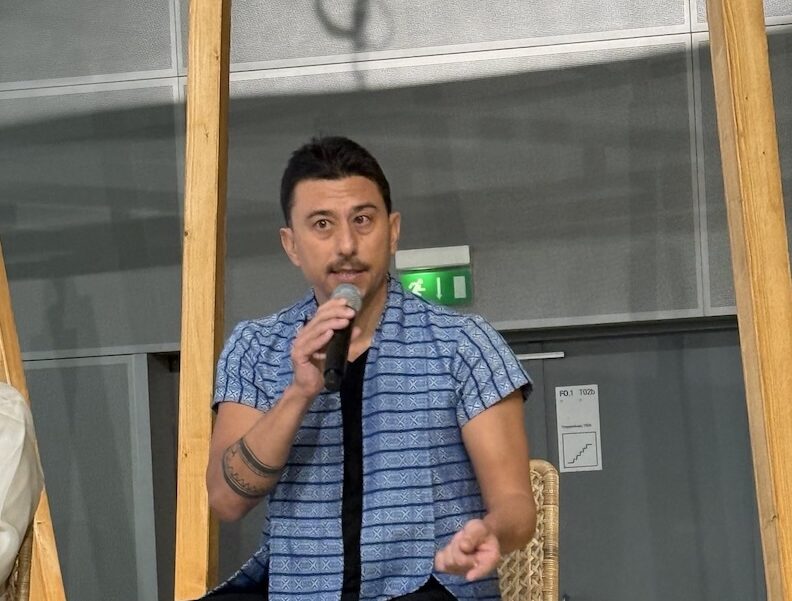
Batanes poet Dorian Merina
Merina has done much fieldwork seeking out elders on the islands still chanting these songs, recording and transcribing them and asking how they learned the art of laji. Merina feels strongly for the tradition. “Though it is a tradition constantly in danger of vanishing, I do not learn the songs for the sake of nostalgia. Rather, I believe our contemporary world—with its challenges and forgetfulness—is in need of this artistic imagination, these rare and valuable phrases that express a particular way of living, a specific balance with the natural world. They are gifts from our ancestors, who were also flawed, also full of dreams, also brilliant in their own way.”
Merina has come home from overseas to settle with his wife and daughter in Sabtang, Batanes, to document and preserve the Ivatan indigenous oral poetry.
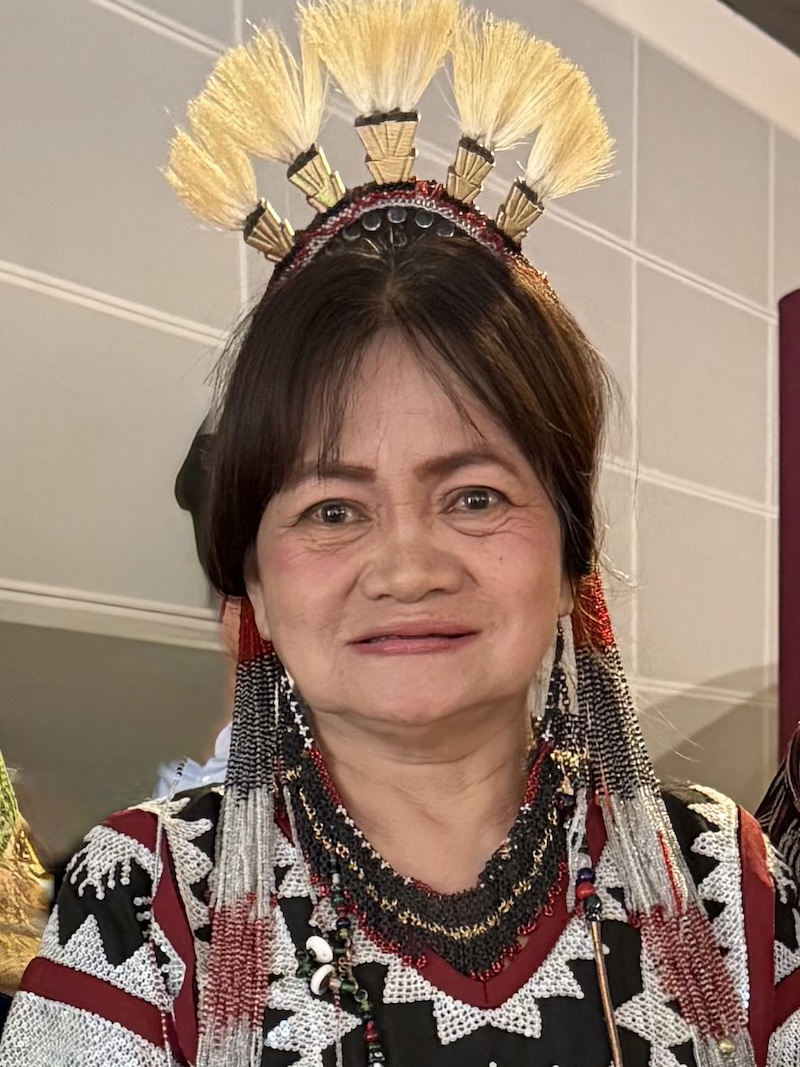
Rosie Sula, Gawad sa Manlilikha ng Bayan (GAMABA) awardee for Tboli chanting, the youngest recipient of the National Living Treasure
A fitting end to the session was the Tboli chant of Gawad sa Manlilikha ng Bayan (GAMABA) awardee for Tboli chanting, Rosie Sula, the youngest recipient of the National Living Treasure honor at age 55. She can compose 20 original poems in one day and perform epic chants for three days without faltering. With good humor, she said her chant that day was this counsel: “Not to marry a man who is pogi, for you’ll be a battered wife.”
How many treasures await our discovery!


