
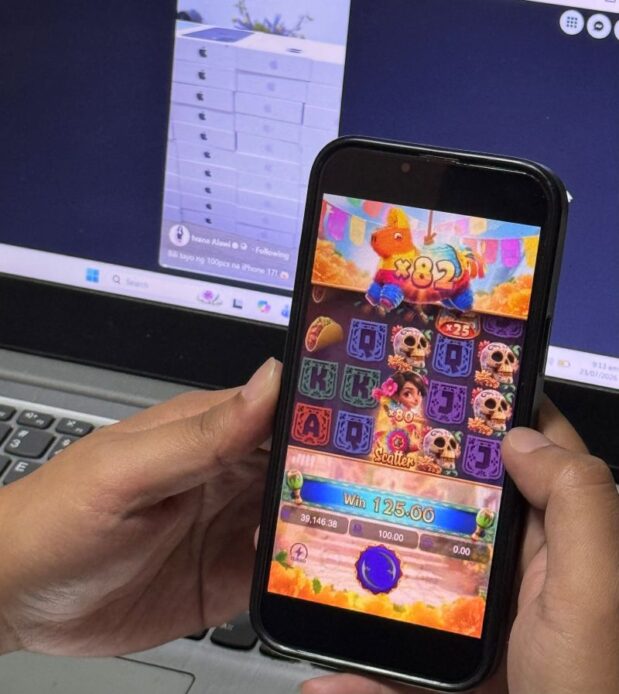
It was 2:47 am. I wasn’t even looking for it. I was scrolling to kill a few minutes before trying to sleep again, thumb moving on its own, and there it was: a video of Ivana Alawi holding up a stack of iPhone boxes, grinning, telling everyone that a hundred of them were up for grabs, but you had to follow the page first. The clip had already pulled in more than 280 million views, eight million reactions, and seven million comments in a matter of days. My thumb froze mid-scroll, not because I have a story of my own getting tangled up in this, but because I recognized the shape of it immediately, the way you recognize a trick even when it isn’t being played on you.
So I did what I do on nights like this. I stopped scrolling and started reading, and I kept a running account of it in my head, half notes and half argument with myself, until the sky started going grey. This is that account, more or less as it happened.
The facts first, because I wanted to be sure before I let myself get angry. On July 15, Alawi posted that she’d spent about ₱4.28 million at the mall on 100 iPhone 17 units, which she planned to give away as a thank-you to her audience. “Happy ako dahil 100 tao ang makakatanggap at magagamit niyo ito,” she said. Nice sentiment, at face value. The video went everywhere in days.
Then people noticed the mechanics buried in it: To actually qualify, you had to follow the Facebook page of Casino Plus, the online gambling platform she’s endorsed since being made its “responsible gaming” ambassador earlier this year, and one report noted the platform had actively backed the giveaway to extend its own reach. “Follow our CP Fam,” she wrote, green heart emoji, link in the comments. The pinned comment is deleted now. The backlash isn’t. What struck me most, reading further, is that the backlash doesn’t seem to have cost her anything measurable—her page reportedly went from 47 million followers to 51 million in the days after the controversy broke. Getting called out and growing your audience turned out not to be mutually exclusive.
I sat with that word for a while—mechanics. Like it’s a coin-op machine, and not somebody’s attention being quietly rerouted toward a betting app. Because that’s what a follow is, isn’t it? It’s not a raffle ticket. It’s a name added to a list that a gambling company now gets to advertise to, forever, whether or not that person ever wins a phone. No one has to be convinced all at once for this to work; the algorithm just needs the door to open a crack, and it walks through on its own schedule, showing up later as a suggested post, a friend’s like, a “claim your bonus” notification that seems to arrive out of nowhere. One commenter online put it about as plainly as I could: If it’s free, you’re the product. I don’t think I’d have believed how many people said some version of that if I hadn’t scrolled through it myself.
I went looking for the actual Facebook comments underneath the post, not just the summary of them, because I wanted the specific words, not a paraphrase of a paraphrase. One Facebook comment argued that a “P4 million worth of 100 iPhones is nothing compared to the lives” that could be affected by pushing people toward online casinos, the commenter’s point being that millions of Alawi’s followers were exposed to the gambling platform in the process, whether or not they ever entered the raffle.
Another commenter, quoted in the same coverage, said she never expected to unfollow Alawi at all, since she’d followed her for years for her generosity and charity work, and finding that same generosity now wrapped around a gambling endorsement felt like a genuine loss, not just an internet complaint.
A third comment circulating the same week estimated that more than a million people had already engaged with the giveaway promo, and worried aloud that some of them, having followed a gambling page just to enter a raffle, end up gambling, when they otherwise would never have done so. None of these people are activists or officials. They’re just people who liked her page and didn’t expect this to be the price of a phone.
More than a million people had already engaged with the giveaway and ended up gambling, when they otherwise would never have done so
At 3:20 am, I went looking for whether anyone with actual standing had said anything, because I didn’t want this to just be Facebook shouting at Facebook. Turns out two groups had already made formal statements. The Creator and Influencer Council of the Philippines said gambling-related endorsements deserve “a heightened degree of caution and responsibility”—measured, almost too polite, but it’s something, coming from an industry body that has to keep working with these same creators afterward.
Digital Pinoys was more blunt. Their national campaigner, Ronald Gustilo, called it predatory marketing, and made the point that struck me most: a giveaway like this isn’t really structured to reward 100 people. It’s structured to grow a gambling operator’s followers through everyone who enters and doesn’t win, which is almost everyone.
Neither Alawi nor Casino Plus has said a word publicly since. I don’t know what I expected. Silence is usually the safest move, legally and otherwise, and that’s its own kind of answer.
What kept me awake longer than the giveaway itself, honestly, was how ordinary every part of the “promotion” was. Casino Plus is licensed by the Philippine Amusement and Gaming Corporation (PAGCOR). Nothing about the partnership breaks a law. There’s an Ad Standards Council circular that bars gambling operators from showing casino games or paraphernalia in ads, but nobody seems sure whether that covers an organic, unpaid Facebook giveaway post the way it covers a paid commercial—and that gap is exactly the kind of thing that lets something like this happen in plain sight, technically clean the whole way through.
And it wasn’t only deliberate promotion I kept running into. Gambling ads apparently surface unprompted inside completely unrelated apps, too, reaching people who weren’t looking for any of it, which feels less like bad luck for them and more like a trap built for anyone who simply exists online with a phone in hand. It’s the same unease I feel reading about most of this industry lately: Nothing here requires anyone to break a rule. That’s what makes it hard to be angry w ithone person instead of a whole system built loosely enough to let this through, on purpose, by people who understand exactly what endless scrolling and near-miss animations do to attention.
At 4:05 am, I went through the numbers, because I wanted to know if my reaction was proportionate or just a bad night. At a Senate hearing in August 2025, PAGCOR’s own data—cited by Sen. Sherwin Gatchalian—showed 32.117 million registered online gambling accounts in the Philippines as of that July, up from about 469,000 in 2018. Even the senator said he nearly fell off his chair. PAGCOR’s chairman, Alejandro Tengco, later clarified that the 32 million figure counts accounts, not people, since a lot of gamblers register on multiple platforms and drift between them, depending on their luck; he put actual active users on legal platforms closer to 10 million. I noticed I felt almost relieved reading the smaller number, which is its own strange thing to notice about myself at 4 in the morning. Ten million is still an enormous number of people. Relief was the wrong reaction, and I knew it even as I experienced it.
To be fair—and I want to be fair, even now, even about this—PAGCOR hasn’t been sitting still. It banned credit-card deposits. It launched a 24-hour helpline for problem gamblers and their families. A central-bank-ordered delinking of e-wallets like GCash and Maya from gambling platforms reportedly cut online gambling transactions by roughly half over a single weekend last August. License fees for operators have been cut, from 50 percent down toward 30 percent, specifically to pull unlicensed platforms into the regulated system, and PAGCOR credits that with growing the licensed sector’s share of total gambling revenue from under 10 percent in 2022 to more than half by late 2025.
Coordinated takedowns with the National Telecommunications Commission reportedly blocked well over 90 percent of the illegal sites referred for action, in the thousands, over the second half of 2025 alone. None of that is nothing. I wrote it all down because I didn’t want to write down only the damning part.
But then there’s the other half of the ledger, which is that the government needs this money and says so, out loud, without much embarrassment. PAGCOR reported roughly ₱69 billion in license fees in just the first seven months of 2025, on top of licensing revenue that has helped fund corporate social responsibility programs and, PAGCOR itself has said, contributes to the country’s Universal Health Care commitments. Its chairman has described that revenue as funding school buildings and health programs, and PAGCOR ranks as the government’s third-largest revenue source after the tax and customs bureaus.
So the same agency asked to protect people from this industry is also, structurally, one of its biggest beneficiaries. I don’t think that makes anyone at PAGCOR a villain. I think it makes the whole arrangement a conflict of interest that nobody elected anyone to resolve, and that’s a colder, less satisfying thing to be angry about than a single bad actor, but it’s the truer thing.
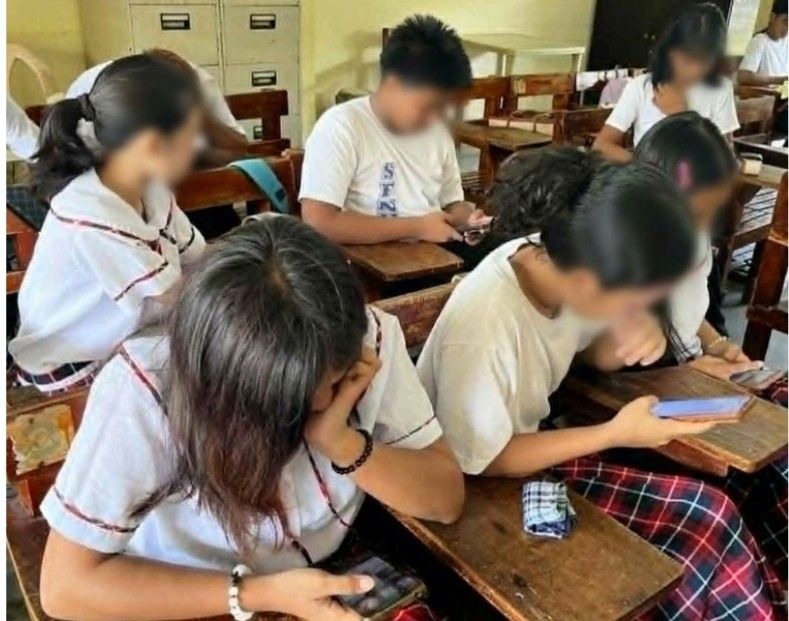
Students can have easy access to such apps with only a mobile number.
At 4:40 am, I remembered something I’d read months before this giveaway even happened. Last August, Rep. Rufus Rodriguez gave a privilege speech naming more than 15 celebrities—Alawi specifically among them—as part of what he called a “silent epidemic” of gambling normalized through lifestyle content, with billboards along EDSA and platforms reachable, he said, by children as young as 7 or 8 with nothing more than a mobile number. He talked about a jeepney driver who lost a day’s wages, a gambling-related suicide, a marriage that turned violent after one partner asked the other to stop.
“Gambling is not a private vice,” he told the House. “It has public consequences.”
Reading that again tonight, a year later, next to a giveaway that used the exact celebrity he named to grow a gambling platform’s audience by the thousands, felt less like irony and more like proof that naming a problem out loud doesn’t actually stop it from happening again in almost the same shape.
The ‘silent epidemic’ of gambling is normalized through lifestyle content, with billboards along EDSA and platforms reachable by children as young as 7 or 8 with nothing more than a mobile number
The cases behind speeches like that aren’t abstract, either, once you go looking, and one in particular stuck with me longer than the others. Reagan Praferosa first got hooked on the feeling of winning, not the money itself—early wins at casino tables in Las Vegas and later in Manila gave him what he’s described as a “big-shot identity,” the sense of being someone the moment he sat down at a table. Over the next seven years, he lost roughly ₱50 million chasing that feeling back. When the money ran out, he stole to keep playing, was jailed for it, and cycled through rehabilitation centers afterward. At his lowest point he attempted to take his own life.
He got help, recovered, and in 2011 started a support group for other Filipino gamblers, where he now describes the addiction in three blunt words: it leads to “jail, institution, or death.”
His story predates the online boom, but almost every aspect of it—the escalating bets, the theft to cover losses, the rehab, the near-fatal low point—shows up again and again in the newer accounts of people hooked on betting apps instead of casino floors.
Those newer accounts read like variations on the same arc, just faster and more private, because the casino now fits in a pocket. A finance executive in his late 30s—call him by the pseudonym Mark—started gambling casually in 2015, burning a few thousand pesos most Fridays in physical casinos. When the pandemic hit in 2020 and he was suddenly working from home with no commute and no supervisor watching the clock, he moved to offshore online casinos and started wagering as much as ₱200,000 a day.
By the time reporters spoke with him, he’d lost more than ₱20 million through bank loans, credit cards, and loan sharks, was still carrying ₱5 million in debt, and described his marriage as one of the casualties, alongside the money.
A housewife in her mid-40s, Ana, described something similar but quieter: She opened a gambling platform through her GCash app one evening just to unwind, won early, and kept going long after the winning stopped, hiding it because she was embarrassed, until a support group became the only place she felt able to say it out loud.
A 34-year-old, Myla, won ₱50,000 on a ₱1,400 bet the first time she tried BingoPlus through an e-wallet in 2024—and then lost all of it, plus her savings, chasing that first win back.
None of them started out thinking of themselves as gamblers. That seems to be the pattern more than any single bad decision: The platform is already inside an app they used for something else, the first win teaches exactly the wrong lesson, and by the time the losses outpace the wins, stopping costs more, socially and financially, than continuing does.
What all of it points to, reading enough of these accounts back to back, is that the damage rarely stops with money. Financially, it’s loans stacked on loans, then loan sharks once banks stop lending, then debts that outlive the habit itself, the way Mark’s ₱5 million did.
Psychologically, counselors and psychiatrists treating these cases describe rising depression, anxiety, and suicidal ideation among people who gamble compulsively; one psychiatrist mentioned treating a patient with ₱200,000 in gambling debt who had already developed suicidal thoughts by the time he sought care. Relationally, it’s the strain Mark named outright and the shame Ana described privately: partners lied to, family conflict, in some documented cases, domestic violence, from the outside it looks like someone just becoming distant or unreliable, when what’s actually happening is a slow self-disappearance into a phone.
And it isn’t evenly distributed; support groups and reporting both note how it’s increasingly showing up among women, housewives specifically, precisely because e-wallet gambling is private, always available, and doesn’t require setting foot in a casino where someone might recognize you. That combination of privacy and accessibility is what several counselors call a “hidden addiction,” and it’s a big part of why it can take years, and a five-page note, a Senate hearing, or a support-group table in a restaurant, before anyone outside the household notices at all.
Some of these accounts end worse than others. In August 2025, a 22-year-old college student in Benguet, Carl Genesis Contero, died by suicide after losing his tuition money to online gambling, leaving behind a five-page note apologizing to his family and asking the government to ban online betting.
Around the same time, in Bukidnon, a 26-year-old gas station worker, Brayan Concha, took his own life after running up gambling debt his family says they discovered only afterward; his cousin later said they’d thought he was betting only small amounts through his e-wallet.
Bridges of Hope, one of the country’s larger addiction treatment providers, has said seven out of 10 of its current clients are now being treated specifically for online gambling addiction, not the drugs or alcohol the center was originally built around.
None of this directly connects any single giveaway to any single tragedy, and I don’t want to harp on a straight-line connection that isn’t there. It’s just the backdrop that makes a hundred iPhones and a follow button feel like more than a harmless promotion to the people objecting to it. If reading this stirs up anything heavy for you personally, it’s worth knowing that support exists and reaching out to it isn’t a small or embarrassing thing to do.
It also struck me, reading around, that gambling harm still tends to get discussed publicly as a discipline problem, a failure of willpower, rather than as the psychological condition clinicians actually treat it as, which probably keeps a lot of people from asking for help in the first place. Admitting to bad discipline is one kind of humiliation; admitting to an illness is a different, harder one, even though it’s the more accurate label. I don’t think that framing shift solves anything on its own, but it seemed worth writing down, because so much of the policy conversation stalls right there, with the question of whether this is a personal failing or a public health issue with a very profitable supply chain attached to it.
Gambling harm still tends to get discussed publicly as a discipline problem, a failure of willpower, rather than as the psychological condition clinicians actually treat it as
At 5:15 am, I made myself zoom out, because it’s too easy to make this a Philippines story when it isn’t only that. Market research firms don’t even agree on the size of the global online gambling market; estimates for 2022 alone range from roughly US$60 billion to over US$100 billion depending on who you ask, but every estimate points in the same direction: more players, more markets, more government budgets quietly built around the losses. Ontario has moved to restrict celebrity gambling endorsements outright. The UK and US are having versions of the same advertising argument right now. This is a pattern with a lot of local costumes on.
By the time the sky was properly gray, I’d landed on something closer to a list than a feeling, which is usually how I know I’m done being just angry and I’m ready to think. If I had to name what should change, these are what they are: Delink deposits from bank accounts and e-wallets so joining a platform takes real friction, not 30 seconds, while accepting that determined gamblers may just shift to cash or crypto instead. Treat follow-to-enter mechanics tied to a gambling page as gambling promotion, subject to disclosure rules, not as an ordinary raffle. Extend advertising-standards enforcement to organic influencer content, not only paid placements, and restrict gambling ads from surfacing inside unrelated apps altogether. Build one unified self-exclusion registry across every licensed operator, since right now a determined gambler just opens an account somewhere else—though that registry, by definition, can’t touch the unlicensed side of the market, which by some estimates is 60 percent of all activity.
Require visible, undismissable deposit and time-loss reality checks inside the apps themselves, not buried in settings menus. And put real, earmarked money—a levy on the industry’s own revenue—behind treatment and helpline access, instead of announcing it once and letting the announcement do the work forever. None of that touches the unlicensed market on its own, which is exactly why the advertising and endorsement rules matter so much: They’re the part of this whole tangle that regulators can actually reach without waiting on an unwinnable enforcement war against sites that just add a digit to their name and reopen.
I still haven’t decided what to think about Ivana Alawi herself, and I’ve mostly stopped trying to. She’s one person inside an arrangement that pays her to grow an audience, a regulator whose budget depends on that audience growing, and an advertising framework written before giveaways-as-follower acquisition became a widespread tactic. A hundred iPhones and a follow button turned out to be enough to put all three of those incentives on public display at the same time, lined up in the same direction, and that’s the part I don’t think I’ll stop thinking about. Not her—the line-up.
If you’re reading this and some part of it landed closer to home than the rest—if the ₱200,000 or the loan-shark debt or the quiet shame Ana described sounds less like someone else’s story and more like this week—I want to say something directly to you, not around you. You are not a weak person, and you are not a bad one. What you’re up against was built by people who study attention for a living, and it was built to be hard to walk away from; the fact that it has a grip on you says more about the engineering than it does about your character.
Reagan Praferosa lost ₱50 million and went to jail and still found his way to the other side of it, and now spends his time helping other people find theirs. That’s not a rare exception dressed up as inspiration; it’s the actual, ordinary shape recovery takes for a lot of people, one day and one honest conversation at a time. You don’t have to fix it tonight, and you don’t have to fix it alone. If you’re in the Philippines and need to talk to someone right now, the National Center for Mental Health‘s crisis line is free and open 24/7 at 1553 or 1800-1888-1553, SMART/TNT: (0919) 057-1553, Globe/TM: (0966) 351-4518. Groups like Recovering Gamblers Philippines and Bridges of Hope exist specifically for this, and PAGCOR’s own self-exclusion program can cut off your access to every licensed platform at once if you ask it to. None of that is a small step. All of them are worth taking.
It’s past 6 am now. I’m closing the tab. I don’t have a tidy ending for this one—no personal turning point, no brick in a wall I’m building, none of that. What I keep coming back to is that the people most exposed in all of this are rarely the ones anyone’s writing statements about: kids scrolling past a giveaway that led them, one follow at a time, to a betting page they were never supposed to be old enough to see, and adults for whom “just one more try to get it back” is already the quiet, ordinary sentence running under everything else. If there’s a use for a night like this one, it’s remembering to actually check on the people around you who might be somewhere inside that sentence, and not waiting for a viral giveaway to be the reason you finally ask.


