

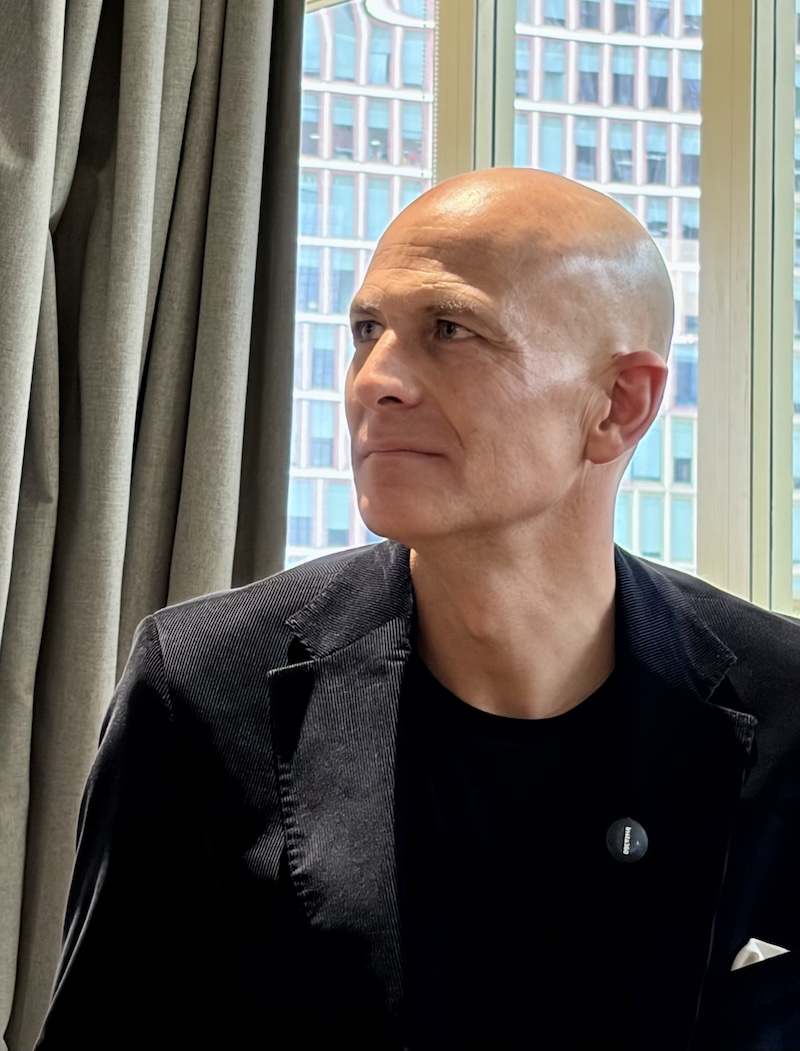
Performance and stress specialist Florian Wolf
“STRESS need not become a badge of productivity,” said two experts, functional medicine and longevity expert Dr. Rex Gloria and performance and stress specialist Florian Wolf, at a recent lecture at Longevity Lab, a biohacking and wellness hub. The problem is not stress itself, but the body failing to recover from it. Mental clarity and long-term health begin by balancing the brain, the body, and the nervous system.
Gloria explained that the brain may lead, but it never acts alone. Too often, talk about mental health treats the mind as if it were separate from the body. For example, meditation is described as quieting the mind, but the process actually starts with quieting the body first. This means slowing the breath, easing muscle tension, and stepping out of the constant rush of daily life.
For Gloria, mental hygiene is vital to wellness. The brain and body work as one single system, and staying balanced requires addressing both. He defines mental hygiene as a “self-relationship.” It starts by noticing when stress pops up and identifying why it is happening at that exact moment. This awareness stops “autopilot,” which is a state where you function without thinking. It means acting or making decisions automatically without pausing to think them through.
Physically, autopilot often triggers the “fight or flight” survival response. In that state, you are just reacting to what happens. You might still be getting work done, but you are not thinking clearly. Autopilot is not a sign of high productivity; it is just stress chemicals driving your behavior.
Recovery, Gloria said, requires letting go of guilt. Mental hygiene includes accepting that you have done the best possible within your own limits and situation, rather than trying to meet what others expect. Protecting your mental health means respecting your limits instead of pushing through them. Repeatedly going beyond what you can handle might bring short-term wins, but it has a high total cost over time.
He also explained why standard stress advice often fails. Stress might start from the outside and affect the brain, the adrenal glands—which act as your body’s emergency dispatchers—and the gut. Because the gut and brain are directly connected, stress can shut down digestion to save energy for a perceived emergency. However, everyone responds differently. Your past experiences, personality, and habits shape your reaction. While problems change, these patterns tend to repeat. Long-term health depends more on these recurring patterns than on any single stressful event.
Gloria pointed to the physical cost of stress. The brain is only about two percent of your body weight, yet it uses roughly 20 percent of your body’s energy while at rest. It never fully turns off. When stress is triggered, the brain’s demand for energy goes even higher. Stress, he said, is not just in your head. It is an energy problem. Managing it requires understanding how the brain burns fuel, and how repeating the same thought patterns increases that drain.
The brain prioritizes survival over being right. In alarming situations, people often do what feels safe rather than what is actually safe. Protection is the brain’s main job.
Because of this survival focus, we tend to repeat our reactions. Gloria cited neuroplasticity as the brain’s ability to reshape itself through repeated experience. Thoughts, emotions, and behaviors turn on specific neural circuits, which are networks of brain cells that work together. When these circuits are used over and over, they get stronger and easier to trigger. Over time, these responses happen by default, as a habit.
A pattern of fear or helplessness can grow stronger over time, but so can patterns of connection, focus, and solving problems. This is why your past is not your permanent blueprint. While early experiences shape your nervous system, they do not have the final say. Through consistent practice, you can actually rewire your brain for a fresh start.
A pattern of fear or helplessness can grow stronger over time, but so can patterns of connection, focus, and solving problems
Florian Wolf uses body measurements and proven training to help people build strength, recover better, and support long-term health. His work turns brain science and nervous system control into practical tools. These are tools that executives, athletes, and teams can use even if they have no experience with meditation or therapy.
Stress is not the enemy, said Wolf; chronic stress is.
The human body is built to handle short bursts of stress. In demanding moments, cortisol, the stress hormone, and catecholamines, the panic button, both rise. This sharpens your focus and boosts your energy. Our ancestors needed this to survive. When a threat popped up, their bodies kicked into high gear to stay safe, then calmed down once the danger passed.
Today, recovery rarely comes.
Instead of isolated challenges, modern life delivers constant pressure through deadlines, digital overload, relationship strain, and environmental noise. The stress response is triggered over and over without a proper reset. Over time, what was once helpful for survival becomes harmful.
One of the first warning signs is sleep. Many people spend eight or nine hours in bed yet wake up exhausted. Wolf calls this non-regenerative sleep, which is when the body fails to fully repair what was worn down during the day. Fatigue makes you more sensitive to stress, stress ruins your sleep, and the cycle gets worse.
For Wolf, sleep quality is one of the clearest signs of stress imbalance. The question is not just how long you sleep, but whether your nervous system actually shifts into recovery mode. If the body stays in an “always-on” state, even fun activities can become stressful. The system loses its ability to tell the difference between excitement and rest.
Rewiring the brain begins with restoring a rhythm: action followed by genuine recovery. The inability to switch off is where the real damage begins.
Wolf explained that meditation often fails because an overstimulated mind resists slowing down. Relaxation techniques must therefore do two things: quiet racing thoughts and activate the vagus nerve, which is the on-off switch for your body’s relaxation response. He emphasized the importance of using proven, individual methods. Lasting stress control depends on practices that can realistically become daily habits and help the system switch off.
Meditation works best when the nervous system is first brought back into balance. You cannot meditate your way out of exhaustion. If your body is stressed and sleep-deprived, mindfulness feels like a chore. But once you are rested and balanced, the prefrontal cortex—your brain’s logic center—can finally do its job. This makes focus feel natural and easy.
Chronic stress suppresses this rational center and shifts control to the amygdala, which is the brain’s alarm system. This leads to anxiety and overreacting. Brain scans of monks show that meditation strengthens the activity in the logic center.
However, meditation is not the only way. Training your attention in everyday life by doing one thing at a time with consistency can also rewire the brain. This improves how you handle stress and allows rational thought to guide your behavior before emotion takes over.
Here are some exercises for relaxation.
Sleep hygiene. Recovery starts with sleep. Good rest kicks your vagus nerve into gear, shifting your body from “stressed” to “repair” mode. Sleep doesn’t begin when the light is turned off. What you do before bed matters greatly. Avoid late meals and electronic media to allow the body to settle, and create a relaxation routine to support proper recovery. Without this, the system remains trapped in a vicious cycle, making mindfulness and meditation far harder.
Recovery starts with sleep. Sleep doesn’t begin when the light is turned off. What you do before bed matters greatly
Mindful counting breath. This exercise helps let go of persistent thoughts. Inhale naturally, exhale, and as you exhale, count backward from five to one, visualizing or repeating the numbers inwardly. If your mind wanders, gently return to the count. Practice for 30 seconds a day; it creates a moment of mental rest, helping you unplug from constant thoughts, many of which never actually happen.
Heart coherence breathing. This breathing technique aligns your heartbeat with your breath. After a relaxed inhale and exhale, pause briefly after exhaling, then inhale naturally when your body asks for it. Repeating this several times slows your heart rate, increases heart rate variability, and helps you settle into a calmer state. Practicing this daily reinforces a sense of balance and recovery.
Extra lung inhale. Think of the parasympathetic system as your body’s “brake pedal.” It tells your heart and mind to slow down and relax. To activate it quickly, take a deep inhale and then add a short, extra inhale at the end, followed by a deep exhale. Repeat three or four times. This exercise can help calm the nervous system when you feel stressed or annoyed.
Tapping. This technique focuses on body sensations to release negative emotions. Using three fingers, gently tap between your eyebrows, under the eyes, on the cheeks, over the mouth, under the nose, on the upper lip, and the chin. Concentrate on the sensation of touch and breathe normally. Tapping helps reconnect the body and mind and foster a sense of letting go.
Journaling. Writing down your thoughts can help release them and show how fleeting many worries are. Ending the day by noting even a small positive moment, such as gratitude that your heart is still beating, can subtly transform your outlook and build resilience.
Smile exercise. Holding a smile on your face for 30 seconds sends feedback to the brain that encourages positivity. Repeating this regularly trains the mind to notice positive signals, counterbalancing the brain’s natural tendency toward negative or survival-focused thoughts.
Wolf said these exercises are about regularity rather than how hard or long you do them. They train your attention and mindfulness. This helps you focus on one thing at a time, sense your current state, recognize your options, and make conscious decisions. When practiced daily for weeks, these exercises create new neural pathways. These new paths form habits that support mental clarity and overall well-being.
Dr. Rex Gloria will talk about “Gut-Immune Exis: Genetic Insights Driving the New Landscape of Resilience” on Feb 21 at 1:30 pm at The Esplanade, MOA Riverside. For details contact, Dr. Gloria via https://www.drrexgloria.com/, or Cellfitt.com via www.cellfitt.com. For details on mental wellness and performance coaching, contact Mr. Wolf at https://www.yourprevention.com/.


