
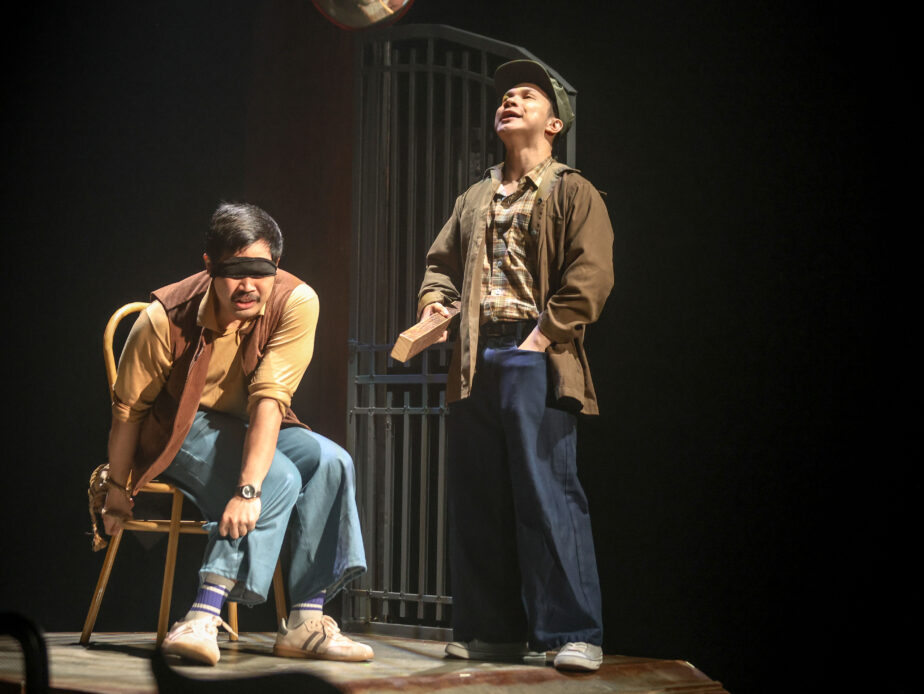
Directed by Delphine Buencamino
28 – 30 August; 4 – 6 September 2026
Produced by Arete Ateneo
Doreen Blackbox Theater
Ateneo de Manila University, Loyola campus, QC
Adapted from the book ‘Subversive Lives’
edited by Susan F. Quimpo and Nathan Gilbert Quimpo
Philippine Edition, published by Anvil Publishing, Inc.
Watching Subversive Lives made me reflect on the nature of faith—not as a religious concept, but as something that moves through our everyday lives. After reading the book and seeing this latest theater production by Arete Ateneo, I am left with the sense that faith takes many shapes, inhabiting different lives and finding a home in the most unexpected vessels.
The memoir was Susan Quimpo’s idea, and, as the play aptly conveys, she took charge, encouraging her activist-turned-academic brother Nathan to co-edit the anthology book of anecdotes, recollections, and reflections. At least one sibling bawled, “I do not want to relive it anymore,” as dramatized in the play’s first act.
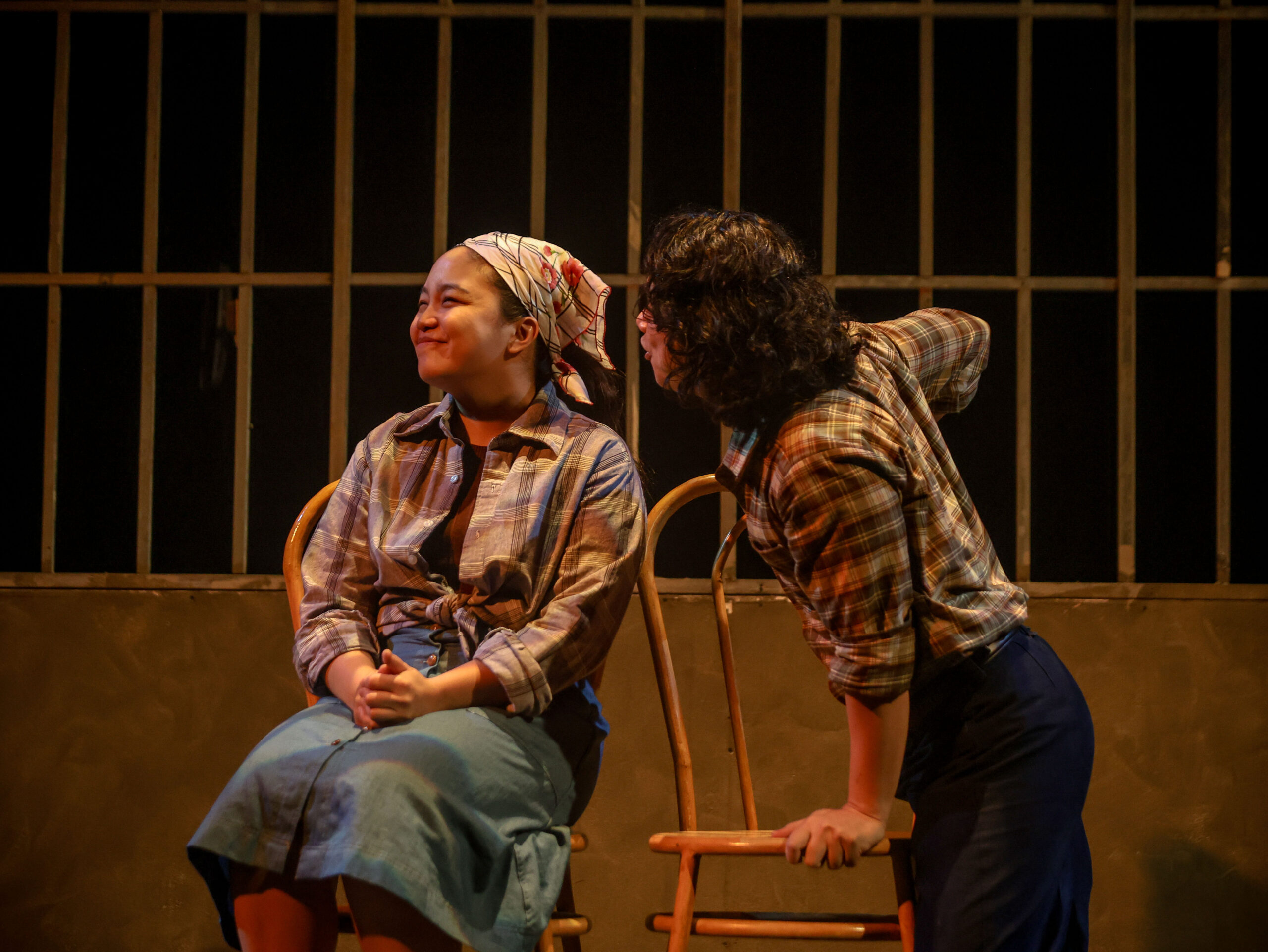
Romance blooms between fellow activists Tina Bawagan (Teetin Villanueva) and Jun Quimpo (Jerome Dawis) while students at the University of the Philippines.
Yet somehow, that sibling’s recollection—elder sister Lillian’s—would make its way into the book. And because Susan was my friend—she died July 14, 2020, after a lingering illness—I could just imagine her encouraging, convincing, and perhaps even badgering her siblings, always in her tender-hearted way, to summon up their memories. Even when memory seemed elusive, she would ask them to at least try, and to trust the process—that remembering would yield something.
I imagine her poring over drafts, sifting through loose pages, plodding through typescripts, delighting in the surprises of memory, but also minding its silences, omissions, and absences—those things she was convinced needed to be included, needed to be written about.
Subversive Lives tells the saga of the Quimpo family: 10 siblings, two of whom gave their lives to the revolutionary cause, and to whom the book is dedicated.
But beneath the story of political conviction is another, quieter story—the story of their parents, Ishmael and Esperanza, who stood as witnesses to the perilous paths chosen by most of their children.
Their memories are intertwined, as their lives were: first, as children growing up in a modest home near Mendiola Bridge and Malacañang; later, as adults whose lives were shaped by an extraordinary chapter in the nation’s history; and eventually, as comrades and allies bound, at least for a time, by faith in a revolutionary organization.
Susan and Nathan’s anthology a challenge for the stage
Susan and Nathan’s anthology is far from unwieldy, but its episodic character—the fragmentary recovery of memory on a person-by-person, period-by-period basis—poses a particular challenge when adapted for the stage. If a single-author memoir could meander, how much more so one built from eight voices, each revisiting painful moments: arrests, torture, death and disappearance, and even betrayal from within the ranks.
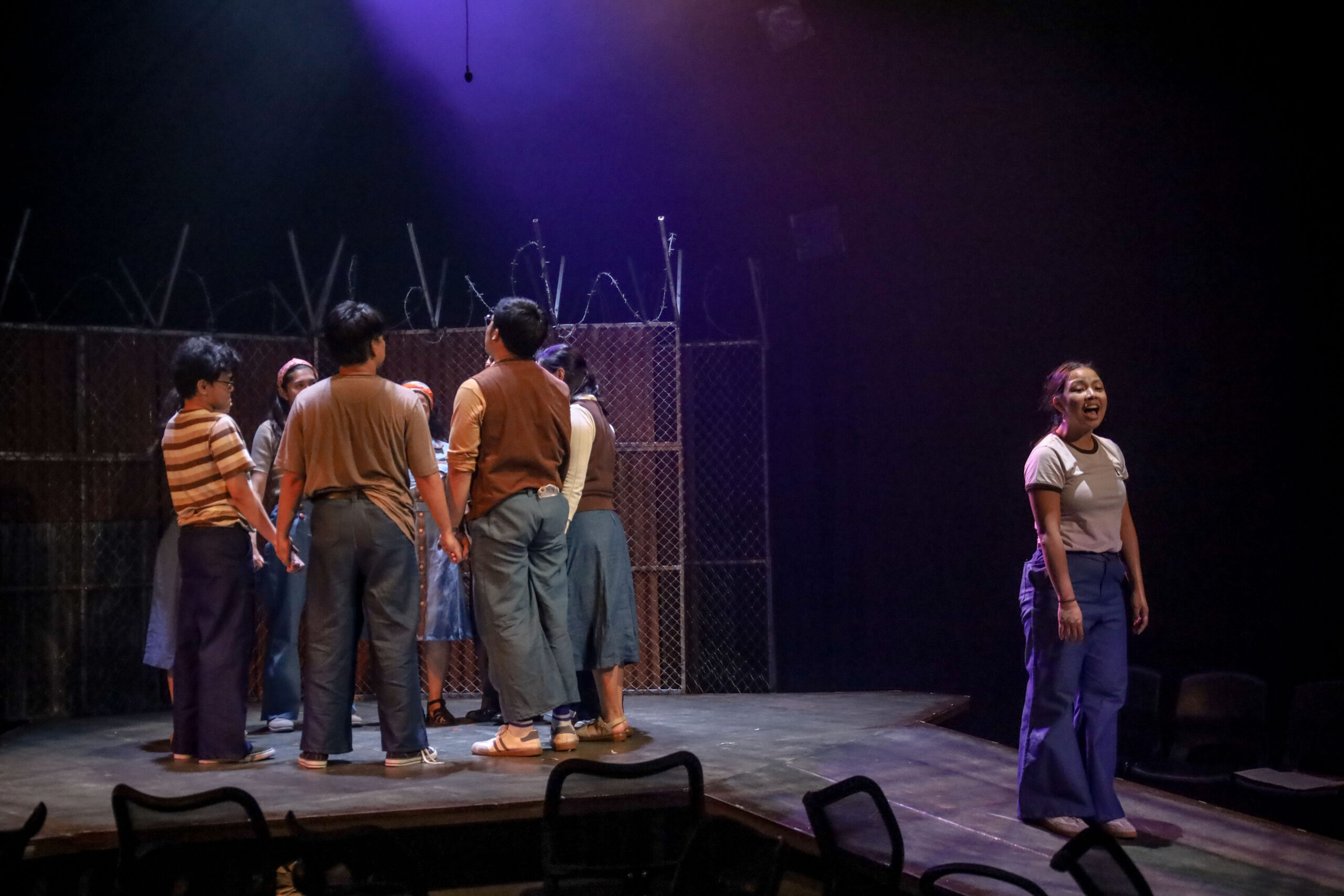
Susan (Rigel Hechanova), foreground, is narrator.
The book structure is not linear at all. It moves backward and forward in time, pauses over a detail, allows one voice to disappear in several pages, and then returns to it.
Theater, however, does not have the luxury of such flexibility. The text with which theater artists begin their work must possess at least a modicum of structure.
This is where Buencamino’s decision to use devised theater becomes particularly intriguing. For a memoir composed of multiple, sometimes overlapping memories, Buencamino’s approach to devised theater must have been a response to this challenge.
I imagine all members of the cast and production closely reading the text, researching a historical period far removed from their own generation, possibly interviewing some of Susan’s siblings, and then engaging in discussions and improvisations through a process of trial and error until they arrived at the final ideas, staging, and integration of the various elements of stagecraft.
Buencamino, who’s also choreographer and movement designer, assembles a remarkably agile cast and mounts a highly kinesthetic dramatization of the saga, extending into the siblings’ post-revolutionary lives.
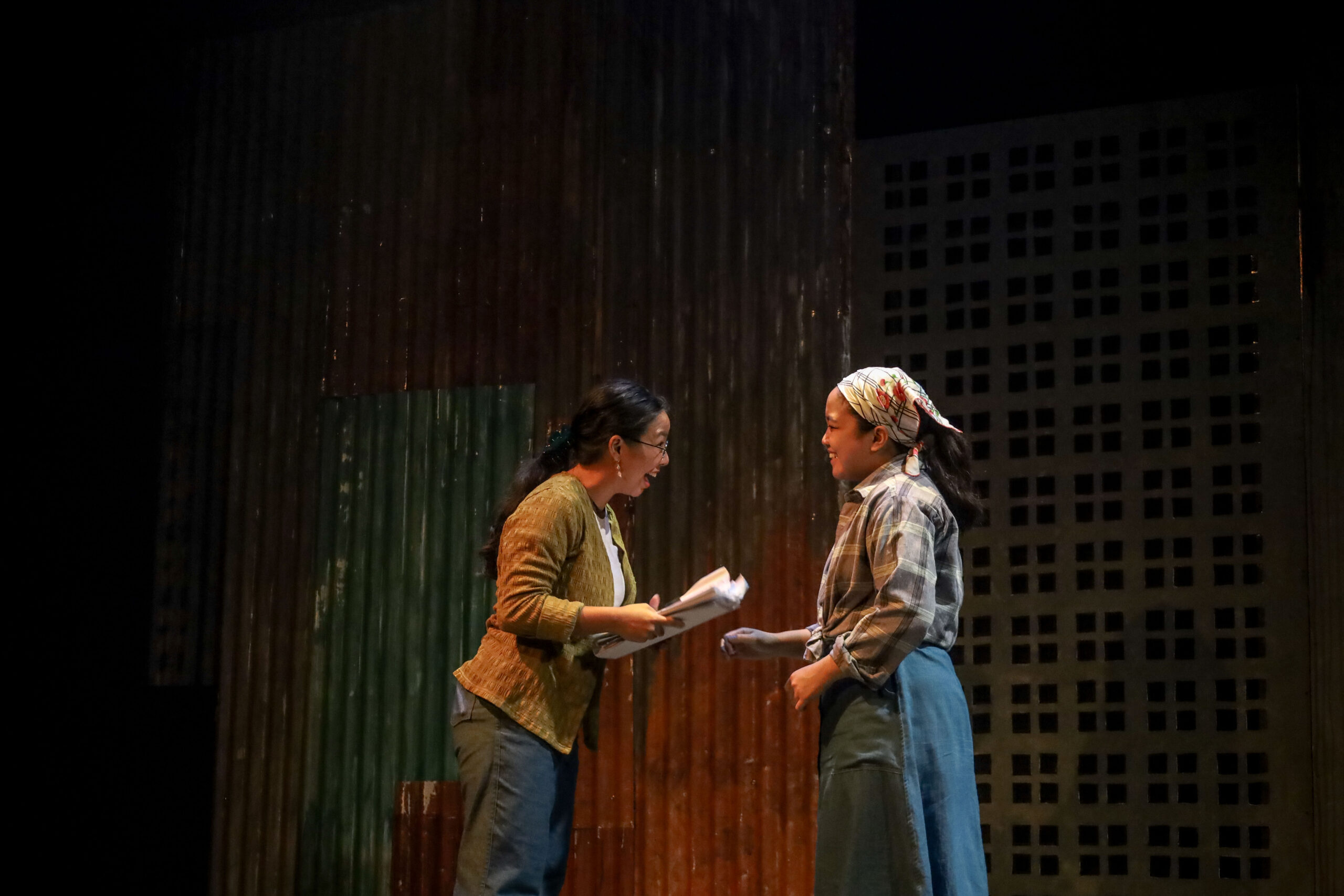
Susan (Rijel Hechanova) urges sister-in-law Tina Bawagan (Teetin Villanueva) to write a chapter in the family memoir.
Upon entering the black-box theater, the audience is greeted by the sight of swivel chairs, whose purpose becomes clear once one encounters set designer D Cortezano’s wrap-around stage. The stage architecture is versatile, allowing the production to move fluidly through the shifting spaces of resistance: the Quimpo home, Mendiola Bridge, the torture chamber, the crevices of the city where activists hid, the headquarters of revolutionary organizations, and the rugged mountains of guerrilla warfare. Beyond their physical dimensions, these places constitute the landscape of memory.
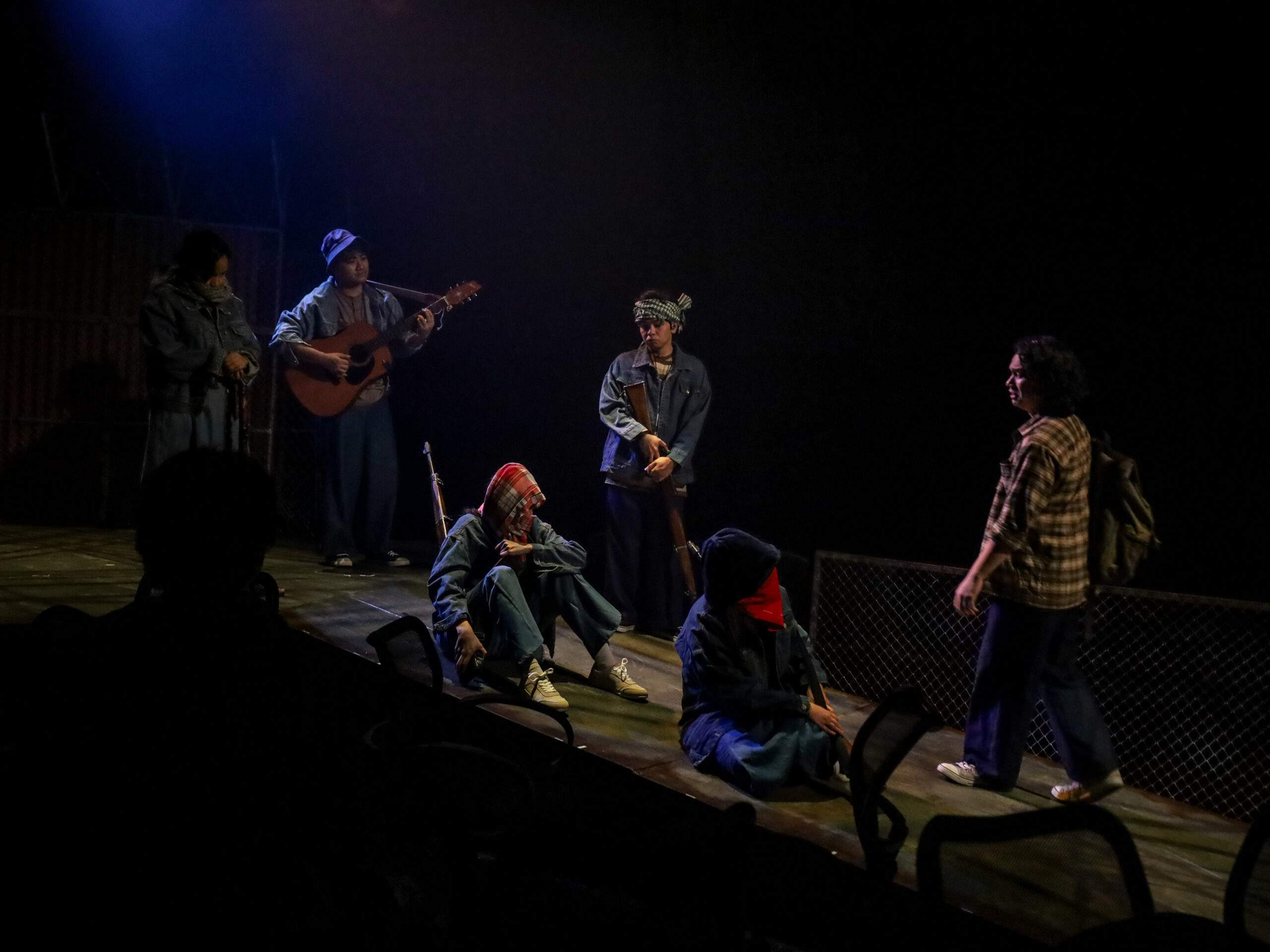
Jun Quimpo (Jerom Canlas) is welcomed by comrades.
Arvy Dimaculangan’s sound design functions almost like the audio archive of an era, recalling the rhythms and textures of a time past: the sirens of Metrocom cars, the sloganeering, the wailing of torture victims, and the gentler songs that convey the faith that sustained the revolutionaries. The sounds do more than establish a period; they summon a world that is no longer there—even the house music, Bookends by Simon and Garfunkel, gives this vibe.
The lines are delivered with power and conviction. That they are mostly in English is puzzling, since the few lines spoken in Filipino come across as more natural. The first act is well-paced and assured. The second act, however, begins to lose momentum in certain segments, particularly in the Opus Dei episode involving Emilie, the third of 10 siblings. The episodic nature that gives the memoir its basic structure becomes, at times, more difficult to sustain because of the temporal demands of theatrical staging.
I have known Susan quite well since our friendship was rekindled in 2017. Sometimes I tell myself it was only then we started to be really friends, when we chanced upon each other in an acupuncture clinic, and I have always regarded her as steely but reserved, resolute but soft-spoken, bold in her decisions but never foolhardy.
Her representation by young actress Rigel Hechanova strikes me as markedly different from the Susan I knew—and this difference is most evident, of course, in how she is physicalized onstage.
Susan was the desiderata to my ligalig
Toward the end, when she bawls out, “Pinatay ang kapatid ko ng isang kasama,” she comes across as reproachful, nanunumbat, as perhaps she should. But Susan was the desiderata to my ligalig; she spoke her truths quietly but clearly—forceful, yes, but gentle, always softhearted.
It was only when Susan wrote about her brother’s death in the guerrilla zones that I realized how deeply it had haunted her. We never got around to talking about her visit to Kalisitan in Muñoz, Nueva Ecija, when she wanted to uncover the circumstances of Jun’s death, only to discover that a former comrade had killed him.
On the other hand, the reason for Jan Quimpo’s disappearance was never spoken of in the adaptation. Given the drift of the narrative onstage, and something known to many about the revolutionary movement, two possibilities emerge: he was abducted by military forces, or his comrades were responsible for his disappearance.
In March 2017, five years after Subversive Lives was published, Susan was scheduled to deliver a talk at UC Berkeley in the US. Some forces, notably those allied with the National Democratic Front and led by a former “comrade” known for blindly toeing the official line, prevented her from holding the event. A statement was issued dismissing the book as purveying “schismatic politics of red-baiting of activists during the martial law era.”
To each, their own faith.
Subversive Lives, as a book and as a theater experience, gathers different strands of faith: Susan’s faith in the potency of memory; the book’s faith that lives can be recovered from the abstractions of revolutionary dogma; and Buencamino and her circle of creatives, who believed in their capacity to transform all of this into meaningful theater.
Now I know, these faiths—personal, familial, historical—gather around one another because, like water, faith seeks its own level, settling into a form that can be shared.


